
While colloquially discussed in terms of their immediate effects and chemical composition, understanding the distinctions between “Molly” and “Ecstasy” also necessitates an exploration of their economic dimensions. From illicit market dynamics to public health burdens and personal financial risks, these substances carry significant monetary implications that often go unrecognized. This article delves into the financial underpinnings that differentiate, and sometimes conflate, these two forms of MDMA (3,4-methylenedioxymethamphetamine).
The Illicit Market: Supply, Demand, and Pricing Dynamics
The global market for illicit substances like MDMA is a complex web of supply chains, risk assessment, and profit maximization. The distinctions between Molly and Ecstasy play a crucial role in how these products are produced, distributed, and priced, ultimately influencing their economic impact.
Raw Materials and Production Costs
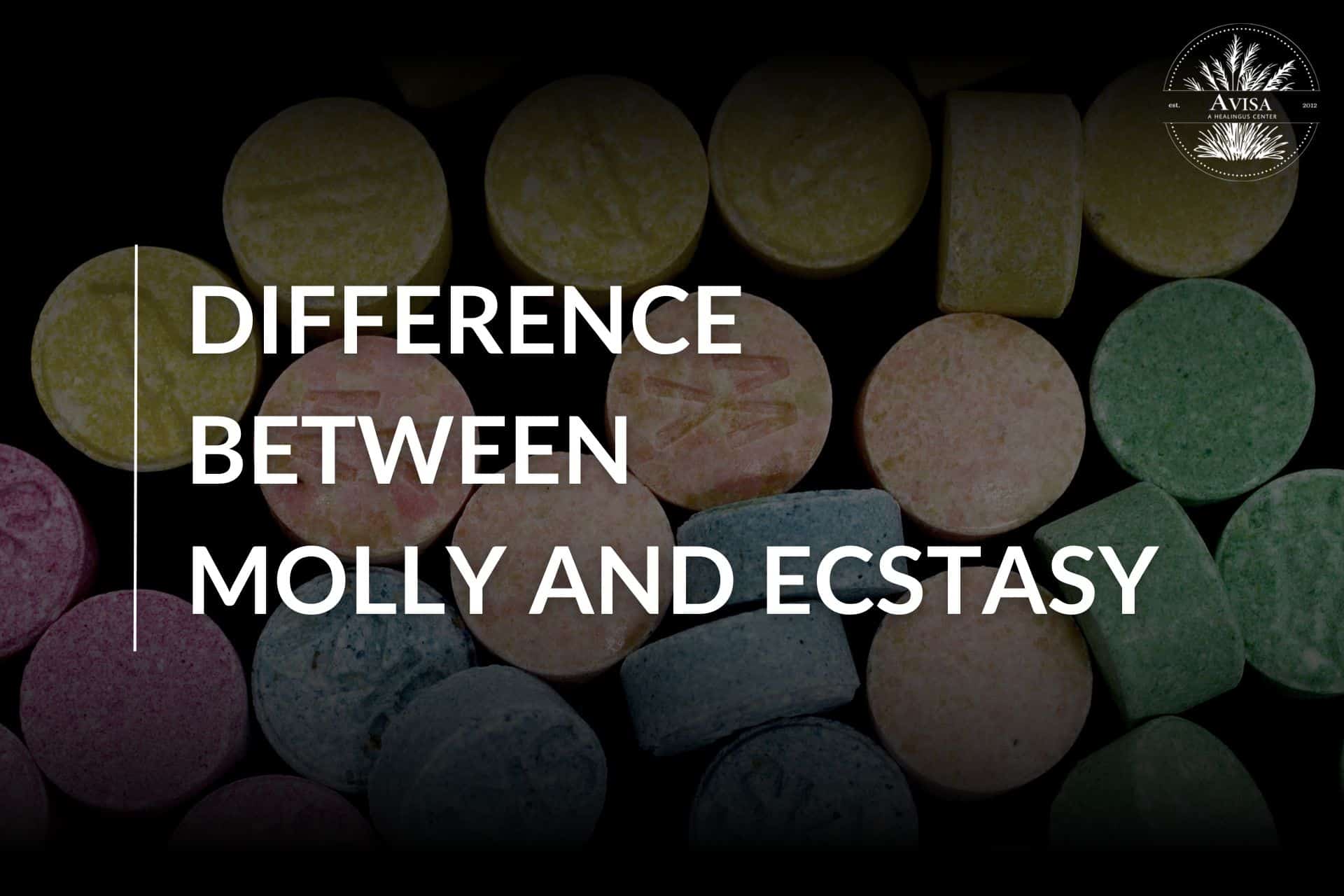
The journey of MDMA, whether destined to be sold as Molly or Ecstasy, begins with its precursor chemicals. The global sourcing of these materials, primarily from regions with less stringent chemical regulations, involves substantial financial outlays for acquisition and clandestine transportation. Manufacturing itself requires lab equipment and specialized knowledge, representing another layer of investment for illicit producers. While the core chemical (MDMA) might be the same, the form factor influences initial production costs. Ecstasy, typically pressed into pills, requires specialized presses and dies, adding a tooling cost. Molly, often sold as powder or crystal, bypasses this additional manufacturing step, potentially reducing per-unit production costs for the initial producer, though processing into individual doses (e.g., capsules) still incurs labor and material costs. The perceived purity, often a marketing point for Molly, might justify a higher initial price for producers if they can credibly claim less adulteration, even if that claim is frequently unfounded.
Distribution and Street Value
Once produced, both Molly and Ecstasy enter a multi-tiered distribution network. Each stage—from international trafficking to regional wholesale and local street dealing—adds significant markups, reflecting the risks involved and the value added (or perceived value added) at each step. Ecstasy pills, with their identifiable logos and colors, can sometimes create a form of illicit “branding,” influencing consumer demand and allowing dealers to charge premiums for well-known or reputedly potent presses. Molly, often presented as a “purer” substance, can command a higher price per gram from distributors and consumers who believe they are paying for unadulterated MDMA. The financial risks associated with distribution, including potential arrest, seizure of assets, and inter-gang conflicts, are factored into these markups, creating a volatile and high-margin economic environment. Geographic variations also play a significant role, with prices fluctuating based on proximity to production hubs, enforcement pressure, and local demand saturation.
Consumer Demand and Economic Drivers
The demand for both Molly and Ecstasy is influenced by a complex interplay of social, cultural, and economic factors. Consumers in specific demographics might be willing to allocate disposable income towards these substances as part of leisure or entertainment activities, particularly in nightlife or festival settings. The “experience economy” extends even to illicit markets, where individuals are paying not just for a chemical compound but for a desired altered state and the social experiences associated with it. The perceived purity and consistency of “Molly” can drive a premium demand from consumers seeking a more “controlled” experience, mistakenly believing it to be less adulterated than pills. Conversely, the accessibility and lower price point of some “Ecstasy” pills might cater to a different segment of the market. Economic downturns or prosperity can subtly shift demand patterns, as individuals’ disposable incomes fluctuate, potentially leading to changes in the quantities purchased or the willingness to pay for perceived “premium” forms.
Public Health and Economic Burden
Beyond the illicit market, the use of Molly and Ecstasy imposes substantial financial burdens on public health systems and broader society, regardless of their specific form.
Healthcare Costs of Misuse
The immediate health risks associated with MDMA use, whether in pill or powder form, translate directly into significant healthcare expenditures. Emergency room visits for acute adverse reactions such as hyperthermia, dehydration, hyponatremia, serotonin syndrome, or cardiac complications are common. These incidents require intensive medical intervention, often involving expensive diagnostic tests, medications, and prolonged hospital stays. While the inherent risks of MDMA are present in both forms, the higher perceived purity (and thus potential for larger doses) often attributed to Molly can paradoxically lead to more severe acute reactions, driving up treatment costs. Furthermore, chronic or heavy use can precipitate or exacerbate long-term mental health issues, including depression, anxiety, and cognitive impairment, necessitating ongoing psychiatric care, therapy, and pharmaceutical interventions, which represent a sustained financial drain on individuals, families, and healthcare providers.
Lost Productivity and Workforce Impact
The economic impact extends beyond direct healthcare costs to affect individual productivity and the overall workforce. Individuals experiencing substance-related issues may exhibit reduced cognitive function, leading to decreased work performance, increased absenteeism, and, in severe cases, job loss. This reduction in earning potential not only impacts the individual’s personal finances but also contributes to a broader societal cost in terms of lost productivity and tax revenue. Families are often forced to shoulder the financial burden of supporting individuals struggling with substance use, diverting resources from other essential needs or investments. The long-term effects on education and career development can create a cascading economic disadvantage that persists for years, impacting individual wealth accumulation and overall economic contribution.
Law Enforcement, Legal Costs, and Risk Management
The illegal status of MDMA, regardless of its form, introduces a distinct economic dimension related to law enforcement efforts, legal consequences, and personal financial risk.
Funding Drug Interdiction and Prosecution
Governments allocate substantial budgets to combating the illicit drug trade. This includes funding for law enforcement agencies (police, customs, border patrol) to intercept shipments, conduct investigations, and make arrests. The legal system incurs costs for prosecuting drug-related offenses, including court administration, legal aid, and the salaries of judges and prosecutors. Furthermore, incarceration costs, ranging from facility maintenance to inmate care, represent a significant ongoing expenditure for taxpayers. The distinction between Molly and Ecstasy rarely alters these costs; possessing either is typically treated under the same legal framework for MDMA. However, larger quantities, which might be more common in trafficking cases of bulk “Molly” powder, often lead to more severe charges and longer incarceration, escalating overall societal costs. The cost-effectiveness of these enforcement strategies versus alternative approaches like harm reduction remains a contentious economic debate.
Personal Financial Risks of Legal Consequences
For individuals involved with either Molly or Ecstasy, the legal ramifications pose considerable personal financial risks. Arrest and conviction can lead to substantial fines, legal fees for defense attorneys, and court costs. A criminal record can severely impact future earning potential by limiting employment opportunities, particularly in professions requiring background checks or security clearances. It can also affect eligibility for higher education, housing, and even travel, creating long-term barriers to financial stability and advancement. The stigma associated with a drug conviction can erode social capital, making it harder to secure loans, insurance, or other financial services, effectively imposing a hidden economic penalty that extends far beyond immediate legal fees.
Investment in Harm Reduction vs. Prohibition
From an economic policy perspective, there’s an ongoing debate about the most financially prudent approach to illicit drugs: continued prohibition and enforcement, or investment in harm reduction strategies. Harm reduction initiatives, such as drug testing kits (allowing users to verify the contents of Molly or Ecstasy), educational campaigns, and supervised consumption sites, aim to minimize the negative health and social consequences of drug use. Economists argue that investing in these preventative measures could potentially reduce the more substantial downstream costs associated with emergency healthcare, long-term treatment, and criminal justice interventions. For example, preventing a single overdose or long-term health issue through harm reduction could save tens of thousands of dollars in medical costs, offering a compelling economic argument for reallocating resources from solely punitive measures to a more balanced public health approach.
The Illusion of Value: Purity, Adulteration, and Financial Deception
A critical economic factor in the Molly vs. Ecstasy discussion revolves around the perception of purity and the reality of adulteration, leading to significant financial deception for consumers.
The “Molly” Premium: Perceived Purity vs. Reality
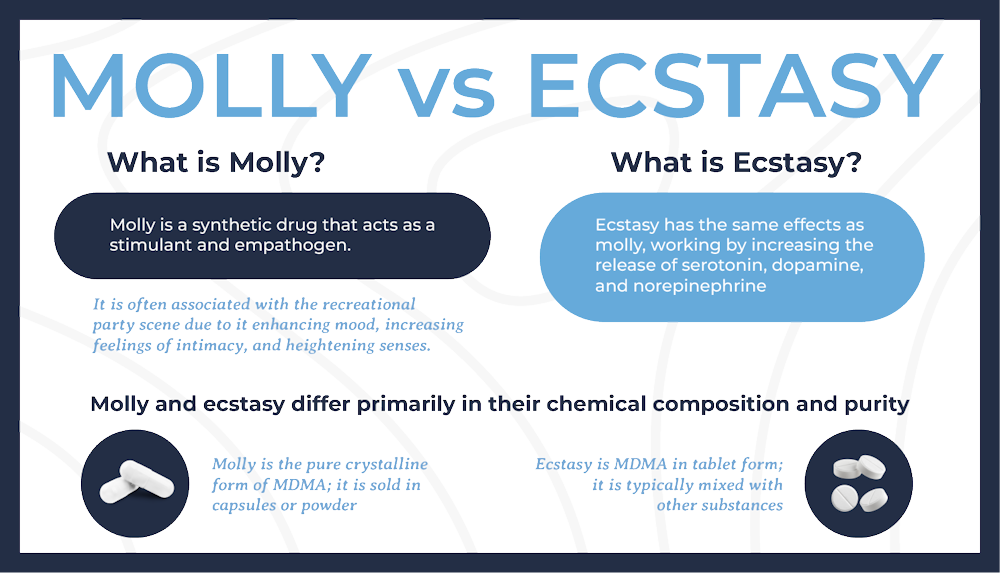
The term “Molly,” an abbreviation for “molecule,” gained traction by being marketed as a purer, unadulterated form of MDMA, often sold as powder or crystal. This perception allowed sellers to command a premium price compared to traditional Ecstasy pills, which are commonly known to contain binders, dyes, and other inactive ingredients, and are also frequently adulterated. Consumers, believing they were investing in a safer, higher-quality product, were willing to pay more. However, numerous analyses have consistently shown that “Molly” is frequently adulterated with other, sometimes more dangerous, substances such as bath salts (synthetic cathinones), methamphetamine, or fentanyl, or contains very little to no MDMA at all. This means consumers are often paying a premium for a product that does not deliver the promised pure MDMA, representing a direct financial loss and an increased health risk. The financial incentive for dealers to adulterate “Molly” is high, as it allows them to stretch their supply or substitute cheaper, more potent, or readily available chemicals while maintaining the high price point associated with perceived purity.

Economic Impact of Adulterated Products
The widespread adulteration of both Molly and Ecstasy has profound economic consequences. Firstly, it directly increases healthcare costs, as users experiencing unexpected and severe reactions to unknown substances require emergency medical attention that is often more complex and expensive than treating pure MDMA intoxication. Secondly, it represents a direct financial fraud against the consumer, who pays for one substance but receives another, potentially more harmful one. This erosion of trust, while operating within an illegal market, highlights the precarious financial position of consumers who have no recourse for faulty or misrepresented products. The economic impact extends to the social fabric, as repeated negative experiences can foster distrust and contribute to the overall instability and danger inherent in the illicit drug market, paradoxically driving some users to seek even more expensive, reputedly “safer” alternatives, thus perpetuating the cycle of financial exploitation.
In conclusion, the differences between Molly and Ecstasy, while often framed chemically or experientially, are profoundly economic. From the clandestine supply chains and pricing strategies that dictate their street value to the enormous public health expenditures and personal financial penalties associated with their use, the monetary implications are pervasive. Understanding these economic facets is crucial for a comprehensive perspective on the societal challenges posed by these substances.
aViewFromTheCave is a participant in the Amazon Services LLC Associates Program, an affiliate advertising program designed to provide a means for sites to earn advertising fees by advertising and linking to Amazon.com. Amazon, the Amazon logo, AmazonSupply, and the AmazonSupply logo are trademarks of Amazon.com, Inc. or its affiliates. As an Amazon Associate we earn affiliate commissions from qualifying purchases.