
In the dynamic world of off-road vehicles, two acronyms frequently surface: ATV and UTV. While both are engineered for navigating challenging terrains beyond paved roads, they represent distinct categories with unique designs, capabilities, and intended applications. Understanding these differences is crucial for enthusiasts, professionals, and anyone considering an off-road investment, as each vehicle is a marvel of specialized engineering tailored for specific tasks and experiences. This article delves into the technical distinctions, operational nuances, and technological advancements that set ATVs and UTVs apart, guiding you through the intricate design philosophies that define these formidable machines.
Defining the Off-Road Landscape: Specialized Vehicle Architectures
At their core, both ATVs and UTVs are designed to conquer rough terrain, but their fundamental architectures diverge significantly, influencing everything from their handling characteristics to their primary functionalities. These differences are not merely cosmetic; they stem from distinct engineering goals and user-interface philosophies.
The All-Terrain Vehicle (ATV) Explained: Solo Prowess and Agility
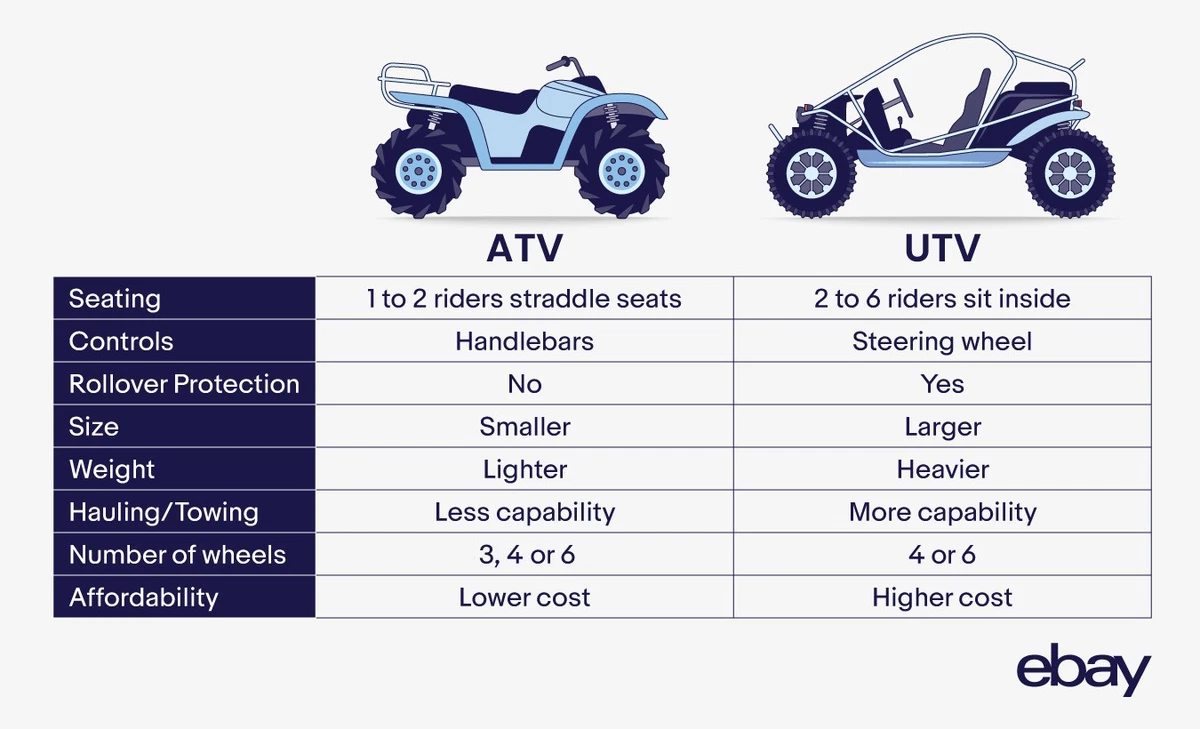
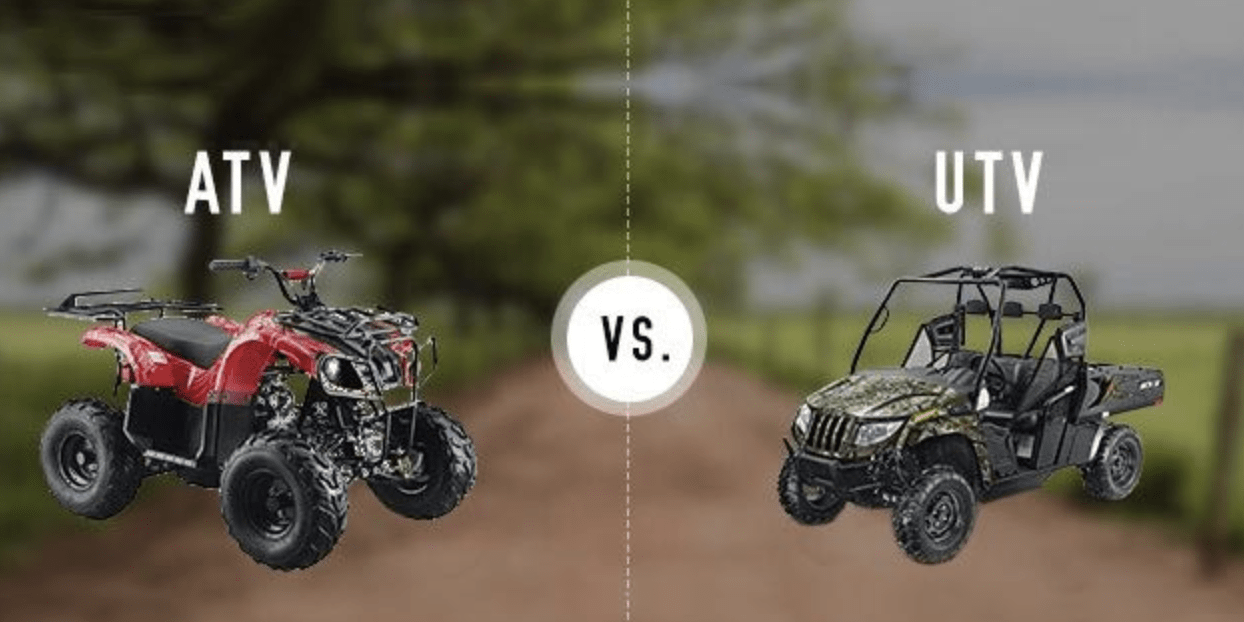
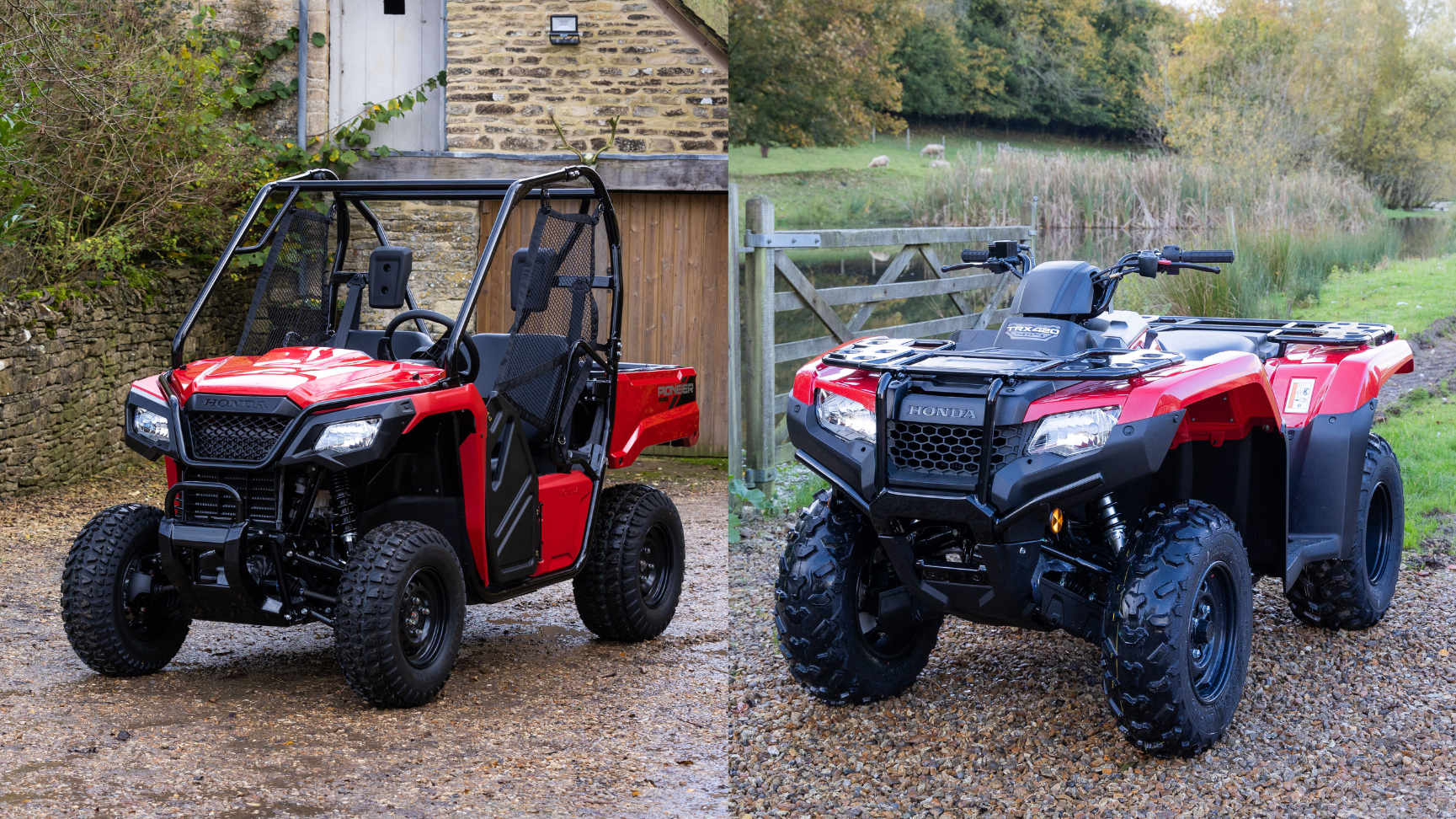
The All-Terrain Vehicle, commonly known as a quad bike or four-wheeler, is a single-rider or two-rider (tandem models) open-air motorized vehicle designed for off-road use. Its defining characteristic is the straddle-style seating arrangement, similar to a motorcycle, coupled with handlebar steering. This design philosophy prioritizes agility, maneuverability, and a direct, engaged riding experience.
Technically, ATVs typically feature a robust, lightweight chassis, often with independent suspension systems on all four wheels to absorb shocks and maintain tire contact on uneven surfaces. Engine sizes vary widely, from smaller recreational models (e.g., 50cc-250cc) to high-performance utility or sport models (e.g., 400cc-1000cc+). Power is typically delivered through an automatic or manual transmission, with advanced models featuring electronic fuel injection (EFI) for optimal performance across varying altitudes and temperatures, and selectable two-wheel-drive (2WD) or four-wheel-drive (4WD) systems. Their compact footprint and responsive controls make them ideal for navigating tight trails, performing precise maneuvers, and engaging in high-octane sport riding where rider input and body positioning are integral to control.
Unpacking the Utility Task Vehicle (UTV) / Side-by-Side: Versatility and Workhorse Design
The Utility Task Vehicle (UTV), often referred to as a Side-by-Side (SxS), represents a more substantial and versatile class of off-road vehicle. Its defining feature is a side-by-side seating arrangement, reminiscent of a conventional car, complete with a steering wheel and foot pedals. UTVs are built to accommodate multiple passengers (typically 2 to 6, depending on the model) and substantial cargo, reflecting their primary design intent: utility and multi-person transport in demanding environments.
From an engineering perspective, UTVs boast a larger, heavier-duty frame designed to support greater payloads and towing capacities. They are almost universally equipped with independent suspension systems, often with longer travel than ATVs, to provide a smoother ride over rough terrain, especially when loaded. Engine displacements are generally larger than those found in ATVs, ranging from 500cc to over 1000cc, with powerful multi-cylinder configurations common, often paired with continuously variable transmissions (CVT) for seamless power delivery. Most UTVs come standard with advanced 4WD systems, often featuring locking differentials and advanced traction control electronics, enhancing their capability for heavy work or extreme off-roading. The inclusion of roll-over protection structures (ROPS), seatbelts, and sometimes doors provides an enhanced level of safety and enclosure compared to an ATV.
Core Technical Distinctions: Design, Ergonomics, and Mechanical Prowess
The most significant divergences between ATVs and UTVs lie in their fundamental mechanical and ergonomic designs, which dictate their performance characteristics, user interaction, and overall utility. These differences are a direct consequence of their intended roles in the off-road ecosystem.
Seating and Control Ergonomics: Rider Engagement vs. Driver Comfort
The distinction in seating and controls is perhaps the most immediate differentiator.
- ATV Ergonomics: Designed for a single rider (or a rider and a passenger in tandem models), ATVs feature a straddle seat, requiring the rider to actively shift their body weight for steering and balance, much like a motorcycle. The handlebar steering provides direct, tactile feedback, making the rider an integral part of the machine’s dynamics. This design offers an exhilarating, visceral connection to the terrain, prioritizing agile handling and responsive control. The open design allows for quick dismounts and direct interaction with the surroundings.
- UTV Ergonomics: UTVs adopt a car-like seating arrangement with bucket or bench seats, a steering wheel, and foot pedals for acceleration and braking. This configuration offers a more familiar and comfortable driving experience, particularly for extended periods or multiple occupants. The enclosed cabin (with a ROPS and often optional full enclosures) provides a sense of security and protection from the elements. The controls are intuitive for anyone familiar with driving a car, reducing the learning curve for new operators and making them suitable for a broader range of users.
Chassis, Suspension, and Powertrain Differences: Agility vs. Durability
The underlying mechanical components reflect each vehicle’s purpose.
- ATV Chassis and Suspension: ATVs typically employ a lighter, more compact frame optimized for agility and responsive handling. Their suspension systems are designed for absorbing impacts at speed and allowing for significant wheel articulation to maintain traction over obstacles. While robust, the chassis often prioritizes weight reduction to maximize power-to-weight ratio and maneuverability. Powertrains are varied, ranging from simple air-cooled engines to sophisticated liquid-cooled, fuel-injected units, often paired with manual transmissions for precise gear control in sport models or automatic CVTs for ease of use in utility variants.
- UTV Chassis and Suspension: UTVs are built on a heavier, more substantial frame capable of handling larger loads and greater stresses. Their suspension systems are often more elaborate, featuring longer travel shocks and robust A-arms designed to provide a smoother ride under heavy loads and absorb larger impacts. The focus is on stability, durability, and ride comfort. Powertrains are generally more powerful, with larger displacement engines and robust, continuously variable transmissions (CVTs) designed for consistent torque delivery, crucial for towing and hauling. Advanced UTVs often incorporate electronic power steering (EPS) to reduce driver fatigue and enhance control, especially at lower speeds or when navigating challenging obstacles.
Size, Weight, and Maneuverability: Compact Trails vs. Open Spaces
The physical dimensions are a clear indicator of their operational envelopes.
- ATV Dimensions: ATVs are inherently smaller and lighter, typically measuring around 48-50 inches wide and 70-85 inches long. This compact size allows them to navigate narrow trails, dense forests, and tight spaces inaccessible to larger vehicles. Their lighter weight also contributes to their agility and ease of transport.
- UTV Dimensions: UTVs are significantly larger, with widths ranging from 50 inches (trail-specific models) to over 70 inches (sport/wide models) and lengths often exceeding 100 inches. Their increased size and weight provide enhanced stability, particularly when carrying passengers or cargo, but necessitate wider trails and more open operating environments. The larger footprint also contributes to a more stable ride over rugged terrain, but limits their access to certain restrictive trails.
Performance and Application: Matching Tech to Task
The engineering choices in ATVs and UTVs directly translate into their performance characteristics and the types of tasks they are best suited for. From recreational thrills to demanding professional applications, their specialized designs excel in different domains.
Recreational Thrills and Sport Performance: The ATV’s Domain
ATVs, particularly sport models, are engineered for exhilaration and challenging riding. Their high power-to-weight ratio, responsive handling, and ability for quick changes in direction make them superb for:
- Sport Riding: Jumping, drifting, and navigating technical race courses. High-performance ATVs feature advanced long-travel suspension, aggressive tire treads, and powerful engines with precise throttle control for dynamic riding.
- Trail Riding: Exploring narrow, winding trails that demand agility and precise control. Their compact size allows access to a vast network of off-road paths.
- Hunting and Fishing: Stealthy access to remote areas, with smaller utility ATVs offering sufficient cargo capacity for gear while maintaining maneuverability in dense woods.
The technology in sport ATVs focuses on performance optimization: lightweight alloy components, sophisticated engine management systems for peak power delivery, adjustable suspension for tuning ride characteristics, and ergonomic designs that allow the rider to become one with the machine.
Utility, Workhorse Capabilities, and Versatility: The UTV’s Strength
UTVs, especially utility and multi-purpose models, are designed as robust workhorses, excelling in tasks that require hauling, towing, and transporting multiple people and gear. Their capabilities include:
- Farm and Ranch Work: Transporting feed, tools, and personnel across vast properties. UTVs often feature dump beds, extensive cargo capacity, and impressive towing capabilities. Their stability and comfortable ride reduce fatigue during long workdays.
- Construction Sites: Moving equipment, materials, and workers across rough construction environments. The heavy-duty chassis and robust powertrain are invaluable here.
- Recreational Group Outings: Family camping trips, group trail rides, or accessing remote picnic spots with ease and comfort. The multi-passenger capacity and ample storage are key advantages.
- Off-Road Exploration: Long-distance expeditions where comfort, cargo space, and the ability to carry emergency supplies are paramount.
- Sport UTVs: While primarily utility, the “sport” segment of UTVs has exploded, featuring turbocharged engines, extreme long-travel suspension (often 20+ inches of travel), and advanced differential locking systems, blurring the lines with high-performance ATVs in terms of raw speed and obstacle conquering, but maintaining their multi-passenger, car-like comfort.
Technological advancements in UTVs emphasize durability, power, and utility: advanced drivetrain systems with selectable drive modes (2WD, 4WD, Turf Mode), substantial payload and towing capacities (often exceeding 1,000 lbs payload and 2,000 lbs towing), sophisticated electronic power steering, and robust braking systems. Many utility UTVs can also be equipped with a range of attachments, from plows to sprayers, further enhancing their versatility.
Safety, Regulations, and Operator Considerations: Responsible Off-Roading
While both ATVs and UTVs offer thrilling experiences and invaluable utility, their operation demands respect for safety protocols and adherence to regulatory guidelines. The technological design of each vehicle plays a significant role in its inherent safety profile and the required operator skills.
Operator Training and Safety Features: Engineered Protection
- ATV Safety: Due to their straddle-style seating and handlebar controls, ATVs require a higher degree of physical engagement and balance from the operator. Rider body positioning is crucial for safe navigation, especially on uneven terrain or during turns. Manufacturers and safety organizations strongly recommend comprehensive rider training courses, focusing on weight shifting, throttle control, and hazard avoidance. Safety features include disc brakes on all wheels, often tether switches, and clear warning labels. The open design, while offering freedom, means less inherent protection in a rollover event compared to a UTV.
- UTV Safety: UTVs, with their car-like controls and side-by-side seating, generally offer a more stable platform. They come standard with features like seatbelts, roll-over protection structures (ROPS), and often doors or side nets, providing a higher degree of occupant containment and protection in the event of a roll. Electronic power steering (EPS) reduces driver fatigue, and advanced braking systems (sometimes with ABS in higher-end models) enhance control. Despite their perceived stability, UTVs are not immune to rollovers, especially at high speeds or on extreme inclines, making seatbelt use mandatory and driver training still highly recommended to understand vehicle dynamics.
Road Legality and Environmental Impact: Regulatory Tech
Neither ATVs nor most UTVs are generally street-legal on public roads, though this varies by jurisdiction and specific vehicle modifications. Their design for off-road performance means they typically lack standard automotive safety features required for road use (e.g., turn signals, mirrors, specific headlight/taillight requirements, DOT-approved tires). Some manufacturers produce “street legal” UTV variants that incorporate these features, often classified as Low-Speed Vehicles (LSVs) or similar, but their primary design remains off-road oriented.
Environmentally, both vehicle types are subject to emissions regulations. Modern ATVs and UTVs leverage electronic fuel injection (EFI) and catalytic converters to meet increasingly stringent emissions standards, minimizing their footprint while maintaining performance. Research into electric powertrains for both ATVs and UTVs is also gaining momentum, promising zero-emission off-roading experiences in the future.
The Evolving Off-Road Tech Landscape: Future Trends
The off-road vehicle industry is dynamic, with manufacturers constantly pushing the boundaries of technology to enhance performance, safety, and user experience for both ATVs and UTVs. The future promises even more sophisticated integration of digital and mechanical innovations.
Electric Powertrains and Autonomous Features
The automotive shift towards electrification is influencing the off-road sector. Electric ATVs and UTVs are emerging, offering silent operation, instant torque, and zero emissions—ideal for sensitive environments or covert operations like hunting. Battery technology and charging infrastructure are key areas of development here. Furthermore, rudimentary autonomous features, such as GPS-guided path following for agricultural UTVs or advanced obstacle avoidance systems, are being explored, promising increased efficiency and safety.
Enhanced Connectivity and Digital Integration
Modern off-road vehicles are becoming increasingly “smart.” Digital dashboards with integrated GPS navigation, Bluetooth connectivity for communication and media, and telematics systems for vehicle diagnostics and tracking are becoming common. Future iterations will likely see deeper integration with smartphone apps for ride planning, remote vehicle monitoring, and even over-the-air software updates, mirroring advancements in the automotive industry. Driver-assistance systems, such as blind-spot monitoring or terrain-response modes that automatically adjust suspension and engine mapping, are also on the horizon, making off-roading more accessible and safer for a wider audience.
In conclusion, while ATVs and UTVs both provide access to the wild, their differences are profound, rooted in their distinct engineering philosophies. The ATV offers an intimate, agile experience for solo adventurers and sport enthusiasts, demanding active rider engagement. The UTV provides a stable, versatile, multi-passenger platform designed for heavy-duty work and comfortable group exploration. Understanding these technical distinctions empowers consumers to choose the machine that best aligns with their specific needs, whether for work, recreation, or a blend of both, ensuring they harness the full potential of these incredible off-road technologies.
aViewFromTheCave is a participant in the Amazon Services LLC Associates Program, an affiliate advertising program designed to provide a means for sites to earn advertising fees by advertising and linking to Amazon.com. Amazon, the Amazon logo, AmazonSupply, and the AmazonSupply logo are trademarks of Amazon.com, Inc. or its affiliates. As an Amazon Associate we earn affiliate commissions from qualifying purchases.