
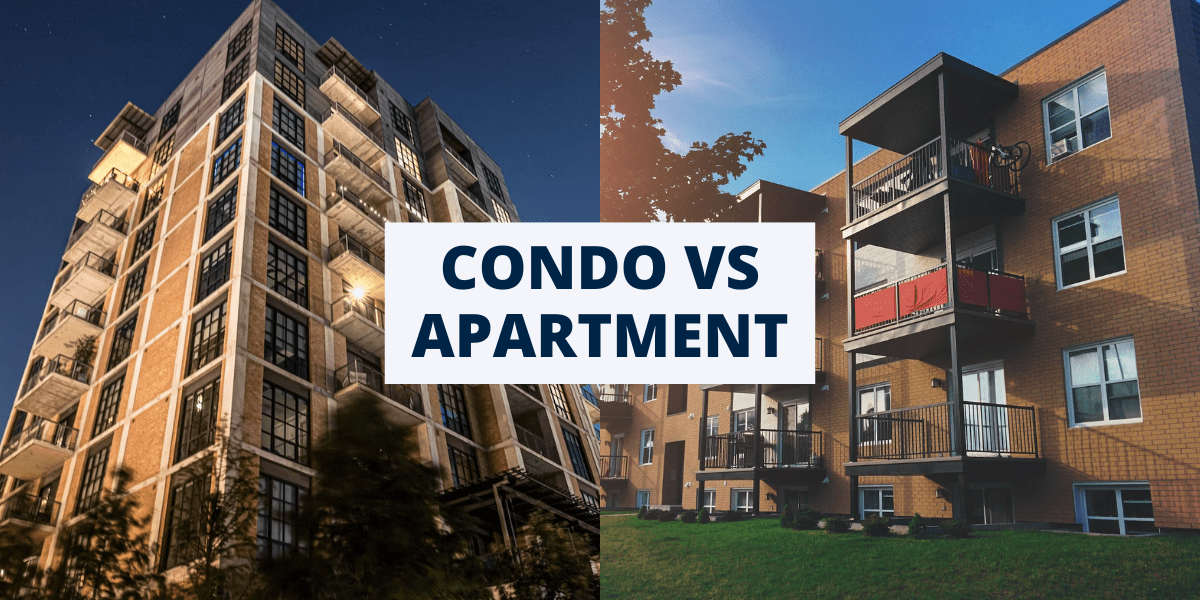
When navigating the world of personal finance and wealth building, housing is typically the largest line item in any budget. Whether you are looking for a primary residence or a strategic investment, the choice between an apartment and a condominium (condo) is not merely a lifestyle preference; it is a fundamental financial decision. While they may look identical from the sidewalk, the underlying financial structures, tax implications, and equity-building potentials of these two housing types are worlds apart.
Understanding the nuance between these two assets is essential for anyone looking to optimize their net worth. An apartment represents a contractual service—housing in exchange for liquidity—whereas a condo represents a capital asset—an investment in physical property. This guide breaks down the financial machinery behind both to help you decide which aligns best with your long-term fiscal goals.

The Core Financial Distinction: Ownership vs. Leasing
The most significant difference between an apartment and a condo is the relationship you have with the title of the property. In the realm of personal finance, this is the difference between an expenditure and an investment.
Equity Accumulation and Net Worth
When you reside in an apartment, your monthly payment is a “sunk cost.” You are paying for the utility of shelter, and once the month is over, that capital is gone, redirected into the landlord’s equity. In contrast, a condo is an ownership model. Each monthly mortgage payment (specifically the principal portion) acts as a form of “forced savings.” Over time, as you pay down the loan and the property value potentially appreciates, you build equity. This equity is a tangible component of your net worth that can later be tapped into through a home equity line of credit (HELOC) or realized upon the sale of the asset.
Liquidity and Opportunity Cost
While the condo builds equity, the apartment offers superior liquidity. Entering a condo agreement usually requires a significant down payment—often 3% to 20% of the purchase price. For a $400,000 condo, that is $12,000 to $80,000 of liquid capital locked into a non-liquid asset. In a high-interest environment or a booming stock market, the “opportunity cost” of that down payment is high. An apartment dweller can keep that capital in a high-yield savings account, index funds, or a business venture, potentially yielding a higher ROI (Return on Investment) than real estate appreciation might provide.
Transferability and Exit Strategies
The financial commitment of an apartment ends with the lease term, typically 12 months. This provides the financial flexibility to move for a higher-paying job or to downsize if your income fluctuates. A condo, however, is a long-term play. Selling a condo involves closing costs, agent commissions (often 5-6%), and market timing. From a financial planning perspective, a condo is generally only advisable if you plan to hold the asset for at least five to seven years to recoup the transaction costs.
Hidden Costs and Long-Term Liabilities
In personal finance, the “sticker price” is rarely the true cost of an asset. Both apartments and condos come with layers of expenses that can impact your monthly cash flow and long-term savings.
HOA Fees and Special Assessments
The defining financial characteristic of a condo is the Homeowners Association (HOA) fee. These monthly dues cover common area maintenance, insurance for the building’s exterior, and amenities. For the savvy investor, these fees are a double-edged sword. While they protect the property value, they are a non-negotiable, recurring expense that can rise over time. Furthermore, condos are subject to “special assessments”—one-time, often large fees levied for major repairs like a new roof or elevator modernization. An apartment tenant is insulated from these shocks; the landlord absorbs the cost of all major capital expenditures.
Maintenance, Repairs, and the “Reserve Fund”
In an apartment, if the HVAC system fails or a pipe bursts, the financial liability lies with the property management. In a condo, the owner is the “property manager” for everything inside the walls. Financial advisors often recommend condo owners set aside 1% to 2% of the property value annually for a maintenance fund. This is a crucial distinction in cash flow management: an apartment has a predictable monthly cost, while a condo has a variable cost structure that requires a more robust emergency fund.

Property Taxes and Insurance
Condo owners are responsible for annual property taxes, which can fluctuate based on local government assessments. While these taxes are often escrowed into a mortgage payment, they represent a significant portion of the carrying cost of the asset. Insurance also differs significantly. Apartment dwellers only need “Renters Insurance” (HOA-4), which is relatively inexpensive and covers personal belongings. Condo owners need “Condo Insurance” (HO-6), which covers the interior structure, liability, and personal property, carrying a much higher premium.
Investment Strategy: Rental Income vs. Passive Diversification
From a “Money” perspective, we must look at these properties as potential income-producing vehicles. The way you leverage an apartment versus a condo can dictate your trajectory toward financial independence.
The Condo as a Cash-Flow Engine
One of the primary reasons to purchase a condo is its potential to eventually become a rental property. Once you move out, you can transition the asset into a source of passive income. However, this requires a rigorous analysis of the “Cap Rate” (Capitalization Rate). You must calculate whether the potential rent exceeds the mortgage, HOA fees, taxes, and maintenance reserves. Before buying a condo as an investment, one must also review the HOA bylaws, as many associations have “rental caps” that limit the percentage of units that can be rented out, which could trap your capital.
The Apartment as a Capital Preservation Tool
Choosing to live in an apartment can be a strategic move for someone who prefers “paper assets” (stocks, bonds, ETFs) over “hard assets” (real estate). By avoiding the high entry and maintenance costs of a condo, an individual can maximize their contributions to tax-advantaged accounts like a 401(k) or an IRA. This is often referred to as “renting and investing the difference.” If the stock market outperforms the local real estate market, the apartment dweller may actually end up with a higher net worth over a 30-year period than the condo owner.
Tax Implications and Wealth Building
The tax code in many jurisdictions heavily favors property ownership. Condo owners can often deduct mortgage interest and property taxes from their taxable income, which can result in thousands of dollars in tax savings annually. Furthermore, under current U.S. tax law (Section 121 exclusion), if you live in your condo for two of the last five years, you can exclude up to $250,000 (single) or $500,000 (married) of capital gains from your income when you sell. Apartment dwellers receive no such tax breaks on their monthly rent, meaning they are paying with “post-tax” dollars without the benefit of a future tax-free gain.
Making the Decision: A Personal Finance Framework
Deciding between an apartment and a condo requires an honest assessment of your financial health, risk tolerance, and career trajectory. There is no one-size-fits-all answer, but there are clear indicators of which path is more fiscally sound for your specific situation.
Assessing Your Debt-to-Income Ratio
Before considering a condo, you must evaluate your Debt-to-Income (DTI) ratio. Lenders typically want to see that your total debt payments—including your future mortgage, HOA fees, and taxes—do not exceed 36% to 43% of your gross monthly income. If buying a condo pushes you past this threshold, the financial strain may lead to “house poor” status, where all your income goes toward your residence, leaving nothing for retirement or emergency savings. In such a case, an apartment is the safer financial play.
Market Volatility and Asset Concentration
Real estate is a localized market. If you buy a condo, you are concentrating a massive portion of your wealth into a single asset in a single geographic location. If the local economy dips, your net worth dips with it. Apartment living allows for a more diversified portfolio, as your wealth can be spread across global markets. However, if you live in a high-growth area with a housing shortage, the condo is a leveraged play that can multiply your initial investment many times over through appreciation.
The Final Verdict: Utility vs. Asset
Ultimately, the difference comes down to how you view your housing. If you view your home as a utility—a place to live that should be as hassle-free and liquid as possible—the apartment is the superior financial tool. It allows for mobility and the redirection of capital into other investment vehicles.
If you view your home as an asset—a foundation for multi-generational wealth, a tax shield, and a hedge against inflation—the condo is the clear winner. While it carries higher risks and more complex costs, the long-term compounding of equity and the potential for future rental income make it a cornerstone of a sophisticated financial plan.
In the world of money, there are no “right” answers, only “calculated” ones. By understanding the underlying costs, tax benefits, and equity structures of apartments versus condos, you can ensure that your largest monthly expense is working toward your financial freedom, rather than against it.
aViewFromTheCave is a participant in the Amazon Services LLC Associates Program, an affiliate advertising program designed to provide a means for sites to earn advertising fees by advertising and linking to Amazon.com. Amazon, the Amazon logo, AmazonSupply, and the AmazonSupply logo are trademarks of Amazon.com, Inc. or its affiliates. As an Amazon Associate we earn affiliate commissions from qualifying purchases.