
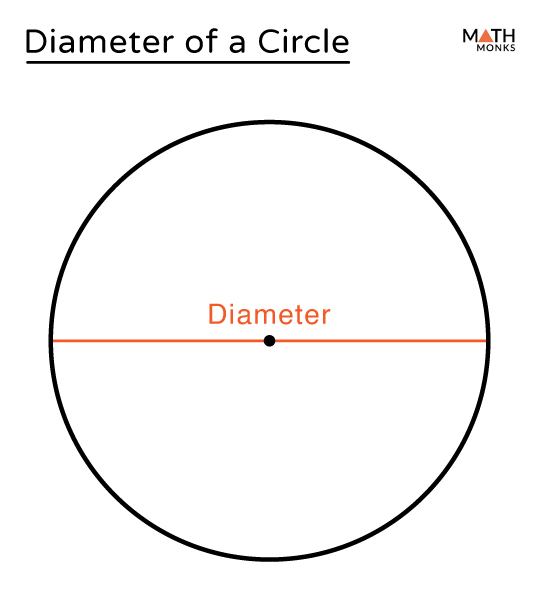
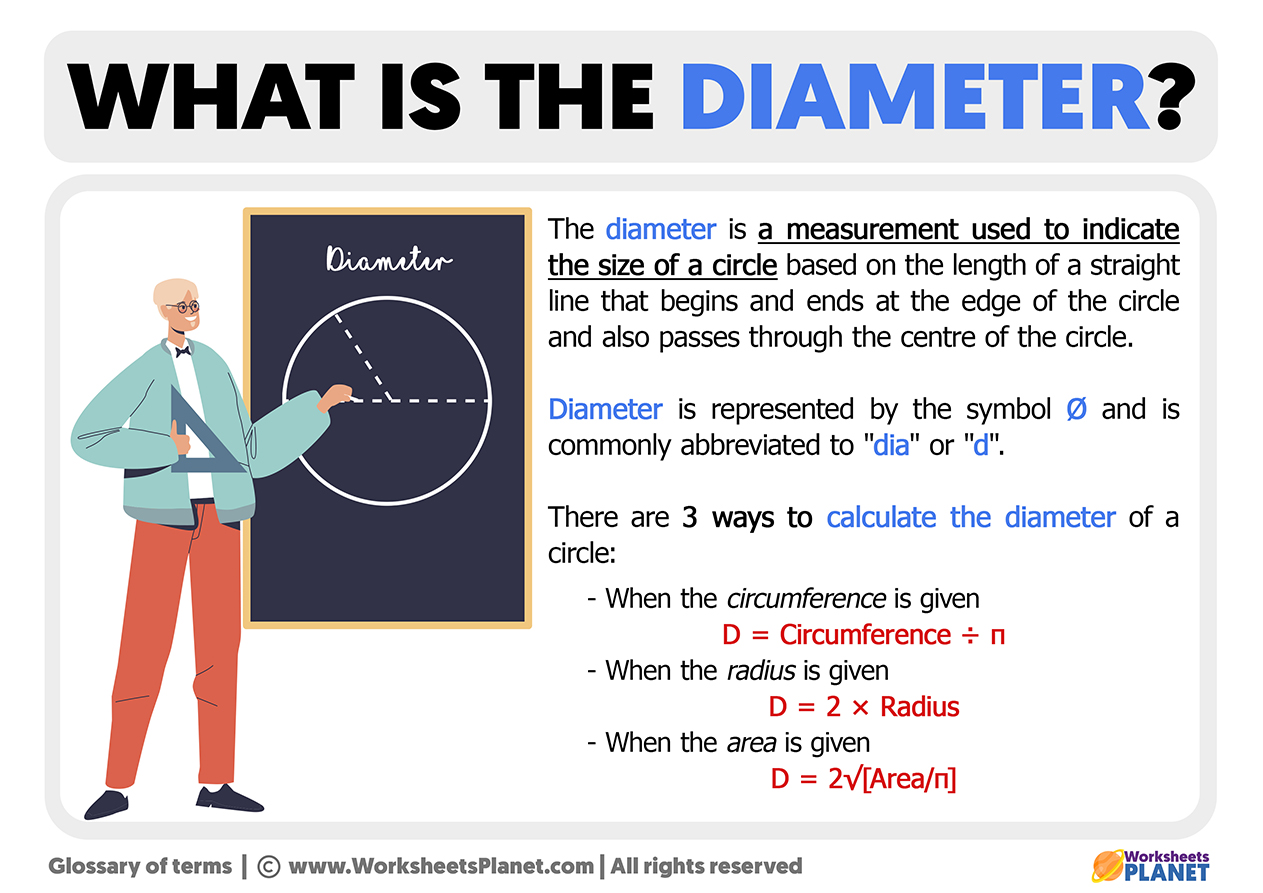
In its simplest mathematical form, the diameter of a circle is any straight line segment that passes through the center of the circle and whose endpoints lie on the circle itself. It is exactly twice the radius. While this definition serves elementary geometry students well, in the high-stakes world of technology, the “diameter of a circle” represents much more than a basic measurement. It is a fundamental concept underpinning everything from the way pixels are rendered on a high-definition display to the way autonomous vehicles perceive their surroundings and the methods by which we secure global financial transactions.
As we transition deeper into a digital-first era, understanding the precision of circular geometry is critical for software engineers, hardware designers, and data scientists. Whether it is the diameter of a semiconductor wafer or the mathematical curvature used in elliptic curve cryptography, the circle remains the most efficient and complex shape in the technologist’s toolkit.
The Geometry of Graphics: Pixels, Vectors, and the Digital Curve
In computer graphics, representing a perfect circle on a display composed of square pixels is a classic engineering challenge. Computers do not inherently understand curves; they understand grids, bits, and coordinates. When a designer asks a software program to draw a circle with a specific diameter, a series of complex algorithmic processes begin.
Rasterization and the Midpoint Circle Algorithm
For a computer to display a circle on a screen, it must perform “rasterization”—the process of converting a continuous geometric shape into a discrete set of pixels. One of the most efficient ways to do this is via the Midpoint Circle Algorithm (or Bresenham’s circle algorithm).
Because a circle is perfectly symmetrical, the algorithm only needs to calculate the coordinates for one-eighth of the circle (an octant). It then uses symmetry to map those points across the entire diameter. The diameter is the defining constraint here; it dictates the resolution and the “aliasing” or jaggedness of the curve. In high-density Retina displays, the diameter is measured in thousands of pixels, allowing for a curve that appears perfectly smooth to the human eye, whereas in low-resolution environments, the diameter determines how the software must “cheat” to make the shape recognizable.
SVG and Mathematical Precision in Scalable Design
Unlike raster graphics, Scalable Vector Graphics (SVG) do not rely on a grid of pixels. Instead, they use mathematical formulas. In the coding of an SVG, a circle is defined by its center coordinates (cx, cy) and its radius (r). The diameter, though not always explicitly coded, is the functional space the element occupies within the UI layout.
For modern UI/UX designers, the diameter of a circular button or an avatar frame is a matter of ergonomic science. Touch targets on mobile devices are often circular, and their diameter must be large enough—typically 44 to 48 pixels—to accommodate the average human fingertip. In this context, the diameter is a bridge between abstract mathematics and human-centric hardware design.
Computer Vision and Object Detection: Calculating the Physical World
In the realm of Artificial Intelligence and Computer Vision, identifying a circle and calculating its diameter is a sophisticated task used in industrial automation, medical imaging, and robotics.
The Hough Transform in Machine Perception
When an autonomous drone or a robotic arm looks at an object, it sees a stream of raw visual data. To recognize a circular object—such as a gear, a wheel, or a biological cell—the software utilizes a feature extraction technique known as the Circular Hough Transform (CHT).
This process involves the AI scanning an image for “edges” and then voting on potential center points and diameters that could explain those edges. Finding the diameter is crucial for depth perception. If a software system knows the true physical diameter of a standard object (like a traffic sign), it can calculate exactly how far away that object is based on the diameter of the circle as it appears in the digital frame. This is a foundational element of spatial computing and augmented reality.
Biometric Geometry and Iris Recognition
One of the most secure forms of digital identity is iris recognition. This technology relies entirely on the geometry of the eye. To authenticate a user, the system must first locate the pupil and the iris, which are roughly concentric circles.

The software measures the diameter of the pupil relative to the diameter of the iris to adjust for light conditions. It then maps the unique patterns within that circular ring. The precision required to calculate these diameters in real-time—often from several feet away and in varying light—is a testament to how geometric constants are utilized to solve modern security challenges.
The Physics of Hardware: Diameter in Fiber Optics and Microchips
While software deals with the mathematical abstraction of a circle, hardware engineering deals with the physical reality. In the manufacturing of the components that power the internet, the diameter is a specification that can determine the success or failure of a billion-dollar product line.
Semiconductor Wafer Size and Scalability
The “brains” of our computers—CPUs and GPUs—are etched onto thin slices of silicon known as wafers. These wafers are always circular. The diameter of these wafers is a primary driver of the economics of the tech industry.
Currently, the industry standard is the 300mm (approximately 12-inch) wafer. The reason for the circular shape is due to the Czochralski process, where a silicon crystal is “pulled” from a melt in a rotating motion, naturally forming a cylinder. The larger the diameter of the wafer, the more individual chips can be cut from it, reducing the cost per chip. As the tech world looks toward 450mm wafers, the engineering hurdles involve maintaining a uniform thickness and chemical application across a larger diameter, proving that the geometry of the circle is directly tied to the pace of Moore’s Law.
Signal Integrity in Cylindrical Transmission Media
The global internet travels through fiber optic cables. At the core of these cables is a strand of glass with a microscopic diameter—usually around 9 micrometers for single-mode fiber.
The diameter of this core is critical because it dictates how light waves (data) propagate through the cable. If the diameter varies by even a fraction of a percent, signal attenuation occurs, leading to data loss and latency. Furthermore, the “cladding” that surrounds the core also has a precise diameter designed to reflect light back into the center. In the world of high-frequency trading and global telecommunications, the diameter of a circle is the difference between a seamless connection and a total network failure.
Digital Security and Cryptography: The Mathematical Circle
Perhaps the most abstract yet vital application of circular geometry in tech is in the field of cryptography. Most of the secure connections we use today, including HTTPS and mobile messaging encryption, rely on Elliptic Curve Cryptography (ECC).
Elliptic Curve Cryptography (ECC) and High-Level Security
While an “elliptic curve” is not a perfect circle, it belongs to the same family of algebraic curves. In ECC, security is derived from the difficulty of the “Discrete Logarithm Problem” on these curves.
The “diameter” of the mathematical space available for these curves determines the strength of the encryption. Unlike traditional RSA encryption, which requires massive keys (3072 bits or more) to remain secure, ECC can provide the same level of security with a much smaller “diameter” of data. This efficiency is why ECC is the standard for mobile devices and IoT (Internet of Things) sensors, where processing power and battery life are limited. We are essentially using the geometric properties of curves to create digital locks that would take a supercomputer billions of years to break.
Key Exchange Mechanisms in a Non-Euclidean Space
When two devices want to communicate securely without ever having met, they perform a “handshake” based on these geometric principles. They agree on a curve and a starting point. By “jumping” across the curve in a way that mimics circular motion, they generate a shared secret key. This process is highly resistant to quantum computing threats and remains the gold standard for digital privacy. The diameter of the field used in these calculations acts as the boundary for the security perimeter, ensuring that the data remains within the intended “circle of trust.”
Conclusion: The Circle as a Technological Constant
From the physical dimensions of the silicon wafers that power our devices to the invisible curves that protect our data, the diameter of a circle is a constant that defines the limits and possibilities of the modern world. It is a reminder that even as we push into the frontiers of Artificial Intelligence and Quantum Computing, we are still building on the foundational truths of geometry discovered thousands of years ago.
For the technologist, a circle is never just a shape. It is a constraint to be optimized, a pattern to be recognized, and a mathematical shield to be deployed. Understanding its diameter is not just a lesson in math—it is a lesson in the precision that makes the digital age possible. As hardware grows more powerful and software grows more intelligent, our reliance on the perfect symmetry of the circle will only continue to expand.
aViewFromTheCave is a participant in the Amazon Services LLC Associates Program, an affiliate advertising program designed to provide a means for sites to earn advertising fees by advertising and linking to Amazon.com. Amazon, the Amazon logo, AmazonSupply, and the AmazonSupply logo are trademarks of Amazon.com, Inc. or its affiliates. As an Amazon Associate we earn affiliate commissions from qualifying purchases.