
The question, “What’s the chance of rain tonight?” has evolved from a casual glance at the sky into a sophisticated data science operation. Today, meteorological forecasting sits at the intersection of high-performance computing, machine learning, and global sensor networks. As we rely increasingly on mobile applications and integrated smart devices to plan our lives, understanding the technology behind these percentages is essential for navigating our digital world.
The Architecture of Predictive Weather Engines
Modern weather forecasting is no longer just about observing clouds; it is about simulating the fluid dynamics of the entire atmosphere. The “chance of rain” is the output of complex numerical weather prediction (NWP) models that crunch millions of data points every few hours.
Global Data Integration
To determine if you will need an umbrella, weather platforms ingest data from a vast array of sources. These include geostationary satellites, weather balloons (radiosondes), ocean buoys, and commercial aircraft sensors. This data is fed into supercomputers that divide the atmosphere into a grid. By solving complex mathematical equations that describe how air moves, heats, cools, and holds moisture, these machines create a digital twin of the current atmospheric state.
From Deterministic to Probabilistic Modeling
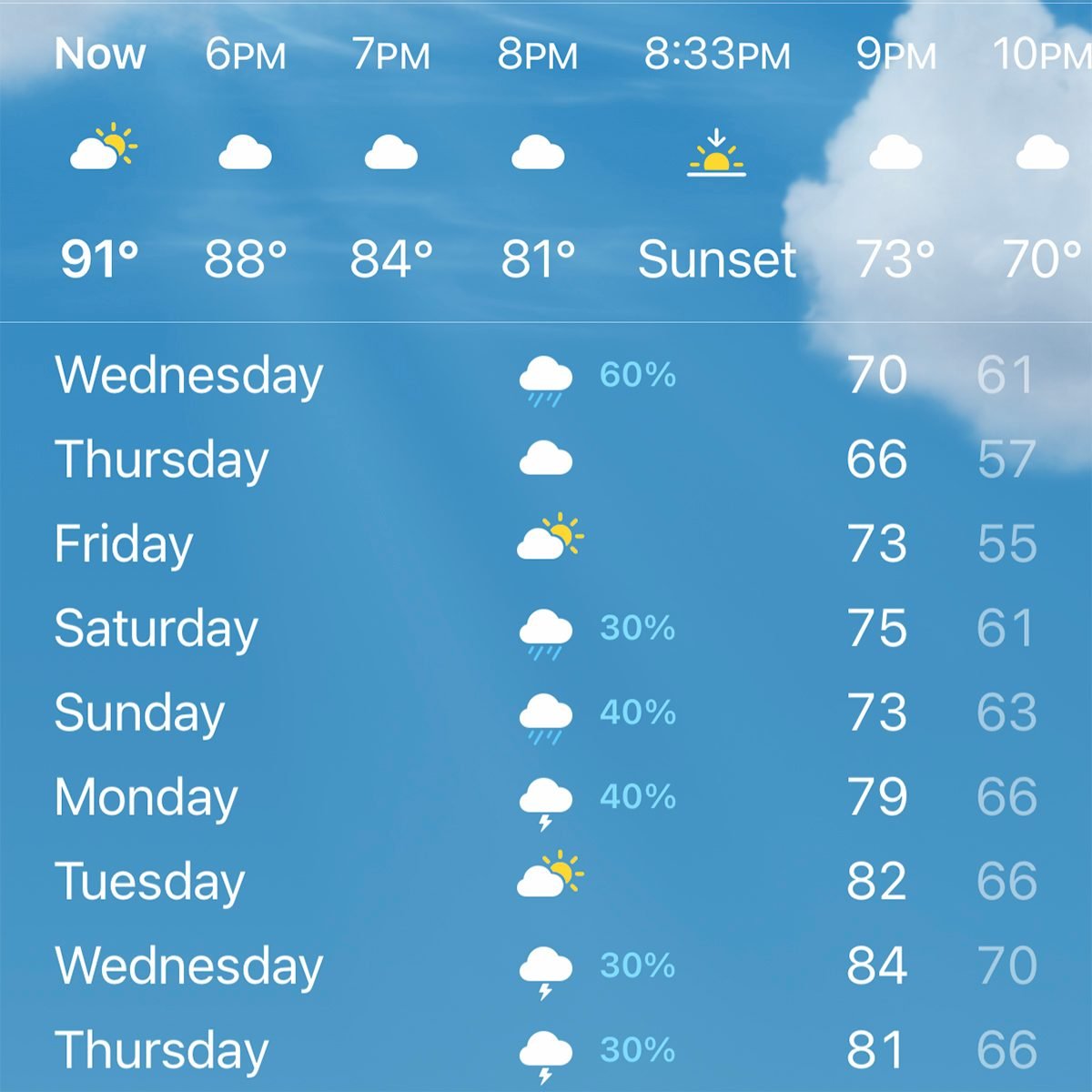
Historically, forecasters relied on deterministic models—a single “best guess” output. However, the atmosphere is a chaotic system where small errors grow exponentially. To provide the percentages you see in your weather app, companies now use “Ensemble Forecasting.” By running a single model dozens of times with slight variations in the starting data, forecasters can see how many versions result in rain. If 60 out of 100 simulations show precipitation, the “chance of rain” for your area becomes 60%. This shift from “Yes/No” to “Likely/Unlikely” provides a much more accurate reflection of risk.
The Role of Machine Learning in Hyper-Local Forecasting
While global models provide the “big picture,” they often struggle with local terrain features like mountains, urban heat islands, or coastal breezes. This is where Artificial Intelligence and Machine Learning (ML) have revolutionized the user experience.
Pattern Recognition in Microclimates
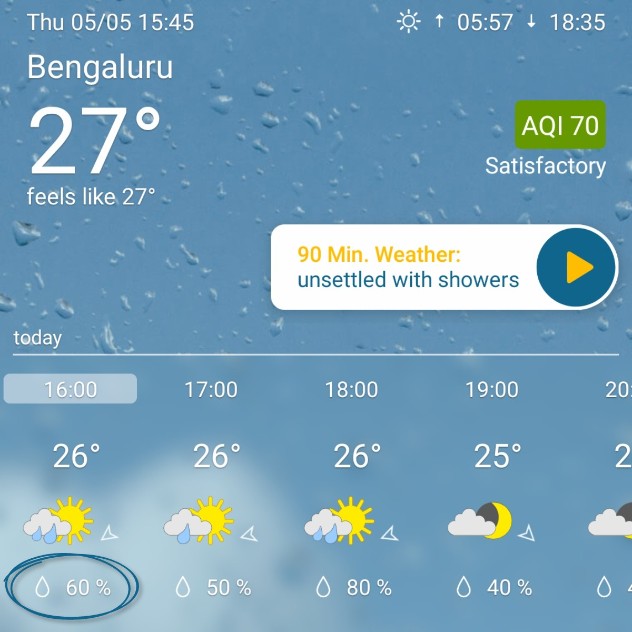
Modern forecasting apps now utilize “Nowcasting,” an AI-driven approach that focuses on the immediate 0–6 hour window. These algorithms are trained on historical data sets—millions of past weather events—to identify patterns that traditional physics-based models might overlook. If the AI recognizes that a specific cloud formation combined with a specific wind direction has resulted in an afternoon shower 90% of the time in your specific zip code, it can override the broader regional model to provide a more tailored probability.
Sensor Fusion and Smart Hardware
The smartphone in your pocket has become a powerful weather tool. Many modern devices are equipped with barometric pressure sensors. When thousands of phones in a specific city report a slight drop in pressure simultaneously, weather companies can use this aggregated, anonymized data to refine their forecasts in real-time. This “crowdsourced sensing” allows tech companies to move beyond static weather stations, creating a high-resolution, hyper-local map of current conditions.
Interpreting Probability: The Science of “Chance”
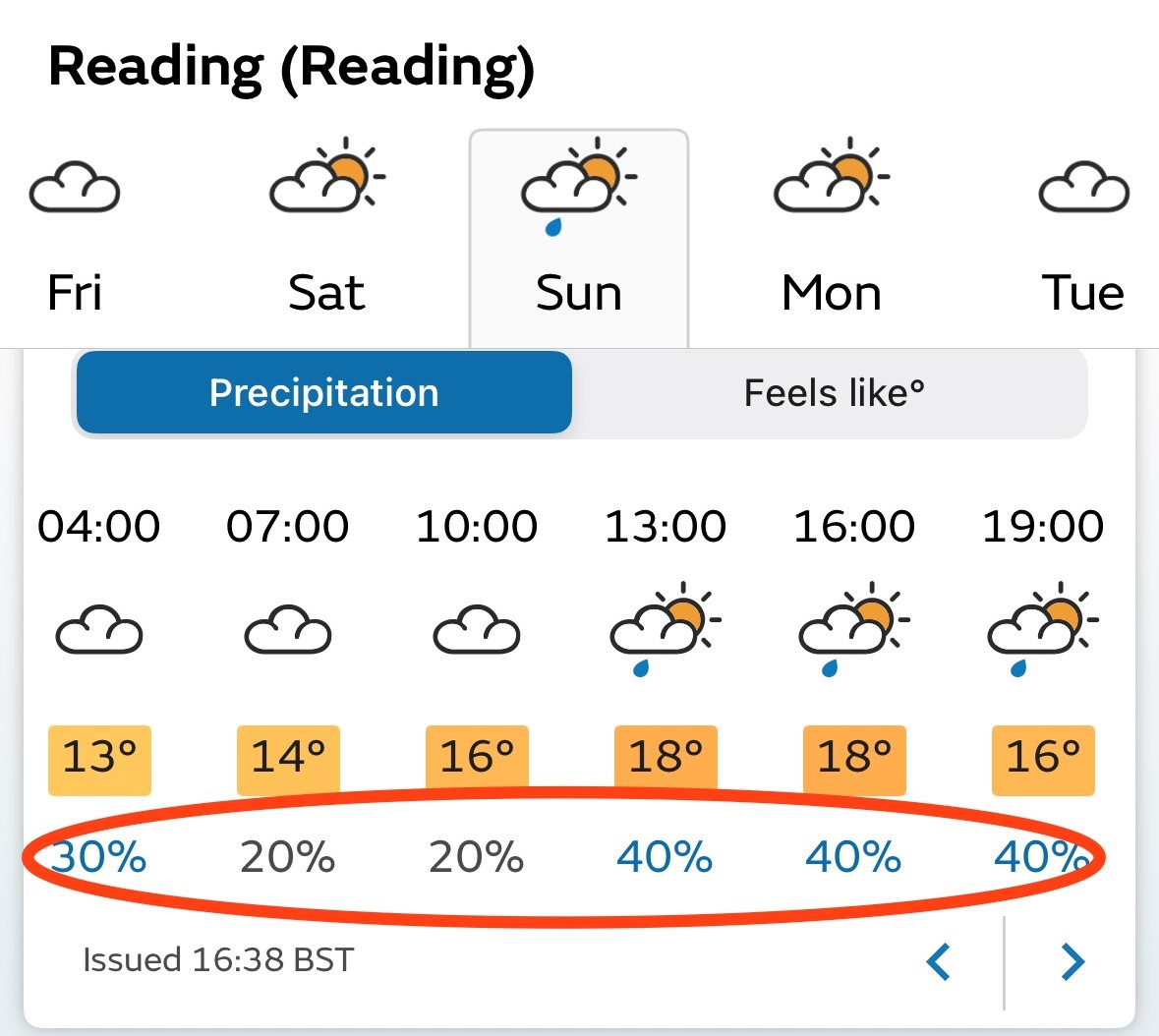
One of the most persistent frustrations for users is the interpretation of precipitation probability. Does a “40% chance of rain” mean it will rain for 40% of the evening, or that there is a 40% chance it will rain anywhere in the forecast area?
Defining the Forecast Area
In technical terms, the Probability of Precipitation (PoP) is defined by the formula: PoP = C × A, where “C” is the confidence that precipitation will occur somewhere in the forecast area, and “A” is the percent of the area that will receive rain if it does happen.
If a meteorologist is 100% sure that rain will occur but only over 40% of the city, the probability is 40%. The technology behind the scenes is designed to account for this spatial distribution, but the user interface often fails to communicate the nuance. As data visualization technology improves, expect to see more “heat maps” in your apps that show exactly where the rain is expected to fall, rather than a single percentage number that can be misleading.
The Human-in-the-Loop Advantage
Despite the power of AI, human meteorologists remain critical, especially in high-impact scenarios. Tech-savvy forecasters use “Decision Support Systems” to review AI-generated models and adjust them based on local expertise. For instance, if an AI model predicts rain, but a meteorologist knows that a specific mountain range will likely block the incoming moisture, they can manually adjust the forecast. The future of weather tech is not fully automated; it is a collaborative loop between machine-driven speed and human-driven intuition.
Future Trends in Meteorological Software
As the demand for hyper-accurate, real-time data increases, the tech industry is pivoting toward more immersive and personalized weather solutions.
Integration with IoT and Smart Home Ecosystems
Imagine a smart home that knows the chance of rain is 80% and automatically closes the retractable awning, pulls in the patio furniture, and adjusts your home’s irrigation system to save water. We are moving toward a future where weather data is not just consumed for planning but is integrated directly into the automated logic of our physical environments. API integrations between weather services and home automation platforms are the next frontier for developers.
Augmented Reality (AR) and Visualization
The way we view weather data is also shifting. We are beginning to see the implementation of AR interfaces that allow users to point their cameras at the sky to see a visual overlay of wind speeds, humidity gradients, and projected rain movement. This transition from two-dimensional charts to three-dimensional, interactive models will fundamentally change how we interact with meteorological information.
Computational Efficiency
The cost of running high-resolution models is immense, requiring massive cloud computing infrastructure. The next wave of innovation involves “Neural Weather Models”—AI frameworks that can approximate the results of traditional physics-based models in a fraction of the time and with significantly less energy consumption. By training AI to emulate the fluid dynamics solvers, tech companies are looking to provide real-time updates that are not only more accurate but also more sustainable.
In conclusion, when you check the chance of rain tonight, you are participating in a massive technological orchestration. From the satellites capturing thermal signatures in the upper atmosphere to the machine learning algorithms refining local probability on your smartphone, the process is a testament to how far we have come in quantifying the unpredictable. As software capabilities and sensor densities grow, the “percentage” on your screen will become increasingly reliable, helping us navigate our days with greater confidence and preparedness.
aViewFromTheCave is a participant in the Amazon Services LLC Associates Program, an affiliate advertising program designed to provide a means for sites to earn advertising fees by advertising and linking to Amazon.com. Amazon, the Amazon logo, AmazonSupply, and the AmazonSupply logo are trademarks of Amazon.com, Inc. or its affiliates. As an Amazon Associate we earn affiliate commissions from qualifying purchases.