
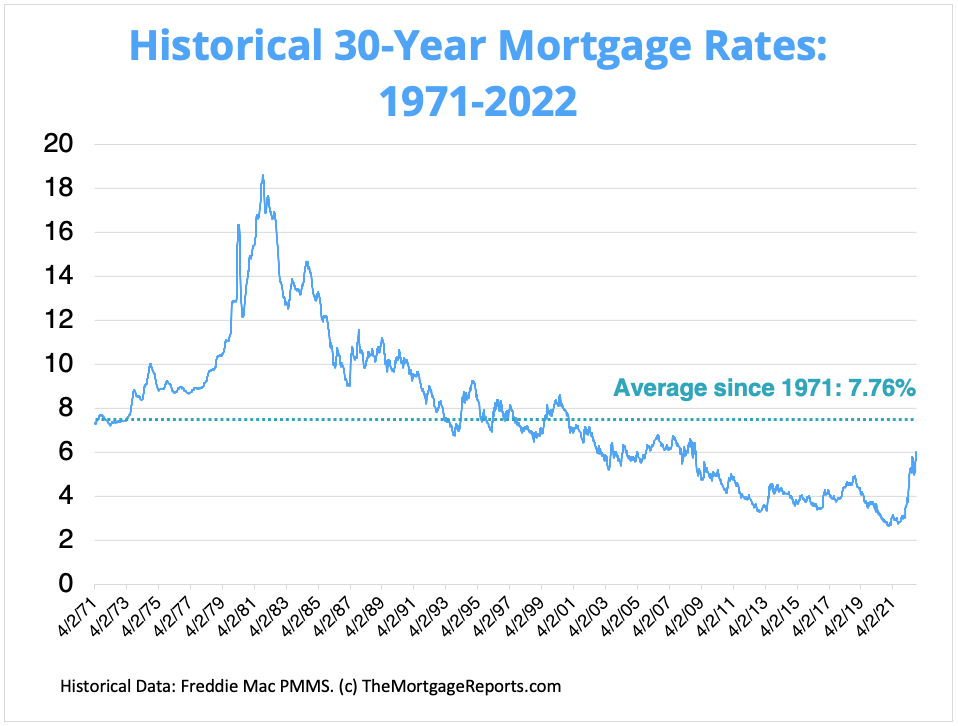
The 30-year fixed-rate mortgage is a cornerstone of the American dream of homeownership, offering stability and predictability to millions of homeowners. For anyone embarking on the journey to buy a home, or considering refinancing an existing one, the current 30-year mortgage rate is often the most pressing question. It’s not just a number; it’s a critical financial lever that dictates monthly payments, overall affordability, and long-term financial planning. Understanding what influences these rates, where to find reliable information, and how they impact your financial future is paramount in today’s dynamic housing market. This article delves into the intricacies of the 30-year mortgage rate, providing a comprehensive guide for prospective and current homeowners alike.
Understanding the 30-Year Fixed-Rate Mortgage
At its core, a mortgage is a loan used to purchase or maintain a home, land, or other types of real estate. The borrower agrees to pay back the loan, with interest, over a set period. Among the various mortgage products available, the 30-year fixed-rate mortgage stands out as the most popular choice for homebuyers in the United States, and for good reason.
Definition and Appeal
A 30-year fixed-rate mortgage is a loan that is paid back over three decades, with an interest rate that remains constant for the entire life of the loan. This means that the principal and interest portion of your monthly payment will never change, regardless of market fluctuations. This predictability is its greatest appeal. Homeowners can budget with confidence, knowing exactly what their primary housing cost will be each month for the next 360 payments.
The longer repayment period, compared to a 15-year fixed mortgage, results in lower monthly payments, making homeownership more accessible to a broader range of buyers. While a 15-year mortgage typically offers a lower interest rate and a faster path to equity, the higher monthly payments can be a significant hurdle for many. The 30-year option strikes a balance, offering manageable payments while still allowing for long-term financial stability. It provides a sense of security against rising interest rates in the future, as your rate is locked in from day one. This feature is particularly attractive during periods of economic uncertainty or when interest rates are perceived to be relatively low.
How It Works: Principal and Interest
When you make a mortgage payment, a portion goes towards the principal (the original loan amount) and a portion goes towards the interest (the cost of borrowing the money). With a 30-year fixed-rate mortgage, the amortization schedule—how the loan is paid off over time—is heavily front-loaded with interest payments. In the early years of the loan, a larger percentage of your monthly payment goes towards interest, and a smaller percentage reduces your principal balance. As the loan matures, this ratio gradually shifts, with more of your payment going towards principal repayment and less towards interest.
This structure means that while your monthly payment is consistent, the equity you build in your home grows slowly in the initial years. However, the consistent principal reduction, coupled with potential appreciation in your home’s value, builds significant wealth over the long term. Understanding this amortization schedule is crucial for anyone considering a 30-year fixed-rate mortgage, as it clarifies how your money is being allocated and how equity is accumulated over three decades.
Factors Influencing Mortgage Rates
Mortgage rates are not static; they are dynamic and influenced by a complex interplay of economic forces, market conditions, and even individual borrower characteristics. To truly understand “what’s the 30-year mortgage rate,” one must grasp the underlying factors that cause these rates to fluctuate daily, sometimes even hourly.
Economic Indicators and Federal Policy
At a macro level, several key economic indicators heavily influence mortgage rates. Inflation is perhaps the most significant. When inflation rises, lenders demand higher interest rates to compensate for the eroding purchasing power of future repayments. Conversely, low inflation can put downward pressure on rates. The Federal Reserve’s monetary policy also plays a pivotal, albeit indirect, role. While the Fed does not directly set mortgage rates, its actions regarding the federal funds rate influence the overall cost of borrowing for banks. When the Fed raises its benchmark rate, it typically pushes up other interest rates across the economy, including those for mortgages. Employment reports, GDP growth, and consumer confidence also provide signals about the health of the economy, which in turn affect investor sentiment and demand for mortgage-backed securities, ultimately impacting rates.
Market Dynamics and Investor Demand
Mortgage rates are closely tied to the bond market, specifically the market for Mortgage-Backed Securities (MBS). Lenders originate mortgages and then often package them into MBS, which are sold to investors. The demand for these securities influences their yield, which directly correlates with mortgage rates. When there’s high demand for MBS, their prices rise, and yields (and thus mortgage rates) fall. Conversely, when investors are wary or seek higher returns elsewhere, MBS demand drops, prices fall, and yields (and rates) increase. Global economic events, geopolitical tensions, and even natural disasters can trigger shifts in investor sentiment, leading to rapid changes in mortgage rates.
Lender-Specific and Borrower-Specific Factors
Beyond the broader economic landscape, individual lenders and borrowers also contribute to the final rate offered. For lenders, factors like their operating costs, profit margins, and risk assessment for a particular loan type all play a role. Some lenders may offer more competitive rates if they have lower overhead or are aggressively trying to gain market share.
From the borrower’s perspective, several personal financial attributes are critical determinants:
- Credit Score: A higher credit score (e.g., FICO score of 740 or above) signals lower risk to lenders, often resulting in access to the lowest available rates. Borrowers with lower scores may still qualify but will typically pay a higher interest rate.
- Down Payment: A larger down payment reduces the amount of money borrowed, lowering the lender’s risk and potentially securing a better rate. A significant down payment also often negates the need for private mortgage insurance (PMI).
- Debt-to-Income (DTI) Ratio: This ratio compares your total monthly debt payments to your gross monthly income. A lower DTI indicates that you can comfortably manage your existing debts and new mortgage payments, making you a more attractive borrower.
- Loan-to-Value (LTV) Ratio: This compares the amount of your mortgage to the appraised value of your home. A lower LTV (meaning a higher down payment) often leads to more favorable rates.
- Loan Type and Term: While we’re focusing on 30-year fixed, other terms (15-year) or types (adjustable-rate) will have different rate structures.
- Lock Period: The length of time you want to lock in your rate can also subtly affect the rate.
Where to Find Current 30-Year Mortgage Rates
Finding accurate and up-to-date mortgage rate information is crucial when planning to buy or refinance. The good news is that there are numerous resources available, from broad market overviews to personalized quotes.
Online Aggregators and Comparison Sites
The most convenient starting point for many is online mortgage rate aggregators and comparison websites. Platforms like Bankrate, Zillow Mortgages, NerdWallet, and LendingTree gather rate data from a wide array of lenders across the country. These sites allow you to input basic information (e.g., state, credit score range, loan amount) and instantly view estimated rates from multiple providers.
Pros:
- Convenience: Quick and easy way to get a snapshot of the market.
- Comparison: Facilitates side-by-side comparison of different lenders.
- Educational Resources: Often include calculators, articles, and guides.
Cons:
- Estimated Rates: The rates shown are often “teaser” rates or averages and may not be the exact rate you qualify for. They typically assume a prime borrower with excellent credit and a significant down payment.
- Information Overload: Can be overwhelming with too many options.
- Lead Generation: Some sites require personal information, leading to calls/emails from multiple lenders.
Direct from Lenders (Banks, Credit Unions, Mortgage Brokers)

For more precise and personalized rate quotes, going directly to lenders is essential. This includes traditional banks, credit unions, and independent mortgage brokers.
- Banks (e.g., Chase, Wells Fargo, Bank of America): Large national banks often have competitive rates, a wide range of products, and established customer service. They can offer a convenient option, especially if you already bank with them.
- Credit Unions: Often known for their competitive rates and personalized service, credit unions are member-owned and tend to prioritize member benefits.
- Mortgage Brokers: These professionals act as intermediaries, working with multiple lenders to find the best rates and loan products for your specific situation. They can be invaluable for borrowers with unique financial circumstances or those who want someone to navigate the market on their behalf. They get paid by the lender, but ethical brokers prioritize the client’s best interest.
When contacting lenders directly, be prepared to provide more detailed financial information to receive an accurate, personalized quote. This is where your specific credit score, debt-to-income ratio, and down payment come into play.
Government-Sponsored Enterprises (GSEs) Data
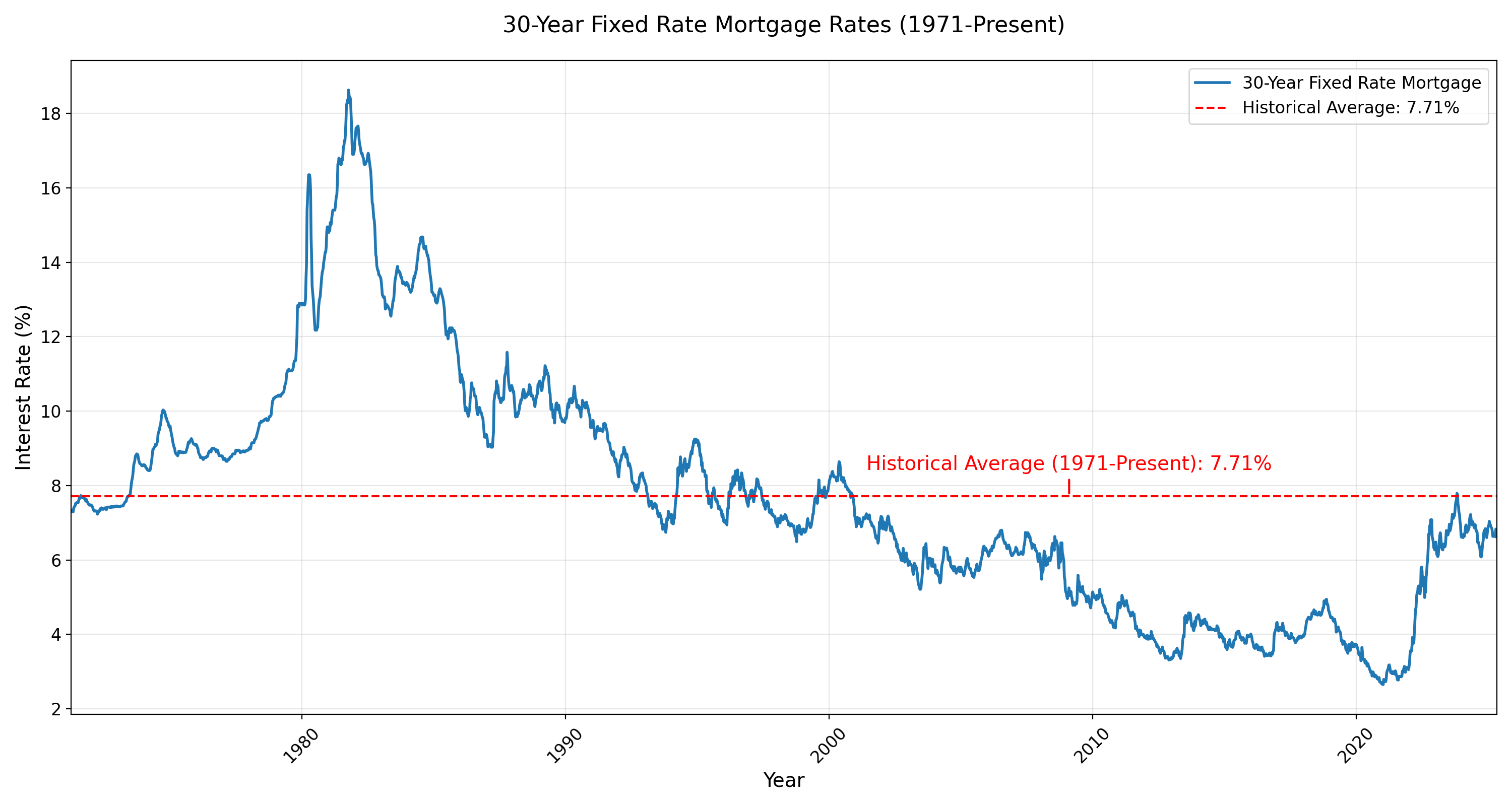
Organizations like Freddie Mac and Fannie Mae, which are government-sponsored enterprises, are major players in the secondary mortgage market. They purchase mortgages from lenders, providing liquidity to the market. Freddie Mac, in particular, publishes a weekly survey of national average mortgage rates, which is widely cited as an industry benchmark. While this survey provides a valuable historical and macro-level view, it’s an average and not necessarily the rate you would receive. It’s excellent for understanding trends but less so for personalized quotes.
The Impact of Mortgage Rates on Your Homeownership Journey
The current 30-year mortgage rate doesn’t just represent a number; it profoundly influences the practical aspects of homeownership, from initial affordability to the long-term cost of your investment.
Affordability and Monthly Payments
The most immediate impact of the mortgage rate is on your monthly payment. Even a seemingly small difference of a quarter or half-percentage point can translate into significant savings or additional costs over 30 years. For example, on a $300,000 mortgage, a 0.5% difference in rate could mean an extra $80-$100 per month, or roughly $30,000-$36,000 over the life of the loan.
Higher rates reduce your purchasing power. If your budget dictates a maximum monthly payment, a higher rate means you’ll qualify for a smaller loan amount, effectively limiting the price range of homes you can afford. Conversely, lower rates expand your budget, opening up more housing options. This relationship underscores why monitoring rates is crucial, especially for first-time homebuyers operating within a strict budget.
Total Cost of the Loan
Beyond the monthly payment, the mortgage rate directly determines the total interest you will pay over the loan’s duration. A lower rate significantly reduces the overall cost of borrowing, saving you tens of thousands, or even hundreds of thousands, of dollars over 30 years. This long-term cost is often overlooked when homebuyers focus solely on the monthly payment. Understanding the total interest paid helps put the current rate into perspective and highlights the value of securing the lowest possible rate. It’s a critical component of your overall financial health and wealth accumulation.
Refinancing Opportunities and Strategies
For existing homeowners, fluctuations in the 30-year mortgage rate present opportunities for refinancing. Refinancing involves taking out a new mortgage to pay off your old one, ideally at a lower interest rate or with more favorable terms. When rates drop significantly below your current mortgage rate, refinancing can lead to:
- Lower Monthly Payments: Reducing your interest rate directly lowers your principal and interest portion of your payment, freeing up cash flow.
- Reduced Total Interest Paid: A lower rate over the remaining life of the loan means substantial long-term savings.
- Shorter Loan Term: Sometimes, homeowners refinance a 30-year loan into a 15-year loan to pay it off faster, especially if rates are very low and they can afford the higher monthly payment.
- Cash-Out Refinance: Borrowers can also take cash out of their home equity during a refinance, often for home improvements or debt consolidation, though this should be approached cautiously.
Refinancing, however, comes with closing costs, which can range from 2-5% of the loan amount. Homeowners must weigh the savings from a lower rate against these upfront costs to determine if refinancing is financially advantageous. The “break-even point” – how long it takes for the monthly savings to offset the closing costs – is a key calculation in this decision.
Navigating the Mortgage Market: Tips for Prospective Homebuyers
Securing the best 30-year mortgage rate requires a proactive and informed approach. Here are some actionable tips for prospective homebuyers to navigate the complex mortgage market effectively.
Improving Your Financial Profile
Before even applying for a mortgage, take steps to strengthen your financial standing. This means focusing on your credit score, reducing existing debt, and building up your savings.
- Boost Your Credit Score: Pay bills on time, keep credit card balances low, and avoid opening new lines of credit just before applying for a mortgage. A higher FICO score will open the door to the most competitive rates.
- Reduce Debt-to-Income Ratio: Pay down high-interest debts, especially credit card balances and personal loans. A lower DTI ratio (ideally below 36%) signals financial stability to lenders.
- Save for a Larger Down Payment: While not always feasible, a larger down payment (e.g., 20% or more) can secure a better rate, reduce the loan amount, and eliminate private mortgage insurance (PMI). Even a slightly larger down payment can make a difference.
Shopping Around for the Best Rate
One of the biggest mistakes homebuyers make is only getting a quote from one lender. Mortgage rates can vary significantly between different financial institutions on the same day.
- Get Quotes from Multiple Lenders: Contact at least 3-5 lenders, including large banks, local credit unions, and mortgage brokers. Don’t just compare rates, but also look at points (fees paid to the lender to lower your interest rate) and other closing costs.
- Understand the Loan Estimate: Once you officially apply for a loan, lenders are required to provide a standardized “Loan Estimate” form. This document clearly outlines the interest rate, monthly payment, closing costs, and other loan terms. Compare these forms meticulously to ensure you’re getting the best deal.
- Negotiate: Don’t be afraid to use a competitive offer from one lender to negotiate a better rate or lower fees with another. Lenders want your business.
Understanding Rate Locks and Closing Costs
When you’ve found a rate you’re happy with, consider a “rate lock.” This is a guarantee from the lender that your interest rate will not change between the time you lock it in and your closing date, provided you close within a specified period (e.g., 30, 45, or 60 days). Rate locks protect you from market volatility, but longer lock periods might come with a slightly higher rate or a small fee.
Additionally, pay close attention to closing costs, which are fees paid at the close of the real estate transaction. These can include origination fees, appraisal fees, title insurance, attorney fees, and more. While the rate is crucial, high closing costs can sometimes negate the benefit of a slightly lower rate. Ensure you understand all fees associated with your mortgage.
In conclusion, the 30-year mortgage rate is more than a fleeting market number; it’s a foundational element of personal finance and a key determinant of financial well-being for homeowners. By understanding its drivers, knowing where to seek accurate information, and applying diligent financial planning, individuals can confidently navigate the mortgage landscape, secure favorable terms, and build lasting wealth through homeownership.
aViewFromTheCave is a participant in the Amazon Services LLC Associates Program, an affiliate advertising program designed to provide a means for sites to earn advertising fees by advertising and linking to Amazon.com. Amazon, the Amazon logo, AmazonSupply, and the AmazonSupply logo are trademarks of Amazon.com, Inc. or its affiliates. As an Amazon Associate we earn affiliate commissions from qualifying purchases.