
Tesla (TSLA) remains one of the most closely watched securities on the global market. For the modern investor, tracking Tesla isn’t just about monitoring an electric vehicle manufacturer; it is about gauging the pulse of the retail trading community, the growth of the green energy sector, and the evolving valuation of artificial intelligence. When asking what Tesla stock is doing today, an investor must look beyond the flashing green or red numbers on a ticker. They must understand the confluence of macroeconomic pressures, internal financial performance, and the psychological factors that drive one of the world’s most volatile large-cap stocks.
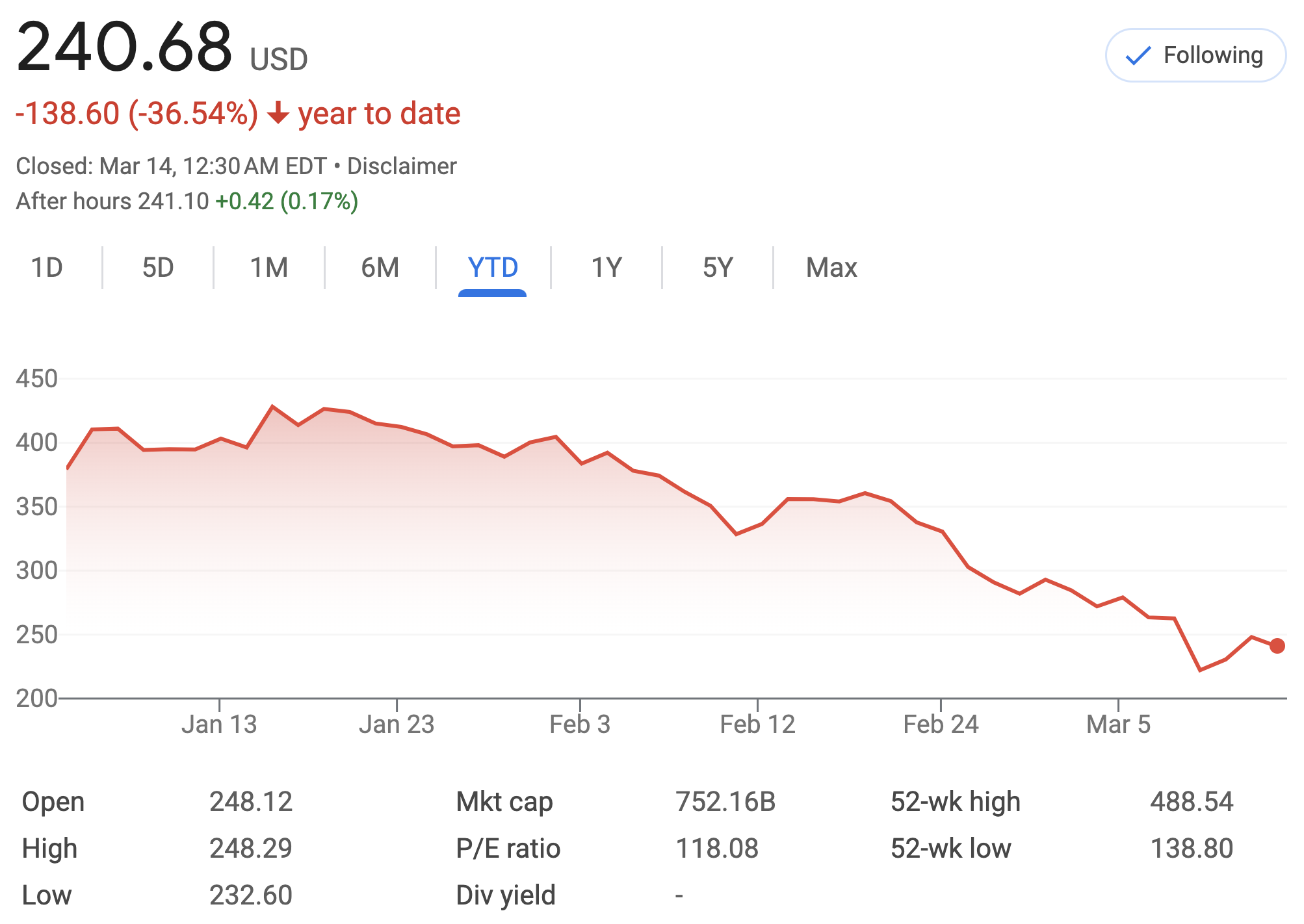
Understanding Today’s Market Sentiment and Volatility
The daily performance of Tesla is often a masterclass in market psychology. Unlike more traditional legacy automakers or even stable big-tech firms, Tesla operates with a high beta, meaning it tends to move more aggressively than the broader S&P 500. On any given day, the stock’s movement is a reaction to a cocktail of immediate news cycles and broader algorithmic trading patterns.
Daily Price Movements and Trading Volume
Tesla frequently tops the charts for daily trading volume on the NASDAQ. This high liquidity means that even minor news—a tweet from leadership, a leaked memo regarding production targets, or a regulatory update in China—can trigger massive inflows or outflows of capital. Today’s price action is typically a reflection of how the market is pricing in “near-term uncertainty.”
When the stock experiences a sharp rise, it is often driven by “short covering” or a positive sentiment shift regarding delivery numbers. Conversely, downward pressure is frequently linked to concerns over profit margins. Investors today are increasingly focused on the intraday support and resistance levels, looking for signs of whether the stock can maintain its premium valuation in a landscape where traditional valuation metrics often fail to apply.
Short-Term Catalysts vs. Long-Term Fundamentals
To understand what the stock is doing today, one must distinguish between “noise” and “signal.” Short-term catalysts include things like quarterly delivery previews or immediate reactions to Federal Reserve interest rate decisions. Because Tesla is categorized as a growth stock, it is highly sensitive to the cost of capital. If the market perceives that interest rates will remain higher for longer, Tesla’s stock often faces a headwind today because future earnings are discounted more heavily.
However, the long-term fundamentals—Tesla’s balance sheet strength, its massive cash reserves, and its vertical integration—provide a floor for the stock. Smart money often looks at a “down day” for Tesla not as a sign of failure, but as a repositioning of the “Magnificent Seven” stocks, where capital rotates from overextended tech giants into defensive sectors or vice versa.
The Financial Health of Tesla: Revenue, Margins, and Deliveries
From a “Money” perspective, the most critical lens through which to view Tesla stock today is its financial efficiency. For years, Tesla was valued on its potential; today, it is being judged on its performance. The transition from a niche disruptor to a mass-market leader has changed the financial narrative.
Profitability Metrics and the Price War Effect
One of the primary drivers of Tesla’s stock price today is the state of its gross margins. Over the past several quarters, Tesla has engaged in strategic price cuts to maintain market share amidst rising competition from both domestic Chinese manufacturers like BYD and legacy European brands.
Investors are constantly calculating the trade-off: is the volume growth (selling more cars) compensating for the lower profit per vehicle? When Tesla reports that it is maintaining double-digit operating margins despite price cuts, the stock typically reacts favorably. If margins slip toward the industry average of legacy automakers, the “tech premium” that allows Tesla to trade at a high Price-to-Earnings (P/E) ratio begins to erode. Monitoring the stock today requires a keen eye on whether the market believes Tesla can remain a high-margin software-and-energy company rather than just a hardware manufacturer.
Cash Flow and Capital Expenditures
Tesla’s ability to fund its own growth is a rarity in the EV space. While many competitors are burning through cash to build out infrastructure, Tesla’s free cash flow allows it to invest heavily in R&D, specifically in the Optimus robot project and Dojo supercomputing cluster. Today’s investors look at capital expenditure (CapEx) not as a cost, but as an investment in future revenue streams. A high CapEx announcement might temporarily depress the stock as it signals lower immediate cash on hand, but for the institutional investor, it reinforces the narrative of Tesla as a long-term compounder.
Institutional Perspectives and Analyst Ratings

The dispersion in analyst price targets for Tesla is perhaps wider than for any other stock in history. This divergence is a major reason why the stock remains so volatile today.
The Bull Case: An Autonomous and AI Future
The “Bulls” on Wall Street argue that Tesla should not be valued as a car company at all. Their perspective, which often supports a high stock price today, is rooted in Tesla’s potential in Full Self-Driving (FSD) software and Robotaxis. In this financial model, Tesla is a recurring-revenue software business. Every car on the road is a data-collection node that improves an AI model, which can eventually be licensed to other manufacturers. When the stock moves up on seemingly “no news,” it is often because institutional investors are betting on a breakthrough in autonomous regulatory approval or a milestone in AI training capacity.
The Bear Case: Valuation and Competition
On the other side of the ledger, the “Bears” focus on the reality of the automotive market. They point out that Tesla’s P/E ratio is significantly higher than that of Toyota, Ford, or GM. Today’s skeptical investor looks at the slowing growth of the global EV market and the saturation of the high-end vehicle segment. If Tesla’s delivery growth slows to under 20% annually, many analysts believe the stock is drastically overvalued. This tension between “AI-tech company” and “car company” is the primary battleground for the stock’s price discovery on any given trading day.
Macroeconomic Factors Influencing Performance
No stock exists in a vacuum, and Tesla is particularly sensitive to the global economic environment. To know what Tesla is doing today, you must know what the global economy is doing.
Interest Rates and Consumer Spending
Tesla’s products are high-ticket items that most consumers finance. Therefore, the stock is a proxy for interest rate expectations. When the yield on the 10-year Treasury note rises, Tesla stock often falls. Higher rates mean more expensive car loans, which either forces Tesla to lower prices (hurting margins) or accept lower sales volume. Today’s performance is often a direct reaction to the morning’s economic data—inflation reports, employment figures, or retail sales data—that hint at the Federal Reserve’s next move.
Global Trade Relations and Supply Chain Stability
With its Giga Shanghai factory serving as a primary export hub, Tesla is deeply integrated into the global supply chain. Trade tensions between the U.S. and China, or changes in European Union tariffs on Chinese-made EVs, have an immediate impact on the stock. Investors today are constantly weighing the “geopolitical risk” associated with Tesla’s manufacturing footprint. Any sign of stabilization in trade relations can act as a catalyst for a rally, while new trade barriers act as a persistent weight on the share price.
Strategic Considerations for Individual Investors
For the individual investor looking at Tesla stock today, the primary challenge is managing the emotional volatility that comes with such a high-profile asset.
Portfolio Allocation and Risk Management
Because of its volatility, Tesla can quickly become an outsized portion of a portfolio if its price appreciates rapidly. Financial advisors often suggest that investors rebalance their Tesla holdings to ensure they aren’t overexposed to the swings of a single sector. If the stock is “doing well” today, it might actually be a time for disciplined investors to trim their positions. Conversely, if the stock is “down,” it requires an assessment of whether the dip is a buying opportunity based on long-term conviction or a sign of a deteriorating thesis.
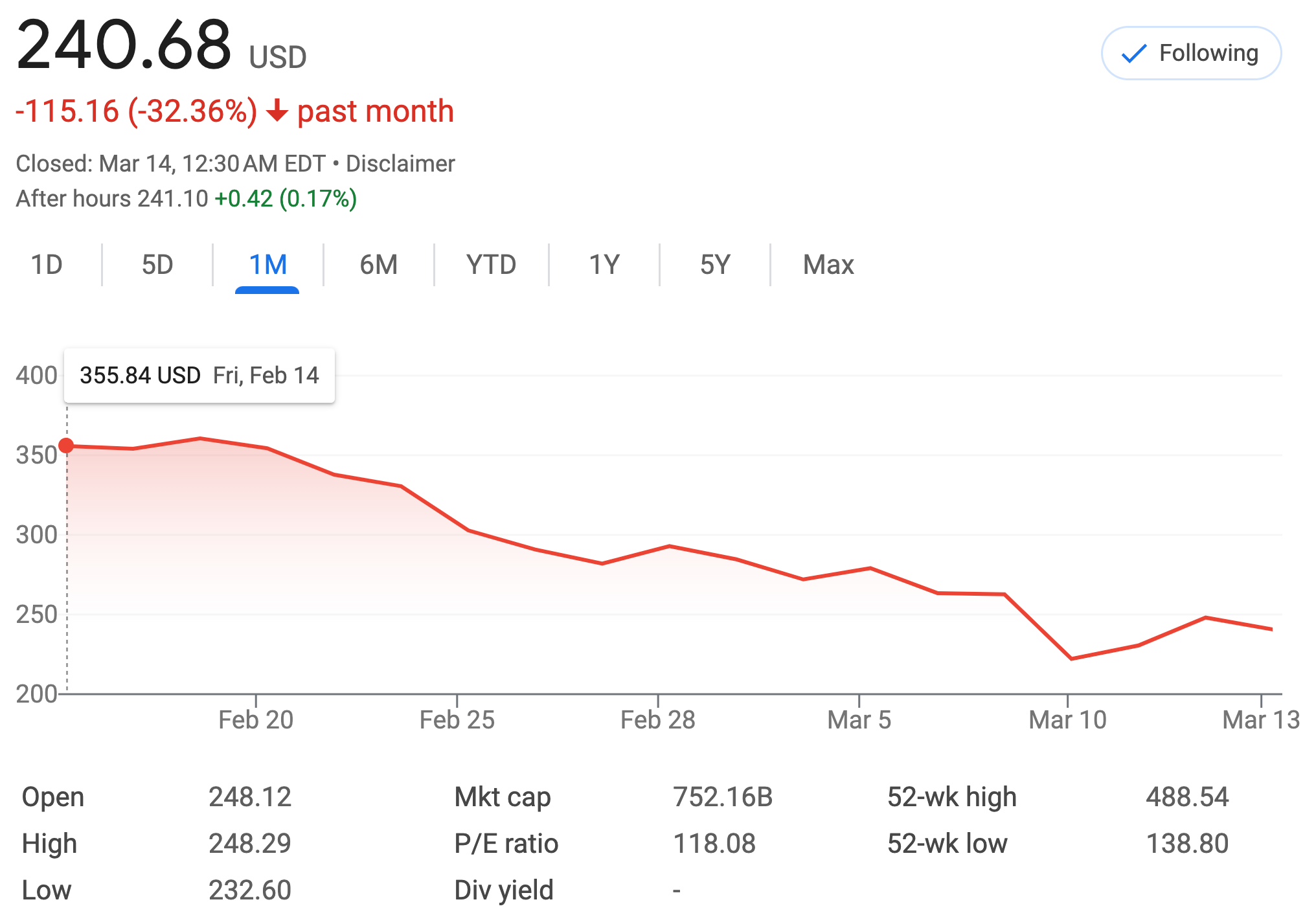
Navigating the “Key Man Risk”
Finally, the stock’s performance today is inextricably linked to its CEO, Elon Musk. Musk’s involvement in other ventures—X (formerly Twitter), SpaceX, and xAI—creates a unique “key man risk” that is priced into the stock every day. Some investors see his multi-disciplinary approach as a benefit that brings cross-industry innovation to Tesla. Others see it as a distraction that warrants a discount on the stock price. Today’s news regarding Musk’s personal ventures often spills over into Tesla’s ticker, requiring investors to stay informed about the entire “Musk ecosystem” to truly understand why the stock is moving.
In conclusion, “what Tesla stock is doing today” is never a simple answer. It is a reflection of the struggle between future-leaning AI speculation and current-day manufacturing realities. It is a barometer for interest rates, a signal of consumer health, and a testament to the power of brand loyalty in the financial markets. For the investor, success lies in ignoring the minute-by-minute fluctuations and focusing on the underlying financial trends that will dictate the company’s trajectory in the years to come.
aViewFromTheCave is a participant in the Amazon Services LLC Associates Program, an affiliate advertising program designed to provide a means for sites to earn advertising fees by advertising and linking to Amazon.com. Amazon, the Amazon logo, AmazonSupply, and the AmazonSupply logo are trademarks of Amazon.com, Inc. or its affiliates. As an Amazon Associate we earn affiliate commissions from qualifying purchases.