
In a world increasingly dominated by screens, digital interfaces, and the omnipresent sun, our eyes are constantly bombarded with visual information and environmental stressors. Among the myriad of innovations designed to protect and enhance our vision, polarized sunglasses stand out as a remarkable piece of optical technology. Far more than just tinted lenses, polarized sunglasses incorporate a sophisticated scientific principle to combat one of the most pervasive visual nuisances: glare. This article delves into the technological marvel behind polarized sunglasses, exploring their core mechanisms, advantages, evolutionary journey, and what to consider when integrating this advanced eye protection into your daily life.
The Core Technology: Understanding Polarization
At its heart, a polarized sunglass lens is a finely engineered filter designed to manage how light reaches your eyes. To truly appreciate this technology, we must first understand the nature of light and the problem it seeks to solve.
The Problem of Glare: Unfiltered Light’s Chaos
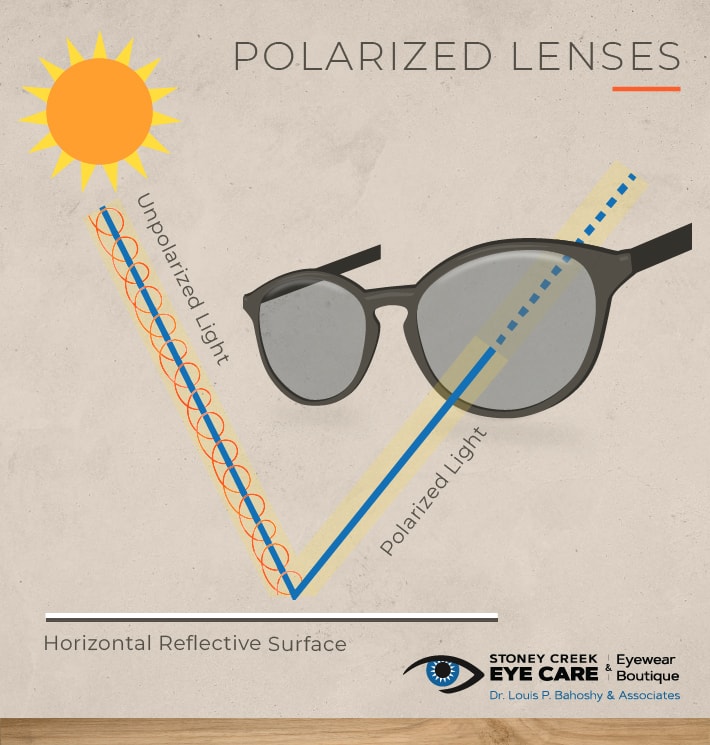
Light, a form of electromagnetic radiation, travels in waves. When light waves originate from a source like the sun, they vibrate and scatter in all directions. However, when these light waves strike a flat, reflective surface—such as water, snow, a wet road, or even the hood of a car—they become polarized. This means a significant portion of the light waves begin to vibrate primarily on a single plane, typically horizontally.
This horizontally polarized light is what we perceive as glare. Glare is not just a bright light; it’s an intense, concentrated beam of light that significantly reduces visual clarity, depth perception, and color distinction. It can be blinding, uncomfortable, and in critical situations like driving or operating machinery, downright dangerous. Traditional tinted sunglasses merely reduce the overall intensity of light, including both useful light and glare, offering some relief but failing to specifically address the disruptive nature of polarized glare.
The Solution: The Polarizing Filter
The genius of polarized sunglasses lies in their integrated polarizing filter. This filter is typically a chemical film applied to or embedded within the lens material itself. The key to its function is its unique molecular structure. Imagine a microscopic picket fence with vertically aligned openings.
This chemical filter is crafted with a precise pattern of molecules (often iodine crystals or a dichroic dye) that are stretched and aligned to create microscopic, parallel lines. These lines act as a selective gate for light waves.
How It Works: Selective Light Blocking
When light passes through a polarized lens, the vertically oriented molecular structure of the filter allows only vertically oscillating light waves to pass through. Crucially, it blocks the horizontally oscillating light waves that constitute glare.
Think of it this way:
- Vertically polarized light (useful light, allowing you to see objects clearly) can pass through the vertical “pickets” of the filter.
- Horizontally polarized light (glare, reflected off flat surfaces) is blocked because it attempts to pass through the filter perpendicular to its alignment, much like trying to push a horizontal plank through a vertical slot.
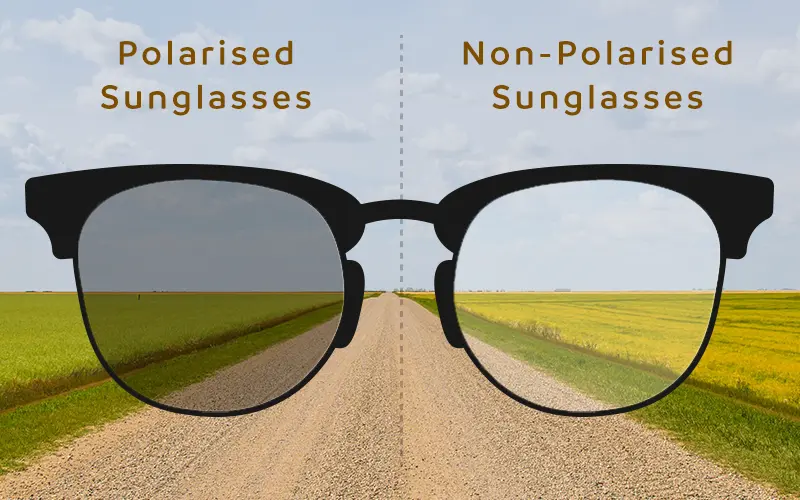
This selective blocking of horizontally polarized light significantly reduces glare without excessively dimming the overall scene. The result is a dramatic improvement in visual comfort and clarity, allowing you to see objects with sharper contrast and truer colors, even in intensely reflective environments.
Beyond Glare Reduction: The Technological Advantages
While glare reduction is the primary function, the technological sophistication of polarized lenses translates into a host of secondary benefits that elevate them beyond conventional sunglasses.
Enhanced Visual Clarity and Contrast
By eliminating the scattered light from glare, polarized lenses allow the eyes to receive a cleaner, more organized visual signal. This leads to a remarkable improvement in visual clarity. Colors appear more vibrant and true to life, and the perception of depth is significantly enhanced. For activities like fishing, this means seeing beneath the water’s surface to spot fish or underwater structures. For driving, it means sharper perception of road conditions and surrounding vehicles. This isn’t just about dimming; it’s about refining the light information your brain processes.
Reduced Eye Strain and Fatigue
Constantly contending with glare forces the eyes to work harder, leading to strain, fatigue, and discomfort, especially during prolonged exposure. Headaches, squinting, and dryness are common symptoms. Polarized lenses alleviate this burden by filtering out the harsh glare before it reaches your eyes. This allows the ocular muscles to relax, providing a more comfortable and sustainable viewing experience. For professionals who spend hours outdoors or drivers on long journeys, this reduction in eye fatigue is a significant health and safety benefit.
Superior UV Protection (and why it’s different from polarization)
It’s crucial to understand that polarization is distinct from UV protection, though many high-quality polarized lenses offer both. Ultraviolet (UV) light is invisible, high-energy radiation from the sun that can cause significant damage to the eyes, leading to conditions like cataracts, macular degeneration, and photokeratitis (sunburn of the eye). While some non-polarized sunglasses offer UV protection, and some polarized lenses may not inherently block 100% UV rays, almost all reputable modern polarized sunglasses incorporate UV-blocking agents. The best lenses offer 100% protection against UVA and UVB rays up to 400 nanometers (UV400). When choosing polarized sunglasses, always confirm their UV protection capabilities, as it’s a separate, yet equally vital, technological feature.
Versatile Applications
The technological benefits of polarized lenses make them indispensable in various scenarios:
- Driving: Eliminates glare from wet roads, dashboards, and other vehicles, improving safety and reducing fatigue.
- Watersports & Fishing: Crucially allows seeing through the water’s surface, enhancing visibility of fish, reefs, and potential hazards.
- Snow Sports: Reduces blinding glare from snow and ice, improving contrast and depth perception on slopes.
- Cycling & Running: Offers clear vision and reduced strain during outdoor exercise, especially on sunny days.
- Everyday Use: Provides superior comfort and clarity for general outdoor activities, making bright environments much more pleasant.
Evolution of Polarized Lens Technology
The journey of polarized lenses from laboratory concept to a widely adopted consumer product is a testament to continuous innovation in optical technology.
Early Innovations and Materials
The concept of polarization has been understood for centuries, but practical application in eyewear began in the 1930s with Edwin H. Land, the founder of Polaroid Corporation. Land developed a process to embed microscopic polarizing crystals into a transparent plastic sheet. Early lenses were typically made from cellulose acetate, which was effective but susceptible to scratching and warping. These foundational developments paved the way for more robust and refined iterations.
Modern Lens Materials and Coatings
Today’s polarized lenses leverage advanced materials and sophisticated manufacturing processes to enhance durability, optical clarity, and performance:
- Polycarbonate: A lightweight, impact-resistant plastic commonly used in sports eyewear and safety glasses. It naturally blocks some UV light and can be easily treated for full UV protection and polarization.
- Trivex: An even lighter and more impact-resistant material than polycarbonate, offering superior optical clarity. It’s often favored for prescription polarized lenses due to its excellent visual properties.
- Glass: Offers the highest optical clarity and scratch resistance, though it is heavier and less impact-resistant than plastic alternatives. Glass lenses are often found in premium eyewear.
- CR-39 (Plastic): A common, lightweight plastic offering good optical quality at a more accessible price point.
- Specialized Coatings: Modern polarized lenses often come with a suite of additional technological coatings:
- Anti-scratch coatings: Hardens the lens surface, prolonging its lifespan.
- Anti-reflective (AR) coatings: Reduces reflections from the back surface of the lens, further enhancing clarity and reducing ghosting.
- Hydrophobic/Oleophobic coatings: Repels water, oils, and smudges, making lenses easier to clean and maintain clear vision in wet conditions.
- Mirror coatings: Adds a highly reflective layer that further reduces light transmission and adds a stylish aesthetic.
Integrated Technologies
The evolution also includes integrating polarization with other advanced lens technologies:
- Photochromic Polarized Lenses: These lenses combine polarization with photochromic technology, meaning they darken automatically in response to UV light and lighten in its absence. This offers adaptive glare reduction and clarity across varying light conditions, a complex feat of chemical engineering.
- Digital Lens Design: For prescription polarized lenses, advanced digital surfacing technologies are used to optimize lens curvature and thickness, ensuring uniform polarization and superior optical performance across the entire lens surface, especially important for progressive or high-prescription lenses.
Choosing the Right Polarized Technology for Your Needs
With the array of technological options available, selecting the right pair of polarized sunglasses involves considering several factors beyond just the polarizing filter itself.
Lens Colors and Their Specific Benefits
The tint of a polarized lens significantly impacts its performance and suitability for different environments:
- Grey/Smoke: Provides the most natural color perception, dimming all colors equally. Ideal for general use, driving, and bright conditions where true color representation is important.
- Brown/Amber: Enhances contrast and depth perception, especially beneficial in variable or lower light conditions. Excellent for fishing, golf, and other outdoor sports where distinguishing subtle changes in terrain or water is key.
- Green: Offers a good balance between natural color perception and contrast enhancement. Good for everyday use and sports.
- Rose/Copper: Maximizes contrast, particularly in low light or hazy conditions. Often preferred for skiing or cloudy days as it brightens vision.
- Yellow: Best for very low light conditions, enhancing contrast and brightness. Not ideal for bright, sunny days due to potential color distortion.
The choice of lens color is a technological preference based on the user’s primary activity and typical light exposure.
Frame Technology and Ergonomics
While the lenses are the star, the frame also plays a crucial role in overall performance and user experience, falling under the broader “gadget” aspect of Tech:
- Material Science: Frames are made from a variety of advanced materials like lightweight plastics (e.g., Grilamid TR 90, nylon), metals (e.g., titanium, aluminum), and even sustainable composites. These materials are chosen for their durability, flexibility, weight, and hypoallergenic properties.
- Ergonomics and Fit: A technologically advanced frame considers factors like wrap-around designs to maximize peripheral protection, adjustable nose pads and temple tips for a custom fit, and ventilation systems to prevent fogging. For active users, features like non-slip rubber components are essential for maintaining secure placement during movement.
- Optical Integration: For prescription wearers, the frame must be capable of securely holding prescription polarized lenses, sometimes requiring specific frame geometries to accommodate complex lens curvatures.
Identifying Genuine Polarized Lenses
Not all sunglasses marketed as “polarized” live up to their claims. As a consumer, understanding how to verify the technology is important:
- The LCD Screen Test: Look at an LCD screen (like your phone, computer, or car display) through the lenses. Rotate the sunglasses 90 degrees. If the screen appears to dim or turn black at a certain angle, the lenses are polarized. This is because LCD screens emit polarized light, and the sunglasses’ filter will block it when aligned perpendicularly.
- The Two-Pair Test: Hold two pairs of polarized sunglasses at a 90-degree angle to each other. The area where the lenses overlap should become completely dark, as the two filters are blocking all light.
- Manufacturer Specifications: Always look for clear indications of polarization (e.g., “Polarized,” “P”) and UV protection (e.g., “UV400,” “100% UV Protection”) from reputable brands. Reputable manufacturers invest in quality control and clear product labeling.
The Future of Ocular Tech: What’s Next for Polarized Lenses?
The realm of optical technology is continuously evolving, and polarized lenses are no exception. The future holds exciting possibilities for even more advanced glare management and vision enhancement.
Smart Integration
We are already seeing rudimentary forms of “smart” eyewear. The future could bring polarized lenses integrated with:
- Augmented Reality (AR): Displaying navigational cues, vital statistics, or digital information directly onto the polarized lens without compromising glare reduction or visual clarity.
- Embedded Sensors: Lenses that monitor UV exposure, ambient light levels, or even biometric data, providing real-time feedback to the wearer.
- Adaptive Polarization: Imagine lenses that can dynamically adjust their polarization level based on the intensity and angle of incoming glare, optimizing clarity in rapidly changing light conditions. This would be a significant leap from current photochromic technology.
Sustainable Materials and Manufacturing
As environmental consciousness grows, the tech industry is shifting towards more sustainable practices. Future polarized lenses and frames will likely see:
- Bio-based Plastics: Development of high-performance lens and frame materials derived from renewable resources, reducing reliance on fossil fuels.
- Recycled Materials: Increased use of recycled content in both lens and frame production, alongside closed-loop manufacturing processes.
- Energy-Efficient Production: Innovations in manufacturing techniques to reduce the energy footprint associated with creating polarized lenses.

Personalized Vision Solutions
Just as other tech gadgets are becoming increasingly personalized, so too will eyewear:
- Custom-tailored Polarization: Lenses engineered with polarization optimized for an individual’s specific activities, visual preferences, and even unique eye physiology.
- AI-driven Design: Utilizing artificial intelligence to design lens geometries and polarizing filters that offer optimal performance for the wearer’s specific visual needs and environmental exposures.
In conclusion, polarized sunglasses are a testament to the power of targeted technological innovation. By meticulously filtering out distracting glare, they offer a level of visual clarity, comfort, and protection that traditional eyewear simply cannot match. From their scientific foundation in light physics to their integration with advanced materials and coatings, polarized lenses continue to evolve, promising an even brighter, clearer, and safer visual future. For anyone seeking to enhance their outdoor experience and safeguard their vision, understanding “what’s polarized sunglasses” is the first step towards embracing this essential piece of wearable tech.
aViewFromTheCave is a participant in the Amazon Services LLC Associates Program, an affiliate advertising program designed to provide a means for sites to earn advertising fees by advertising and linking to Amazon.com. Amazon, the Amazon logo, AmazonSupply, and the AmazonSupply logo are trademarks of Amazon.com, Inc. or its affiliates. As an Amazon Associate we earn affiliate commissions from qualifying purchases.