
In the landscape of global technology, few names carry as much weight—or as much history—as Oracle. For decades, Oracle has been the backbone of the enterprise world, providing the infrastructure, software, and data management tools that power everything from global banking systems to logistics networks. While many casual tech users may know the name through the ubiquitous “Java” update prompts on their computers, Oracle’s true impact lies deep within the server rooms and cloud architectures of the world’s largest organizations.
To understand what Oracle is today, one must look beyond its origins as a database company. It has evolved into a comprehensive technology provider, specializing in cloud infrastructure, enterprise software, and cutting-edge artificial intelligence. This guide explores the multi-faceted tech ecosystem of Oracle, detailing how it shapes the modern digital economy.
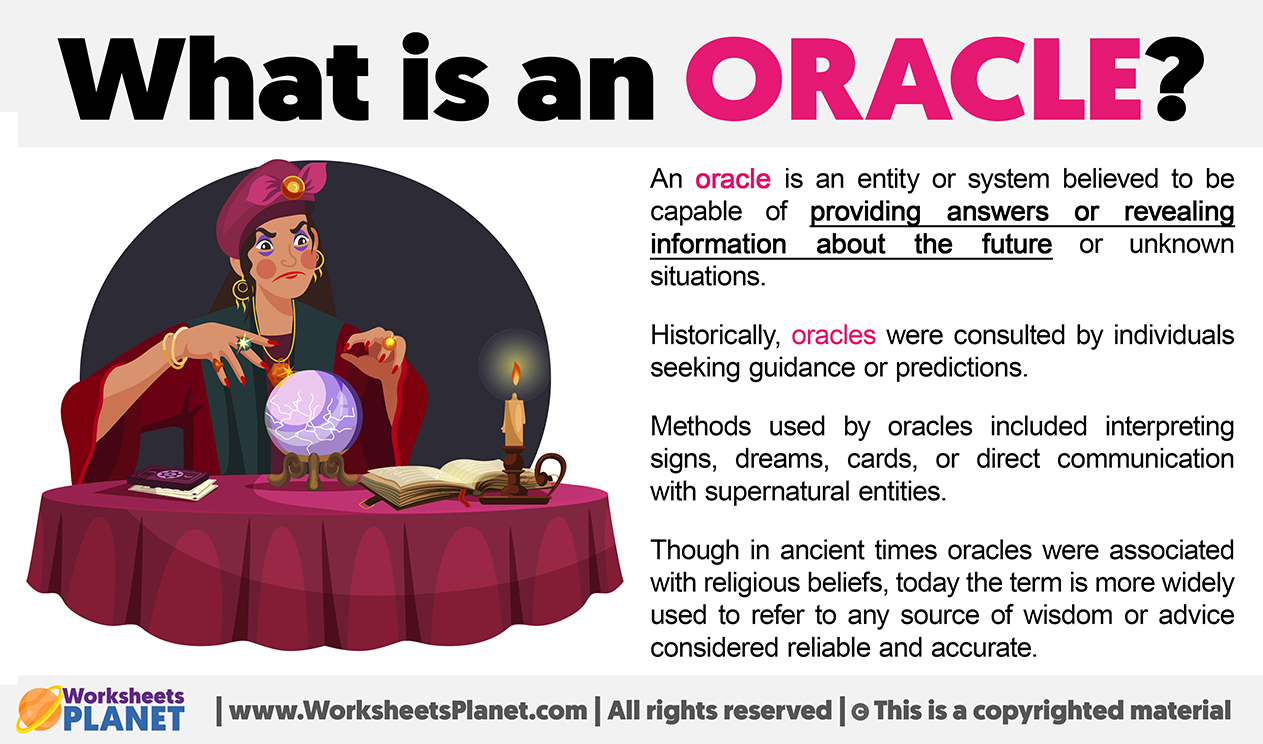
The Foundation of Data Management: The Oracle Database
At its core, Oracle is synonymous with the relational database. Founded in the late 1970s, the company was the first to commercialize a relational database management system (RDBMS) based on the principles of Structured Query Language (SQL). Today, the Oracle Database remains the gold standard for high-performance data management.
The Evolution of the Relational Database
The Oracle Database is designed to handle massive amounts of data with extreme reliability. Unlike simpler data storage methods, a relational database organizes data into tables that can be linked—or related—based on data common to each. This allows for complex querying and data retrieval that is essential for modern business intelligence. Over the years, Oracle has optimized this system to support “multitenant” architectures, allowing multiple databases to run on a single hardware footprint, which significantly reduces costs for large enterprises.
The Autonomous Database and Automation
Perhaps the most significant leap in Oracle’s database technology is the introduction of the Oracle Autonomous Database. By leveraging machine learning, this system is “self-driving, self-securing, and self-repairing.” It automates routine administrative tasks such as patching, tuning, and scaling. In a tech environment where human error is the leading cause of security breaches and system downtime, the Autonomous Database represents a paradigm shift toward hands-free, high-availability data management.
The Role of SQL and PL/SQL
Oracle’s dominance is also rooted in its implementation of SQL and its proprietary procedural extension, PL/SQL. These languages allow developers to build complex logic directly into the database layer. This ensures that data processing is fast and efficient, as the logic lives right where the data resides, minimizing the latency that occurs when moving large datasets to an application server for processing.
The Shift to the Cloud: Oracle Cloud Infrastructure (OCI)
As the tech industry pivoted from on-premises hardware to cloud computing, Oracle underwent a massive transformation. While they were perceived as late entrants compared to Amazon Web Services (AWS) or Microsoft Azure, Oracle’s “Generation 2” Cloud (OCI) was built specifically to address the performance and security gaps found in first-generation cloud architectures.
IaaS and PaaS: Building the Digital Backbone
Oracle Cloud Infrastructure (OCI) provides both Infrastructure as a Service (IaaS) and Platform as a Service (PaaS). IaaS allows companies to rent virtualized computing resources, storage, and networking, while PaaS provides the tools for developers to build and deploy applications without worrying about the underlying hardware. OCI is unique because it was designed with a “flat” network architecture, which minimizes hops between servers and provides the consistent high-speed performance required for heavy-duty enterprise workloads.
The Multi-Cloud and Hybrid Cloud Strategy
Oracle has recognized that the modern tech environment is rarely a “one-vendor” ecosystem. Through strategic partnerships, most notably with Microsoft, Oracle has pioneered “interconnect” services that allow data to flow seamlessly between OCI and Azure. This allows a company to run their application logic in Azure while keeping their mission-critical Oracle database in OCI, enjoying the best of both worlds with near-zero latency.
Security-First Architecture
In an era of frequent data breaches, Oracle’s cloud is built on a “security-first” principle. This involves a zero-trust architecture where the cloud control plane is separated from the customer data plane. This means that even Oracle employees cannot access customer data, and the hardware-level isolation prevents “noisy neighbors” (other companies on the same server) from interfering with or seeing another company’s data.
Enterprise Applications and Software as a Service (SaaS)
Beyond the “plumbing” of the internet, Oracle provides the actual applications that businesses use to run their day-to-day operations. These are categorized under Software as a Service (SaaS), where Oracle hosts and maintains the software, and users access it via the web.
Oracle Fusion Cloud ERP
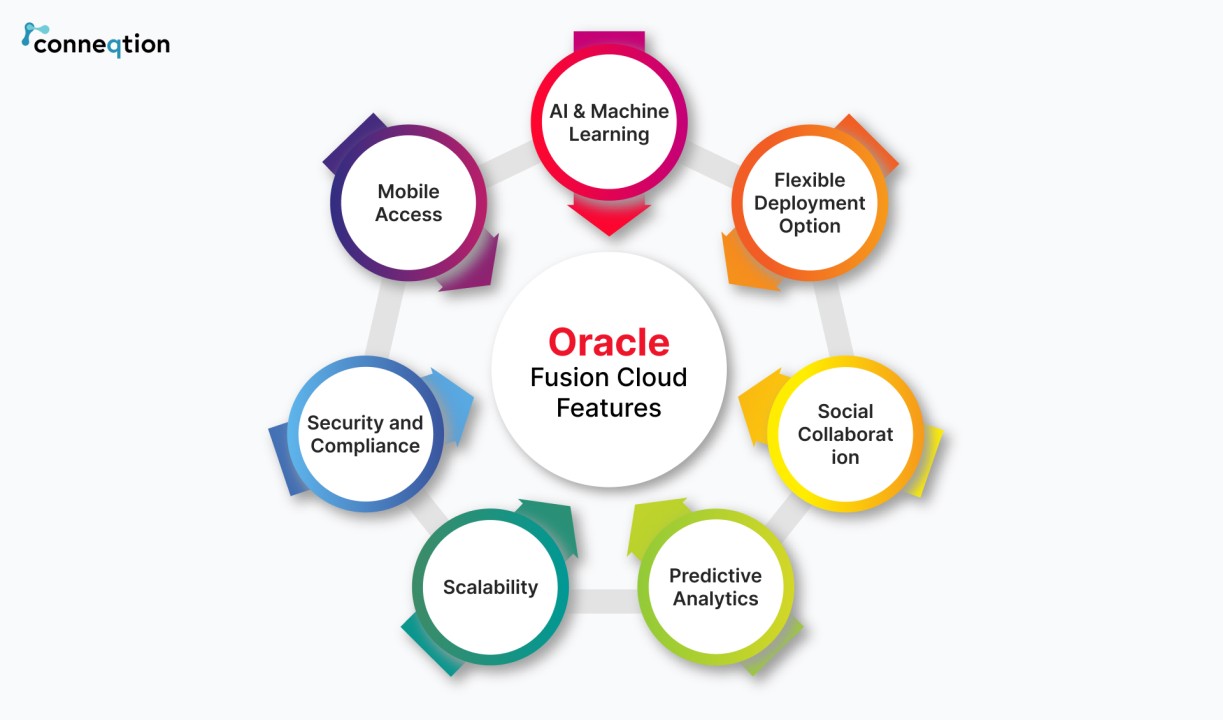
Enterprise Resource Planning (ERP) is the software that manages a company’s financials, supply chain, and procurement. Oracle Fusion Cloud ERP is a comprehensive suite that helps organizations automate complex processes. From managing global payroll to tracking real-time inventory across continents, Fusion ERP utilizes AI to provide “continuous forecasting” and automated reporting, allowing executives to make data-driven decisions faster than ever before.
NetSuite and the Mid-Market
While Fusion Cloud serves the world’s largest corporations, Oracle’s acquisition of NetSuite allowed it to dominate the mid-market. NetSuite was the first company dedicated to providing business applications over the internet. Today, it serves as the primary growth engine for startups and mid-sized companies that need a scalable, cloud-native solution for accounting, e-commerce, and Customer Relationship Management (CRM).
Industry-Specific Solutions (Verticals)
Oracle differentiates itself by offering “Vertical” applications tailored to specific industries. Through massive acquisitions like Cerner (healthcare) and Micros (hospitality and retail), Oracle provides specialized tools that generic software cannot match. For instance, Oracle Health is currently revolutionizing electronic health records (EHR) by integrating them with cloud-based analytics to improve patient outcomes and streamline hospital management.
The Future of Oracle: AI Integration and the Java Ecosystem
Oracle’s future is inextricably linked to two major tech pillars: the ongoing development of the Java programming language and the aggressive integration of Generative AI across its entire stack.
Java: The Language of the Enterprise
Oracle is the steward of Java, one of the most popular and enduring programming languages in the world. Java is used in billions of devices, from Android smartphones to the server-side applications of almost every Fortune 500 company. Oracle maintains the Java Development Kit (JDK) and ensures the language evolves to meet modern demands, such as modularity and cloud-native development, ensuring its relevance for decades to come.
Generative AI and Large Language Models (LLMs)
Oracle is currently integrating Generative AI into its cloud and applications. Unlike some competitors, Oracle’s approach to AI is focused on “embedded AI.” This means instead of just offering a chatbot, Oracle builds AI features directly into its ERP and CRM tools. For example, an HR manager using Oracle Cloud HCM can use built-in AI to automatically generate job descriptions or summarize employee performance reviews based on internal data.
OCI Supercluster and AI Training
Because AI requires massive amounts of raw computing power, Oracle has positioned OCI as a premier destination for AI startups and research labs. By utilizing NVIDIA GPUs and high-performance RDMA (Remote Direct Memory Access) networking, Oracle’s “Superclusters” allow developers to train massive Large Language Models (LLMs) more efficiently and at a lower cost than many other cloud providers. This has made Oracle a critical player in the “AI arms race.”
Conclusion
So, what is Oracle? It is far more than a database company. It is a comprehensive technology stack that begins with the most robust data management systems in the world, extends into a high-performance cloud infrastructure, and culminates in a suite of intelligent enterprise applications that run the global economy.
In a tech world characterized by rapid cycles of “hype,” Oracle has maintained its position by focusing on the “mission-critical.” Whether it is ensuring that a bank transaction is processed securely, a hospital’s patient records are accessible, or a global supply chain is optimized through AI, Oracle provides the technical foundation upon which modern society operates. As the company continues to innovate in the realms of autonomous systems and cloud-integrated AI, its role as a titan of the technology sector remains firmly established.
aViewFromTheCave is a participant in the Amazon Services LLC Associates Program, an affiliate advertising program designed to provide a means for sites to earn advertising fees by advertising and linking to Amazon.com. Amazon, the Amazon logo, AmazonSupply, and the AmazonSupply logo are trademarks of Amazon.com, Inc. or its affiliates. As an Amazon Associate we earn affiliate commissions from qualifying purchases.