
The financial world currently revolves around a singular titan: Nvidia Corporation (NVDA). To ask what Nvidia stock is at today is to ask for the pulse of the modern global economy. Over the last several fiscal quarters, Nvidia has transitioned from a specialized manufacturer of graphics processing units (GPUs) for gamers into the foundational infrastructure provider for the artificial intelligence revolution. This transition has not only catapulted its market capitalization into the trillions but has also fundamentally rewritten the rules of valuation for the semiconductor industry. To understand where Nvidia’s stock stands today, investors must look beyond the daily ticker price and examine the confluence of institutional demand, technical market indicators, and the macroeconomic environment.
Decoding Nvidia’s Current Market Performance and Valuation
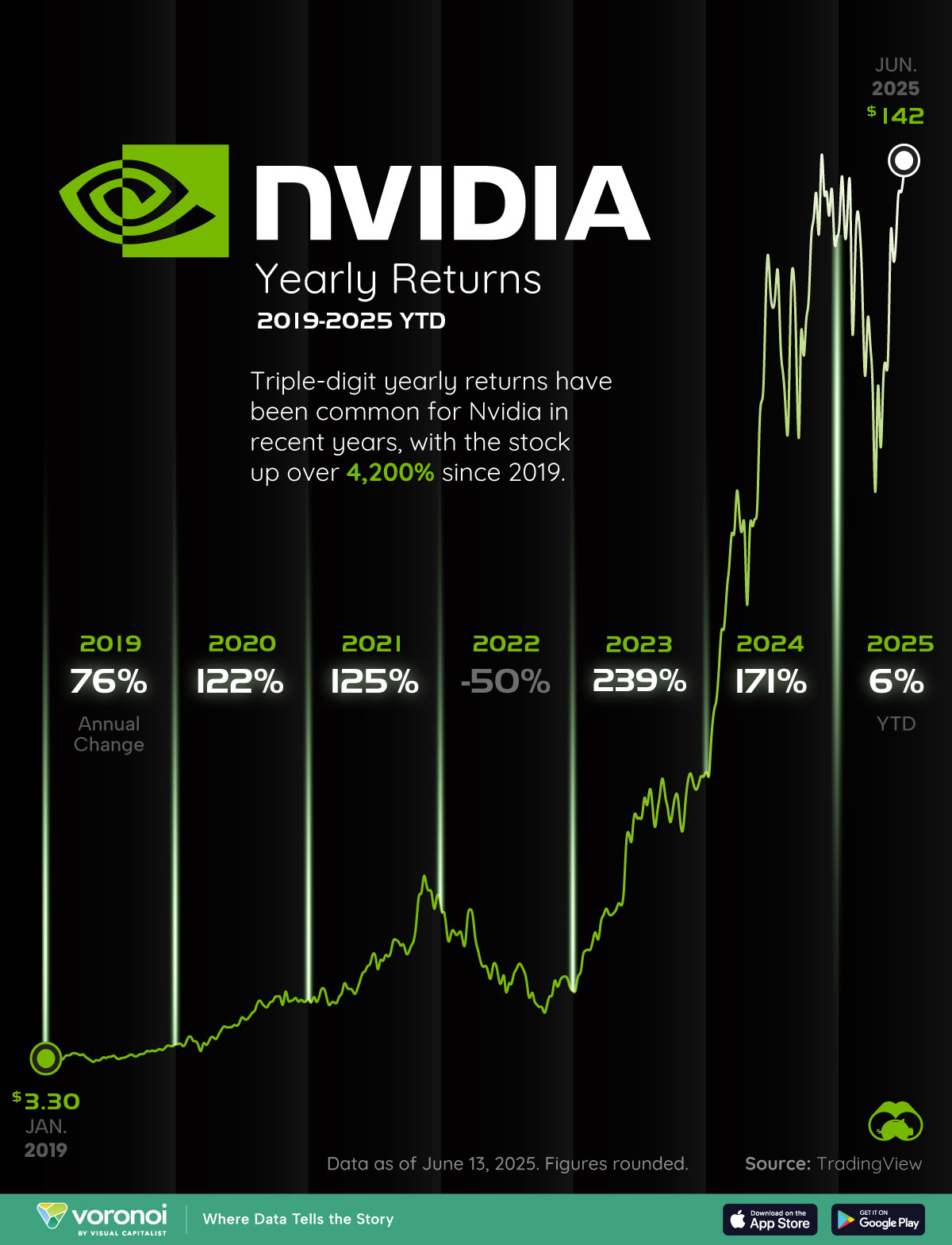
Nvidia’s stock price today reflects a unique intersection of unprecedented growth and high expectations. When investors look at the “price” of NVDA, they are viewing a forward-looking barometer for the entire tech sector. As of the current market cycle, Nvidia has consistently outperformed the broader S&P 500 and Nasdaq-100 indices, often acting as the primary driver of gains for passive index funds. The stock’s movement is characterized by high liquidity and significant institutional participation, with major hedge funds and pension funds maintaining heavy weightings in the company.
The Role of Market Capitalization and Index Weighting
Nvidia’s journey to becoming one of the most valuable companies in the world has significant implications for individual portfolios. Because of its massive market cap, daily fluctuations in NVDA’s price can shift billions of dollars in market value, affecting the performance of ETFs like the SPY and QQQ. Today, the stock is viewed as a “must-own” asset for institutional managers, which creates a floor for the stock price but also increases the stakes during quarterly earnings reports. When the stock moves, the entire tech sector moves with it, making it the ultimate bellwether for investor sentiment.
Volatility and the Retail Investor
For the retail investor, Nvidia stock today represents both an opportunity and a challenge in risk management. While the long-term trajectory has been overwhelmingly positive, the stock is prone to sharp pullbacks. These “corrections” are often healthy, shaking out speculative excess and allowing long-term buyers to enter at more attractive price points. Understanding the stock’s current standing requires looking at the “Beta”—a measure of volatility relative to the market. Nvidia’s high Beta suggests that while it captures the upside of a bull market, it can also lead the way during broader market retreats.
The Fundamental Catalysts Driving the Stock Price
To understand why Nvidia is priced where it is today, one must analyze the fundamental drivers of its revenue. Nvidia is no longer just a hardware company; it is a full-stack computing platform. The demand for its H100 and H200 Tensor Core GPUs, and the upcoming Blackwell architecture, has created a supply-demand imbalance that favors high margins and sustained pricing power.
Data Center Dominance and AI Infrastructure
The primary engine behind Nvidia’s stock performance is its Data Center segment. This division now accounts for the lion’s share of the company’s total revenue. Hyperscalers—including Microsoft, Amazon, Google, and Meta—are in an “arms race” to build out AI capabilities. This has led to a consistent “beat and raise” pattern in Nvidia’s quarterly earnings. When investors assess the stock today, they are pricing in the belief that these multi-billion dollar investments by Big Tech will continue unabated for the next several years.
The Blackwell Transition and Supply Chain Dynamics
A critical factor in Nvidia’s current valuation is the transition to the Blackwell platform. Wall Street is currently laser-focused on the production ramps and shipping timelines for these new chips. Any news regarding supply chain constraints, foundry yields at TSMC, or shipment delays can cause immediate price swings. Conversely, evidence that Blackwell is shipping in high volumes provides a “catalyst” for the stock to reach new all-time highs. The efficiency and performance gains promised by Blackwell are expected to solidify Nvidia’s lead over competitors, justifying its premium valuation in the eyes of many analysts.
Software and the CUDA Moat
Beyond hardware, Nvidia’s software ecosystem, known as CUDA, creates a significant “moat” that protects its market share. Developers have spent over a decade building AI applications on the CUDA platform, making it difficult for customers to switch to rival chips from AMD or Intel. This software lock-in is a key component of Nvidia’s business finance strategy, as it ensures recurring demand and high barriers to entry for competitors.
Valuation Metrics: Is Nvidia Overextended or Undervalued?
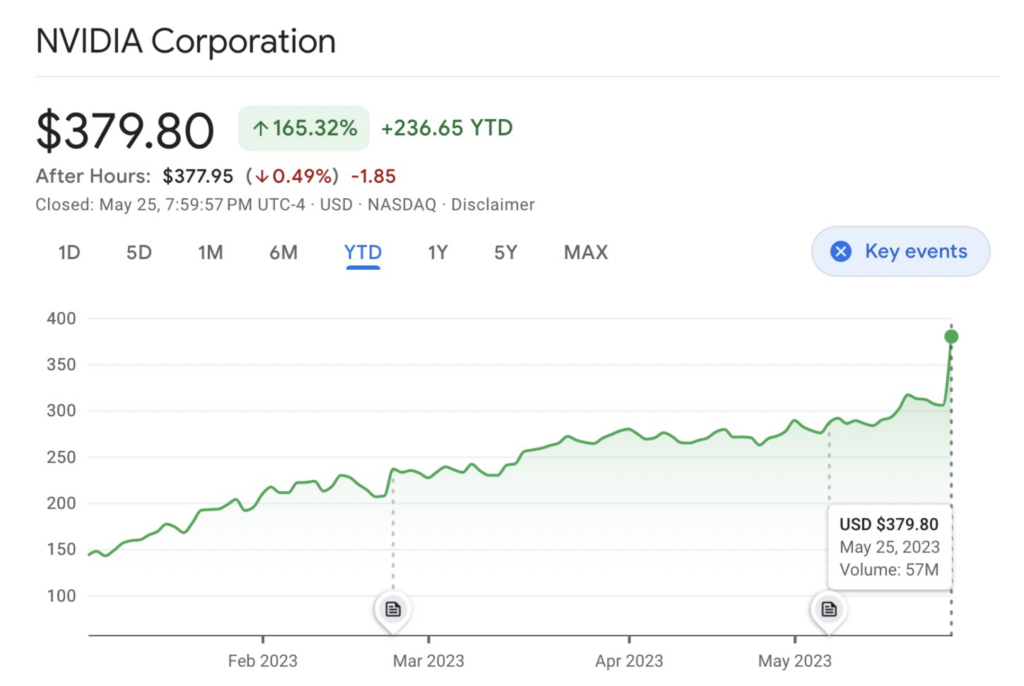
A central debate in the financial community today is whether Nvidia’s stock is a “bubble” or a fairly valued growth engine. Traditional valuation metrics, such as the Price-to-Earnings (P/E) ratio, can sometimes be misleading when applied to a company growing its bottom line at triple-digit rates.
Forward P/E vs. Trailing P/E
While Nvidia’s trailing P/E ratio might look expensive compared to the legacy industrial sector, its forward P/E ratio—which accounts for projected future earnings—often tells a different story. Historically, Nvidia has traded at a premium, but its rapid earnings growth frequently “catches up” to its stock price, making the valuation look more reasonable over time. Investors today look at the “PEG ratio” (Price/Earnings to Growth) to determine if the stock is priced appropriately relative to its expansion rate.
Free Cash Flow and Capital Allocation
One of the most impressive aspects of Nvidia’s financial health today is its free cash flow (FCF) generation. The company’s ability to generate billions in cash while maintaining high research and development spending is a hallmark of a high-quality business. This cash flow allows Nvidia to engage in significant share buybacks and maintain a modest dividend, returning value to shareholders while simultaneously investing in the next generation of computing. For the savvy investor, the strength of the balance sheet is just as important as the top-line revenue growth.
Navigating Risks and Market Headwinds
No investment is without risk, and Nvidia faces several challenges that could impact its stock price in the short and medium term. Recognizing these risks is essential for anyone monitoring where the stock is at today.
Geopolitical Pressures and Export Restrictions
Nvidia’s reliance on global supply chains—specifically manufacturing in Taiwan—introduces geopolitical risk. Furthermore, the U.S. government’s restrictions on exporting high-end AI chips to certain international markets represent a direct hit to potential revenue. While Nvidia has attempted to mitigate this by designing specific chips that comply with regulations, the regulatory landscape remains fluid and unpredictable.
The Rise of Internal Silicon
While Nvidia currently dominates the market, many of its largest customers are developing their own custom AI chips (ASICs) to reduce their reliance on Nvidia and lower costs. Companies like Google (TPUs) and Amazon (Trainium/Inferentia) are making strides in this area. While these custom chips are often optimized for specific tasks and may not replace Nvidia’s general-purpose GPUs entirely, they represent a long-term competitive threat that could eventually compress Nvidia’s industry-leading margins.
Market Saturation and the AI ROI Question
The biggest macro risk to Nvidia today is the question of “Return on Investment” (ROI) for its customers. If corporations spending billions on AI infrastructure do not see a corresponding increase in productivity or revenue, they may eventually scale back their spending. A slowdown in AI capital expenditure would have a direct and immediate impact on Nvidia’s growth trajectory. Analysts are closely watching for signs of “AI fatigue” in the corporate world, though current data suggests that the build-out phase is still in its early-to-middle innings.
The Long-Term Strategic Outlook for Investors
When assessing what Nvidia stock is at today, the consensus among many top-tier analysts remains cautiously optimistic, albeit with an acknowledgment of the stock’s inherent volatility. The long-term investment thesis for Nvidia is built on the idea that accelerated computing is the future of all technology.
Technical Analysis and Price Targets
From a technical standpoint, many traders look at key moving averages—such as the 50-day and 200-day lines—to gauge the stock’s health. Support and resistance levels are constantly being recalibrated as the stock discovers new price territory. Price targets from major investment banks currently vary, but most reflect a belief that as long as the AI cycle continues, Nvidia remains the premier way to play the trend.

Conclusion of the Investment Thesis
In summary, Nvidia’s stock today is more than just a ticker symbol; it is a representation of the global shift toward automated, intelligent, and accelerated computing. For the investor, it requires a balanced approach: appreciating the massive growth potential while remaining disciplined regarding valuation and risk. Whether you are looking at the stock through the lens of a day trader or a long-term retirement planner, Nvidia remains the most critical story in the financial markets today. Its ability to navigate the transition to Blackwell, manage geopolitical tensions, and maintain its technological lead will determine if it can continue its historic run in the years to come.
aViewFromTheCave is a participant in the Amazon Services LLC Associates Program, an affiliate advertising program designed to provide a means for sites to earn advertising fees by advertising and linking to Amazon.com. Amazon, the Amazon logo, AmazonSupply, and the AmazonSupply logo are trademarks of Amazon.com, Inc. or its affiliates. As an Amazon Associate we earn affiliate commissions from qualifying purchases.