
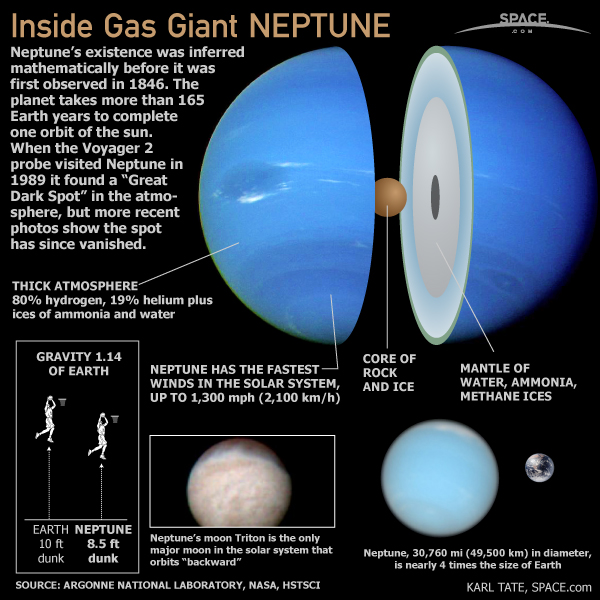
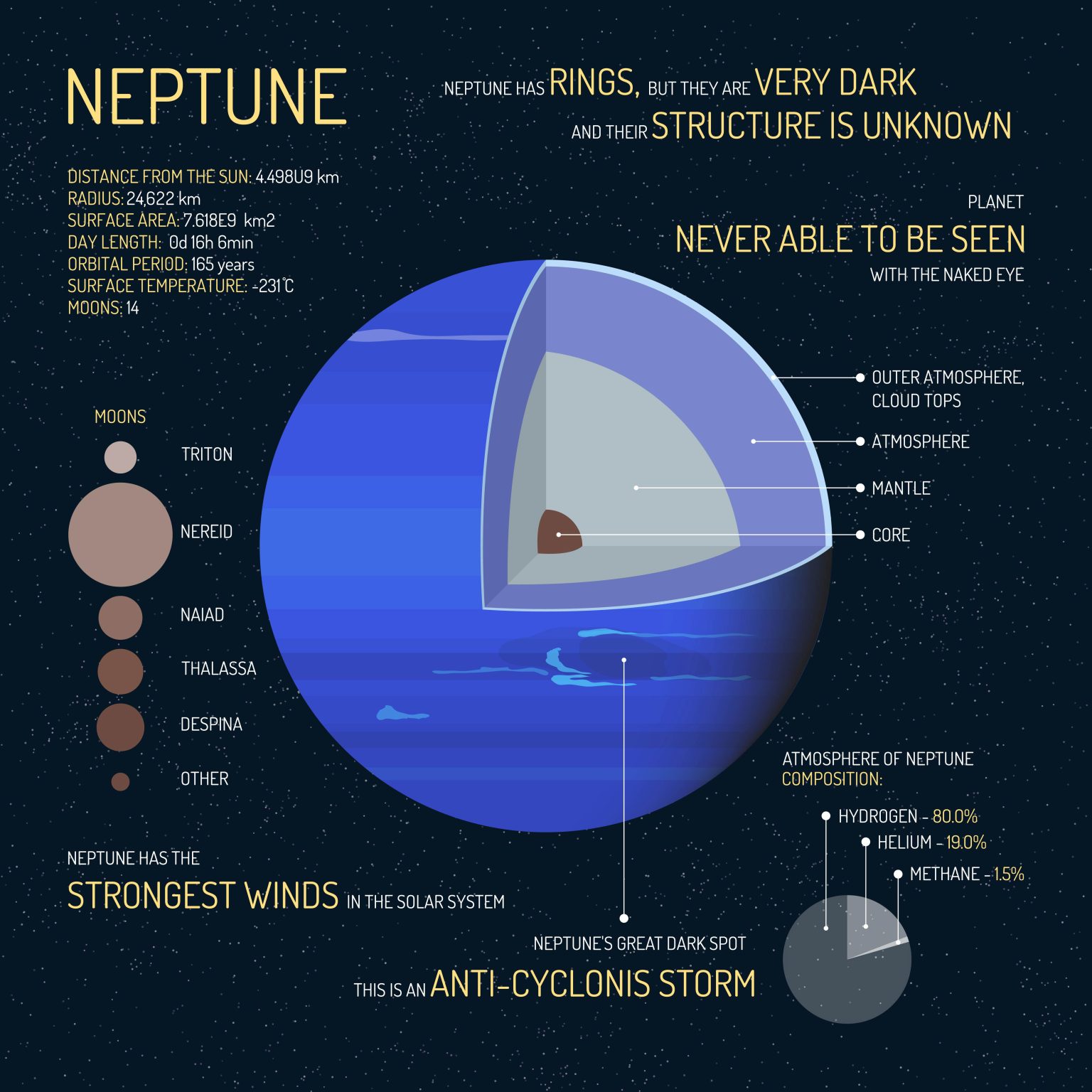
In the vast ecosystem of modern data management, the name “Neptune” evokes a sense of depth, complexity, and specialized power. While astronomers look to the eighth planet of our solar system to understand its composition of hydrogen, helium, and methane, the technology industry looks to Amazon Neptune to understand the composition of interconnected data.
In the digital era, data is no longer just a collection of rows and columns; it is a web of relationships. Traditional relational databases (RDBMS) often struggle with the performance requirements of highly connected datasets, such as social networks, fraud detection systems, and recommendation engines. This is where Amazon Neptune comes in. To understand “what Neptune is made of” in a technological sense, we must deconstruct its purpose-built architecture, its multi-model capabilities, and the sophisticated engineering that allows it to process billions of relationships with millisecond latency.
The Core Engine: Understanding the Purpose-Built Graph Foundation
At its most fundamental level, Neptune is “made of” a purpose-built, high-performance graph database engine. Unlike older database models that were “retrofitted” to handle graph data, Neptune was engineered from the ground up to optimize for the traversal of relationships.
The Storage Layer: Decoupling Compute and Storage
One of the most significant technological breakthroughs in Neptune’s architecture is the decoupling of the compute and storage layers. This is a hallmark of cloud-native design. The storage layer is a distributed, self-healing, and multi-tenant system that scales automatically. By separating these two components, Neptune allows users to scale their processing power (read replicas and instance sizes) independently of their data volume. This ensures that even as your “data planet” grows to hundreds of terabytes, your query performance remains consistent.
Multi-AZ Availability and Durability
Neptune is built for enterprise-grade reliability. It maintains six copies of your data across three Availability Zones (AZs). This means that even in the event of a localized hardware failure or a data center outage, the system can failover in less than 30 seconds. The underlying storage is “log-structured,” meaning it can recover from crashes almost instantaneously without the need for time-consuming check-pointing. This resilience is a core component of its “DNA,” making it suitable for mission-critical applications.
The Language Framework: How Neptune Communicates
A database is only as powerful as the languages it supports. Neptune is unique in the tech landscape because it is “made of” a multi-model framework, allowing developers to interact with data using two primary paradigms: Property Graphs and the Resource Description Framework (RDF).
Supporting Property Graphs with Apache TinkerPop (Gremlin)
For developers building social applications or real-time recommendation engines, Neptune provides full support for Apache TinkerPop and the Gremlin traversal language. This “ingredient” allows for imperative and declarative querying. Gremlin is designed to walk through the graph—moving from a “user” node to a “purchased” edge to a “product” node. This traversal capability is what makes Neptune significantly faster than a traditional SQL JOIN for complex, multi-hop queries.
Semantic Web Standards: RDF and SPARQL
On the other side of its composition, Neptune supports the Resource Description Framework (RDF) and the SPARQL query language. This is particularly vital for knowledge graphs and data integration projects. RDF treats data as “triples” (Subject-Predicate-Object), allowing for a high degree of data interoperability. By supporting SPARQL, Neptune enables organizations to query global datasets and linked data architectures, making it a favorite for pharmaceutical research, digital libraries, and complex organizational knowledge bases.
Security and Compliance: The Protective Layers
In the tech world, a database is only as good as its security perimeter. Neptune is “made of” several layers of enterprise-grade security features designed to protect sensitive information and meet global compliance standards.

Encryption at Rest and in Transit
Neptune integrates deeply with the AWS Key Management Service (KMS), providing robust encryption at rest. This means that even the underlying storage volumes, backups, and snapshots are encrypted using industry-standard AES-256 algorithms. Furthermore, all data in transit is protected via Transport Layer Security (TLS), ensuring that as data moves between your application and the database, it remains shielded from interception.
IAM Integration and Network Isolation via VPC
To control who can see or manipulate the data, Neptune uses Identity and Access Management (IAM) policies. This allows for fine-grained access control, ensuring that only authorized users or services can execute specific queries. Additionally, Neptune resides within a Virtual Private Cloud (VPC), meaning it is isolated from the public internet by default. You can define security group rules and network ACLs to create a “fortress” around your data, a necessity for industries like finance and healthcare that must adhere to strict regulatory frameworks like PCI-DSS and HIPAA.
Real-World Use Cases: What Can You Build with Neptune?
To truly understand what a technology is “made of,” you must look at its output. Neptune’s architecture is designed to solve problems that involve “six degrees of separation” or complex patterns that are invisible to traditional software.
Fraud Detection and Pattern Recognition
One of the most potent uses of Neptune is in the realm of financial security. Fraudsters rarely act in isolation; they create networks of fake accounts, shared phone numbers, and redirected IP addresses. Neptune allows security analysts to perform “cluster analysis” in real-time. By querying the graph, a system can instantly see if a new transaction is linked to a previously flagged identity, even if that link is five or six steps removed. This ability to “connect the dots” is what sets graph technology apart from static data tables.
Identity Resolution and Knowledge Graphs
In modern marketing and customer experience, “Identity Resolution” is the holy grail. A single customer might interact with a brand via an email address, a social media handle, a physical address, and a mobile device ID. Neptune is “made of” the tools necessary to stitch these disparate identifiers into a single “Golden Record.” Similarly, large organizations use Neptune to build internal knowledge graphs—mapping out the relationships between employees, projects, skills, and documentation—to break down information silos and accelerate innovation.
The Future of Neptune: AI Integration and Serverless Scaling
As technology evolves, Neptune is becoming “made of” even more advanced components, specifically in the realms of Artificial Intelligence (AI) and automated resource management.
Neptune ML: Graph Neural Networks (GNNs)
Perhaps the most exciting recent addition to the Neptune stack is Neptune ML. This feature allows developers to apply Machine Learning—specifically Graph Neural Networks (GNNs)—directly to their graph data. Unlike traditional ML, which treats data points as independent entities, GNNs utilize the relationships between data points to improve accuracy. For example, Neptune ML can predict which product a user might buy not just based on their history, but based on the behavior of their “neighbors” in the graph. This integration of AI and graph theory represents the cutting edge of data science.
Serverless Architecture: Optimizing for Variable Workloads
The latest iteration of Neptune includes “Neptune Serverless.” This means the database is no longer “made of” fixed-size instances that you must manually manage. Instead, it scales its capacity up and down automatically based on the application’s demand. This is a game-changer for startups and enterprises with fluctuating traffic. It ensures that you are never paying for idle capacity while providing the “burst” performance needed for heavy data ingestion or complex analytical queries.
Conclusion: The Architecture of Connection
In summary, when we ask “What’s Neptune made of?” in the context of modern technology, the answer is far more complex than a simple list of gases or minerals.
Amazon Neptune is made of a cloud-native engine that prioritizes the separation of compute and storage for ultimate scalability. It is made of flexible query languages like Gremlin and SPARQL that allow developers to speak to their data in the most intuitive way possible. It is made of impenetrable security layers that meet the world’s most stringent compliance demands. And finally, it is increasingly made of intelligent automation and AI, paving the way for the next generation of predictive applications.
As our world becomes increasingly interconnected, the value of a database is no longer found in how much data it can hold, but in how effectively it can map the relationships within that data. Neptune stands as a testament to this shift, providing the technological foundation for a future where every connection—no matter how small—carries significant insight.
aViewFromTheCave is a participant in the Amazon Services LLC Associates Program, an affiliate advertising program designed to provide a means for sites to earn advertising fees by advertising and linking to Amazon.com. Amazon, the Amazon logo, AmazonSupply, and the AmazonSupply logo are trademarks of Amazon.com, Inc. or its affiliates. As an Amazon Associate we earn affiliate commissions from qualifying purchases.