
In the modern digital landscape, a username is far more than a creative label or a login credential; it is a unique identifier that serves as a cornerstone of your digital identity. For security researchers, investigators, and privacy-conscious individuals, the query “what’s my name web” often leads to the door of Open Source Intelligence (OSINT). This field focuses on gathering information from publicly available sources to piece together a comprehensive profile of a digital entity. At the heart of this process lies username enumeration—the practice of searching for a specific handle across hundreds of social media platforms, forums, and professional networks to map out a person’s digital footprint.
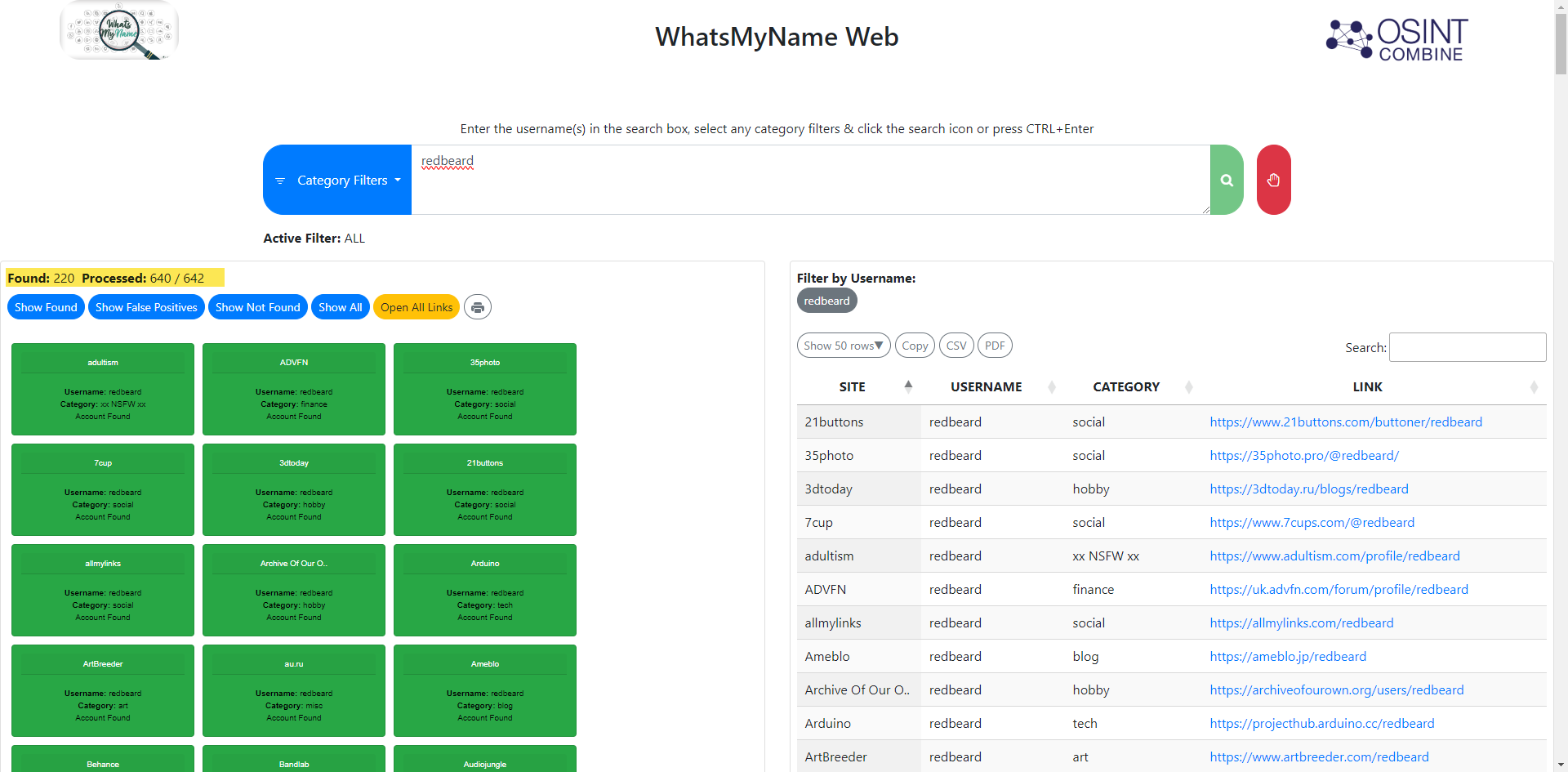
Understanding how your name or handle propagates across the web is essential in an era where data breaches and identity theft are rampant. By leveraging sophisticated web tools designed for username discovery, one can uncover forgotten accounts, identify potential impersonators, and assess the overall surface area of their online presence. This analysis is not merely about vanity; it is a critical component of digital hygiene and cyber defense.
The Evolution of Digital Identity and Username Enumeration
The concept of a digital footprint has evolved from simple email addresses to complex webs of interconnected accounts. Most users tend to reuse the same username across multiple platforms for the sake of convenience. While this makes it easier to remember logins, it creates a “linkability” factor that can be exploited. If an individual uses the handle “TechVoyager88” on a gardening forum and the same handle on a professional coding site, an investigator can instantly link those two personas.
The Mechanics of Username Discovery
Username enumeration tools work by programmatically “poking” various websites to see if a specific profile exists. When you enter a handle into a web-based OSINT tool, the backend script sends requests to the URLs where profiles typically reside. For example, it might check twitter.com/TechVoyager88 or github.com/TechVoyager88. The tool interprets the server’s response: a “200 OK” status code usually indicates the account exists, while a “404 Not Found” suggests it does not.
Advanced tools go beyond simple HTTP status codes. They analyze the content of the page to ensure the account is active and not a “placeholder” or a parked page. This technical precision allows for the rapid mapping of a user’s presence across thousands of domains in a matter of seconds, a task that would take a human researcher weeks to perform manually.
Why Digital Handles Matter in Cybersecurity
From a cybersecurity perspective, the “What’s My Name” methodology is used in the reconnaissance phase of a penetration test or a targeted attack. If a threat actor finds a target’s username on a site known for poor security, they may attempt to find that same username on more sensitive platforms. By establishing a pattern of life through these accounts, attackers can craft highly personalized phishing emails or attempt credential stuffing attacks, where they use passwords leaked from one site to gain access to others under the same username.
Deep Dive into the What’sMyName Project and OSINT Frameworks
One of the most prominent resources in this niche is the “What’sMyName” project. Originally a collection of scripts and data formats, it has evolved into a standard for the OSINT community. The project maintains a massive library of “site expressions” in JSON format, which defines how to check for usernames on various platforms ranging from mainstream giants like Instagram and LinkedIn to niche forums and international sites.
The Power of Web-Based OSINT Tools
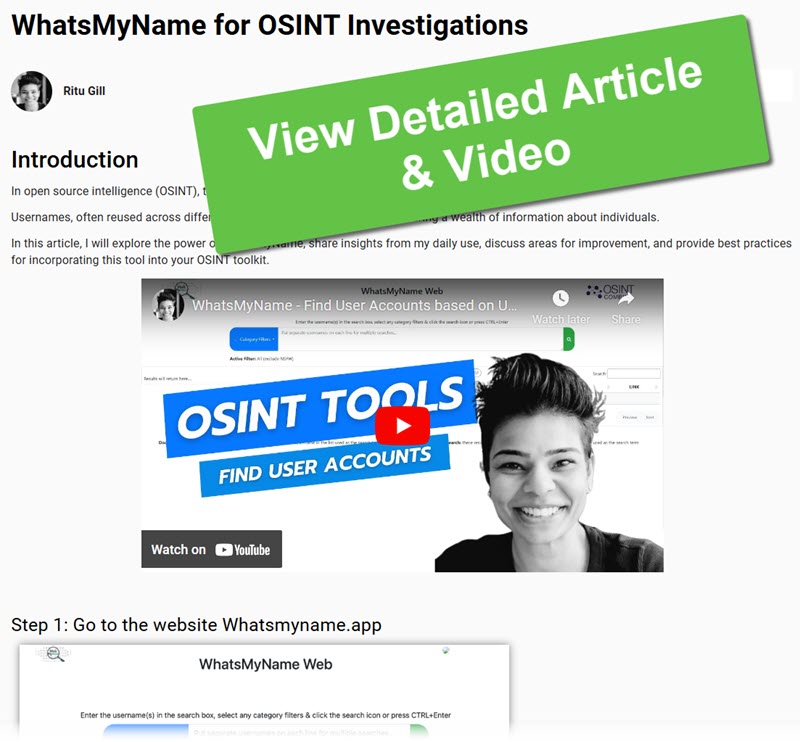
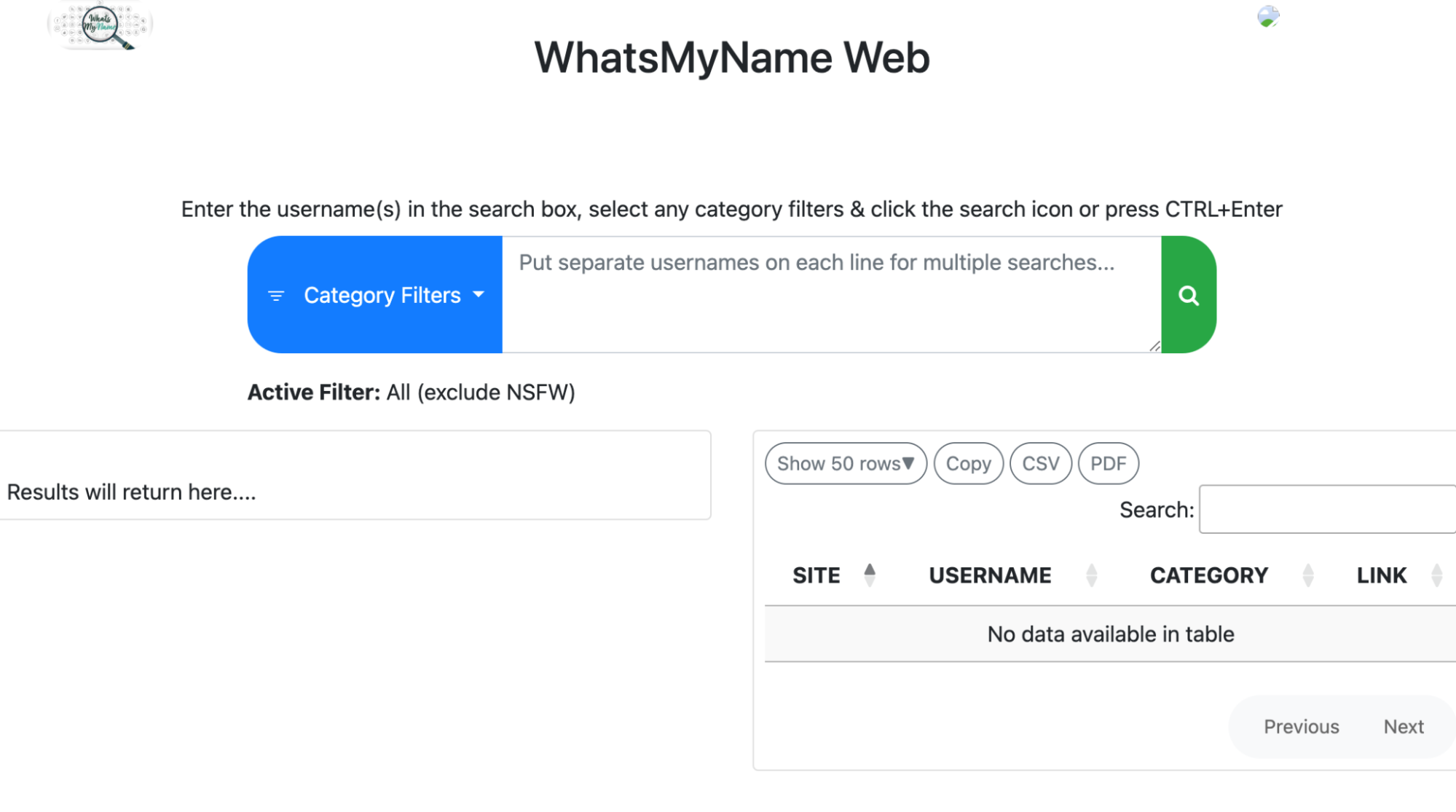
Web-based versions of these tools have democratized access to digital forensics. Previously, a user would need to be proficient in Python or Linux to run these scripts via a command-line interface. Today, intuitive web interfaces allow users to simply type in a handle and receive a categorized report of every platform where that handle is registered. This ease of use is vital for journalists verifying sources, HR departments performing due diligence, and individuals conducting self-audits.
Analyzing the Metadata
The value of finding a username isn’t just in knowing the account exists; it’s about the metadata attached to it. Many OSINT tools now incorporate “scraping” capabilities that pull public information from the discovered profiles. This might include the date the account was joined, the last time it was active, a profile biography, and even links to other social media accounts. When synthesized, this data creates a chronological map of a person’s digital life, often revealing geographic locations, interests, and professional trajectories.
The Role of Automation in Intelligence
Automation is the engine of the “What’s My Name” web ecosystem. High-performance tools use asynchronous requests, allowing them to check hundreds of sites simultaneously without being blocked by rate-limiting security measures. This level of automation ensures that the intelligence gathered is real-time. As new social networks emerge, the community-driven nature of these OSINT projects ensures that the detection algorithms stay updated, keeping pace with the ever-shifting landscape of the social web.
Practical Applications for Security Professionals and Investigators
The application of username enumeration extends far beyond curiosity. It is a foundational element of modern investigative work across several sectors.
Threat Intelligence and Phishing Defense
In corporate environments, security teams use these tools to monitor for executive impersonation. If a “What’s My Name” search reveals a new account using a CEO’s handle on a platform they don’t inhabit, it is a red flag for a potential “whaling” attack or brand reputation risk. By identifying these rogue accounts early, companies can issue takedown notices before the accounts are used to deceive employees or customers.
Background Checks and Due Diligence
In the legal and corporate worlds, due diligence requires a look into a subject’s public conduct. A username search can uncover a person’s history on forums or alternative social media sites that might not appear on a standard resume. This helps organizations assess the cultural fit or the potential liability of an individual. It is also used in “know your customer” (KYC) processes to verify that a person is who they claim to be by cross-referencing their digital history.
Law Enforcement and Forensic Investigations
For law enforcement, username enumeration is often the first step in identifying a suspect. Criminals often use the same aliases across the dark web and the clear web. By finding a link between a suspicious handle on an illicit marketplace and a registered account on a mainstream site, investigators can find the real-world identity behind the digital mask. The “What’s My Name” web approach provides the initial “pivot point” from which a full investigation can be launched.
Reclaiming Privacy: Managing Your Online Presence
While these tools are powerful for discovery, they are equally valuable for defense. Individuals can use the “What’s My Name” methodology to conduct a personal privacy audit.
Auditing Your Own Digital Footprint
The first step in digital self-defense is knowing what information is public. By running your common handles through an OSINT tool, you can identify old accounts you created years ago and forgot to delete. These “zombie accounts” are security risks; they often contain outdated personal information and use weak passwords that haven’t been changed in years. Closing these accounts shrinks your digital footprint and reduces the avenues available to hackers.
Strategies for Username Obfuscation
To protect your privacy, it is recommended to break the linkability of your accounts. Instead of using one handle for everything, consider using “persona-based” usernames. Use one handle for professional networking, another for gaming, and a completely randomized one for sensitive forums or newsletters. This technique, known as username obfuscation, prevents an investigator from easily connecting your various online identities.
The Importance of Diversified Identities
In addition to changing usernames, privacy-conscious users should vary the metadata associated with their accounts. This includes using different profile pictures, distinct “About Me” sections, and unique email aliases for each platform. When you diversify your digital presence, the “What’s My Name” web tools will yield fragmented results, making it significantly harder for third parties to build a cohesive profile of your life.
The Future of Identity Resolution on the Web
As we look toward the future, the technology behind username discovery is becoming increasingly sophisticated, moving toward “Identity Resolution.” This involves using artificial intelligence to link accounts even when the usernames are not identical.
Artificial Intelligence and Pattern Recognition
Next-generation OSINT tools are beginning to use machine learning to analyze posting styles (stylometry), image patterns, and network connections. If a tool notices that two different usernames frequently post the same photos or interact with the same circle of friends at the same times of day, it can assign a high probability that they belong to the same person. This moves the search from “exact match” to “probabilistic matching,” greatly increasing the power of web-based investigations.
Ethical Considerations and the Right to be Forgotten
The rise of these tools brings significant ethical questions to the forefront. As it becomes easier to track individuals across the web, the “Right to be Forgotten” becomes more difficult to enforce. While the data is public, the aggregation of that data into a searchable profile creates a new kind of privacy risk. Regulatory frameworks like the GDPR in Europe are beginning to address the legality of scraping public data, but the technology often moves faster than the law.
In conclusion, “What’s My Name Web” represents the intersection of technology, security, and personal privacy. Whether you are using these tools to investigate a threat, verify a source, or simply clean up your own digital history, understanding the power of username enumeration is vital. As our lives become more integrated with the digital world, the ability to navigate and control our online identity will remain one of the most important skills in the modern age. By staying informed about the tools and techniques of OSINT, we can better protect ourselves and navigate the vast, interconnected web with confidence.
aViewFromTheCave is a participant in the Amazon Services LLC Associates Program, an affiliate advertising program designed to provide a means for sites to earn advertising fees by advertising and linking to Amazon.com. Amazon, the Amazon logo, AmazonSupply, and the AmazonSupply logo are trademarks of Amazon.com, Inc. or its affiliates. As an Amazon Associate we earn affiliate commissions from qualifying purchases.