
In an increasingly digital world, ancient wisdom traditions are finding new life through technology. Astrology, with its intricate calculations and personalized insights, is a prime example. Among the myriad of digital astrological tools, the “moon sign calculator” stands out as a fundamental utility, marrying precise astronomical data with accessible user interfaces. This article explores the technological underpinnings, design considerations, and future trajectory of these fascinating applications, firmly establishing them within the realm of modern tech.
At its heart, a moon sign calculator is a sophisticated piece of software designed to determine the precise zodiac sign the Moon occupied at the moment of an individual’s birth. While seemingly simple to the end-user, this calculation involves complex astronomical algorithms, robust data management, and intuitive design to translate celestial mechanics into personal astrological insight. It exemplifies how technology can democratize access to specialized knowledge, transforming what was once the domain of expert astrologers into an accessible digital experience for millions.

The Core Technology Behind Moon Sign Calculators
The apparent simplicity of inputting a birth date, time, and location belies the intricate computational framework that powers a moon sign calculator. These tools are far more than mere lookup tables; they are dynamic applications built upon a foundation of astronomical science and sophisticated programming.
Algorithmic Foundations and Astronomical Data Integration
The primary challenge in calculating a moon sign is accurately determining the Moon’s exact celestial longitude at a specific point in time and space. This requires specialized algorithms that can process precise astronomical data.
-
Ephemeris Data: The cornerstone of any astrological calculation is the ephemeris – a table that provides the precise positions of celestial bodies (planets, Moon, Sun, etc.) over a period of time. Modern calculators utilize highly accurate digital ephemerides, which are often based on NASA JPL (Jet Propulsion Laboratory) data or other astronomical observatories. These databases contain positional data for the Moon and other planets at regular intervals, often down to seconds of arc for specific times.
-
Time and Place Correction: The exact birth time and geographical location are crucial inputs. The calculator must account for time zone differences, daylight saving time adjustments (which have varied historically by region), and the precise longitude and latitude of the birthplace. These corrections are vital for calculating the True Local Sidereal Time (TLST), which is essential for determining the ascendant and house cusps, and indirectly influencing the precise planetary positions relative to the observer.
-
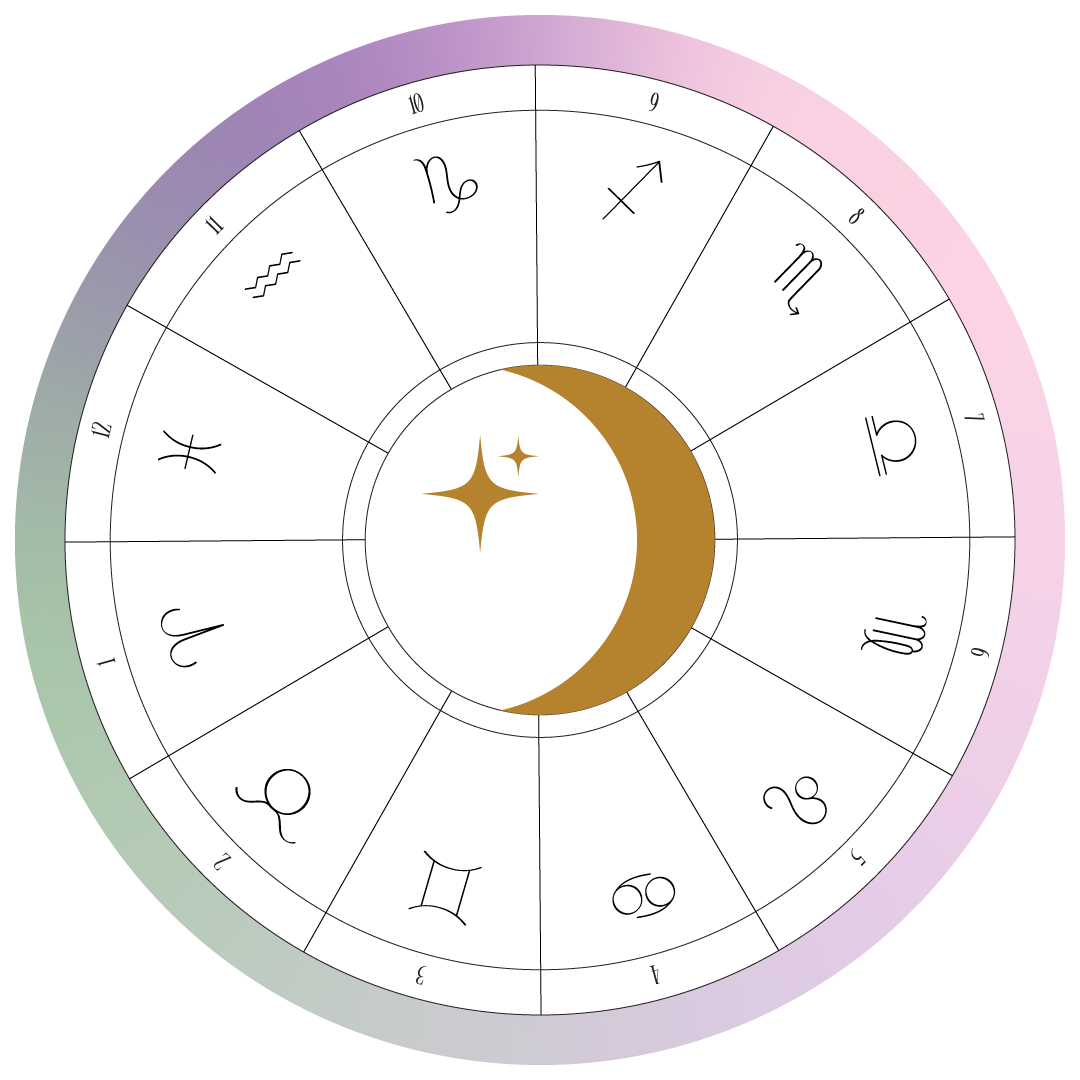
Zodiacal Mapping: Once the Moon’s geocentric longitude is determined for the moment of birth, the calculator maps this position onto the 360-degree zodiacal wheel. The zodiac is divided into twelve 30-degree segments, each corresponding to a sign. The algorithm identifies which of these segments the Moon occupies. Different astrological systems (e.g., sidereal vs. tropical zodiac) employ different starting points for the Aries ingress, and advanced calculators may allow users to select their preferred system.
-
Astrological House Systems: While not directly for the moon sign, many comprehensive calculators also determine house cusps, which further refine the interpretation. This involves complex spherical trigonometry to project celestial positions onto the terrestrial sphere, based on the specific chosen house system (e.g., Placidus, Koch, Whole Sign, Regiomontanus). The accuracy of these calculations relies heavily on robust mathematical libraries and astronomical constants.
User Interface and Experience (UI/UX) Design
For a technology to be impactful, it must be accessible. The UI/UX of moon sign calculators plays a critical role in bridging the gap between complex computation and user-friendly interaction.
-
Intuitive Input Forms: The design prioritizes ease of input for birth date, time, and location. This often includes auto-suggest features for cities, date pickers, and time selectors that simplify the process and reduce input errors. Clear labels and instructional text guide users through data entry.
-
Clear Output Display: The primary output – the moon sign – must be displayed prominently and unambiguously. Beyond just the sign, many calculators present additional relevant information like the Moon’s degree within the sign, and potentially aspects to other planets. Data visualization, such as a simplified natal chart wheel highlighting the Moon’s position, can significantly enhance understanding.
-
Responsive Design: Given the prevalence of mobile devices, responsive design is paramount. A calculator should function seamlessly across desktops, tablets, and smartphones, adapting its layout and functionality to different screen sizes and orientations. This ensures a consistent and accessible experience for all users.
-
Feedback Mechanisms: Error handling and clear feedback are essential. If a user inputs an invalid time or location, the system should gently inform them and guide them toward correction. Real-time validation of input fields can prevent submission errors.
Backend Architecture and Database Management
The engine room of a moon sign calculator, especially one that supports high traffic or multiple features, involves a robust backend.
-
Server-Side Logic: The actual astrological calculations are typically performed on a server to maintain accuracy, security, and consistent results. This involves programming languages like Python, Java, Node.js, or PHP, which execute the astronomical algorithms and interact with databases.
-
Database Management Systems (DBMS): Databases are used to store a variety of essential information:
-
Ephemeris Data: Large datasets containing planetary positions over centuries.
-
Geographical Data: Databases of cities worldwide, including their latitudes, longitudes, and historical time zone and daylight saving rules, are crucial for accurate location-based calculations.
-
Astrological Interpretations: Textual descriptions and interpretations for each moon sign, house, and planetary aspect are often stored in content databases, linked to the calculation results.
-
User Data (for logged-in services): For applications that offer personalized profiles, user birth data and preferences are securely stored, requiring adherence to data privacy regulations (e.g., GDPR, CCPA).
-
-
Scalability and Performance: For popular calculators, the backend infrastructure must be scalable to handle concurrent user requests without degradation in performance. This might involve cloud computing services (AWS, Azure, Google Cloud), load balancing, and efficient database indexing to ensure quick calculation times.
Types of Moon Sign Calculators and Their Platforms
The accessibility of moon sign calculators is further amplified by their deployment across various digital platforms, each offering distinct advantages and user experiences.
Web-Based Calculators
These are arguably the most common and accessible type, typically found on astrological websites, blogs, or as standalone tools.
-
Browser Agnostic: Accessible from any device with an internet browser, regardless of operating system. This broad reach is a significant advantage.
-
Immediate Access: No installation required. Users can simply visit a URL and start calculating.
-
Integration with Content: Often embedded within larger astrological portals, allowing for seamless transition from calculation to interpretive articles or related astrological content.
-
Monetization: Often free to use, supported by advertising, or act as lead generators for paid astrological reports or services.
Mobile Applications (iOS/Android)
Dedicated mobile apps offer a more integrated and often richer user experience compared to web versions.
-
Enhanced UX: Apps can leverage native mobile UI components, gestures, and device features (e.g., GPS for location detection, though often not ideal for birth location).
-
Offline Functionality: Some apps may store ephemeris data locally, allowing for calculations even without an internet connection, enhancing convenience.
-
Personalization and Notifications: Users can create profiles, save their birth charts, and receive personalized daily astrological insights or moon phase notifications directly to their device.
-
Monetization Models: Often employ freemium models, in-app purchases for advanced features (e.g., more detailed reports, additional charts), or subscription services for premium content.
-
Integration with Other Features: Mobile apps frequently offer a suite of astrological tools beyond just the moon sign, including natal chart generation, transits, progressions, and compatibility reports, creating a comprehensive astrological hub.
API Integrations and Developer Tools
Beyond direct consumer-facing tools, the underlying astrological calculation engines are increasingly exposed through Application Programming Interfaces (APIs).
-
Empowering Developers: Astrological APIs allow third-party developers to integrate moon sign calculations and other astrological data into their own applications, websites, or services without needing to build the complex algorithms from scratch.
-
Versatile Applications: This enables a wide range of uses, from wellness apps that offer daily horoscopes, to social platforms that incorporate astrological compatibility features, to personalized content recommendations based on user’s astrological profile.
-
Standardization: APIs often standardize the output format (e.g., JSON), making it easier for different systems to communicate and exchange astrological data reliably.
-
Business Opportunities: Providers of these APIs create a B2B model, selling access to their robust calculation engines to other businesses and developers, fostering a broader astrological tech ecosystem.
Key Features and Advanced Functionality
Modern moon sign calculators often go beyond a simple single output, offering a range of features that enhance precision, depth of insight, and user control.
Precision and Customization
Accuracy is paramount in astrology, and advanced calculators provide granular control and options.
-
Minute-Level Precision: The ability to input birth time down to the minute is critical, as the Moon moves relatively quickly through the zodiac (approximately 13 degrees per day). A difference of a few minutes can sometimes shift the Moon into a different degree or even cusp a new sign, especially if close to a sign boundary.
-
Historical Time Zone and DST Databases: Accurate calculation requires access to comprehensive databases that track historical time zone changes and daylight saving time rules for virtually every location on Earth, which have changed significantly over centuries.
-
House System Selection: Advanced calculators often allow users to select from various astrological house systems (e.g., Placidus, Koch, Whole Sign, Equal House). While the moon sign itself doesn’t change with house systems, this feature indicates a tool’s sophistication in catering to different astrological methodologies.
-
Geographical Database Accuracy: Integration with high-accuracy geographical databases ensures that even obscure birth locations yield precise latitude and longitude coordinates, which are fundamental to correct calculations.
Interpretive Analysis and Educational Content
Simply providing a moon sign is often just the first step. Many calculators enhance their utility by offering rich contextual information.
-
Detailed Interpretations: Beyond naming the sign, calculators provide comprehensive textual interpretations of what the moon sign signifies for an individual’s emotional nature, subconscious patterns, instinctive reactions, and sense of security. These interpretations are often crafted by experienced astrologers and stored in content databases.
-
Aspect Analysis: More advanced tools not only calculate the moon sign but also analyze the Moon’s aspects (angular relationships) to other planets in the natal chart. These aspects provide nuanced layers of interpretation, revealing how emotional needs interact with other psychological drives and life areas.
-
Educational Resources: Many calculators link directly to articles, videos, or glossaries that explain astrological concepts, helping users understand the significance of their moon sign within the broader context of their natal chart. This educational component transforms a simple tool into a learning platform.
-
AI-Powered Insights: The burgeoning field of AI is starting to influence astrological interpretations. AI models, trained on vast astrological texts and data, can potentially generate more personalized, nuanced, and even predictive insights based on an individual’s entire birth chart, dynamically combining interpretations that traditional static text might miss.
Data Privacy and Security Considerations
As users input highly personal birth details, the privacy and security of their data are paramount for any reputable moon sign calculator.
-
Data Encryption: All data transmitted between the user and the server, as well as data stored in databases, should be encrypted using industry-standard protocols (e.g., SSL/TLS for transit, AES-256 for rest).
-
Strict Privacy Policies: Clear and transparent privacy policies must outline what data is collected, how it’s used, who it’s shared with (if anyone), and how users can access or delete their data. This builds trust and ensures compliance with regulations.
-
Compliance with Regulations: Adherence to data protection regulations like the General Data Protection Regulation (GDPR) in Europe, the California Consumer Privacy Act (CCPA) in the US, and similar laws globally is essential. This includes provisions for data access requests, the right to be forgotten, and data breach notifications.
-
Secure Authentication: For apps or websites requiring user accounts, robust authentication mechanisms (e.g., multi-factor authentication, strong password policies) are necessary to protect user profiles and stored birth data from unauthorized access.
The Future of Astrological Tech: Innovation and Evolution
The intersection of astrology and technology is a dynamic space, continuously evolving with advancements in computing, data science, and user experience.
Artificial Intelligence and Machine Learning
AI and ML are poised to revolutionize how astrological insights are generated and consumed.
-
Hyper-Personalized Readings: Beyond pre-written interpretations, AI can analyze an entire natal chart, considering complex interplays of planets, signs, and houses, to generate unique, context-aware insights tailored specifically to an individual’s chart, far surpassing the limitations of static text.
-
Predictive Astrology with ML: While contentious from a scientific standpoint, machine learning could theoretically be applied to vast datasets of anonymized birth charts and corresponding life events (where available) to identify patterns and correlations, potentially refining predictive astrological techniques. This area presents significant ethical and data privacy challenges but demonstrates the potential computational power.
-
Natural Language Generation (NLG): AI-powered NLG can transform complex astrological calculations into fluid, human-like language, making interpretations more engaging and easier to understand for a broader audience.
-
Chatbot Astrologers: AI-driven chatbots could provide on-demand astrological advice, answer specific questions about one’s chart, and guide users through astrological concepts interactively.
Augmented Reality and Gamification
Visual and interactive technologies offer new avenues for engaging with astrological data.
-
AR Chart Visualization: Augmented Reality could allow users to project their natal chart, planetary transits, or the actual celestial sphere into their physical environment, providing an immersive and educational experience of their astrological blueprint.
-
Gamified Learning: Turning astrological learning into a game, where users earn badges for understanding aspects, houses, or planetary energies, could make the complex study of astrology more accessible and enjoyable, particularly for younger generations.

Integration with Wearable Tech and IoT
The expansion of the Internet of Things (IoT) and wearable devices opens speculative but intriguing possibilities.
-
Real-time Astrological Insights: Imagine a smartwatch delivering personalized “Moon in your 7th House today” alerts, or integrating with biometric data to offer insights into how current planetary energies might correlate with mood or energy levels.
-
Contextualized Recommendations: IoT devices could potentially combine astrological data with environmental factors or user activity patterns to offer highly contextualized recommendations, such as “Moon in Pisces today, consider a meditative evening.” This pushes the boundaries of personalized wellness and daily planning.
The “what’s my moon sign calculator” is far more than a simple online widget; it is a testament to the power of technology to bridge ancient disciplines with modern accessibility. From its algorithmic backbone processing vast astronomical data to its carefully designed user interfaces and robust backend infrastructure, it exemplifies how digital tools can make complex knowledge digestible. As technology continues to advance, particularly with AI, AR, and IoT, these astrological computing tools are poised for even greater innovation, promising deeper insights, more personalized experiences, and a richer understanding of ourselves through the lens of the cosmos, all powered by the continuous evolution of tech.
aViewFromTheCave is a participant in the Amazon Services LLC Associates Program, an affiliate advertising program designed to provide a means for sites to earn advertising fees by advertising and linking to Amazon.com. Amazon, the Amazon logo, AmazonSupply, and the AmazonSupply logo are trademarks of Amazon.com, Inc. or its affiliates. As an Amazon Associate we earn affiliate commissions from qualifying purchases.