
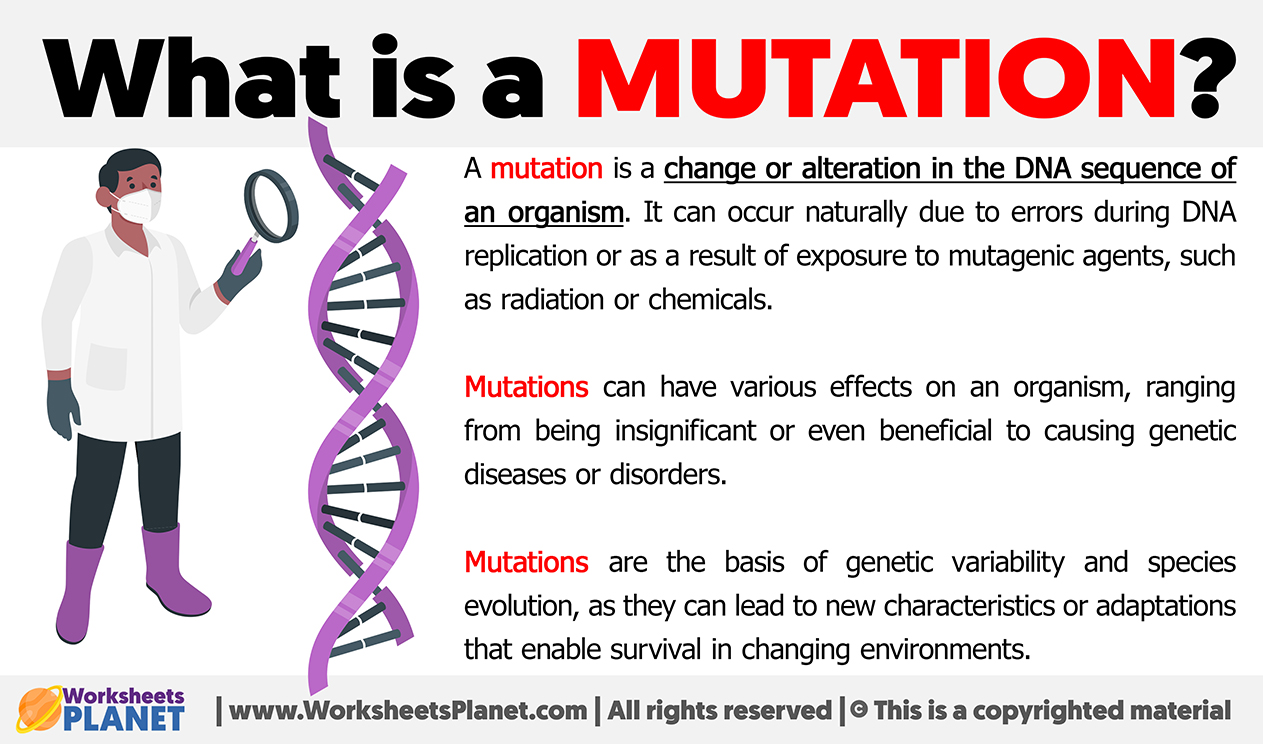
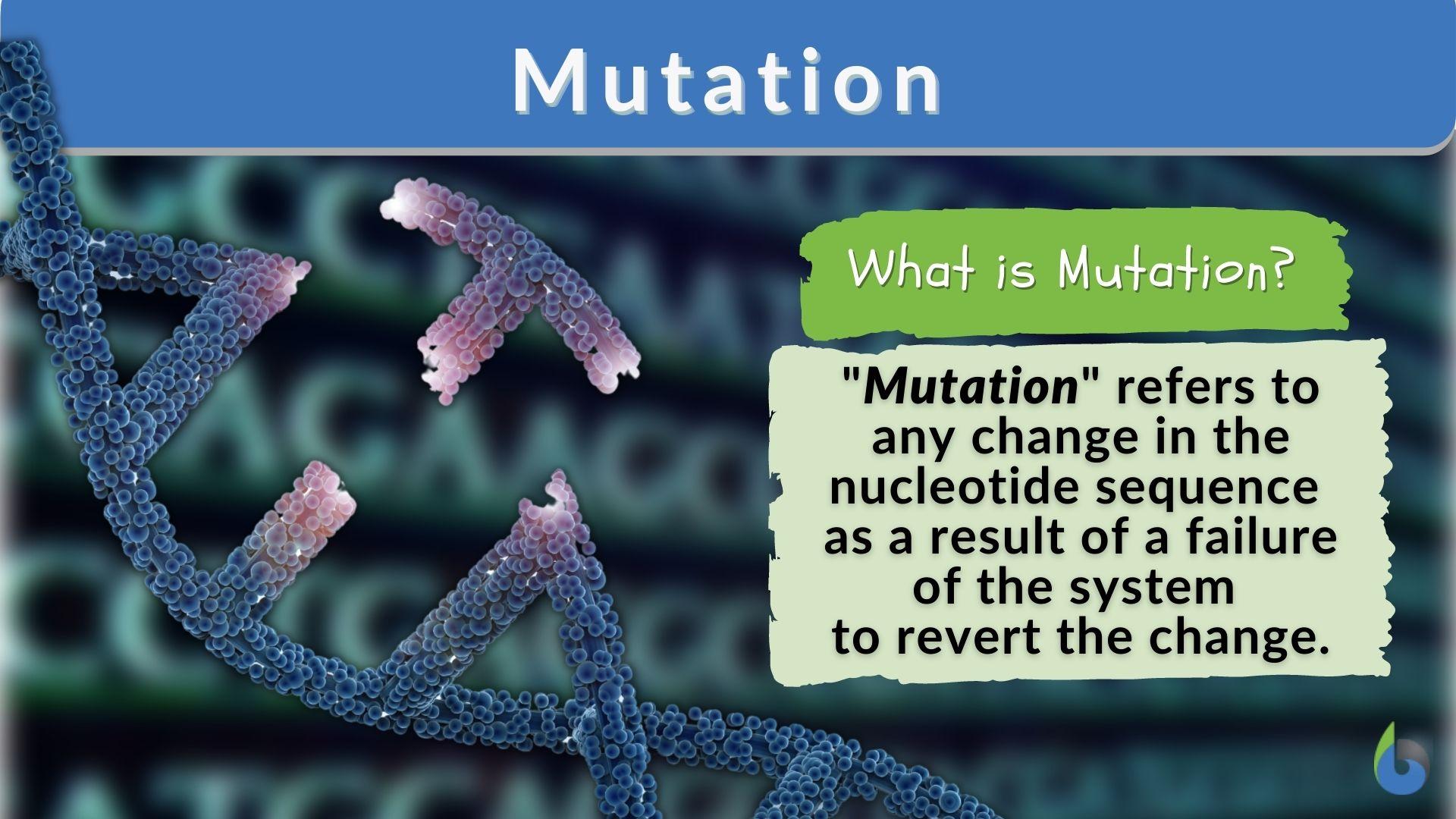
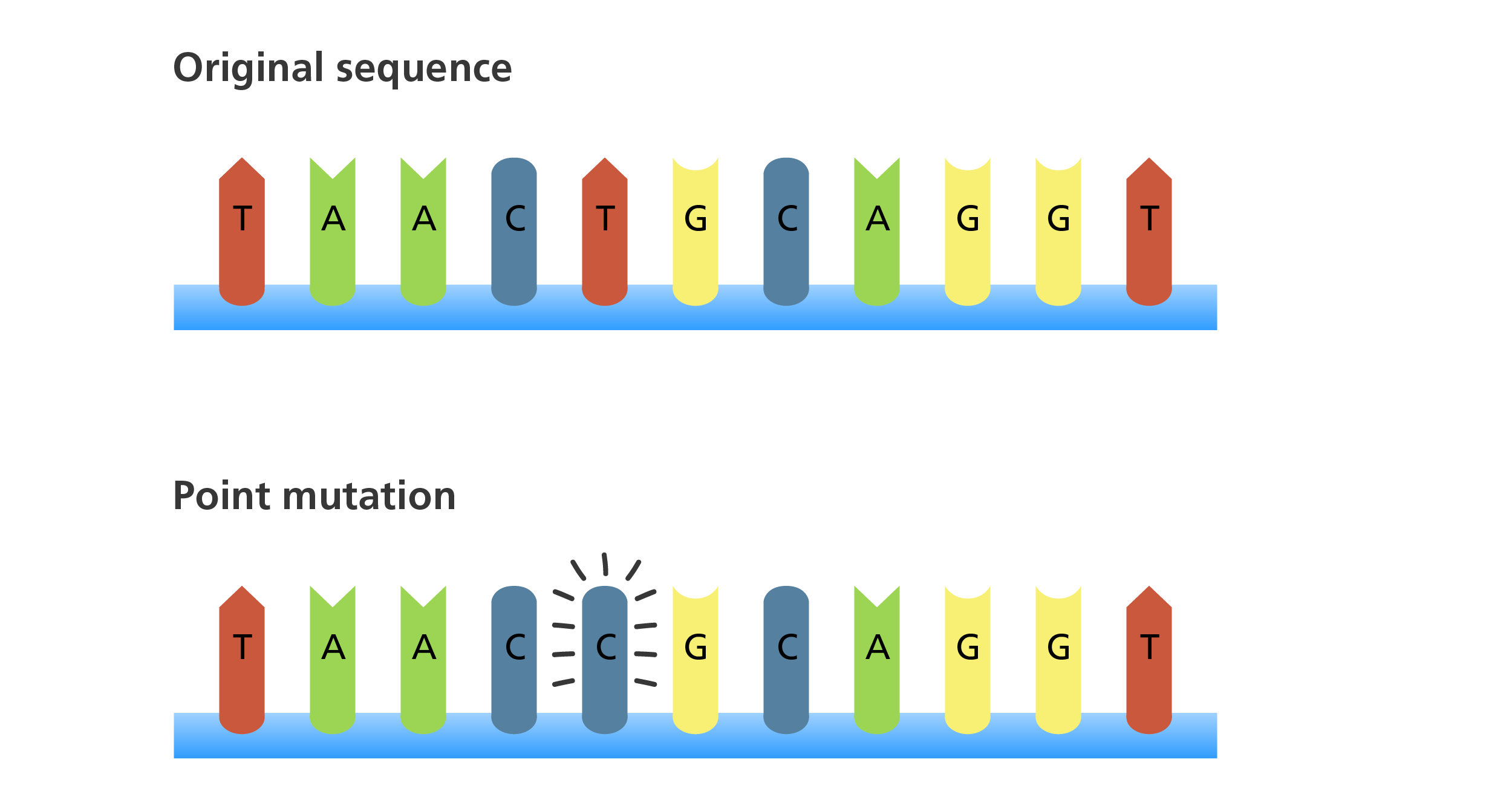
In the biological world, a mutation is a deviation from the norm—a change in the DNA sequence that can lead to evolutionary breakthroughs or catastrophic failures. In the realm of technology, particularly within software engineering and artificial intelligence, “mutation” carries a similarly transformative weight. It is not a random error to be avoided, but a sophisticated tool used to ensure code resilience, optimize machine learning models, and simulate complex systems.
As software systems grow in complexity, traditional testing and development methodologies often fall short. This is where the concept of mutation becomes critical. Whether it is through mutation testing to verify the quality of a test suite or the use of genetic algorithms to evolve AI, understanding what mutation is and how it functions is essential for any modern tech professional. This article explores the various facets of mutation in technology, from its role in quality assurance to its application in the next generation of autonomous systems.
Mutation Testing: The Ultimate Stress Test for Code
At its core, mutation testing is a structural testing technique used to evaluate the quality of existing software tests. While most developers are familiar with “code coverage”—a metric that measures how much of the source code is executed by a test suite—code coverage can be a “vanity metric.” It tells you that a line of code was run, but it doesn’t tell you if the test actually verified that the code was doing the right thing.
How Mutation Testing Differs from Standard Unit Tests
Standard unit tests check if the code meets specific requirements. Mutation testing, conversely, tests the tests. It works by intentionally introducing small, controlled faults (mutations) into the source code. If the existing test suite fails to detect these faults, the tests are considered “weak.”
For example, if a developer changes a mathematical operator from a “plus” to a “minus” in the source code and the test suite still passes, it indicates that the tests are not sensitive enough to catch logic errors. In the tech industry, this process is known as “killing the mutant.” If the test fails after the mutation, the mutant is killed; if the test passes, the mutant has survived, signaling a need for better test cases.
The Mechanics: Mutants, Killers, and Survivors
The process of mutation testing involves several distinct roles and outcomes. First, a “Mutator” (a software tool) creates multiple versions of the program, each containing one minute change, such as:
- Arithmetic Mutation: Changing
a + btoa - b. - Relational Mutation: Changing
x > ytox >= y. - Logical Mutation: Changing
if (A && B)toif (A || B).
Once these “mutants” are generated, the original test suite is run against every single one. The goal is a high “Mutation Score,” which is the percentage of mutants killed by the test suite. This rigorous process moves beyond simple execution checks and forces developers to write meaningful assertions that truly safeguard the logic of the application.
Mutation in Artificial Intelligence: Evolutionary Algorithms
In the field of Artificial Intelligence and Machine Learning, mutation takes on a more generative role. It is a fundamental component of Evolutionary Algorithms (EAs), which are inspired by biological evolution. These algorithms are used to solve optimization and search problems that are too complex for traditional linear programming.
Genetic Programming and the “Survival of the Fittest” Code
Genetic algorithms work by maintaining a “population” of potential solutions to a problem. Each solution is encoded as a string of data, similar to a chromosome. The algorithm uses three primary operators: selection, crossover, and mutation.
While selection and crossover (combining parts of two successful solutions) help refine the existing population, mutation is what introduces “genetic diversity.” By randomly altering parts of a solution’s code or parameters, the algorithm can explore entirely new areas of the “solution space.” Without mutation, an AI model might become “inbred,” repeatedly generating the same types of solutions and failing to innovate or find the absolute best result.
Balancing Exploration and Exploitation
In AI development, there is a constant tension between exploration (searching for new possibilities) and exploitation (refining known good solutions). Mutation is the primary engine of exploration.
If the mutation rate is too low, the algorithm may get stuck in a “local optimum”—a solution that is better than its immediate neighbors but worse than the best possible solution (the global optimum). If the mutation rate is too high, the algorithm becomes a random search, losing the progress made by previous generations. Calibrating the “mutation rate” is a high-level engineering task that determines how quickly an AI can learn and adapt to changing data environments.
Practical Applications and Tools in Modern Tech Stacks
The concept of mutation isn’t just theoretical; it is integrated into some of the most advanced development pipelines in the world. From ensuring the safety of financial software to evolving neural networks, mutation tools are becoming standard in the enterprise tech stack.
Top Mutation Testing Frameworks (Pitest, Stryker)
For developers looking to implement mutation testing, several robust frameworks have emerged.
- Pitest (PIT): This is the gold standard for Java and JVM-based languages. It is known for being extremely fast and integrating directly with build tools like Maven and Gradle.
- Stryker Mutator: Aimed at JavaScript, TypeScript, C#, and Scala, Stryker provides a highly visual report that shows exactly which mutants survived and where the logic gaps exist in the codebase.
- Infection: A popular mutation testing tool for PHP developers that helps improve the quality of unit tests in web applications.
By integrating these tools into a Continuous Integration/Continuous Deployment (CI/CD) pipeline, tech teams can ensure that no “weak” code reaches production, significantly reducing the technical debt and the likelihood of post-release bugs.
Mutation in Cybersecurity: Polymorphic Malware and Defense
Mutation also plays a critical role in the ongoing arms race of digital security. “Polymorphic” or “mutating” malware is software that constantly changes its identifiable features (its file name, encryption keys, or signature) to evade detection by traditional antivirus programs.
However, tech professionals also use mutation for defense. “Fuzzing” or “Fuzz Testing” is a security technique where mutation is used to generate a massive number of random or semi-random inputs to an application. The goal is to cause a crash or a memory leak, which reveals a vulnerability. By “mutating” valid inputs into invalid ones, security engineers can find and patch “Zero-Day” vulnerabilities before malicious actors can exploit them.
The Challenges and Future of Mutative Systems
Despite its immense power, the use of mutation in technology is not without its hurdles. As we look toward the future, the tech industry is working to overcome the computational costs associated with these techniques while moving toward more autonomous, self-healing systems.
The Computational Cost of High-Fidelity Mutation
The biggest drawback of mutation testing and evolutionary AI is the sheer amount of processing power required. Running a test suite thousands of times—once for every mutant created—can be incredibly time-consuming. In large-scale enterprise systems with millions of lines of code, full mutation testing can take hours or even days.
To solve this, researchers are developing “Smart Mutation” techniques. These use machine learning to predict which parts of the code are most likely to contain bugs, allowing the mutator to focus its efforts only on those high-risk areas. This reduces the “state space” and makes mutation a viable part of daily development workflows.
Towards Self-Healing Systems
The ultimate goal of mutation in tech is the creation of self-healing systems. Imagine a software infrastructure that can detect a failure, generate several “mutant” patches, test them in a sandboxed environment, and automatically deploy the one that fixes the error without human intervention.
We are already seeing the beginnings of this in cloud-native environments and Kubernetes orchestration, where systems can “mutate” their configuration to handle traffic spikes or recover from node failures. As AI models become better at writing code (through tools like GitHub Copilot and OpenAI’s Codex), the bridge between evolutionary algorithms and software maintenance will narrow. Mutation will no longer be a test we run on code; it will be the way code lives, breathes, and adapts to the digital ecosystem.
In conclusion, “mutation” in technology represents the shift from static, rigid systems to dynamic, resilient ones. Whether it is being used to harden a codebase against errors or to push the boundaries of what artificial intelligence can achieve, mutation is a cornerstone of modern innovation. By embracing the principles of change and variation, tech professionals can build software that doesn’t just work, but evolves.
aViewFromTheCave is a participant in the Amazon Services LLC Associates Program, an affiliate advertising program designed to provide a means for sites to earn advertising fees by advertising and linking to Amazon.com. Amazon, the Amazon logo, AmazonSupply, and the AmazonSupply logo are trademarks of Amazon.com, Inc. or its affiliates. As an Amazon Associate we earn affiliate commissions from qualifying purchases.