
Multi-level marketing (MLM) is a business model that has sparked intense debate in the realms of personal finance, entrepreneurship, and consumer protection for decades. Often marketed as a low-cost entry point into the world of business ownership, MLMs—also known as network marketing or direct selling—represent a multi-billion dollar global industry. However, for the individual looking to diversify their income or launch a side hustle, understanding the mechanics of this model is crucial. It is a structure that blends retail sales with a complex recruitment-based incentive system, creating a unique financial landscape that requires careful navigation.
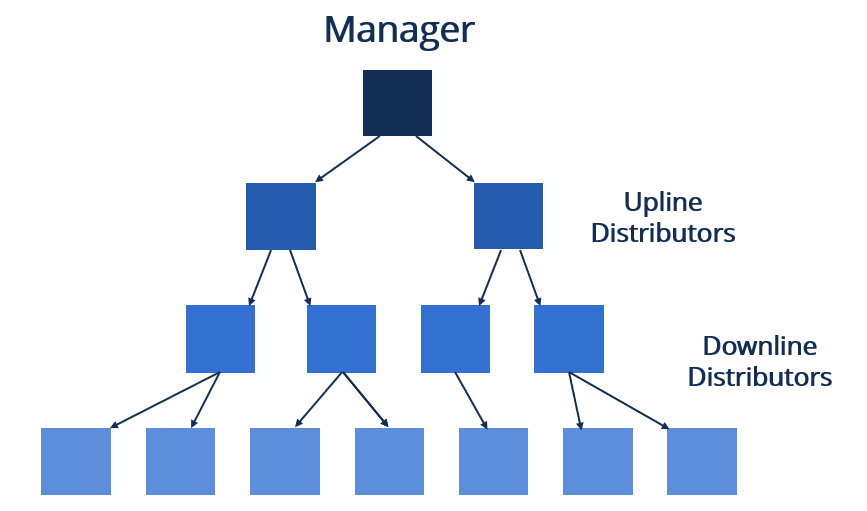
To truly understand what multi-level marketing is, one must look past the flashy marketing materials and focus on the underlying financial architecture. At its core, an MLM is a strategy that some direct sales companies use to encourage existing distributors to recruit new distributors. These new recruits represent the “downline” of the person who brought them in, and the recruiter typically earns a percentage of their downline’s sales. This creates a multi-layered structure where income is derived from two primary sources: direct sales to customers and commissions from the sales made by a recruited team.
Understanding the Core Architecture of Multi-Level Marketing
The financial framework of an MLM is what distinguishes it from traditional corporate structures or standard affiliate marketing. In a traditional retail model, a company sells products to a wholesaler, who sells to a retailer, who then sells to the end consumer. In an MLM, the company bypasses the traditional retail storefront and relies on a network of independent participants to move product and expand the sales force.
Direct Sales: The Front-End Revenue Stream
The most visible aspect of an MLM is the direct sale of products or services. These can range from health and wellness supplements and cosmetics to home utilities and financial services. Participants, often referred to as “distributors,” “consultants,” or “associates,” purchase inventory at a wholesale price and sell it to the public at a retail markup. This portion of the model is relatively straightforward and mirrors a traditional sales role. The profit margin on these individual sales constitutes the immediate, front-end income for the participant.
However, in many modern MLMs, the emphasis has shifted away from stocking physical inventory. Many companies now use a “drop-shipping” style model where the distributor facilitates a sale through a personalized website, and the company handles the shipping and fulfillment. In this scenario, the distributor earns a commission on the transaction without having to manage overhead or logistics.
Recruitment and the “Downline” Logic
The “multi-level” aspect of the name refers to the recruitment structure. This is the engine that drives the exponential growth of the organization. When a participant recruits a new member, they become that person’s “upline.” As the new recruit begins to sell products and potentially recruit others, the original participant earns a “residual” or “override” commission on all activities occurring within their hierarchical tree.
This structure is designed to incentivize leadership and training. Theoretically, the upline is rewarded for mentoring their team to be successful. However, from a financial perspective, this creates a mathematical tension. Because commissions are paid out across multiple levels of the hierarchy, the price of the product must be high enough to cover all these “points” of commission while still remaining competitive in the open market. This often leads to MLM products being positioned as “premium” or “specialized” to justify their higher price points.
The Financial Reality: Income Potential vs. Operational Costs
When evaluating an MLM as a potential source of income, it is essential to look at the hard data. While the marketing for these opportunities often highlights “top earners” and lifestyle freedom, the statistical reality for the average participant is often quite different. For those interested in the “Money” niche, the primary tool for evaluation is the Income Disclosure Statement (IDS).
Analyzing the Typical Income Disclosure Statement
Most reputable MLM companies are required to publish an annual Income Disclosure Statement. This document provides a breakdown of what participants at various ranks within the company actually earn. A consistent trend across the industry is a “heavy-tail” distribution. Typically, the top 1% to 3% of participants earn the vast majority of the commissions, often reaching six or seven figures.
In contrast, the bottom 90% of participants often earn very little, with many showing a gross annual income of less than $1,000. It is important to note that these figures usually represent gross income—meaning they do not account for the expenses incurred by the participant to run their business. When the cost of starter kits, monthly product minimums, marketing materials, and travel to conventions are factored in, a significant portion of participants may actually experience a net financial loss.
The Hidden Costs of Being a “Business Owner”
In the MLM world, participants are categorized as independent contractors, not employees. This means they are responsible for their own taxes, insurance, and operating expenses. To stay “active” and eligible for commissions, many MLMs require a minimum monthly personal volume (PV). This often leads to a phenomenon known as “garage qualifying,” where participants purchase product they cannot sell simply to maintain their rank or commission eligibility.

From a financial planning perspective, this makes the MLM model a high-risk venture for those without significant disposable income. Unlike a traditional job where you are paid for your time, or a traditional investment where you have an equity stake in an asset, an MLM requires a continuous reinvestment of capital and time with no guarantee of a return.
Distinguishing Between Legitimate MLMs and Financial Fraud
One of the most critical aspects of understanding multi-level marketing is being able to distinguish a legitimate business opportunity from an illegal pyramid scheme. While the structures look similar, the legal and financial distinctions are profound.
The Koscot Test and Regulatory Standards
In the United States, the Federal Trade Commission (FTC) uses what is often called the “Koscot Test” (derived from a 1975 legal case) to determine if a company is a pyramid scheme. A business is generally considered a pyramid scheme if the financial incentives are primarily based on the act of recruiting others rather than the sale of products to external customers.
If a company’s primary “revenue” comes from participants buying products themselves (internal consumption) rather than selling to “retail” customers outside the network, regulators may view it as a fraudulent scheme. For a participant, this is a vital distinction. In a legitimate MLM, there is a viable market for the product. In a pyramid scheme, the product is merely a veneer for a money-transfer scheme that will inevitably collapse when recruitment slows down.
Red Flags for Investors and Participants
When performing due diligence on an MLM as a potential income stream, several red flags should give an individual pause:
- High Buy-In Costs: If the initial investment is thousands of dollars for “inventory” or “training,” the risk increases significantly.
- Emphasis on Recruitment Over Sales: If the training focuses almost exclusively on how to “build a team” rather than how to find customers for the product.
- Complex Compensation Plans: If the math required to understand how you get paid is intentionally opaque, it may be designed to hide a low probability of profit.
- Pay-to-Play Requirements: Requiring participants to pay for mandatory “success seminars” or high-priced monthly subscriptions to remain active.
The Psychological and Social Capital at Risk
In the context of personal finance, we often talk about “social capital.” This is the value of your relationships and your reputation within your community. One of the unique risks of the MLM model is the commodification of these personal relationships.
The Commodification of Personal Relationships
Most MLMs encourage participants to start with their “warm market”—friends, family, and colleagues. While this lowers the barrier to entry for sales, it puts personal relationships at risk. If the products underperform or if the recruit feels pressured into a business opportunity that doesn’t benefit them, the participant risks damaging their social network. From a long-term professional standpoint, this can be more costly than a simple loss of capital.
Opportunity Cost and Career Trajectory
Another financial concept to consider is “opportunity cost.” The hundreds of hours a participant spends prospecting, hosting “parties,” and attending recruitment meetings could be spent elsewhere. For many, those hours would yield a higher and more consistent return if invested in a traditional side hustle (like freelancing), professional certifications, or even a part-time job. Understanding MLM requires looking not just at what you might gain, but what you are giving up to pursue it.
The Future of Network Marketing in the Gig Economy
As the gig economy evolves, the line between multi-level marketing and other forms of digital income is blurring. The rise of social media has transformed how these businesses operate, moving from door-to-door sales to “social selling.”
Digital Transformation and Social Selling
Today, many MLM participants act as “influencers,” using platforms like Instagram and TikTok to build a brand around a lifestyle that the product supposedly enables. This has integrated MLM into the broader creator economy. This shift has allowed for more efficient scaling, as a single post can reach thousands of potential customers or recruits. However, it also increases competition and market saturation, as participants are no longer limited by geography.

Diversifying Income Beyond the MLM Model
For those looking to build wealth, the consensus among financial experts is rarely to rely on an MLM as a sole source of income. Instead, if an individual chooses to participate, it should be viewed as one small part of a larger, diversified financial strategy. The most successful participants are often those who already have a platform or a specific skill set that allows them to sell products effectively without relying solely on recruitment.
Ultimately, multi-level marketing is a complex financial vehicle. It offers the allure of entrepreneurship with the infrastructure of an established corporation. However, the high failure rate and the structural emphasis on recruitment make it a path fraught with financial risk. For the savvy individual, success in an MLM—if it is to be found at all—requires a rigorous analytical approach, a clear understanding of the legal landscape, and an unwavering focus on the bottom line.
aViewFromTheCave is a participant in the Amazon Services LLC Associates Program, an affiliate advertising program designed to provide a means for sites to earn advertising fees by advertising and linking to Amazon.com. Amazon, the Amazon logo, AmazonSupply, and the AmazonSupply logo are trademarks of Amazon.com, Inc. or its affiliates. As an Amazon Associate we earn affiliate commissions from qualifying purchases.