
The passage of a new federal budget bill is often viewed through the lens of political maneuvering, but for the savvy investor, business owner, and household planner, it represents something far more tangible: a shift in the economic landscape. A budget bill is the ultimate statement of a nation’s priorities, dictating where capital will flow, which industries will receive tailwinds, and how much of your hard-earned income will remain in your pocket.
The latest legislative package is no exception. It contains a complex web of tax adjustments, sector-specific investments, and updates to retirement regulations that will have a profound impact on personal finance and corporate strategy for years to come. Understanding these changes is not merely a matter of staying informed; it is a necessity for protecting and growing your net worth in an evolving fiscal environment.

Understanding the Tax Implications for Individuals and Families
At the heart of any budget bill are the provisions that directly affect the taxpayer. The latest legislation introduces several key modifications designed to address the current inflationary environment while balancing the need for federal revenue. For the average family, these changes manifest in three primary areas: tax bracket adjustments, credits, and the treatment of itemized deductions.
Changes to Standard Deductions and Tax Brackets
One of the most critical aspects of the new bill is the adjustment of income tax brackets to account for inflation. While the core tax rates remain largely unchanged, the income thresholds for each bracket have been shifted upward. This “indexing” is a vital mechanism to prevent “bracket creep,” where cost-of-living raises inadvertently push taxpayers into higher tax percentages despite no real increase in their purchasing power.
For high-earning individuals, the bill introduces nuanced changes to the alternative minimum tax (AMT) thresholds. By raising the exemption levels, the bill ensures that fewer middle-to-upper-class families are caught in a tax trap originally designed for the ultra-wealthy. Additionally, the standard deduction has seen a modest increase, providing a slightly larger “floor” of tax-free income for those who do not itemize.
The Expansion of Family-Focused Tax Credits
The new budget places a significant emphasis on the Child Tax Credit (CTC) and the Earned Income Tax Credit (EITC). The legislation aims to make these credits more accessible to lower- and middle-income families by increasing the refundable portion of the credit. For parents, this means a direct reduction in tax liability or a larger refund, which can be strategically allocated toward 529 college savings plans or other long-term investment vehicles.
Furthermore, the bill includes provisions for child and dependent care expenses. By increasing the cap on qualifying expenses, the government is effectively subsidizing a portion of the rising costs of childcare, allowing more parents to remain in the workforce. From a personal finance perspective, maximizing these credits requires proactive planning, especially for those whose income hovers near the phase-out thresholds.
Retirement and Long-Term Savings: New Rules for the Future
The “Money” niche has seen a flurry of activity lately due to significant updates in how retirement accounts are managed. Building on previous legislative frameworks, the new budget bill introduces several “SECURE 2.0”-style enhancements that change the math for retirement planning.
Adjustments to IRA and 401(k) Contribution Limits
To encourage higher rates of private savings, the bill authorizes an increase in the annual contribution limits for 401(k), 403(b), and most IRA accounts. What is particularly noteworthy is the introduction of “super catch-up” contributions for individuals aged 60 to 63. This allows those nearing the end of their peak earning years to aggressively front-load their retirement accounts, taking advantage of tax-deferred growth just before they transition into the withdrawal phase.
Moreover, the bill mandates that many new employer-sponsored plans must now include an automatic enrollment feature. For employees, this “nudge” is a powerful tool for wealth accumulation, ensuring that a percentage of their salary is invested by default unless they specifically opt-out.
Required Minimum Distributions (RMDs) and Roth Conversions
Longevity is a primary concern in modern financial planning, and the new budget bill addresses this by further pushing back the age for Required Minimum Distributions (RMDs). By allowing retirees to keep their money in tax-advantaged accounts for longer, the government is facilitating more extended periods of compounded growth.
Additionally, the bill clarifies the rules surrounding Roth conversions. With the potential for future tax rates to rise as the national debt increases, the ability to convert traditional retirement assets into Roth accounts—where withdrawals are tax-free—is a critical strategy. The new bill provides a clearer roadmap for these “backdoor” strategies, making it easier for high-income earners to build tax-free buckets of wealth.
Corporate Shifts and Small Business Growth
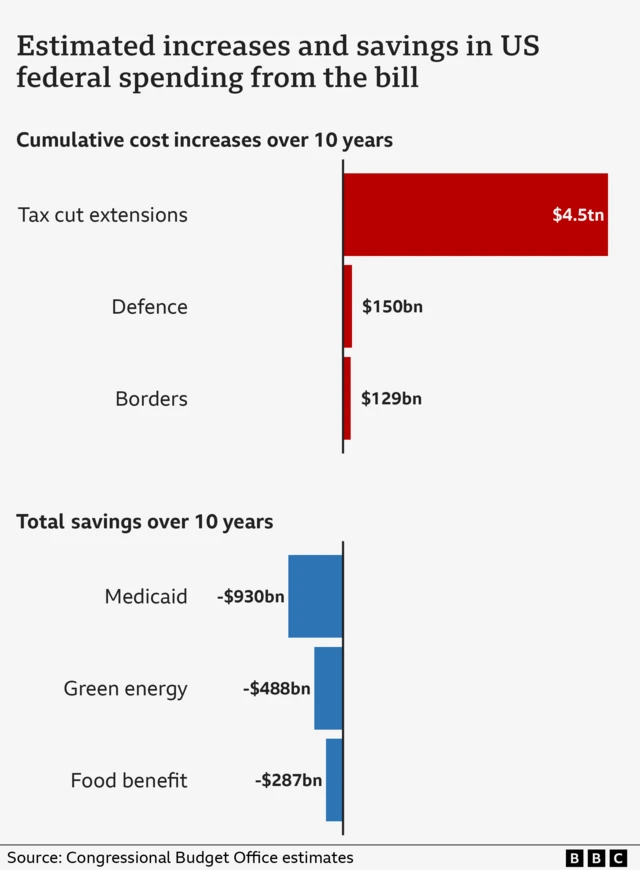
For entrepreneurs and business leaders, the budget bill is a double-edged sword. While it introduces new compliance burdens, it also opens doors to significant tax incentives, particularly for those involved in domestic manufacturing, research and development (R&D), and sustainable technology.
R&D Tax Credits and Manufacturing Incentives
A major point of contention in recent years has been the treatment of R&D expenses. Previously, businesses could deduct these costs in the year they were incurred. A recent shift toward amortization—spreading the deduction over five years—put a significant cash flow strain on startups and tech-heavy firms. The new budget bill offers a partial reprieve, allowing for more favorable “expensing” of certain domestic research costs. This is a massive win for small-to-mid-sized enterprises (SMEs) that rely on innovation to compete.
Furthermore, the bill includes robust incentives for “onshoring” or “near-shoring” operations. Businesses that move their supply chains back to domestic soil are eligible for various investment tax credits (ITCs) and accelerated depreciation schedules on new machinery and equipment.
Payroll Taxes and Compliance Requirements
On the flip side, the bill strengthens the enforcement capabilities of the IRS, particularly regarding corporate tax compliance. Business owners should expect increased scrutiny on “pass-through” entities and a higher frequency of audits for those claiming complex credits. Additionally, the bill introduces minor adjustments to payroll tax responsibilities, specifically targeting high-salary employees to help shore up the Social Security Trust Fund. For the business owner, this means a slight increase in the “cost of labor” and necessitates a review of compensation structures.
Economic Stimulus and Sector-Specific Investments
The way the government spends money is just as important as the way it collects it. The new budget bill allocates hundreds of billions of dollars toward specific sectors of the economy, creating distinct winners and losers in the stock market and the broader investment landscape.
The Clean Energy and Infrastructure Push
Following the trend of previous industrial policies, this bill continues to pour capital into the “green economy.” This includes expanded tax credits for electric vehicle (EV) infrastructure, renewable energy production, and carbon capture technology. Investors should look toward utilities and industrial manufacturers that are pivoting toward these technologies, as the government subsidies effectively de-risk these long-term projects.
Infrastructure also remains a bipartisan priority. The bill earmarks significant funds for broadband expansion in rural areas, grid modernization, and transportation logistics. This “hard asset” spending provides a steady stream of revenue for engineering firms, construction companies, and raw material suppliers.
Healthcare Costs and Prescription Drug Provisions
One of the most significant “money” stories within the bill is the continued effort to lower healthcare costs. By empowering the government to negotiate prices on a wider range of prescription drugs, the bill aims to reduce federal spending on Medicare. For the individual, this could mean lower out-of-pocket costs and lower insurance premiums. However, for investors in the pharmaceutical sector, it suggests a potential squeeze on profit margins, necessitating a move toward biotech firms with more robust, non-negotiable patent portfolios.

Strategic Financial Moves to Make Now
With the landscape shifted, what should the individual investor or business owner do? The key is to move from a reactive posture to a proactive one.
First, review your tax withholding and estimated payments. With the changes to brackets and credits, your current withholding may no longer be optimized, leading to either an unwanted tax bill or an unnecessarily large interest-free loan to the government.
Second, re-evaluate your retirement contribution strategy. If you fall into the “super catch-up” age bracket, you must coordinate with your HR department or financial advisor to ensure you are hitting the new maximums. The power of tax-deferred growth in your 60s cannot be overstated.
Third, for business owners, now is the time to audit your supply chain and R&D activities. If you can qualify for the new “onshoring” credits, the capital expenditure on new equipment could be significantly offset by tax savings, effectively subsidizing your company’s growth.
Finally, keep a close eye on the bond market. The sheer size of the budget bill impacts the national deficit, which in turn influences Treasury yields. As the government issues more debt to fund these initiatives, interest rates may remain “higher for longer,” affecting everything from mortgage rates to the valuation of “growth” stocks.
In conclusion, the new budget bill is far more than a political document. It is a comprehensive financial roadmap that alters the incentives for saving, investing, and doing business. By understanding the granular details of these changes—from tax credits to sector-specific subsidies—you can position yourself to weather any economic volatility and capitalize on the opportunities the new fiscal reality provides.
aViewFromTheCave is a participant in the Amazon Services LLC Associates Program, an affiliate advertising program designed to provide a means for sites to earn advertising fees by advertising and linking to Amazon.com. Amazon, the Amazon logo, AmazonSupply, and the AmazonSupply logo are trademarks of Amazon.com, Inc. or its affiliates. As an Amazon Associate we earn affiliate commissions from qualifying purchases.