
Iceland, a land of breathtaking landscapes, geothermal wonders, and a vibrant culture, also possesses a unique economic identity, central to which is its national currency. For anyone planning a visit, considering investment, or simply curious about global financial systems, understanding Iceland’s currency is a foundational step. The official currency of Iceland is the Icelandic Króna (ISK). While often a smaller player on the global financial stage, the Króna carries a significant history and reflects the robust, yet sometimes volatile, economic journey of this North Atlantic island nation.
Unlike many of its European neighbors that adopted the Euro, Iceland has steadfastly maintained its independent currency. This decision is deeply intertwined with its economic structure, trade relationships, and the sovereign control it wishes to maintain over its monetary policy. The Króna, pluralized as “krónur,” is not merely a medium of exchange; it is a symbol of Icelandic economic independence and a critical tool through which the Central Bank of Iceland navigates the nation’s financial stability and growth. For individuals and businesses alike, grasping the nuances of the ISK is essential, from understanding its physical forms to appreciating the economic forces that shape its value in the global marketplace. This article delves deep into the Icelandic Króna, offering insights into its identity, economic context, practical usage, and its standing in the wider financial world.
The Icelandic Króna (ISK): A Deep Dive into its Identity
The Icelandic Króna, abbreviated as ISK and often symbolized with kr, is more than just money; it’s a testament to Iceland’s economic resilience and cultural heritage. Its journey through history, distinct design, and the management by its central bank all contribute to its unique identity.
Historical Roots and Evolution
The Króna’s origins can be traced back to the late 19th century when Iceland, then a part of the Kingdom of Denmark, used the Danish Krone. However, with the dissolution of the Scandinavian Monetary Union in 1914 and Iceland gaining home rule in 1918, the Icelandic Króna officially emerged as a distinct currency. Initially, its value was pegged to the Danish Krone, but it began its independent float in 1922. The 20th century saw the Króna undergo significant transformations, including periods of high inflation, particularly during and after World War II, which necessitated several revaluations. A major redenomination occurred in 1981, where 100 old krónur became 1 new króna, a move aimed at simplifying transactions and tackling runaway inflation. This history underscores a currency that has weathered numerous economic storms, reflecting Iceland’s adaptability.
Physical Appearance: Coins and Banknotes
The physical manifestations of the Icelandic Króna are both practical and aesthetically rich, often featuring motifs from Iceland’s unique nature and mythology.
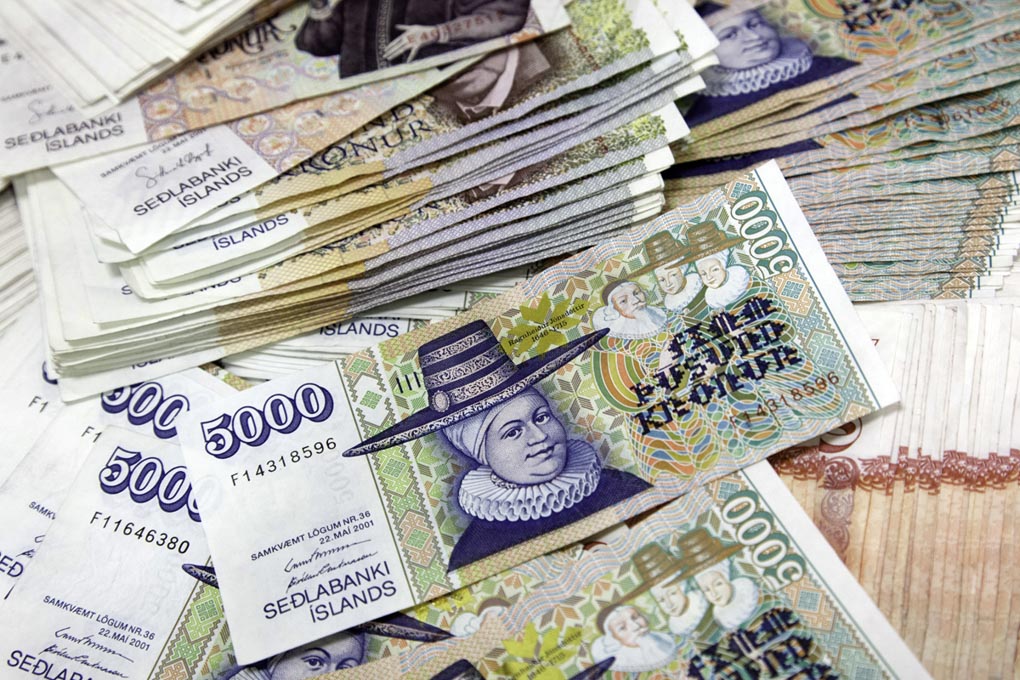
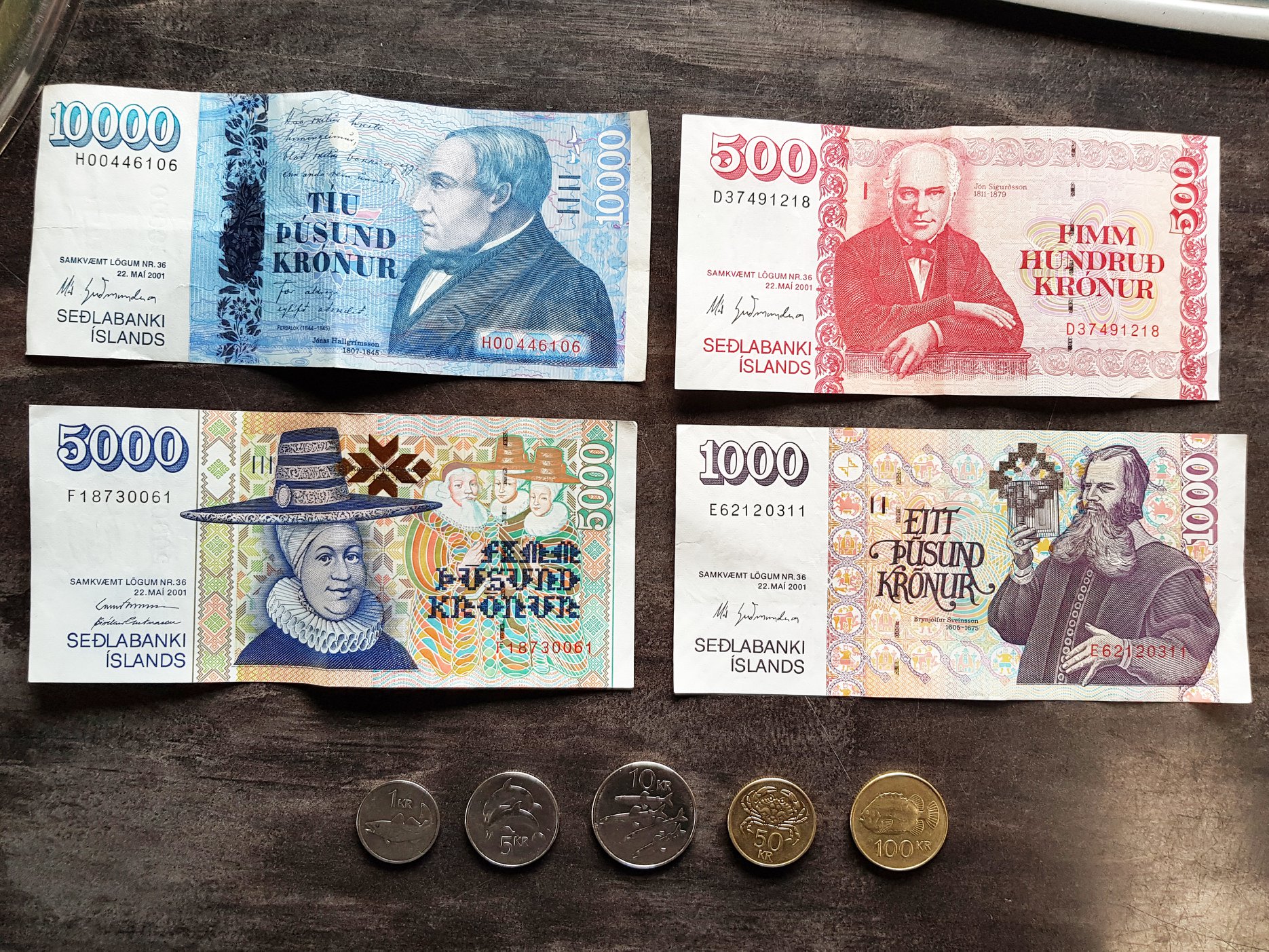
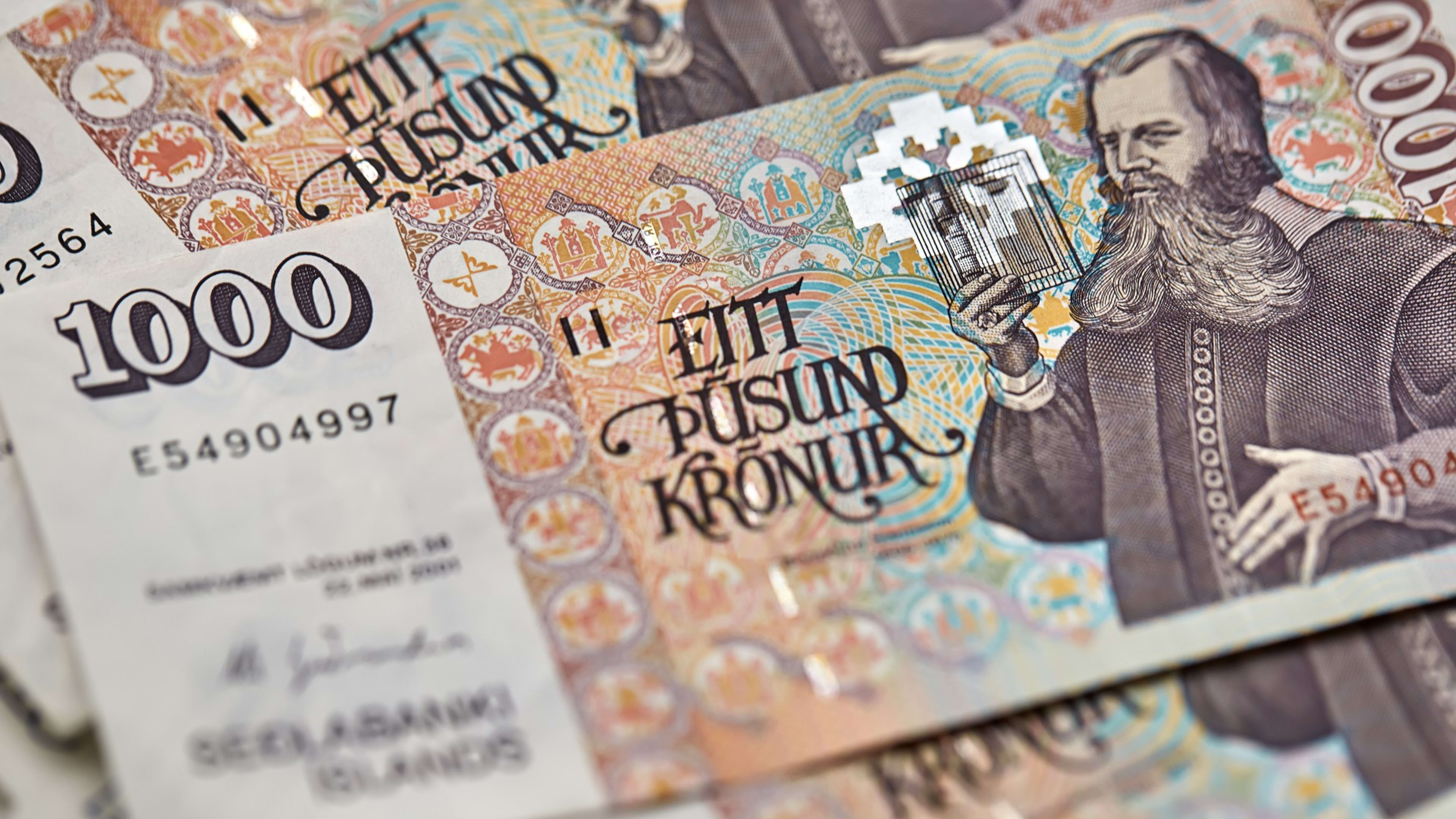
- Banknotes: Icelandic banknotes are renowned for their elegant design and high security features. They are issued in denominations of 500, 1,000, 2,000, 5,000, and 10,000 Krónur. Each denomination features prominent Icelandic historical figures, artists, and literary giants, alongside intricate patterns and symbols relevant to Icelandic culture and landscape. For instance, the 10,000 Króna note features Jónas Hallgrímsson, a renowned poet and naturalist, accompanied by Icelandic landscapes. The newer series notes incorporate modern security threads, watermarks, and holographic elements to prevent counterfeiting, making them safe for circulation.
- Coins: Coins are issued in denominations of 1, 5, 10, 50, and 100 Krónur. What makes Icelandic coins particularly distinct are the marine animals depicted on their reverse sides, symbolizing Iceland’s historical reliance on the sea and its rich maritime heritage. You’ll find a cod on the 1 Króna coin, a common fish on the 5 Króna, a capelin on the 10 Króna, a crab on the 50 Króna, and a squid on the 100 Króna coin. The obverse typically features the national coat of arms of Iceland. These designs are not just decorative; they tell a story of Iceland’s connection to the ocean, which has been the bedrock of its economy for centuries.
The Role of Seðlabanki Íslands in Currency Management
The Central Bank of Iceland, or Seðlabanki Íslands, is the sole issuer of the Icelandic Króna and plays a pivotal role in managing its stability and ensuring the smooth functioning of the financial system. Its primary objectives include maintaining price stability, promoting financial stability, and operating an efficient payment system.
Seðlabanki Íslands influences the Króna’s value through its monetary policy tools, primarily the setting of interest rates. By adjusting the key interest rate (the seven-day collateralized lending rate), the central bank aims to control inflation, stimulate or cool down economic activity, and indirectly impact the exchange rate of the Króna. The bank also manages Iceland’s foreign exchange reserves, intervening in the currency markets when deemed necessary to smooth out excessive volatility or to support the Króna’s value. Its independence is crucial for maintaining confidence in the Króna, both domestically and internationally.
Understanding the Króna’s Denominations and Symbolism
The denominations chosen for the Króna reflect the general price levels within the Icelandic economy. While a 1 Króna coin might seem small, it is still in circulation, indicating that relatively low-value transactions might still occur in cash, though digital payments dominate. The symbolism embedded in both coins and banknotes serves as a constant reminder of Iceland’s cultural identity, its deep connection to nature, and the historical figures who have shaped the nation. This isn’t just about financial instruments; it’s about national pride and a continuous narrative of heritage, resilience, and progress.
Economic Forces Shaping the Króna’s Value
The value of any currency is a complex interplay of various economic forces, and the Icelandic Króna is no exception. Its exchange rate against major currencies like the Euro or US Dollar is influenced by domestic economic performance, international trade, and the monetary policy decisions made by Seðlabanki Íslands.
Key Economic Indicators and their Influence
Several macroeconomic indicators are crucial in determining the Króna’s strength or weakness.
- Inflation: High inflation relative to other countries can erode the purchasing power of the Króna, leading to depreciation. The central bank’s efforts to keep inflation within its target range are therefore vital.
- Interest Rates: As mentioned, the Central Bank uses interest rates as a primary tool. Higher interest rates can attract foreign capital seeking better returns, increasing demand for the Króna and potentially strengthening its value. Conversely, lower rates might make the Króna less attractive.
- Economic Growth (GDP): A strong and stable Gross Domestic Product (GDP) growth indicates a healthy economy, which typically bolsters investor confidence and demand for the national currency.
- Unemployment Rate: A low and stable unemployment rate generally points to a robust economy, which can positively influence the Króna.
- Balance of Payments: This indicator tracks all financial transactions between Iceland and the rest of the world. A consistent current account surplus (exports exceeding imports) indicates that more foreign currency is flowing into Iceland than out, which strengthens the Króna.
Impact of Tourism and International Trade
Tourism has become an increasingly dominant factor in the Icelandic economy, and by extension, for the Króna. The influx of millions of tourists each year brings substantial foreign currency into the country, increasing the demand for ISK as visitors exchange their home currencies to spend in Iceland. This strong demand can lead to appreciation of the Króna. However, an over-reliance on tourism also exposes the Króna to global economic shocks and travel downturns, as demonstrated during the COVID-19 pandemic.
Beyond tourism, Iceland’s traditional export sectors, primarily fish products and aluminum, also play a significant role. Strong demand and favorable prices for these exports can bring in foreign currency, supporting the Króna. Conversely, fluctuations in commodity prices or global demand can affect Iceland’s balance of trade and, consequently, the Króna’s value. Investment flows, particularly foreign direct investment (FDI) into Icelandic industries, also influence the demand for ISK.
Monetary Policy and Interest Rate Dynamics
The Central Bank of Iceland’s monetary policy is arguably the most direct and powerful influence on the Króna’s short-to-medium-term value. By setting the policy interest rate, the bank signals its stance on inflation and economic stability. If inflation is high or the economy is overheating, the central bank might raise interest rates to cool demand, which typically strengthens the Króna by attracting ‘hot money’ from international investors seeking higher returns. If the economy is sluggish or inflation is too low, the central bank might lower rates to stimulate activity, which can weaken the Króna. These decisions are made quarterly by the Monetary Policy Committee (MPC) and are closely watched by market participants. The central bank also employs other tools, such as foreign exchange market interventions, though these are typically used sparingly to counter excessive volatility rather than to dictate a specific exchange rate level.
Exchange Rate Mechanisms and Market Perceptions
The Icelandic Króna operates under a floating exchange rate regime. This means its value is determined by the forces of supply and demand in the foreign exchange market, without a fixed peg to another currency. While the central bank can intervene, it generally allows the market to determine the rate. Market perceptions, often influenced by news, geopolitical events, and investor sentiment, can lead to rapid shifts in the Króna’s value. For instance, positive news about Iceland’s economic outlook or a new lucrative export deal can boost confidence and strengthen the Króna, while negative news can lead to depreciation. The relatively small size and liquidity of the ISK market mean it can sometimes experience higher volatility compared to major global currencies.
Practical Financial Considerations for Visitors and Residents
Whether you’re visiting Iceland for its stunning landscapes or residing there, understanding the practical aspects of managing your money is crucial. Iceland has a modern financial infrastructure, but some local specifics are worth noting.
Navigating Payments: Cards, Cash, and Digital Wallets
Iceland is remarkably progressive when it comes to cashless payments. Credit and debit cards are widely accepted almost everywhere – from major hotels and restaurants to remote gas stations and even small guesthouses. Visa and Mastercard are universally accepted, while American Express and Discover are also common, though not as ubiquitous. It’s not uncommon for Icelanders to go for weeks without touching physical cash. Therefore, reliance on cards is highly recommended for convenience and security. Most transactions involve a tap-and-pay system, and ATMs are readily available in towns and cities if you do need cash, though fees may apply. Digital payment methods and mobile wallets are also gaining traction, further reducing the need for physical currency.
Smart Currency Exchange Strategies
While cards are king, having a small amount of Krónur for minor purchases (like a local hot dog stand or tipping, though tipping is not customary in Iceland) can be useful.
- Avoid Airport Exchange Bureaus: These generally offer less favorable exchange rates and higher fees.
- Use ATMs (Bankomats): If you need cash, withdrawing directly from an ATM using your debit card often provides a better exchange rate than currency exchange offices. However, be mindful of your bank’s international transaction fees and ATM withdrawal limits. Look for ATMs affiliated with reputable Icelandic banks (e.g., Arion Banki, Íslandsbanki, Landsbankinn).
- Inform Your Bank: Always notify your bank about your travel plans to Iceland to prevent your card from being flagged for suspicious activity.
- Dynamic Currency Conversion (DCC): When paying by card or withdrawing cash, you might be asked if you want to pay in your home currency or ISK. Always choose to pay in ISK. This allows your bank to perform the conversion at its typically more favorable exchange rate, rather than the merchant’s or ATM operator’s less competitive rate.
Budgeting and Cost of Living Insights
Iceland is known for being an expensive country, particularly for visitors. Understanding this is key to effective budgeting.
- Accommodation: Can be pricey, especially in Reykjavik and during peak season. Booking in advance is advisable.
- Food: Groceries are expensive, and dining out can be significantly more so. Self-catering when possible can help manage costs. Look for budget-friendly grocery stores like Bónus or Krónan.
- Transportation: Car rental is popular for exploring, but fuel costs are high. Public transport is limited outside of Reykjavik.
- Activities: Many of Iceland’s natural wonders are free to visit, but organized tours and popular attractions (like the Blue Lagoon) can be costly.
- Tips: Tipping is not expected in Iceland, neither in restaurants, hotels, nor for tour guides, as service charges are typically included in prices.
For residents, the cost of living remains high, particularly for housing, utilities, and imported goods. Wages are generally higher to compensate, but careful financial planning is essential. Understanding the local tax system and social security contributions is also crucial for budgeting as a resident.
Understanding Banking Services in Iceland
Iceland’s banking sector is modern and efficient. The three main commercial banks are Landsbankinn, Íslandsbanki, and Arion Banki. For residents, opening an account is a relatively straightforward process, typically requiring a valid ID, proof of address, and an Icelandic identification number (kennitala). These banks offer a full range of services, including checking accounts, savings accounts, loans, and online banking platforms. Online banking and mobile apps are sophisticated, allowing for easy management of finances, bill payments, and transfers. International transfers are also generally efficient, though exchange rates and fees should be considered. Understanding the local banking hours and any specific holiday closures is also practical.
The Króna in the Global Financial Landscape: Challenges and Opportunities
While the Icelandic Króna may not hold the global clout of the US Dollar or the Euro, its unique position within the international financial system presents both distinct challenges and strategic opportunities for investors, businesses, and the nation itself.
Capital Controls: A Historical Perspective and Current Status
One of the most defining aspects of the Króna’s recent history has been the implementation of capital controls. Following the catastrophic collapse of Iceland’s major banks during the 2008 financial crisis, the government imposed strict capital controls to prevent a mass exodus of capital, stabilize the Króna, and rebuild its financial system. These controls restricted the movement of Króna assets out of the country and limited foreign exchange transactions.
While initially controversial and economically restrictive, they were gradually eased and fully lifted in 2017. This careful and phased removal demonstrated Iceland’s commitment to returning to conventional financial market operations, restoring confidence among international investors. The experience highlights the vulnerability of a small, open economy to global financial shocks and the drastic measures that might be taken to protect its currency and financial stability. Today, the Króna is fully convertible, and capital can flow freely in and out of the country, though the memory of the crisis and the controls still informs policy decisions.
Investment Implications: Icelandic Markets and ISK Exposure
For international investors, dealing with the Icelandic Króna requires a nuanced understanding.
- Currency Risk: Investing in Icelandic assets (e.g., stocks, bonds) means exposure to ISK currency risk. Fluctuations in the Króna’s exchange rate can significantly impact the returns on investments when converted back into a foreign currency. A strong Króna can boost returns, while a weakening Króna can erode them.
- Fixed Income: Icelandic government bonds and corporate bonds can offer attractive yields compared to many developed markets, partly due to higher interest rates set by Seðlabanki Íslands to combat inflation. However, these higher yields often come with higher currency volatility risk.
- Equity Market: The Icelandic stock market (Nasdaq Iceland) is relatively small but features companies in sectors like fisheries, tourism, technology, and pharmaceuticals. Investing here means participating directly in the Icelandic economy’s growth.
- Diversification: For some investors, a small allocation to Icelandic assets can offer diversification benefits due to the ISK’s often uncorrelated movements with major global currencies, though this comes with heightened risk.
Businesses operating in or with Iceland must also carefully manage their ISK exposure. Importing goods requires converting foreign currency to ISK, while exporting means converting ISK revenues back into foreign currency. Hedging strategies, such as forward contracts, can be employed to mitigate currency risk.
The Future of Payments: Digital Transformation in Iceland
Iceland is at the forefront of digital payment adoption. The high penetration of internet and mobile usage, combined with a tech-savvy population, has led to a near-cashless society. This trend is expected to continue, with innovations in financial technology (fintech) driving further changes.
- Mobile Payments: Growth in mobile payment apps and contactless payments is accelerating.
- Blockchain and Crypto: While not directly replacing the Króna, discussions around blockchain technology and its potential applications, including the possibility of a Central Bank Digital Currency (CBDC), are ongoing. Seðlabanki Íslands has been actively researching CBDCs, exploring how a digital Króna could complement existing payment systems and enhance financial stability in the long run. The high level of financial digitalization in Iceland makes it a fertile ground for such innovations.
- Open Banking: The development of open banking initiatives is allowing for greater integration and innovation among financial service providers, potentially leading to new services and more efficient payment systems for both consumers and businesses.
The Króna’s Resilience and Future Prospects
The Icelandic Króna has proven its resilience through significant economic challenges, from the global financial crisis to the more recent pandemic-induced downturns. Its future prospects are intrinsically linked to Iceland’s economic diversification, sustainable resource management, and prudent monetary policy. As Iceland continues to attract foreign investment and visitors, and as its key industries adapt to global changes, the Króna will remain a crucial barometer of the nation’s economic health. The ongoing debate about whether Iceland should eventually adopt the Euro periodically resurfaces, often linked to discussions about reducing currency volatility and gaining easier access to the Eurozone market. However, for the foreseeable future, the Icelandic Króna stands firm as the sovereign currency, a reflection of a proud and independent nation navigating its path in the global economy. Understanding the ISK is therefore not just about currency exchange; it’s about appreciating the dynamic economic landscape of one of the world’s most unique countries.
aViewFromTheCave is a participant in the Amazon Services LLC Associates Program, an affiliate advertising program designed to provide a means for sites to earn advertising fees by advertising and linking to Amazon.com. Amazon, the Amazon logo, AmazonSupply, and the AmazonSupply logo are trademarks of Amazon.com, Inc. or its affiliates. As an Amazon Associate we earn affiliate commissions from qualifying purchases.