
In the modern era, the game of golf has undergone a radical transformation. What was once a sport defined by handwritten scorecards and manual calculations is now a sophisticated data-driven ecosystem. At the heart of this evolution is the “handicap”—a numerical representation of a golfer’s potential. While the concept of a handicap has existed for centuries to level the playing field, today it serves as a masterclass in software engineering, algorithmic processing, and cloud-based data management. Understanding the handicap in golf today requires more than a rulebook; it requires an understanding of the technology that powers the World Handicap System (WHS).

Decoding the Algorithm: The Software Architecture of the World Handicap System
The handicap is no longer a static number calculated by a club secretary; it is a dynamic data point generated by complex software architectures. In 2020, the governing bodies of golf—the USGA and the R&A—unified several disparate systems into the World Handicap System (WHS). This transition represented one of the largest digital migrations in the history of amateur sports.
From Manual Math to Cloud Computing
Traditionally, calculating a handicap involved averaging a player’s scores against a course rating. Today, this process is handled by a centralized Cloud Computing Infrastructure. When a golfer finishes a round and enters their score into a terminal or smartphone, the data is instantly transmitted to a centralized server. The software then applies the “Handicap Index” formula: (Score – Course Rating) x (113 / Slope Rating).
The complexity arises in the “best 8 of 20” logic. The system must maintain a rolling database of every round played, automatically discarding the oldest or highest scores as new data points are introduced. This requires high-availability databases that can handle millions of simultaneous queries from golfers across the globe, ensuring that a player’s index is updated at the stroke of midnight in their local time zone.
The Role of Big Data in Course Rating and Slope
A handicap is meaningless without the context of the course’s difficulty. This is where “Big Data” meets the fairway. The software uses Course Rating and Slope Rating—metrics derived from thousands of data points regarding obstacle stroke values, effective playing length, and green speeds. Modern course rating software utilizes GPS mapping and topographical data to determine the “Effective Playing Length” of a hole, accounting for roll, elevation, and altitude. This technological precision ensures that a 10-handicap on a mountain course in Colorado is statistically equivalent to a 10-handicap on a seaside links in Scotland.
The App Ecosystem: Managing Performance in the Palm of Your Hand
The primary interface for the modern golfer is the mobile application. Whether it is the GHIN (Golf Handicap and Information Network) app or regional equivalents, these platforms have turned the handicap into a real-time performance metric.
The GHIN Mobile Experience and User Interface (UI)
The digital transformation of the handicap has prioritized User Experience (UX). A golfer’s “Handicap Index” is the central KPI (Key Performance Indicator) of their “golfing career.” Modern apps provide visual dashboards that track trends, showing “Handicap Directional Indicators” (going up or down) and “Scoring Averages” through interactive charts.
This is not just about data entry; it is about data visualization. Developers utilize APIs (Application Programming Interfaces) to pull in weather data, course maps, and even peer scores. This connectivity allows the app to calculate a “Daily Handicap” based on which set of tees the golfer chooses, adjusting for the specific “Course Rating” and “Slope” of that day’s setup instantly—a feat of computation that would have taken minutes of manual calculation in the past.
Integration with GPS and Rangefinder Technology
The most advanced handicap apps now integrate directly with GPS and laser rangefinder technology. By utilizing the smartphone’s internal GPS or syncing via Bluetooth with a rangefinder, the software can track “Shot-by-Shot” data. When a golfer records their score, the app doesn’t just see a “4” on a par 4; it sees a 280-yard drive, a 150-yard approach shot, and two putts.
This granular data collection is fueling a new wave of “Strokes Gained” analytics within the handicap system. By comparing a player’s shot data against millions of other data points in the cloud, the software can tell a player exactly where their handicap is being lost—whether it’s off the tee, on the approach, or around the green.
Wearables and IoT: Real-Time Data Collection on the Green

The Internet of Things (IoT) has found a permanent home in the golfer’s wardrobe. Wearable technology has become the primary “hardware” for the modern handicap, automating the data collection process to ensure accuracy and integrity.
Smartwatches and Biometric Tracking
Devices from manufacturers like Garmin, Apple, and Tag Heuer have developed dedicated golf operating systems. These wearables use accelerometers and gyroscopes to detect the vibration of a club hitting a ball. By marking the location of each swing, the watch automatically compiles the score for the round.
This automation is critical for the “Handicap Index” because it reduces human error and “vanity capping” (the practice of intentionally lowering one’s score). The biometric data—heart rate and stress levels—tracked during the round can even be correlated with performance dips, offering a tech-driven look at how physical fitness impacts a golfer’s handicap over time.
Syncing On-Course Performance with Handicap Databases
The “Sync” is the final step in the digital chain. Once a round is completed on a wearable device, the data is pushed via Bluetooth to the smartphone, which then pushes it to the national handicap server via LTE or Wi-Fi. This seamless integration ensures that the golfer’s “Digital Identity” is always up to date.
Furthermore, smart clubs—grips embedded with RFID (Radio Frequency Identification) sensors—can track exactly which club was used for every shot. This creates a “Digital Twin” of the golfer’s game in the cloud, allowing for a level of handicap analysis that was previously reserved for professional athletes on the PGA Tour.
The Future of Handicapping: AI and Predictive Analytics
As we look toward the future, Artificial Intelligence (AI) and Machine Learning (ML) are set to become the ultimate arbiters of the golf handicap. The sheer volume of data being generated by millions of golfers is a goldmine for predictive modeling.
Identifying Anomalies and Fraud Prevention with AI
One of the greatest challenges in handicapping is “sandbagging”—the act of a golfer artificially inflating their handicap to win betting money in tournaments. AI algorithms are now being deployed to identify these anomalies. By analyzing a player’s scoring history, the software can identify “statistically improbable” sequences of scores.
For instance, if a player consistently shoots high scores in casual rounds but significantly lower scores in high-stakes tournaments, a machine-learning model can flag this account for review. This “Algorithmic Integrity” ensures that the handicap remains a fair representation of potential, protecting the competitive ecosystem of the sport.
Machine Learning and Personalized Skill Assessment
Beyond policing, AI is being used to help golfers improve. “Predictive Handicapping” can analyze a player’s current trajectory and suggest specific areas of practice to reach a “Target Handicap.” By processing millions of variables—including green speed, wind velocity, and historical performance under pressure—AI models can provide a “Probability of Success” for any given round. This turns the handicap from a retrospective number into a prospective tool for goal setting and performance optimization.
Digital Security and Data Privacy in Amateur Sports
With the digitization of the handicap comes the necessity of robust cybersecurity. A golfer’s handicap profile contains more than just scores; it includes personal information, payment details for club memberships, and a history of their physical locations (via GPS).
Protecting Personal Performance Metrics
As golf apps become more interconnected, the surface area for cyberattacks increases. Encryption of “Data in Transit” and “Data at Rest” is paramount for golf associations. National governing bodies must comply with global data protection regulations like GDPR (General Data Protection Regulation), ensuring that golfers have control over who sees their performance data.
The Interconnectivity of Global Golf Databases
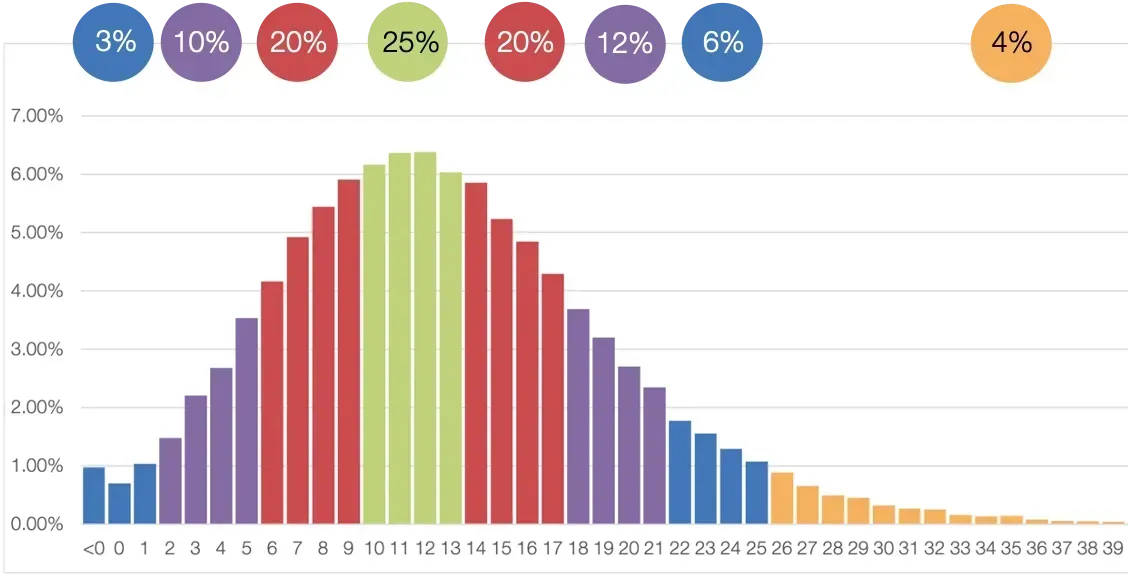
The ultimate goal of the WHS is a “Global Digital Passport” for golfers. This requires the secure exchange of data between different national servers. If a golfer from the United States plays in Japan, the local system must be able to securely query the USGA servers to retrieve the player’s current index and then push the new score back across the ocean. This level of interoperability requires standardized APIs and rigorous security protocols to prevent data breaches and maintain the sanctity of the global handicap pool.
In conclusion, the question “What’s a handicap in golf?” is no longer answered by a simple definition of strokes. In the 21st century, a handicap is a sophisticated digital asset. It is the result of high-level software engineering, processed through the cloud, accessed via mobile apps, and refined by artificial intelligence. For the modern golfer, the handicap is their “Tech Profile” on the course—a data-driven testament to their skill in an increasingly digital world.
aViewFromTheCave is a participant in the Amazon Services LLC Associates Program, an affiliate advertising program designed to provide a means for sites to earn advertising fees by advertising and linking to Amazon.com. Amazon, the Amazon logo, AmazonSupply, and the AmazonSupply logo are trademarks of Amazon.com, Inc. or its affiliates. As an Amazon Associate we earn affiliate commissions from qualifying purchases.