
In the early days of personal computing, the central processing unit (CPU) was the undisputed master of the machine. It handled every calculation, from the simplest logic gates to the complex mathematics required to render basic shapes on a screen. However, as digital environments evolved from static text to vibrant, three-dimensional worlds, a specialized form of hardware emerged to take the burden off the CPU. This is the Graphics Processing Unit, or GPU.
While the term was originally synonymous with video games, the modern GPU has transcended its origins. Today, it is the foundational technology powering artificial intelligence, scientific simulations, cinematic visual effects, and the vast infrastructure of the modern data center. To understand the GPU is to understand how the most complex digital tasks of the 21st century are accomplished.
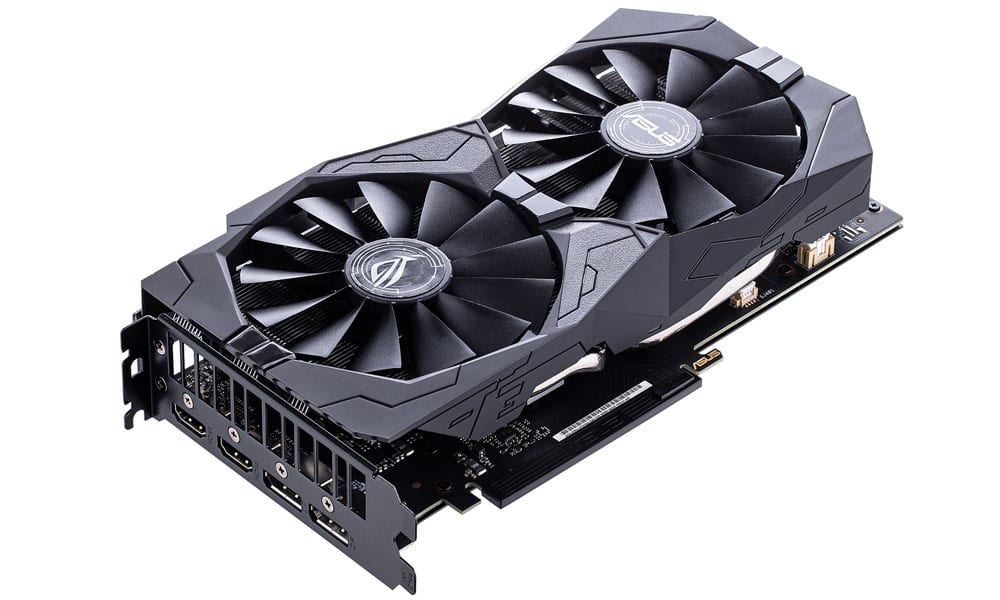
The Fundamental Architecture: How GPUs Differ from CPUs
To grasp what a GPU is, one must first understand how it differs from the CPU. Although both are silicon-based microprocessors, they are designed for fundamentally different types of mathematical labor.
Serial vs. Parallel Processing
A CPU is often described as the “brain” of the computer. It is designed for serial processing, meaning it is exceptionally fast at executing a single stream of complex instructions one after another. A CPU typically has a handful of cores (often between 4 and 16 in consumer models) that are optimized for low-latency tasks, such as running an operating system, managing files, or handling the logic of a software application.
In contrast, a GPU is designed for parallel processing. Instead of a few powerful cores, a GPU contains thousands of smaller, more specialized cores. These cores are designed to handle many tasks simultaneously. While a single GPU core is significantly slower than a CPU core, the sheer volume of cores allows the GPU to break a massive task into thousands of smaller pieces and solve them all at once.
Core Counts and Throughput
In the world of computing, “throughput” refers to the amount of data processed in a specific window of time. Because graphics rendering requires calculating the color and position of millions of pixels multiple times per second, it is a task perfectly suited for high throughput. When you move a camera in a video game, the GPU isn’t calculating one pixel at a time; it is calculating nearly every pixel on the screen simultaneously. This architectural philosophy is why GPUs have become the go-to solution for any problem that can be “parallelized.”
From Pixels to Polygons: The GPU’s Role in Graphics and Gaming
The primary driver of GPU innovation for decades was the pursuit of photorealistic graphics. To create a 3D image, a computer must perform complex geometric transformations to turn a “wireframe” model into a textured, lighted, and shaded object.
Real-Time Ray Tracing
One of the most significant leaps in recent GPU technology is the introduction of hardware-accelerated ray tracing. Traditionally, games used a technique called “rasterization” to estimate how light hits objects. Ray tracing, however, simulates the physical behavior of light, tracing the path of individual photons as they bounce off surfaces, refract through water, and cast soft shadows.
Doing this in real-time requires an incredible amount of computational power. Modern GPUs now include dedicated “RT Cores” specifically designed to handle the complex mathematics of light simulation without tanking the overall performance of the system.
High Frame Rates and Resolution
As monitors have moved from 1080p to 4K and beyond, the demand on the GPU has grown exponentially. A 4K image contains four times as many pixels as a 1080p image. To maintain a smooth experience, the GPU must refresh those pixels 60, 120, or even 240 times per second. This requires massive memory bandwidth and high-speed Video RAM (VRAM) to ensure the data can move between the processor and the screen without bottlenecks.
Beyond Gaming: The AI and Deep Learning Revolution
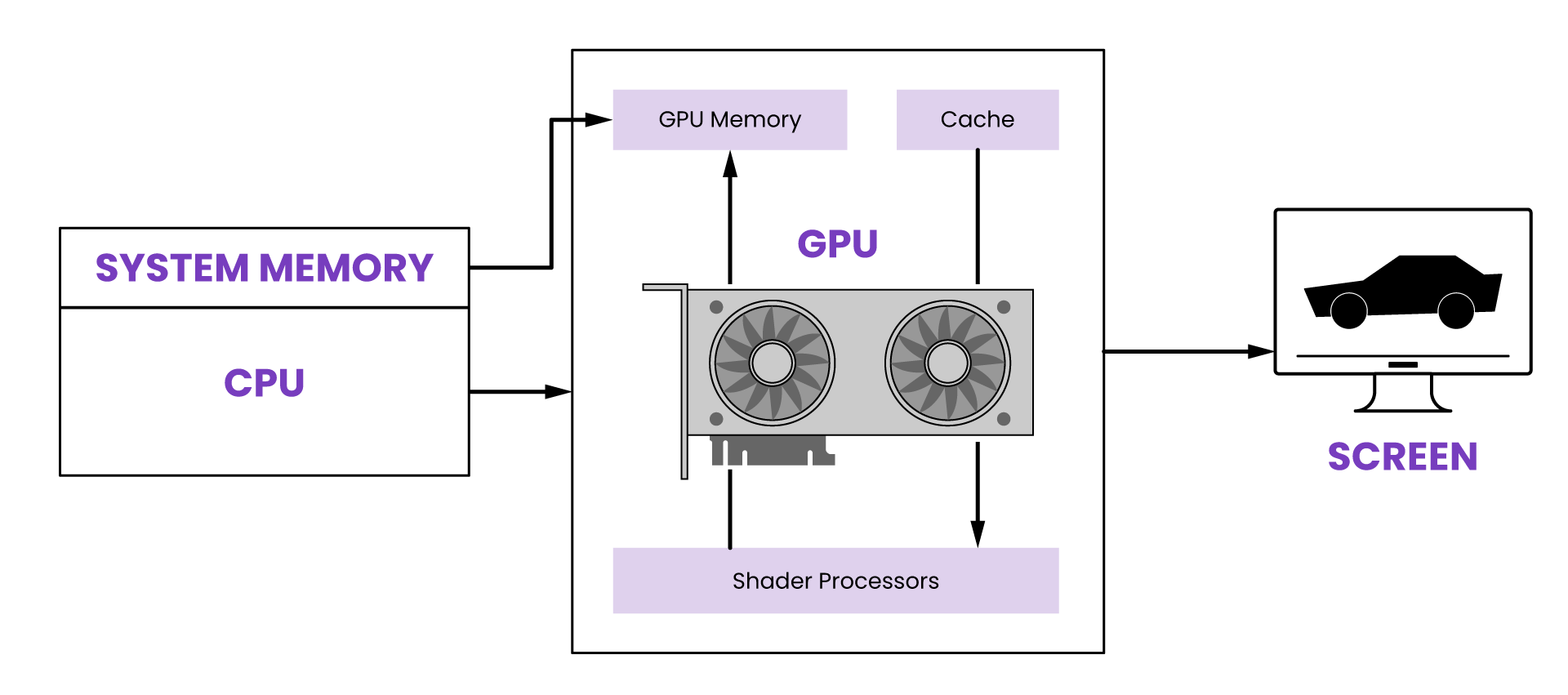
In the last decade, the most profound shift in the tech industry has been the realization that GPUs are the perfect engines for Artificial Intelligence. The mathematical operations required to train a neural network—specifically matrix multiplications—are identical in structure to the math used to render 3D graphics.
Training Neural Networks
Deep learning involves processing vast datasets through layers of algorithms. This process requires billions of repetitive calculations. Because a GPU can perform these calculations in parallel, it can train an AI model in a fraction of the time a CPU would require. The recent explosion in Large Language Models (LLMs) and generative AI tools like ChatGPT or Midjourney would have been impossible without the massive scaling of GPU clusters in data centers.
The Rise of the Data Center GPU
Today, companies like NVIDIA, AMD, and Intel produce GPUs that never see a monitor. These are “headless” units designed for server racks. These enterprise-grade GPUs focus on compute density and interconnectivity, allowing thousands of GPUs to work together as a single supercomputer. This infrastructure is what enables modern digital life, from personalized recommendations on streaming platforms to the rapid development of new pharmaceutical drugs through molecular modeling.
Professional Workflows: Rendering, Simulation, and Video Production
Outside of gaming and AI, the GPU has become an essential tool for creative and scientific professionals. This is often referred to as GPGPU (General-Purpose computing on Graphics Processing Units).
Hardware Acceleration in Creative Software
For video editors and 3D animators, the GPU is a time-saving miracle. High-resolution video editing, especially in formats like 8K or RAW, places an immense load on a computer. Modern video editing suites utilize the GPU to decode and encode video streams in real-time, allowing editors to apply complex color grades and visual effects without waiting for the computer to “catch up.”
In the world of architecture and engineering, GPUs power Computer-Aided Design (CAD) software. These tools allow engineers to run structural simulations—testing how a bridge might sway in the wind or how heat dissipates in an engine—by utilizing the parallel processing power of the GPU to simulate thousands of physical variables simultaneously.
Scientific Computing and GPGPU
The scientific community uses GPUs for everything from climate modeling to astrophysics. By harnessing the thousands of cores available in a GPU, researchers can run simulations that were previously only possible on the world’s most expensive supercomputers. This democratization of high-performance computing has accelerated the pace of discovery in virtually every field of hard science.
Choosing the Right GPU: Key Specifications to Consider
Whether for a workstation, a gaming rig, or a specialized server, understanding the specifications of a GPU is vital for matching the hardware to the task.
VRAM, Clock Speed, and TGP
The most commonly cited spec is Video RAM (VRAM). This is the dedicated high-speed memory the GPU uses to store textures, frame buffers, and AI model weights. For gaming at 4K or for high-end video editing, having 12GB, 16GB, or even 24GB of VRAM is increasingly necessary.
Clock speed, measured in Megahertz (MHz) or Gigahertz (GHz), dictates how fast the cores can execute instructions. However, because of the parallel nature of GPUs, clock speed is often less important than the total core count. Finally, Total Graphics Power (TGP) indicates how much electricity the card consumes and, by extension, how much heat it generates. As GPUs become more powerful, managing thermal output has become a primary challenge for hardware designers.
Integrated vs. Discrete Graphics
It is also important to distinguish between integrated and discrete GPUs. An integrated GPU (iGPU) is built directly into the same chip as the CPU. These are power-efficient and cost-effective, making them ideal for laptops and office computers. However, they share the system’s main RAM and have limited thermal headroom.
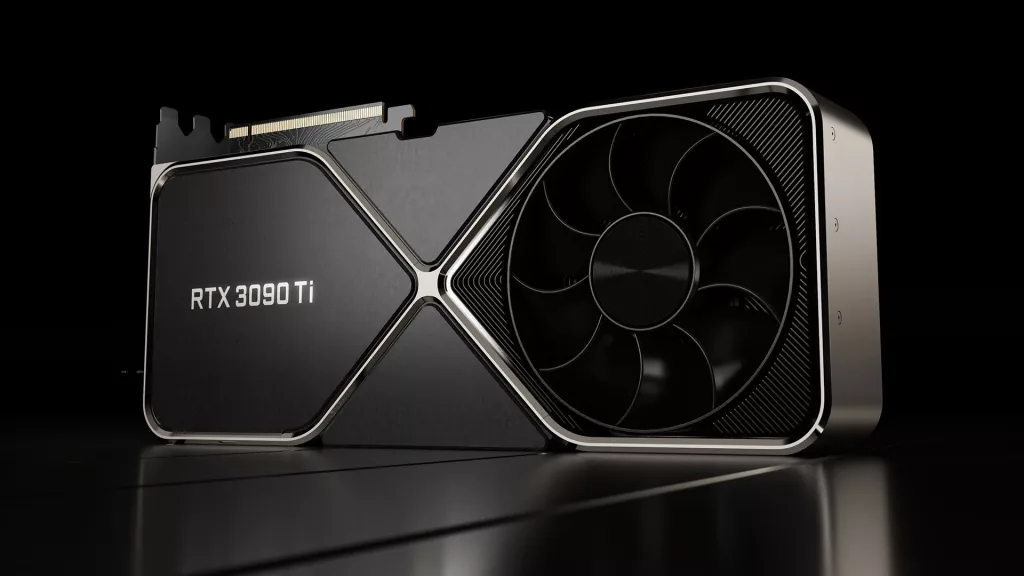
A discrete GPU (dGPU) is a standalone component with its own memory and cooling system. For anyone involved in gaming, content creation, or AI development, a discrete GPU is non-negotiable, as it provides the dedicated resources necessary for high-performance computing.
As we look toward the future, the GPU’s role will only expand. With the move toward “chiplet” designs and the integration of specialized AI “Tensor” cores into consumer hardware, the line between traditional computing and accelerated computing is blurring. The GPU is no longer just a “graphics” card; it is the primary engine driving the next generation of digital innovation.
aViewFromTheCave is a participant in the Amazon Services LLC Associates Program, an affiliate advertising program designed to provide a means for sites to earn advertising fees by advertising and linking to Amazon.com. Amazon, the Amazon logo, AmazonSupply, and the AmazonSupply logo are trademarks of Amazon.com, Inc. or its affiliates. As an Amazon Associate we earn affiliate commissions from qualifying purchases.