
DoorDash has fundamentally altered the landscape of the modern service economy, evolving from a local delivery startup into a dominant force in the logistics and technology sector. At its core, DoorDash is an on-demand food delivery platform that bridges the gap between local merchants and consumers. However, describing it simply as a “food delivery app” ignores the complex technical infrastructure and strategic marketplace dynamics that power its operations. By leveraging a three-sided marketplace—connecting customers, merchants, and a fleet of independent contractors known as “Dashers”—the company has created a logistical ecosystem that prioritizes speed, scale, and data-driven efficiency.
The Architecture of the DoorDash Platform
The brilliance of DoorDash lies not in the act of delivering a meal, but in the proprietary software that orchestrates the thousands of variables occurring simultaneously across multiple cities. The platform operates as a sophisticated matching engine, utilizing complex algorithms to manage the “last-mile” delivery problem, which has historically been the most expensive and inefficient part of the logistics chain.
The Matching Algorithm
When a user places an order, the DoorDash backend initiates a multi-layered optimization process. The algorithm must calculate the real-time location of available Dashers, the estimated preparation time of the merchant, current traffic conditions, and the historical efficiency of specific routes. This is a dynamic optimization problem that must be solved in milliseconds. By constantly updating these variables, DoorDash ensures that a Dasher arrives at the restaurant at the precise moment an order is ready, minimizing “dwell time” and maximizing the earnings potential for the contractor.
The Consumer Interface
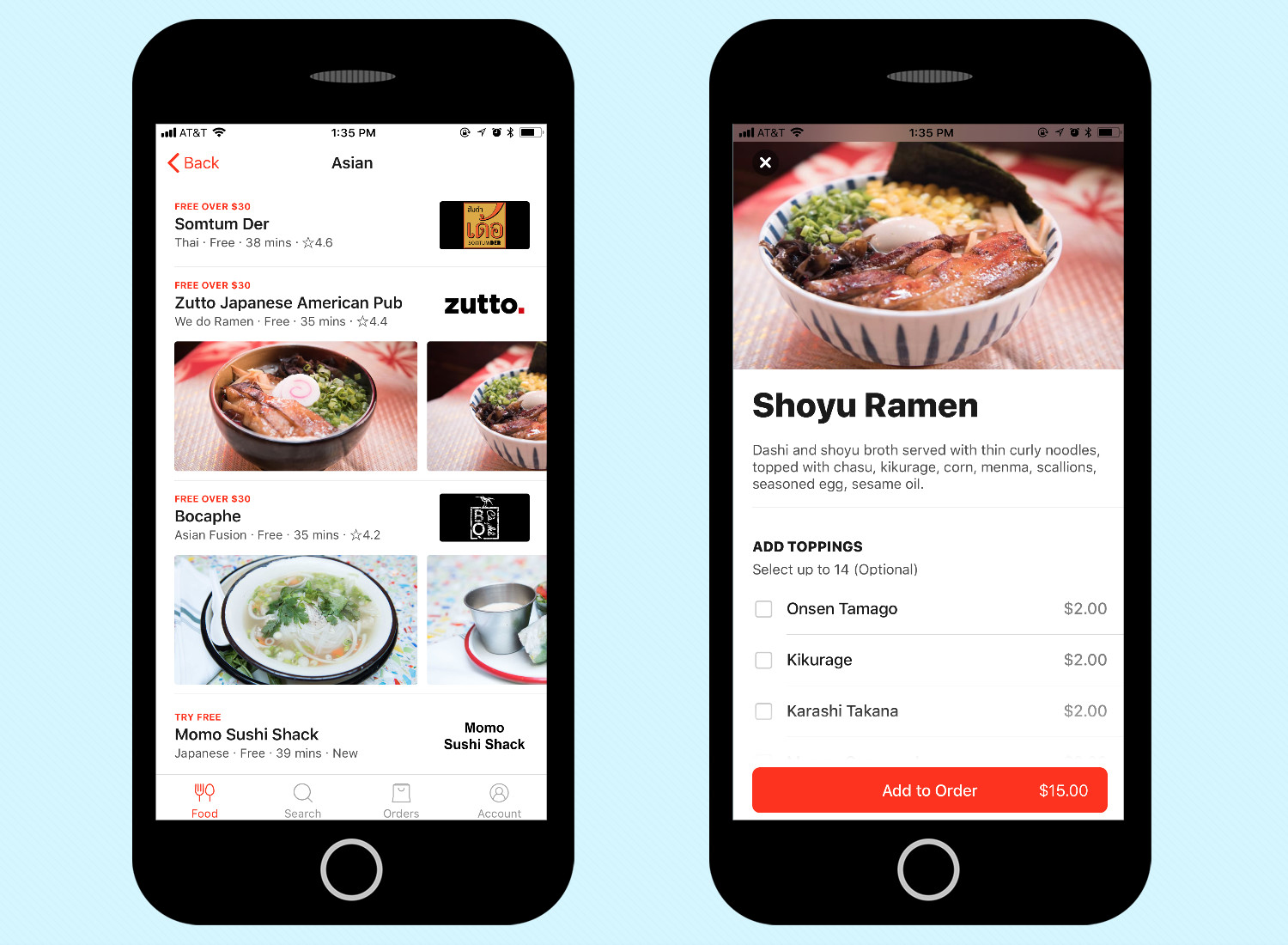
The front-end application serves as the primary touchpoint, designed to maximize conversion through intuitive user experience (UX) design. Key features such as “DashPass” subscriptions, real-time GPS tracking, and AI-driven meal recommendations are integrated to increase user stickiness. The software uses machine learning models to analyze past ordering behaviors, effectively predicting what a user might want based on time of day, weather conditions, or local trends. This predictive modeling transforms the app from a simple directory into a personalized concierge service.
The Economics of the On-Demand Marketplace
DoorDash operates within the gig economy, a model defined by flexible, task-based labor. Understanding the financial mechanics of this model is essential for grasping why DoorDash has scaled so aggressively compared to traditional restaurant delivery services.
The Three-Sided Marketplace
The business model relies on a delicate balance between three distinct stakeholders:
- The Consumers: Seeking convenience and variety. They pay for the platform via delivery fees, service fees, and occasionally, marked-up menu prices.
- The Merchants: Ranging from global fast-food chains to independent local bistros. They pay commission fees (often ranging from 15% to 30%) to gain access to a larger customer base and the platform’s logistical capabilities.
- The Dashers: Independent contractors who provide the transportation and labor. They are the mobile nodes of the network, and their participation is incentivized through a combination of base pay, “Peak Pay” multipliers, and customer tips.
Scalability and Network Effects
DoorDash thrives on “hyper-local network effects.” As the number of Dashers in a specific area increases, delivery times drop, which in turn attracts more customers. As the customer base grows, more restaurants feel compelled to join the platform to capture that digital demand. This cycle creates a self-reinforcing loop that provides the platform with a significant competitive moat in every market it enters. The investment in R&D and data infrastructure allows DoorDash to identify which neighborhoods are underserved and strategically allocate resources to achieve “market density” faster than regional competitors.

Expanding Beyond Food: The “DashMart” Vision
While DoorDash began with restaurant deliveries, it has aggressively pivoted to a broader “local commerce” strategy. The goal is to become the “Amazon of the neighborhood,” facilitating the delivery of virtually anything a consumer needs in under an hour.
DashMart and Convenience Logistics
The launch of DashMart—a series of company-operated convenience stores that do not offer foot traffic—represents a massive shift toward vertical integration. By owning the inventory, DoorDash can control the quality and speed of the fulfillment process, bypassing the variability of third-party restaurant preparation times. This transition into the grocery and convenience space positions the platform to capture a larger share of the “quick commerce” market, where the margin profile differs significantly from traditional restaurant delivery.
Software Integration for Merchants
DoorDash isn’t just providing delivery; it is providing a digital transformation suite for small businesses. Through “DoorDash Storefront,” the company offers merchants their own online ordering systems, effectively white-labeling the technology. This strategy turns DoorDash into a software-as-a-service (SaaS) provider. By equipping local businesses with inventory management, CRM tools, and analytics dashboards, the platform ensures that its merchants remain reliant on the DoorDash ecosystem for their long-term digital growth, not just for an occasional delivery.
Challenges and Future Trends in Logistics Technology
Despite its success, the platform faces ongoing technical and regulatory challenges that define the current discourse in the tech industry. As DoorDash matures, its focus is shifting from simple market acquisition to operational profitability.
Autonomous Delivery and Automation
One of the most significant frontiers for the company is the integration of autonomous technology. DoorDash has been actively testing autonomous robots and drone delivery programs. The logic is simple: the cost of human labor is the highest variable expense in the delivery chain. If a robot can handle the “last block” of the journey, the per-unit economics of the platform improve dramatically. These trials are not merely experimental; they represent a long-term strategic pivot toward reducing dependency on human labor in dense, highly mapped urban environments.
Data Security and Privacy
As the company hoards massive amounts of consumer behavior data—including home addresses, financial details, and specific consumption patterns—it faces mounting pressure regarding data security. Protecting this data while utilizing it for AI-driven marketing is a tightrope walk. The future of DoorDash will likely see increased investment in cybersecurity infrastructure to ensure that the platform remains a trusted gatekeeper for local commerce.

Regulatory and Labor Shifts
The debate over the classification of independent contractors remains the most significant threat to the current model. DoorDash has invested heavily in lobbying and technological solutions to maintain the flexibility of the “Dasher” model while navigating varying labor laws across different states and countries. The company’s ability to use its software to demonstrate that it provides flexibility rather than rigid control will be the defining factor in its legal and operational survival.
Ultimately, DoorDash is a technological entity that uses the delivery of goods as a proxy for the delivery of data and connectivity. Its rise highlights a permanent shift in consumer expectations, where the standard for commerce is no longer “shipping in 3–5 days,” but “delivery in 30 minutes.” By effectively solving the logistics of time and space, DoorDash has cemented its place as a cornerstone of the modern digital economy, continuously evolving its software to capture more of the consumer’s daily life. Whether through grocery, convenience, or local restaurant access, the platform acts as the invisible infrastructure of the modern neighborhood, proving that in the digital age, convenience is the ultimate currency.
aViewFromTheCave is a participant in the Amazon Services LLC Associates Program, an affiliate advertising program designed to provide a means for sites to earn advertising fees by advertising and linking to Amazon.com. Amazon, the Amazon logo, AmazonSupply, and the AmazonSupply logo are trademarks of Amazon.com, Inc. or its affiliates. As an Amazon Associate we earn affiliate commissions from qualifying purchases.