
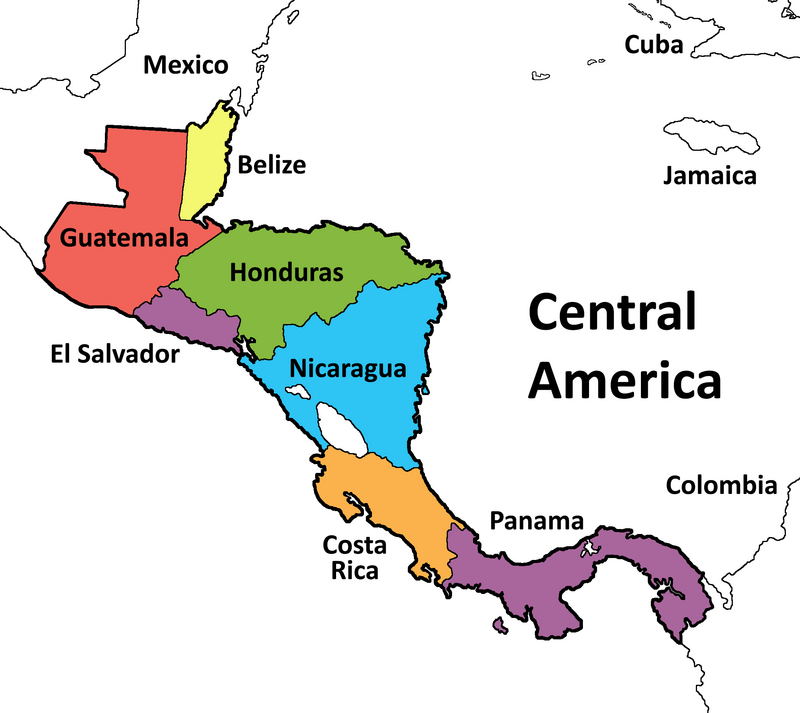
For decades, the global financial community viewed Central America primarily through the lens of commodities—a fertile bridge between continents known for coffee, bananas, and sugar. However, in the contemporary economic landscape, the answer to “What’s Central America?” has shifted dramatically. Today, it represents a dynamic cluster of emerging markets, a critical hub for global logistics, and a burgeoning destination for foreign direct investment (FDI) and nearshoring. For the modern investor, entrepreneur, or financial strategist, Central America is no longer just a geographic corridor; it is a sophisticated ecosystem of diversified economies offering unique opportunities for capital appreciation and business expansion.
The Economic Landscape: Beyond Traditional Agriculture
To understand Central America from a financial perspective, one must first recognize the profound shift from an agrarian-based economy to a service- and manufacturing-oriented one. While agriculture remains a foundational pillar, the region’s GDP is increasingly driven by industrial production, telecommunications, and financial services.
Diversification and Industrialization
The regional economy is no longer a monolith. Countries like Guatemala and El Salvador have aggressively pivoted toward light manufacturing and textiles, leveraging trade agreements like the CAFTA-DR (Dominican Republic-Central America Free Trade Agreement) to gain preferential access to the United States market. This industrialization has created a robust middle class and increased domestic consumption, making the region a viable market for retail and consumer-facing brands.
The Rise of the Services Sector
The services sector now accounts for a significant portion of the region’s economic output. Costa Rica and Panama lead this charge. In Costa Rica, the transition toward high-value services—such as medical device manufacturing, software development, and shared service centers for Fortune 500 companies—has set a blueprint for developing nations. This shift provides a more stable economic foundation, less susceptible to the volatility of global commodity prices, and offers investors a more predictable environment for long-term growth.
Investment Hubs: Where the Capital is Flowing
When evaluating Central America as an investment destination, it is essential to distinguish between the various “hubs” that define the region. Each nation offers a specific value proposition depending on the investor’s risk tolerance and industry focus.
Panama: The Financial Hub of the Americas
Panama remains the undisputed heavyweight of the regional financial sector. Its economy is built around the Panama Canal, but its true power lies in its banking system and its status as a global logistics center. With a dollarized economy, Panama offers a level of currency stability that is rare in emerging markets. The Colon Free Trade Zone and the specialized “Panama Pacifico” business hub provide tax incentives that attract multinational corporations, making it a primary destination for corporate treasury operations and regional headquarters.
Costa Rica: The Tech and Sustainability Leader
Costa Rica has successfully branded itself as the “Silicon Valley of Central America.” By investing heavily in education and green energy, the country has attracted massive FDI from tech giants like Intel and Microsoft. For investors focused on ESG (Environmental, Social, and Governance) criteria, Costa Rica is a premier choice. Its commitment to carbon neutrality and a highly skilled workforce makes it the ideal location for tech startups and sustainable manufacturing ventures.
The Northern Triangle: Nearshoring and Manufacturing
Guatemala, Honduras, and El Salvador—collectively known as the Northern Triangle—are becoming the epicenter of the “nearshoring” trend. As global supply chains decouple from Asia, companies are looking for manufacturing bases closer to North American consumers. These countries offer competitive labor costs and proximity to major shipping lanes. While higher-risk than Panama or Costa Rica, the potential for high-yield returns in industrial real estate and infrastructure development in this sub-region is substantial.
Real Estate and Tourism: Tangible Assets in a Growing Market
One of the most accessible ways to answer “What’s Central America?” from a wealth-building perspective is through real estate. The region has seen a surge in property values, driven by both international tourism and the rise of the digital nomad.
Residential Markets for Expats and Digital Nomads
The advent of remote work has fundamentally changed the real estate landscape in countries like Belize, Nicaragua, and Costa Rica. Coastal towns that were once sleepy fishing villages are now high-demand markets for luxury rentals and second homes. For the individual investor, the “side hustle” of managing short-term rental properties in these regions has become a lucrative source of passive income. Property appreciation in prime locations like Nosara, Costa Rica, or Ambergris Caye, Belize, has consistently outperformed many traditional US markets over the last decade.
Commercial Infrastructure and Logistics
On a larger scale, commercial real estate is booming. The demand for modern warehousing and “last-mile” delivery hubs is skyrocketing as e-commerce takes root across the region. Investors are increasingly looking at industrial parks and logistics centers near major ports and airports. As Central American governments invest in better road networks and port expansions, the surrounding land values are seeing significant upward pressure, offering lucrative opportunities for institutional capital.
Navigating the Financial Ecosystem: Banking, Currency, and Regulation
Investing in Central America requires a nuanced understanding of its financial regulations and currency dynamics. The region is a patchwork of different systems, ranging from fully dollarized economies to those with floating exchange rates.
Understanding Local Currencies vs. Dollarization
Panama and El Salvador are fully dollarized, which eliminates exchange rate risk for US-based investors. In contrast, countries like Guatemala (the Quetzal) and Honduras (the Lempira) maintain their own currencies. While this introduces a layer of currency risk, it also provides opportunities for those engaged in carry trades or seeking to capitalize on local interest rate differentials. Understanding the inflation targets and monetary policies of the respective central banks is crucial for any business operating in the region.
Tax Incentives and Free Trade Zones
Most Central American nations offer aggressive tax incentive programs to attract foreign capital. “Zonas Francas” (Free Zones) are a common feature, offering exemptions from import duties, corporate income tax, and VAT for companies that export a certain percentage of their goods or services. For a brand looking to establish a manufacturing or service base, these incentives can be the difference between a marginal venture and a highly profitable one. Strategic use of these zones is a cornerstone of corporate financial planning in the region.
Future Outlook: Identifying Side Hustles and Online Income Opportunities
The digital transformation of Central America has opened doors for entrepreneurial activity that goes beyond traditional brick-and-mortar investment. For those looking for “online income” or “side hustles,” the region offers a unique competitive advantage.
The Remote Work and Outsourcing Revolution
With a growing bilingual population and a time zone that aligns with the US East and Central coasts, Central America has become a prime location for the “export of services.” From virtual assistance and digital marketing to high-level financial analysis, the region’s talent pool is being tapped by global firms. Entrepreneurs can build agencies that bridge the gap between high-demand Western markets and the skilled, cost-effective talent in Central America.

E-commerce and Cross-Border Trade
The maturation of local payment gateways and the improvement of postal services have paved the way for an e-commerce explosion. There is a massive opportunity for “arbitrage” businesses—importing specialized goods that are currently unavailable in the local market, or conversely, exporting unique Central American artisanal products to global audiences via platforms like Shopify or Amazon. The “Money” story of Central America today is one of connectivity; the barriers to entry for small-scale entrepreneurs have never been lower, while the potential for scale has never been higher.
In conclusion, Central America is a region in transition, shedding its old identity to become a modern financial and industrial hub. For those who can navigate its diverse regulatory environments and identify the right sectors, it offers a compelling blend of stability and high-growth potential. Whether through institutional investment in infrastructure, real estate development, or the burgeoning digital service economy, the financial answer to “What’s Central America?” is clear: it is one of the most promising frontiers for wealth creation in the 21st century.
aViewFromTheCave is a participant in the Amazon Services LLC Associates Program, an affiliate advertising program designed to provide a means for sites to earn advertising fees by advertising and linking to Amazon.com. Amazon, the Amazon logo, AmazonSupply, and the AmazonSupply logo are trademarks of Amazon.com, Inc. or its affiliates. As an Amazon Associate we earn affiliate commissions from qualifying purchases.