
In the realm of computer science and software engineering, an arithmetic sequence is more than a simple mathematical curiosity found in a textbook. It is a fundamental building block of logical systems, data structures, and algorithmic efficiency. At its core, an arithmetic sequence is a sequence of numbers in which the difference between any two consecutive terms is constant. In the world of technology, we refer to this constant difference as the “step” or “increment,” and it serves as the heartbeat of iterative processes, memory management, and digital signal processing.
Whether you are writing a simple loop in Python, optimizing a graphics engine, or managing memory addresses in C++, the principles of the arithmetic sequence are constantly in play. Understanding how these sequences function is critical for any developer or tech professional who aims to write efficient, scalable code.
The Foundational Role of Arithmetic Sequences in Programming Logic
Every programmer, from the novice to the senior architect, utilizes arithmetic sequences daily, often without labeling them as such. The most prevalent manifestation of an arithmetic sequence in software development is the iterative loop.
Defining the Common Difference in Code
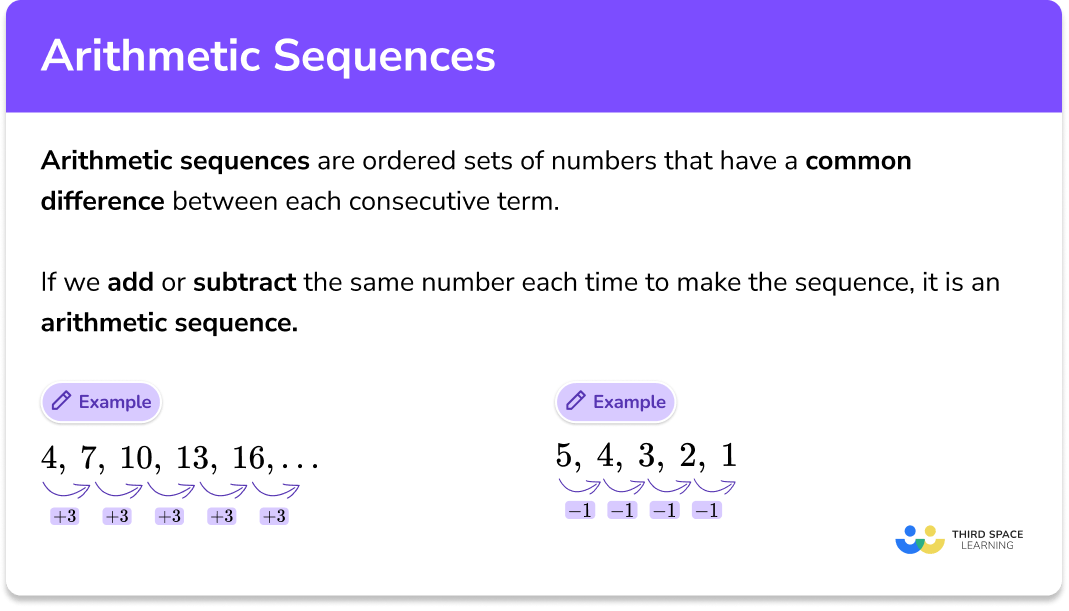
In mathematics, the common difference ($d$) is the value added to each term to get to the next. In tech, this is the incrementer. Consider a standard for loop designed to iterate through a dataset. When a developer writes for (i = 0; i < 100; i += 5), they are creating an arithmetic sequence where the starting term ($a_1$) is 0 and the common difference ($d$) is 5.
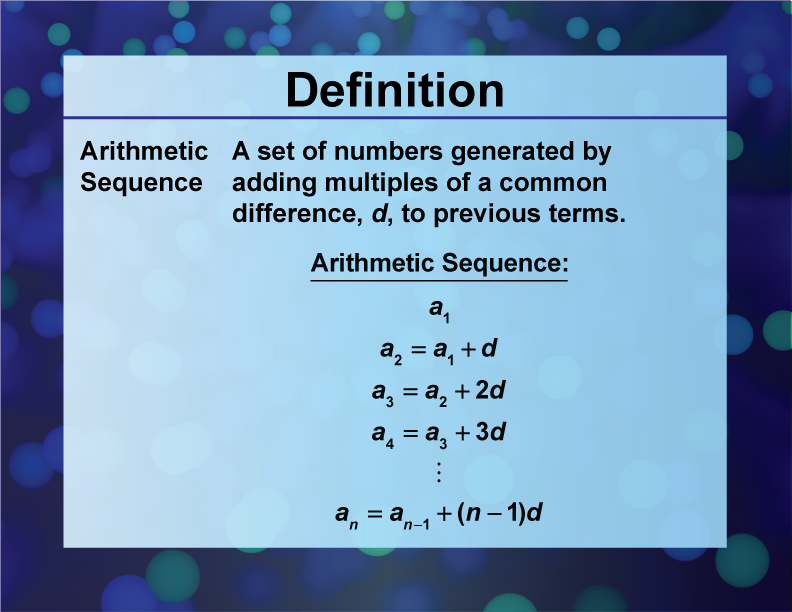
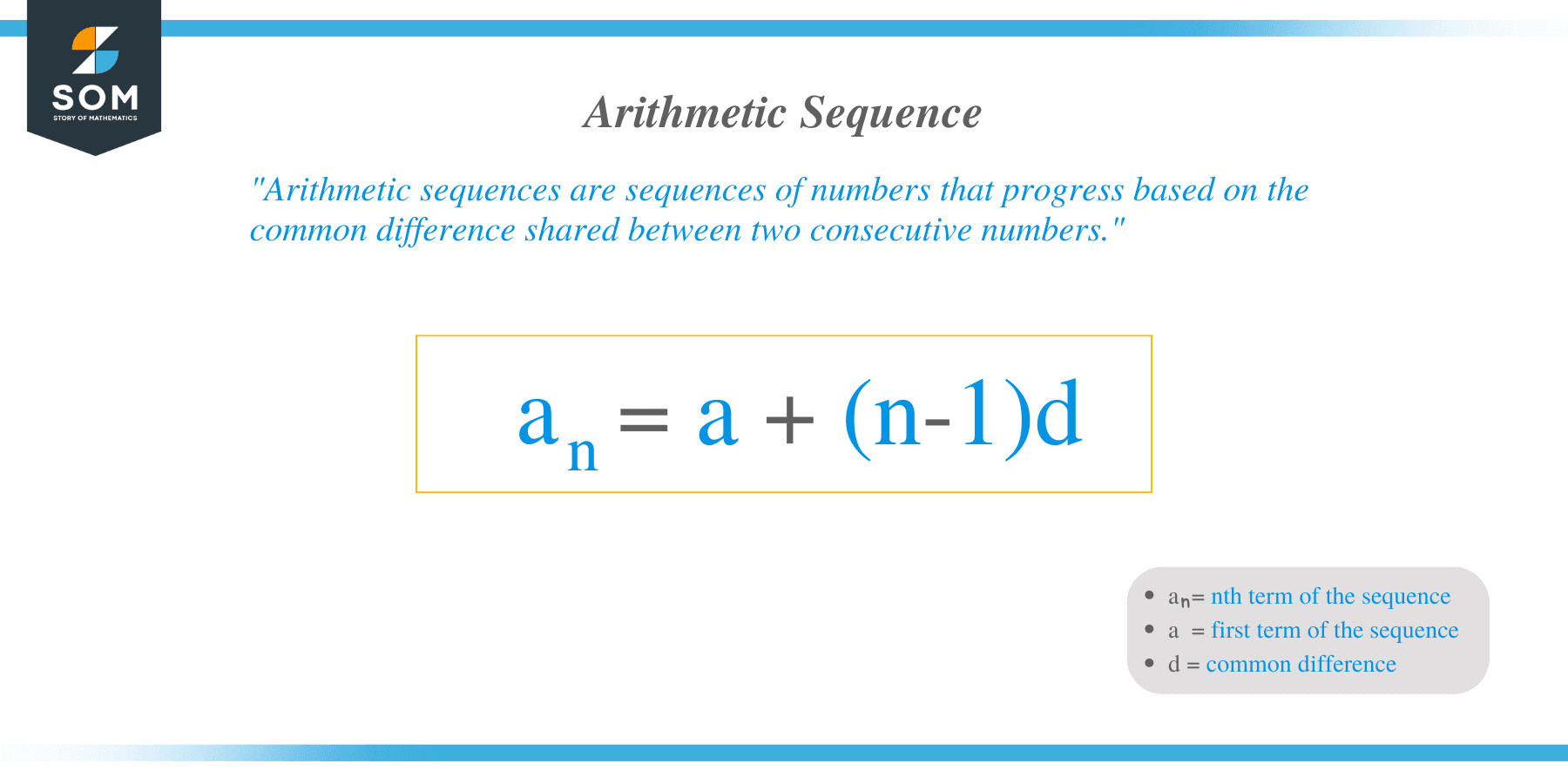
This predictability is essential for automation. Because the sequence is linear, the system can calculate the value of any specific iteration without necessarily processing every preceding step. This concept is the basis for “O(1)” or constant-time access in specific logical scenarios. If a program needs to know the value of the 1,000th term in a sequence starting at 10 with an increment of 2, it doesn’t need to count; it uses the formula $an = a1 + (n – 1)d$. In computing, this translates to direct memory mapping and extremely fast execution speeds.
The Formula: From Mathematical Notation to Function Logic
The transition from the mathematical formula to functional code is seamless. The formula for the $n$-th term of an arithmetic sequence allows developers to create functions that generate data points on the fly. This is particularly useful in UI/UX design for pagination. If a digital platform displays 20 items per page, the starting index for any given page $P$ is determined by an arithmetic sequence: $Index = (P – 1) * 20$.
By leveraging this logic, backend systems can fetch specific chunks of data from a database without loading the entire dataset into RAM. This efficiency is what allows modern applications to handle millions of records while maintaining a responsive user interface.
Data Structures and Memory Management
Beyond simple logic, arithmetic sequences are the literal architects of how data is stored on physical hardware. The way a computer’s central processing unit (CPU) interacts with Random Access Memory (RAM) is governed by the principles of linear progression.
Linear Arrays and Indexing Systems
An array is perhaps the most fundamental data structure in technology. It is a collection of elements stored in contiguous memory locations. Because the elements are stored side-by-side, the memory address of any element in an array follows an arithmetic sequence.
If an integer array starts at memory address 1000 and each integer occupies 4 bytes, the addresses of the elements are 1000, 1004, 1008, 1012, and so on. The common difference here is the size of the data type. This is why array lookups are so fast ($O(1)$ complexity). The computer does not search for the index; it calculates the exact memory address using the arithmetic sequence formula: Address = BaseAddress + (Index * ElementSize).
Pointer Arithmetic in Lower-Level Languages
In languages like C and C++, developers often use pointer arithmetic to navigate through memory. When a developer increments a pointer, they are moving through a sequence of memory addresses. Understanding the underlying arithmetic sequence is vital for preventing buffer overflows and memory leaks.
If a software engineer fails to account for the common difference (the byte size of the object), the pointer may land in the middle of a data packet, leading to corrupted data or system crashes. Modern security protocols, such as Address Space Layout Randomization (ASLR), manipulate these sequences to prevent hackers from predicting where sensitive data is stored, but the core logic remains rooted in sequential progression.
Algorithm Complexity and the Pursuit of Efficiency
The study of arithmetic sequences is also a study of linear growth. In the tech industry, we use Big O notation to describe the performance and scalability of algorithms. An algorithm that grows at the same rate as its input is said to have linear time complexity, denoted as $O(n)$.
Iteration and Big O Notation
When an algorithm processes a list of $n$ elements by visiting each one once, it follows an arithmetic progression of work. For every one unit of data added, one unit of time (or processing power) is added. This is the gold standard for many basic operations, such as searching through an unsorted list or calculating a sum.
However, tech professionals often use the properties of arithmetic series (the sum of an arithmetic sequence) to optimize code. For example, if you need to find the sum of all integers from 1 to $n$, a naive approach would use a loop, resulting in $O(n)$ complexity. A more sophisticated approach uses Carl Friedrich Gauss’s formula for the sum of an arithmetic series: $S = n(a1 + an) / 2$. This reduces the operation to $O(1)$ complexity, allowing a computer to calculate the sum of a billion numbers in a single clock cycle.
Case Study: Range Functions and Memory Generators
Modern languages like Python and JavaScript utilize “generators” or “ranges” to handle sequences. Instead of creating a massive list in memory, these tools store only the starting point, the end point, and the common difference. When the program asks for the next number, the generator calculates it on the fly. This tech allows developers to work with “infinite” sequences without crashing the system, showcasing how mathematical theory directly informs hardware resource management.
Real-World Applications in Modern Technology
Arithmetic sequences are not confined to the backend; they power the visual and communicative aspects of the gadgets we use every day.
Graphics, Game Engines, and Frame Interpolation
In game development and computer graphics, movement is often calculated using arithmetic sequences. If a character is moving at a constant velocity, their coordinates on the X or Y axis form an arithmetic sequence over time.
Furthermore, “tweening” or interpolation in animation relies on these sequences to create smooth transitions. When an app icon slides across your smartphone screen, the software calculates the intermediate positions between the start and end points. By using a constant increment, the movement appears fluid to the human eye. In high-end gaming, “Frame Generation” technologies use similar logic to predict and insert frames between rendered ones, effectively doubling the perceived performance of the hardware.
Rate Limiting and Network Congestion Control
In the world of digital security and networking, arithmetic sequences are used to manage traffic. Rate limiting is a technique used to prevent Distributed Denial of Service (DDoS) attacks. A server might allow a user to make a certain number of requests, with the “allowance” resetting or increasing at a fixed interval (an arithmetic sequence).
Similarly, in network protocols like TCP (Transmission Control Protocol), “Additive Increase/Multiplicative Decrease” (AIMD) is used for congestion control. When the network is clear, the transmission rate increases linearly—adding a fixed amount to the window size for every successful transmission. This “Additive Increase” is an arithmetic sequence that allows the network to safely probe for maximum bandwidth without overwhelming the system.
The Future of Sequential Logic in Machine Learning and AI
As we move into the era of Artificial Intelligence and Machine Learning, the importance of arithmetic logic only intensifies. Neural networks rely heavily on matrix multiplications, which are essentially high-dimensional versions of sequential arithmetic.
In the training of AI models, “gradient descent” involves moving toward a minimum error rate in steps. While these steps aren’t always constant, many optimization algorithms utilize a “learning rate” that acts as a step-size in a sequence. Furthermore, in time-series forecasting—used in everything from stock market AI to weather prediction—identifying arithmetic trends is the first step in differentiating between signal and noise.
In conclusion, an arithmetic sequence is the backbone of the digital world. It dictates how our code loops, how our memory is organized, how our algorithms scale, and how our screens animate. For anyone working in technology, mastering this concept is not just a math requirement; it is a fundamental necessity for building the software and hardware of tomorrow. By recognizing these patterns, developers can write cleaner code, optimize system performance, and solve complex problems with elegant, linear solutions.
aViewFromTheCave is a participant in the Amazon Services LLC Associates Program, an affiliate advertising program designed to provide a means for sites to earn advertising fees by advertising and linking to Amazon.com. Amazon, the Amazon logo, AmazonSupply, and the AmazonSupply logo are trademarks of Amazon.com, Inc. or its affiliates. As an Amazon Associate we earn affiliate commissions from qualifying purchases.