
Airsoft, for the uninitiated, might appear to be a straightforward recreational activity involving replica firearms and plastic pellets. However, to truly understand “what’s airsoft” is to delve into a surprisingly sophisticated world of engineering, electronics, and materials science. Far from being simple toys, modern airsoft guns are complex pieces of equipment, designed for realism, performance, and a highly engaging player experience. This article aims to peel back the layers, exploring the intricate technological ecosystem that defines airsoft, from the core mechanics of its replicas to the cutting-edge digital integrations that are shaping its future. Airsoft is not just a game; it’s a testament to continuous technological innovation in the pursuit of immersive simulated combat.

The Core Mechanics: Powering Airsoft Replicas
At the heart of every airsoft gun lies a system designed to propel a small, spherical projectile (the “BB”) with consistency and accuracy. The primary distinctions in airsoft technology are often categorized by their power source and firing mechanism, each offering a unique balance of realism, reliability, and performance.
Automatic Electric Guns (AEGs): The Workhorse of Airsoft
AEGs represent the most popular and technologically prevalent class of airsoft replicas. Their operation is driven by an electric motor, typically housed within the pistol grip, which powers a series of gears – collectively known as the gearbox. This gearbox is the mechanical brain of an AEG, translating the motor’s rotational energy into linear motion to compress a spring-loaded piston. When the trigger is pulled, the piston is released, creating a burst of compressed air that propels the BB down the barrel.
Modern AEGs feature sophisticated gearboxes (often standardized like V2, V3, V6, or V7 for different weapon platforms), made from durable metals. These gearboxes meticulously control the cycle of the piston, ensuring consistent airflow and repeatable shot performance. Enhancements like pre-cocking functions, which hold the piston in a partially compressed state, drastically reduce trigger response time. The air seal components – including the cylinder, cylinder head, nozzle, and piston head – are critical for maximizing air efficiency and muzzle velocity. Battery technology also plays a crucial role; while older models relied on Nickel-metal hydride (NiMH) batteries, the industry has largely shifted to Lithium Polymer (LiPo) batteries. LiPos offer higher discharge rates, smaller footprints, and lighter weight, leading to faster rates of fire and snappier trigger response, though they require careful handling and specialized chargers due to their volatile chemistry. The integration of electronic trigger units (ETUs) and MOSFETs (Metal-Oxide-Semiconductor Field-Effect Transistors) further refines AEG performance by eliminating electrical arcing across mechanical trigger contacts, protecting the trigger switch, and enabling advanced programmable firing modes such as burst fire or binary triggers.
Gas Blowback (GBB) Systems: Realism Through Recoil
For players prioritizing realism and tactile feedback, Gas Blowback (GBB) systems offer an unparalleled experience. Unlike AEGs, GBBs use pressurized gas—typically green gas (a mixture of propane and silicone oil), CO2, or even High-Pressure Air (HPA)—as their propellant. When the trigger is pulled, a precisely metered amount of gas is released. A portion of this gas propels the BB, while another portion is redirected to cycle the bolt or slide, mimicking the recoil action of a real firearm. This “blowback” effect is what gives GBBs their distinctive kick and contributes significantly to the immersive feel.
The technology behind GBBs involves complex valve systems, gas reservoirs (often contained within the magazines for realism), and intricately designed nozzles that regulate gas flow for both propulsion and blowback. CO2 cartridges offer higher pressure and better performance in colder temperatures, while green gas provides a consistent, albeit lower, pressure and built-in lubrication. HPA systems, which utilize external air tanks connected via a hose, offer the ultimate in adjustability and consistency, but sacrifice some portability. While GBBs offer exceptional realism, they typically come with trade-offs in terms of shot count per magazine fill, consistency in varying temperatures, and often a higher cost of operation compared to AEGs. The intricate gas systems also demand more meticulous maintenance to ensure proper sealing and lubrication.
Spring-Powered Airsoft Guns: Simplicity and Precision
Spring-powered airsoft guns represent the most mechanically straightforward category. They operate without batteries or gas, relying solely on manual force to compress a spring. Each shot requires the user to physically cock the weapon, pulling back a bolt or slide to ready the internal piston and spring mechanism. This simplicity means they are incredibly reliable, requiring minimal maintenance, and are not subject to battery life or gas consumption.
While often associated with entry-level or budget airsoft guns, spring power is also the foundation for many high-performance airsoft sniper rifles and some shotguns. In these specialized applications, the emphasis is on precision engineering of the internal components—such as the cylinder, piston, and trigger mechanism—to deliver consistent high power and exceptional accuracy. Upgraded springs, meticulously machined pistons, and tight-bore barrels are common modifications to maximize performance in spring sniper systems. The manual cocking action, while slower, contributes to a deliberate, methodical playstyle favored by snipers who value consistency and quiet operation above rapid-fire capabilities.
Precision and Performance: Enhancing the Airsoft Experience
Beyond the fundamental power systems, a multitude of technologies are employed to refine the accuracy, range, and overall effectiveness of airsoft replicas. These enhancements transform a simple projectile launcher into a finely tuned instrument for simulated combat.
Barrel Technology and Hop-Up Systems
The trajectory and accuracy of an airsoft BB are fundamentally influenced by the barrel and the hop-up system. Airsoft inner barrels are precision-machined tubes, typically made from brass or stainless steel, with bore diameters ranging from standard 6.08mm down to “tightbore” diameters of 6.03mm or even 6.01mm. A tighter bore can theoretically improve air efficiency and consistency, leading to tighter groupings, though it also demands higher quality BBs to prevent jams. Barrel length also plays a role, with longer barrels generally allowing more time for the BB to accelerate and stabilize, contributing to increased range and accuracy.
The hop-up system is arguably the most critical component for achieving useful range. It applies a backspin to the BB as it exits the barrel, creating a Magnus effect that counteracts gravity and significantly extends the BB’s flat trajectory. This system typically consists of a rubber bucking that partially protrudes into the barrel and a small nub that presses down on the bucking. Adjusting the hop-up mechanism changes the amount of backspin, allowing players to fine-tune the trajectory based on BB weight and desired range. Modern rotary hop-up units offer finer, more consistent adjustments compared to older lever-style designs.
Optics, Sights, and Aiming Devices
Just like real firearms, airsoft replicas benefit immensely from advanced aiming technologies. Red dot sights and holographic sights provide rapid target acquisition by projecting an illuminated reticle onto a lens, allowing for “both eyes open” shooting. These devices often feature multiple reticle options, brightness adjustments, and durable, shock-resistant housings. Magnified scopes, ranging from low-power variables (LPVOs) for medium engagements to high-power fixed-magnification scopes for sniper rifles, are essential for engaging targets at longer distances. They feature adjustable turrets for windage and elevation, illuminated reticles, and sometimes integrated rangefinding capabilities.
Beyond standard optics, specialized technologies such as night vision goggles (NVGs) and thermal imaging devices are occasionally used in advanced night games, though their high cost often limits widespread adoption. These technologies offer a significant tactical advantage by allowing players to see in low-light or complete darkness, or detect heat signatures, adding another layer of realism and complexity to gameplay. Laser pointers, typically infrared for use with NVGs or visible for close-quarters engagements, and powerful weapon-mounted flashlights, often with strobe functions, provide additional tactical utility for target designation and disorientation.
Batteries and Charging: Powering the Play
The pervasive nature of AEGs in airsoft means that battery and charging technology is a cornerstone of the sport. As mentioned, LiPo batteries have become the standard, necessitating an understanding of their specific characteristics. LiPo batteries are rated by voltage (e.g., 7.4V, 11.1V), capacity (measured in mAh), and discharge rate (C-rating). Higher voltage typically leads to faster motor speeds and thus a higher rate of fire and snappier trigger response, while higher capacity means longer playtime. The C-rating indicates how quickly the battery can safely discharge power.
Proper battery management is critical for safety and longevity. Smart chargers are essential for LiPo batteries, as they perform “balance charging” to ensure each cell within the battery pack is charged to an equal voltage, preventing overcharging or undercharging that can lead to damage or even thermal runaway. Chargers often feature various modes for charging, discharging, and storage, and can provide diagnostic information about the battery’s health. Field charging solutions, such as portable power banks and DC-to-AC inverters, allow players to recharge batteries during prolonged events, ensuring continuous play. Safe storage practices, such as storing LiPo batteries at a “storage voltage” and in fire-retardant bags, are also crucial due to their inherent risks if mishandled.
Digital Integration and Smart Accessories
The convergence of microelectronics and airsoft is pushing the boundaries of what’s possible, introducing a new era of digital control, diagnostics, and enhanced user interaction.
MOSFETs and Electronic Trigger Units (ETUs)
The evolution of airsoft electronics began with the adoption of MOSFETs, which are semiconductor devices that act as electronic switches. In an AEG, a MOSFET redirects high current directly from the battery to the motor, bypassing the mechanical trigger contacts. This prevents electrical arcing, which can degrade and eventually burn out trigger contacts, thereby extending the life of the trigger switch. More importantly, MOSFETs improve electrical efficiency, leading to a noticeable increase in the rate of fire and a snappier trigger response.
Building upon MOSFET technology, Electronic Trigger Units (ETUs) or “smart” MOSFETs integrate advanced microcontrollers. These units offer programmable firing modes (e.g., three-round burst, binary trigger, or even simulated single-shot only for specific scenarios), active braking (which stops the motor immediately after each shot, preventing overspin and spring compression fatigue), and cycle completion (ensuring the gearbox always finishes a full cycle, reducing wear and improving reliability). Many advanced ETUs feature Bluetooth connectivity, allowing users to configure settings, monitor battery voltage, and diagnose issues wirelessly via a smartphone app, making customization incredibly intuitive.
Chronographs and Diagnostic Tools
Accuracy and safety are paramount in airsoft, and technological tools are indispensable for maintaining these standards. Chronographs are devices that measure the velocity of a BB as it exits the barrel (typically in feet per second, or FPS). This measurement, combined with the BB’s weight, allows for the calculation of the BB’s kinetic energy (measured in Joules), which is the universal standard for field limits and safety regulations. Ensuring guns fall within these limits is critical for player safety and fair play.
Beyond chronographs, various diagnostic tools assist in troubleshooting and maintenance. Multimeters are used to test battery voltage, circuit continuity, and motor function. Small endoscopes or borescopes can be invaluable for inspecting the internal barrel for obstructions or damage, or for examining gearbox components without full disassembly. Specialized tools exist for checking air seal consistency, motor alignment, and gear mesh, allowing players and technicians to fine-tune performance and identify potential issues before they escalate.
Communication and Field Technology
Effective communication is a force multiplier in team-based airsoft games, and technology facilitates seamless coordination. Two-way radios (walkie-talkies) are standard equipment, allowing teammates to relay tactical information, call out enemy positions, or coordinate movements across large outdoor fields. Modern radios often feature multiple channels, privacy codes, and voice-activated transmission (VOX) for hands-free use.
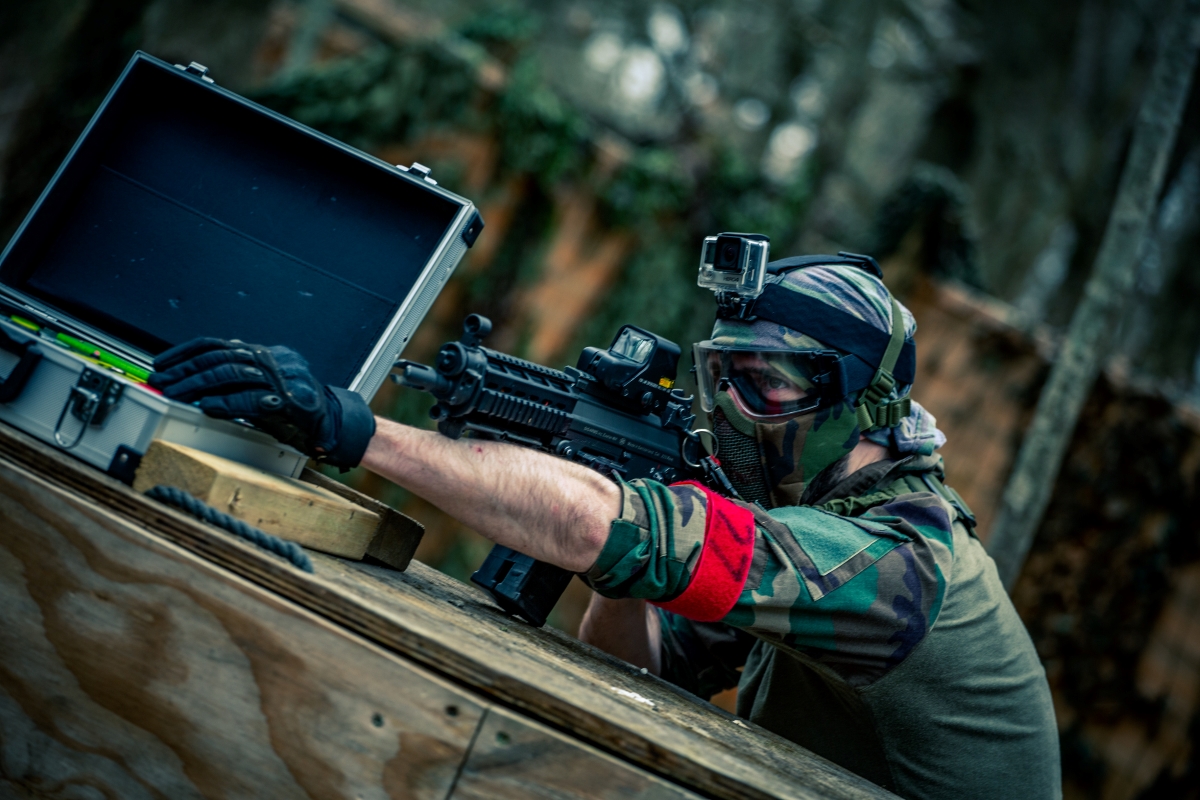
For enhanced communication, headsets with boom microphones can be integrated directly into helmets or tactical vests, providing clear audio in noisy environments while protecting hearing. Some advanced systems offer bone conduction technology or noise cancellation for even greater clarity. GPS trackers and mapping applications on smartphones can be used for navigation in complex terrain, designating objective points, and tracking team movements. Furthermore, action cameras like GoPros are ubiquitous, allowing players to record their gameplay, create highlight reels, and review tactics, adding a valuable post-game analysis dimension to the sport.
Customization, Upgrades, and Maintenance: The DIY Aspect
The modular nature and robust aftermarket support for airsoft replicas foster a vibrant culture of customization and tinkering, deeply rooted in technical understanding and a passion for optimization.
Aftermarket Parts and Performance Enhancement
One of the most appealing aspects of airsoft is the extensive availability of aftermarket parts, allowing players to personalize their replicas and enhance their performance significantly. Internal upgrades focus on improving power, accuracy, and reliability. This includes replacing stock motors with high-torque or high-speed variants, upgrading gear sets for durability or rate of fire, installing stronger pistons and air-seal components for increased power, and swapping out inner barrels for tighter bores and improved consistency. The hop-up unit and bucking are also prime candidates for upgrades, with various designs and materials available to fine-tune BB trajectory.
External customizations are equally popular, enabling players to modify the aesthetics and ergonomics of their replicas. This includes interchangeable stocks, ergonomic pistol grips, modular handguards (such as M-LOK or KeyMod systems for attaching accessories), and various muzzle devices like suppressors (often mock, for aesthetics) or tracer units (which illuminate glow-in-the-dark BBs). The advent of 3D printing technology has further democratized customization, allowing enthusiasts to design and produce unique parts, adapters, and accessories, opening up endless possibilities for personalization that were once unimaginable.
Repair and Troubleshooting: Digital Diagnostics and Skill-Building
The intricate nature of airsoft guns means that maintenance and occasional repairs are an inevitable part of the hobby. Troubleshooting issues often requires a methodical, diagnostic approach. Common problems include gearbox jams (especially in AEGs), feeding issues (BBs not loading correctly), and air leaks (leading to reduced power). For electronic issues, a multimeter is invaluable for checking battery voltage, motor continuity, and the integrity of wiring harnesses. Advanced issues might require partial or full disassembly of the gearbox, a process that demands patience, specialized tools, and a good understanding of the internal mechanics.
The airsoft community is a rich resource for technical support, with countless online forums, YouTube tutorials, and dedicated repair shops providing guidance. Learning to diagnose and fix problems not only saves money but also builds a deeper understanding of how these complex devices function, empowering players to maintain and optimize their own equipment. This DIY aspect fosters a strong sense of community and technical skill development among enthusiasts.
Software and Firmware for Smart Airsoft Devices
The increasing sophistication of airsoft electronics has led to the integration of software and firmware as critical components. Advanced ETUs and MOSFETs often come with upgradable firmware, allowing manufacturers to release performance enhancements, bug fixes, or new features that can be flashed onto the device by the end-user. This ensures that the electronic heart of the airsoft gun remains current and capable.
Furthermore, companion applications for smartphones or tablets are becoming standard for high-end electronic units. These apps provide an intuitive graphical interface for adjusting a wide array of settings: programming firing modes, setting active braking levels, monitoring battery health in real-time, configuring trigger sensitivity, and even running diagnostic checks. Some systems can track shot count, rate of fire, and other performance metrics, offering players detailed insights into their replica’s operation and their own shooting habits. This digital interface transforms the airsoft gun from a purely mechanical device into a smart tool that can be continuously refined and personalized through software.
The Future of Airsoft Technology
Airsoft technology is not static; it is a constantly evolving field driven by innovation, a desire for greater realism, and enhanced player experiences. The future promises even more sophisticated integrations and capabilities.
Advanced Sensors and Feedback Systems
Imagine an airsoft gun that provides haptic feedback for every shot fired, or vibrates to indicate an empty magazine. The integration of advanced sensors could bring these concepts to reality. Shot counters are already becoming more common, but future systems could incorporate ammo tracking within magazines, displaying remaining rounds on a small screen or through a connected app. Wearable technology could link directly with airsoft replicas, providing real-time player statistics such as simulated “health” levels, hit detection (beyond traditional honor system calls), or even vital signs in a highly immersive simulation. This level of feedback could dramatically enhance the tactical depth and realism of gameplay.
Realistic Simulation and Training Tools
As airsoft technology advances, its potential as a realistic, low-cost training tool for law enforcement and military personnel becomes increasingly apparent. Replicas that precisely mimic the weight, feel, and operation of real firearms, combined with advanced recoil systems (e.g., electronic or pneumatically driven reciprocating masses), and sophisticated sound emulators, could bridge the gap between expensive simulation systems and traditional live-fire training. This would allow for force-on-force training scenarios in environments where live ammunition is unsafe or impractical, providing valuable tactical experience without the associated risks and costs.
Sustainable Technology and Innovation
The airsoft community is increasingly aware of its environmental impact. The future will likely see a greater emphasis on sustainable technologies. This includes the widespread adoption of biodegradable BBs that break down quickly without leaving lasting plastic residues. Research into more environmentally friendly gas propellants or highly efficient HPA systems could reduce reliance on traditional green gas. Furthermore, innovations in battery technology could lead to safer, longer-lasting, and more energy-dense power sources. Modular designs that facilitate easier repair, recycling, and upgrades, reducing overall waste and prolonging the lifespan of replicas, will also be key to a more sustainable airsoft future.

Conclusion
“What’s airsoft” is, at its core, a question about an intricate blend of mechanical prowess, electronic ingenuity, and an unrelenting pursuit of realism. From the robust gearboxes of AEGs and the immersive blowback of GBBs to the precision-enhancing hop-up systems and the digitally controlled firing modes, technology underpins every facet of the sport. It empowers players with customizable performance, facilitates accurate diagnostics, and enables sophisticated team communication. As microelectronics become more pervasive and materials science advances, airsoft continues to evolve, promising an even more realistic, interactive, and environmentally conscious experience. Far from being a mere pastime, airsoft stands as a vibrant testament to the continuous innovation within the realm of realistic combat simulation technology.
aViewFromTheCave is a participant in the Amazon Services LLC Associates Program, an affiliate advertising program designed to provide a means for sites to earn advertising fees by advertising and linking to Amazon.com. Amazon, the Amazon logo, AmazonSupply, and the AmazonSupply logo are trademarks of Amazon.com, Inc. or its affiliates. As an Amazon Associate we earn affiliate commissions from qualifying purchases.