
In the rapidly evolving landscape of digital innovation, the term “template” has transcended its origins as a physical stencil or a simple document preset. Today, a template serves as the fundamental architectural blueprint for almost every digital interaction we encounter. From the complex codebases powering global financial systems to the intuitive interfaces of mobile applications, templates provide the necessary structure that allows technology to scale efficiently. At its core, a template in the tech industry is a pre-defined framework or pattern used to create multiple instances of a digital object without starting from scratch every time.
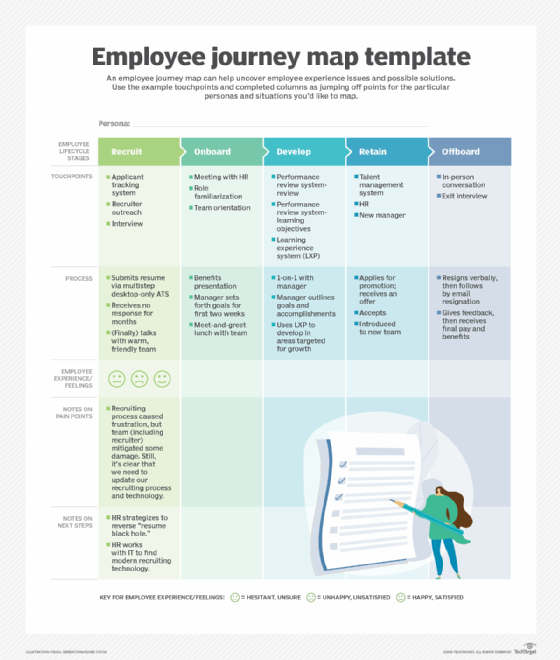
Understanding what a template is requires looking beyond the surface-level “placeholder.” It is an exercise in efficiency, standardization, and the systematic reduction of human error. By leveraging templates, developers, designers, and engineers can ensure consistency across diverse platforms while focusing their creative energy on unique problem-solving rather than repetitive scaffolding.
Defining the Digital Template in the Software Ecosystem
In the context of software and digital infrastructure, a template is a reusable asset that contains the logic, structure, and formatting of a final product, awaiting only the injection of specific data. This concept is central to the “DRY” (Don’t Repeat Yourself) principle of software engineering, which aims to reduce the repetition of information.
The Philosophy of Reusability and Efficiency
The primary driver behind the use of templates in technology is efficiency. In a world where “time to market” is a critical metric for success, manually building every component of a software system is no longer viable. Templates act as a force multiplier. By defining a set of rules and a layout once, a tech organization can deploy that structure across thousands of pages or modules. This reusability ensures that updates are manageable; changing the master template automatically propagates those changes across all derived instances, ensuring a cohesive ecosystem.
Structural Standardization
Beyond speed, templates provide a rigorous standard. In digital security and systems administration, templates ensure that every new server or application instance adheres to a vetted security profile. Without a standardized template, manual configuration leads to “configuration drift,” where subtle differences between systems create vulnerabilities and bugs. A template, therefore, is not just a shortcut; it is a governance tool that maintains the integrity of a technical environment.
Templates in Software Engineering and Programming
For a software engineer, a template is often a sophisticated tool integrated into the language or the development environment itself. It allows for the creation of flexible, type-safe code that can work with various data types or structures without sacrificing performance.
Logic vs. Presentation: The MVC Model
One of the most significant applications of templates in tech is the separation of concerns, particularly in the Model-View-Controller (MVC) architecture. Here, the “View” is often a template file (such as Jinja2 in Python, Blade in PHP, or EJS in JavaScript). These templates contain the HTML structure of a webpage with embedded “hooks” or variables. When a user requests a page, the server fetches data from the database (the Model), processes it (the Controller), and “renders” it into the template. This allows developers to change the look of a website without ever touching the underlying logic that processes user data.
Generics and Template Metaprogramming
In languages like C++, the concept of “templates” refers to a powerful feature that allows functions and classes to operate with generic types. This is known as template metaprogramming. It allows a programmer to write a single function—for example, a sorting algorithm—that works for integers, floating-point numbers, or custom-defined objects. The compiler uses the template as a factory to generate the specific code needed for each type at compile time. This results in highly optimized code that is both abstract and performant.
Infrastructure as Code (IaC)
In the realm of DevOps and Cloud Computing, templates have moved from the application layer to the hardware layer. Through “Infrastructure as Code,” platforms like AWS (via CloudFormation) and HashiCorp (via Terraform) use JSON or YAML templates to define entire data centers. These templates describe virtual private clouds, load balancers, and database clusters. By treating infrastructure as a template, tech teams can version-control their hardware setups, roll back changes, and replicate complex environments in different global regions with a single command.
The Proliferation of Templates in Web Development and Design

The web as we know it would not exist without templating. Modern web development has shifted away from static HTML files toward dynamic, component-based architectures where templates are the primary building blocks.
Content Management Systems (CMS) and Themes
Platforms like WordPress, Drupal, and Ghost are built entirely on the concept of templating. A WordPress “theme” is essentially a collection of templates that dictate how content—stored in a database—should be displayed. When a blogger hits “publish,” they aren’t creating a new design; they are injecting text and images into a pre-existing template. This democratization of web design has allowed millions of non-technical users to build professional-grade websites, while allowing developers to create highly complex, scalable web applications by focusing on the “Master Template.”
Frontend Frameworks and Component-Based Architecture
Modern frontend libraries like React, Vue, and Angular have refined the idea of a template into “components.” A component is a micro-template: a self-contained piece of UI (like a search bar or a profile card) that includes its own structure, styling, and logic. These components are used like Lego bricks to build complex user interfaces. The “template” here is the component definition, which can be reused across different parts of an application. This modularity is what allows tech giants like Facebook or Google to maintain visual and functional consistency across thousands of different pages and sub-services.
Productivity and Automation: Templates in the SaaS Era
In the world of Software as a Service (SaaS), templates have become a product in themselves. They serve as the bridge between a blank slate and a finished workflow, significantly lowering the barrier to entry for complex software tools.
No-Code and Low-Code Platforms
The rise of “No-Code” tools like Notion, Airtable, and Zapier relies heavily on templates. For these platforms, a template is a pre-configured workspace that solves a specific problem—such as a CRM (Customer Relationship Management) system or an editorial calendar. Users don’t need to understand database schemas or API integrations; they simply select a template, and the software configures the underlying technical architecture automatically. This shift represents the “templatization” of logic, where complex business processes are distilled into plug-and-play formats.
API and Integration Blueprints
In the interconnected world of modern software, APIs (Application Programming Interfaces) use templates to standardize communication. When different software systems talk to each other, they often use standardized message templates (like JSON schemas). These templates ensure that the data sent from a payment processor like Stripe is correctly interpreted by an accounting software like QuickBooks. Without these predefined communication templates, every software integration would require custom, manual coding, making the modern ecosystem of interconnected apps impossible.
The Future of Templates: AI-Generated Scaffolding
As we move further into the era of Artificial Intelligence, the definition of a template is evolving from a static file to a dynamic, generative process. AI is beginning to take the “template” concept to its logical conclusion: automated creation based on intent.
From Static to Dynamic Templates
Traditional templates are rigid; you must fit your data into the holes provided by the template. However, AI-driven development tools (like GitHub Copilot or Replit) are now generating “smart templates” on the fly. By analyzing a developer’s intent through natural language prompts, these tools generate the boilerplate code, the directory structure, and the testing suite automatically. This is, in effect, a “just-in-time” template that adapts to the specific needs of the project rather than forcing the project to adapt to the template.
The Shift Toward Intent-Based Design
In the future, we may see the disappearance of the “blank page” entirely. In UI/UX design, tools are emerging that can generate an entire interface template based on a user’s description of their goal. Instead of browsing a library of static templates, a designer might prompt an AI to “create a dashboard for a renewable energy monitoring system,” and the AI will assemble a custom template using vetted design tokens and components. This represents the ultimate evolution of the template: a flexible, intelligent framework that serves as a starting point for human-machine collaboration.
Conclusion
A template is far more than a “fill-in-the-blank” document; it is the fundamental unit of scalability in the digital age. By providing a bridge between abstract logic and tangible output, templates enable the tech industry to build faster, more securely, and with greater consistency. Whether it is a C++ template optimizing memory usage, a Terraform script deploying a global network, or a React component powering a social media feed, the template remains the indispensable blueprint of the modern world. As technology continues to advance, our templates will become smarter and more adaptive, but their core purpose will remain the same: to provide the structure upon which innovation can be built.
aViewFromTheCave is a participant in the Amazon Services LLC Associates Program, an affiliate advertising program designed to provide a means for sites to earn advertising fees by advertising and linking to Amazon.com. Amazon, the Amazon logo, AmazonSupply, and the AmazonSupply logo are trademarks of Amazon.com, Inc. or its affiliates. As an Amazon Associate we earn affiliate commissions from qualifying purchases.