
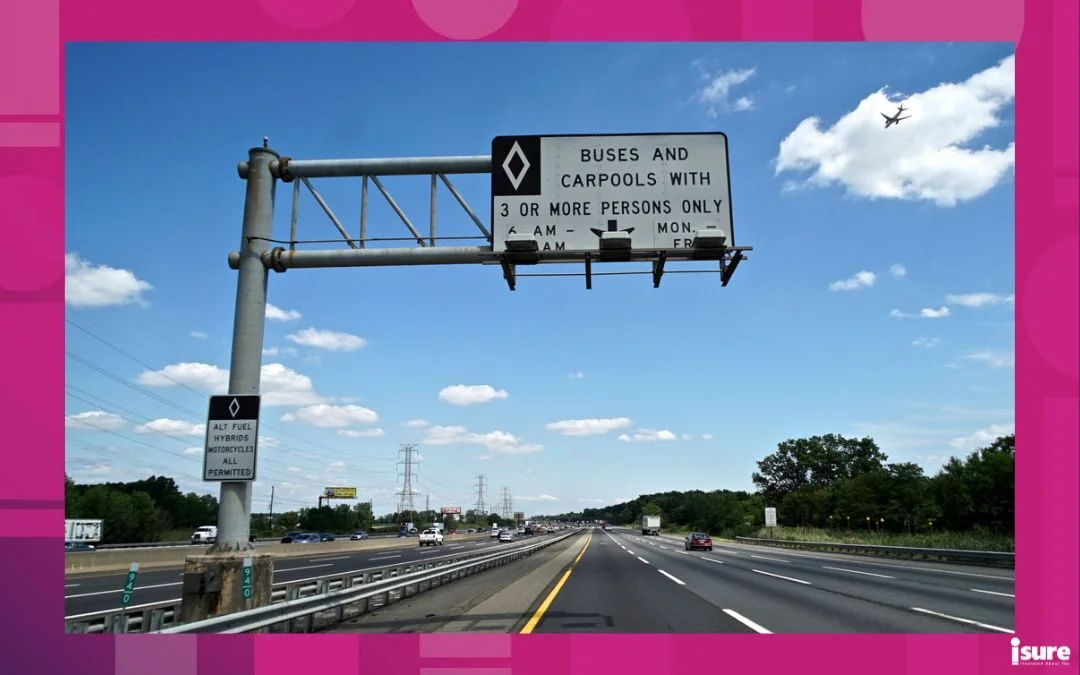
In the landscape of modern urban planning and personal finance, the High-Occupancy Vehicle (HOV) lane is more than just a strip of asphalt reserved for carpoolers. For the savvy commuter and the fiscally conscious business owner, the HOV lane represents a critical intersection of time management, cost-benefit analysis, and strategic resource allocation. Often referred to as “carpool lanes,” these designated paths are designed to move more people through a corridor by incentivizing shared rides. However, to understand what an HOV lane truly is, one must look past the traffic cones and diamond-shaped road markings to see the complex financial mechanisms that drive its existence and its impact on the individual’s bottom line.
The Economics of the Fast Lane: Understanding HOV and HOT Infrastructure
At its core, an HOV lane is a financial instrument of public policy intended to maximize the “throughput” of a roadway. From a macro-economic perspective, building more lanes is an expensive capital expenditure that often yields diminishing returns due to induced demand. Instead, governments implement HOV lanes to increase the utility of existing infrastructure without the massive price tag of new construction.
Defining the HOV Asset
An HOV lane is typically restricted to vehicles carrying two or more occupants (HOV 2+) or three or more (HOV 3+). From a personal finance standpoint, this creates a “barrier to entry” that functions much like a premium subscription service. To access the “premium” speed of the HOV lane, you must “pay” with the coordination and cooperation of others. By grouping commuters together, the individual cost of fuel and vehicle maintenance is distributed across multiple parties, effectively turning a solo liability—the commute—into a shared, more efficient operation.
The Shift to High-Occupancy Toll (HOT) Lanes
In recent years, the financial model of the HOV lane has evolved into the HOT (High-Occupancy Toll) lane. This is where the concept of the “Value of Time” becomes explicitly monetized. HOT lanes allow solo drivers to access HOV lanes by paying a toll, often managed through dynamic pricing. When traffic is heavy, the price increases; when it is light, the price drops. This is a real-world application of supply and demand curves. For a professional whose billable hour exceeds the cost of the toll, the HOT lane is a strategic investment in productivity. It allows the individual to buy back minutes or hours of their day, which can then be reinvested into income-generating activities or personal well-being.
Cost-Benefit Analysis: Is the HOV Lane Worth Your Investment?
For any individual looking to optimize their personal budget, the decision to use an HOV or HOT lane should be treated like any other investment. It requires a clear understanding of the Return on Investment (ROI) regarding both liquid capital and intangible assets like stress reduction.
Quantifying the Value of Time
The most significant financial benefit of an HOV lane is the reduction in travel time. To calculate the value of this, one must determine their “hourly rate” of personal time. If using an HOV lane saves 30 minutes a day, that equals 2.5 hours a week. Over a year, that is 125 hours. If your time is valued at $50 an hour, the HOV lane is providing you with $6,250 worth of recovered time annually. For many, this far outweighs the minor inconvenience of coordinating a carpool or the specific cost of a transponder and occasional toll fees.
Fuel Savings and Depreciation Reductions
Beyond time, the HOV lane offers direct savings on vehicle operating costs. Stop-and-go traffic is the least efficient environment for internal combustion engines and electric vehicles alike. By maintaining a steady speed in the HOV lane, drivers maximize their miles-per-gallon (MPG) or range per kilowatt-hour.
Furthermore, the mechanical wear and tear on a vehicle—brakes, transmission, and engine components—is significantly higher in heavy traffic. By utilizing HOV lanes, carpoolers share the burden of vehicle depreciation. If four colleagues alternate driving each week, each individual is reducing the annual mileage on their personal vehicle by 75%, effectively extending the life of their second-most expensive asset and delaying the need for a capital-intensive replacement.
The Financial Risks: Fines, Compliance, and Insurance
While the benefits are clear, the HOV lane also introduces specific financial risks that must be managed. High-occupancy lanes are strictly regulated, and the penalties for non-compliance are steep.
The Hidden Costs of Violations

In many jurisdictions, the fine for “HOV lane jumping”—using the lane without the required number of passengers—can range from $150 to over $500 for a first offense. Subsequent offenses often carry escalating penalties. These fines are “dead money”—expenditures that provide zero utility or return.
Furthermore, many automated enforcement systems now use high-definition cameras and infrared sensors to detect the number of heartbeats or heat signatures in a car. From a financial security perspective, an HOV violation is a preventable leak in a budget that can erase weeks of fuel savings in a single afternoon. Additionally, these citations can sometimes impact insurance premiums, depending on the state’s point system, leading to long-term increased costs.
Insurance Implications of Carpooling
When engaging in a carpool to access HOV lanes, there is a minor but noteworthy shift in liability. Carrying passengers for work-related purposes is generally covered by standard personal auto insurance policies, but it is a prudent financial move to ensure that your liability limits are sufficient. If you are the designated driver for a group of four high-earning professionals, a single accident could lead to significant medical and lost-wage claims. Ensuring you have adequate “Umbrella” insurance or higher liability limits is a necessary overhead cost for the long-term protection of your net worth.
Leveraging HOV Access for Business and Side Hustles
For entrepreneurs and gig economy workers, the HOV lane is not just a way to get to the office; it is a tool for increasing operational efficiency and profit margins.
Tax Incentives and Corporate Benefits
Many forward-thinking corporations offer “Commuter Benefits” that are tied to HOV usage. Under Section 132(f) of the Internal Revenue Code, employers can provide tax-free fringe benefits for qualified transportation, including transit passes and vanpooling. By utilizing these programs, employees can use pre-tax dollars to cover the costs of commuting, effectively reducing their taxable income. For the employer, incentivizing HOV use can reduce the need for expensive on-site parking infrastructure, which is a major real estate cost in urban centers.
Maximizing Profits in the Gig Economy
For those involved in the “side hustle” or gig economy—such as ride-sharing or delivery services—the HOV lane is a competitive advantage. While some HOV lanes require specific “clean air” stickers for solo drivers (like EVs or hybrids), others allow ride-share vehicles with passengers to bypass the main flow of traffic.
In the world of Uber or Lyft, time is the primary constraint on earning potential. A driver who can complete three trips in the time a solo driver completes two—thanks to HOV access—sees a 50% increase in gross revenue for that period. Even for delivery drivers, faster turn-around times mean more deliveries per shift and higher customer satisfaction ratings, which translates to better tips and higher platform rankings.
The Future of Congestion Pricing and Personal Wealth
As we look toward the future of urban mobility, the financial structure of the HOV lane is set to become even more integrated into our digital lives. We are moving toward a “Mobility as a Service” (MaaS) model where the decision to use an HOV lane is managed by AI-driven financial apps.
Smart Tolling and Automated Budgeting
The next generation of HOV and HOT infrastructure will use blockchain and IoT (Internet of Things) to handle micro-payments in real-time. Imagine a vehicle that automatically assesses the cost of the HOT lane versus the value of the driver’s upcoming calendar appointments, making a split-second financial decision to enter the lane to ensure the driver arrives at a high-stakes meeting on time.
For the individual, this means the “cost” of the HOV lane will be seamlessly integrated into monthly financial statements, much like a utility bill. This level of data allows for hyper-accurate budgeting. You will no longer guess what your commute costs; you will know exactly how much you are spending on “time-buybacks” each month.

Conclusion: The Bottom Line on HOV Lanes
An HOV lane is more than a traffic management tool; it is a geographic representation of time-value and fiscal efficiency. Whether you are carpooling to split the rising costs of fuel, paying a toll in a HOT lane to protect your billable hours, or leveraging corporate tax incentives to lower your taxable income, the HOV lane is a vital component of a modern financial strategy. By understanding the rules, quantifying the benefits, and mitigating the risks of these specialized lanes, the informed individual can turn a daily chore into a strategic advantage, ensuring that their most precious resources—time and money—are managed with the highest possible level of precision.
aViewFromTheCave is a participant in the Amazon Services LLC Associates Program, an affiliate advertising program designed to provide a means for sites to earn advertising fees by advertising and linking to Amazon.com. Amazon, the Amazon logo, AmazonSupply, and the AmazonSupply logo are trademarks of Amazon.com, Inc. or its affiliates. As an Amazon Associate we earn affiliate commissions from qualifying purchases.