
For anyone navigating the real estate market or planning a home renovation, the terminology surrounding bathroom configurations can often feel ambiguous. Among these, the “half bath”—frequently referred to as a powder room—is perhaps the most misunderstood. When assessing a home’s value, determining insurance premiums, or calculating your long-term return on investment (ROI), understanding the exact financial implications of a half bath is essential. From a personal finance and property valuation perspective, a half bath is not just a plumbing fixture; it is a strategic asset that impacts market liquidity and household equity.
The Financial Definition of a Half Bath
In real estate and appraisal standards, bathrooms are categorized by the number of plumbing fixtures they contain. A full bathroom is defined by the presence of four specific components: a sink, a toilet, a shower, and a bathtub. A half bath, conversely, consists strictly of two components: a sink and a toilet.
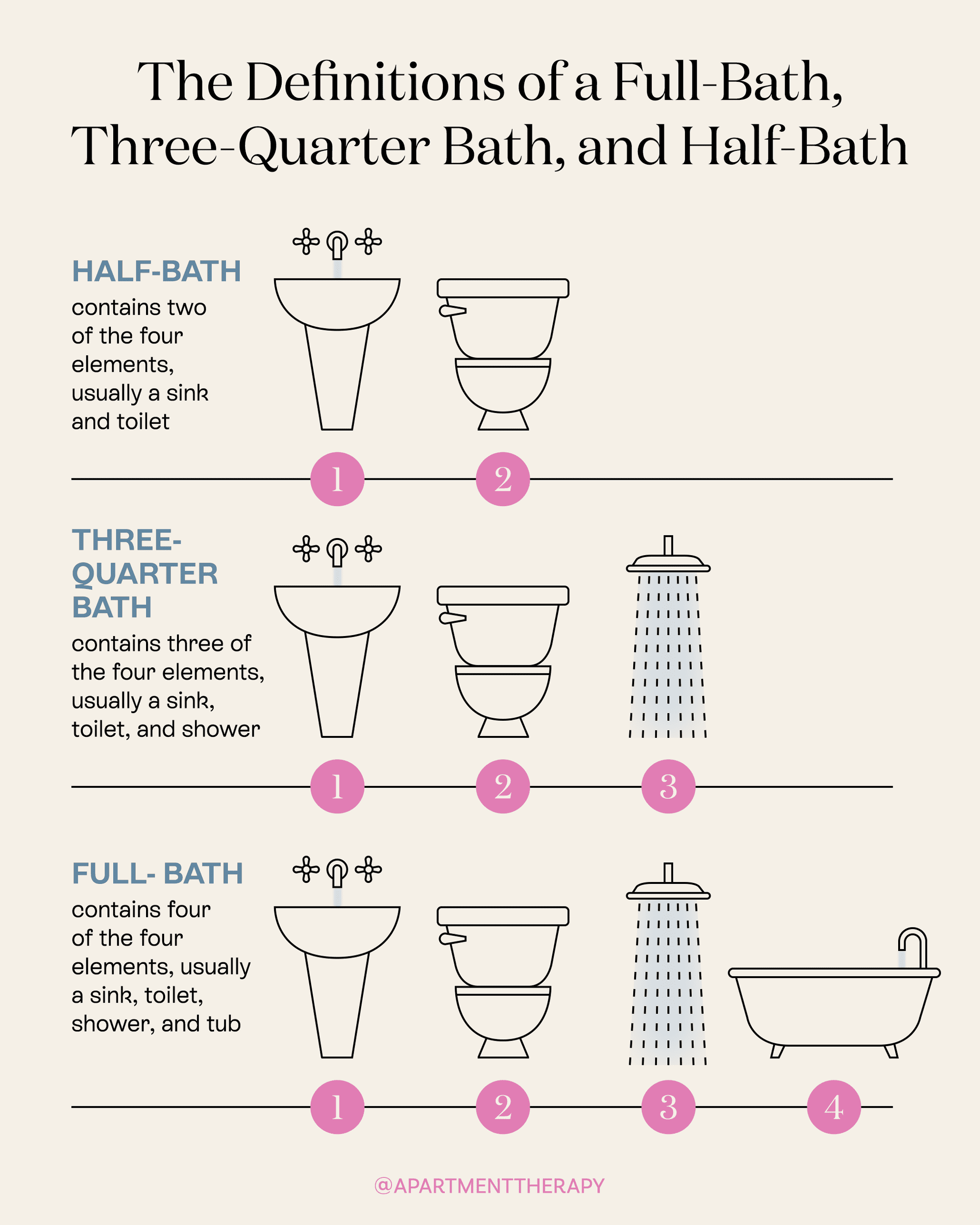
From a financial standpoint, this distinction is vital. When a property appraiser assesses a home for mortgage refinancing or a potential sale, they utilize specific metrics to assign value. A half bath provides utility without the space requirement of a full bath. For the homeowner, this means acquiring a functional amenity that costs significantly less to install, maintain, and insure than a full bathroom, yet contributes positively to the home’s “bedroom-to-bathroom ratio,” a key metric used by buyers to gauge convenience and modern living standards.
Why Valuation Matters for Your Portfolio
Real estate is often the most significant component of an individual’s net worth. Adding a half bath can be one of the most cost-effective home improvement projects you undertake. Unlike a kitchen remodel, which often involves high-end appliances and custom cabinetry that may not see a full return on investment, a half bath is a low-capex project that solves a major pain point for potential buyers: the need for a convenient guest facility on the main living level. By converting a walk-in closet or an under-utilized alcove into a half bath, you are essentially increasing the square footage utility of your asset, which translates into a higher listing price when the time comes to divest.
Strategic ROI: Costs vs. Market Perception
When considering a home improvement project as an investment, one must weigh the out-of-pocket capital expenditure against the projected increase in property value. The average cost to install a half bath can vary significantly based on existing plumbing infrastructure and location within the home, but it generally ranges from $5,000 to $15,000.
The Cost of Convenience
The financial argument for a half bath rests on the principle of “utility-to-cost ratio.” Because a half bath does not require a bathtub or a shower stall, you eliminate the need for expensive waterproofing, tiling, and high-flow plumbing fixtures. Furthermore, the square footage required for a functional powder room is minimal—often as little as 15 to 20 square feet.
By strategically placing a half bath on the ground floor, you effectively increase the marketability of your home. Real estate data consistently shows that homes with at least one bathroom on every floor, or a dedicated powder room for guests, spend fewer days on the market. In the world of personal finance, time is money; reducing the time your asset sits on the market decreases carrying costs such as property taxes, utilities, and mortgage interest payments.

Hidden Value in Home Refinancing
When you apply for a home equity line of credit (HELOC) or a cash-out refinance, lenders look at the total number of bathrooms as a proxy for property desirability. If your home is listed as a 3-bedroom, 1-bath property, it may be perceived as “underserved.” Adding a half bath shifts the designation to 3-bedroom, 1.5-bath. This small change in the property description can alter the comparable sales data (comps) that an appraiser uses, potentially resulting in a higher appraisal value and, consequently, more favorable loan terms or a lower interest rate on your debt.
Managing the Tax and Maintenance Implications
Owning a property comes with a series of ongoing financial responsibilities. While a half bath is a low-maintenance asset, it is still a component that requires consideration within your personal financial plan.
Insurance Premiums and Asset Protection
Homeowners’ insurance is a significant expense. When you renovate, it is imperative to update your policy. Adding a half bath increases the replacement value of your home. While the premium increase for an additional sink and toilet is generally negligible, failing to report significant improvements can lead to “under-insurance.” Should a pipe burst in your newly installed powder room, you want to ensure the damage is covered by your policy. A professional appraisal of the new installation ensures that your insurance coverage keeps pace with your investment.
Capitalizing on Energy and Water Efficiency
From a business finance perspective, minimizing overhead is key to long-term wealth building. When installing or updating a half bath, you have the opportunity to implement low-flow, high-efficiency toilets and sensor-activated faucets. While the immediate cost might be slightly higher than standard fixtures, the reduction in monthly utility bills provides a steady, albeit small, return on investment over the lifetime of the home. When you sell, “green” features serve as an effective marketing hook, allowing you to differentiate your property from competing listings in your neighborhood.
Assessing Future Liquidity and Market Trends
As you manage your personal wealth, your home serves as both a place of residence and a financial instrument. The inclusion of a half bath is a hedge against future market fluctuations.
Catering to Demographic Shifts
Current real estate trends emphasize the “living-in-place” model. As the population ages, or as families look for multi-generational living solutions, the demand for accessible, convenient bathroom space becomes more pronounced. A half bath located on the main floor makes a home more attractive to a wider demographic of buyers—from young families who need quick access to facilities while playing in the living area, to older individuals who prefer not to navigate stairs to access a bathroom. By installing a half bath, you are diversifying your potential buyer pool, which directly enhances the liquidity of your asset.

Avoiding Over-Capitalization
While the addition of a half bath is generally a smart financial move, it is crucial to avoid “over-improving” for your specific neighborhood. If you spend $20,000 on luxury marble finishes and high-end fixtures in a neighborhood where the median home price does not support such luxury, you risk not recovering your full investment upon sale.
The strategy should always be to align your home’s amenities with the “neighborhood standard.” Use the half bath as a means to reach the baseline of local expectations, or to slightly exceed them to gain an edge, but perform thorough market research before committing to high-end finishes. Effective financial management of your home requires a balanced approach: treat the space as a functional, value-add amenity rather than an artistic vanity project.
In conclusion, a half bath is a fundamental component of residential real estate that offers outsized returns relative to its footprint and construction cost. By viewing this addition through the lens of a financial investment, you can leverage it to increase your home’s equity, enhance its marketability, and ensure that your property remains a robust and liquid asset in your personal finance portfolio. Whether you are adding one for personal convenience or as part of a strategic renovation to maximize resale value, the math remains consistent: the humble half bath is a powerful tool for building household wealth.
aViewFromTheCave is a participant in the Amazon Services LLC Associates Program, an affiliate advertising program designed to provide a means for sites to earn advertising fees by advertising and linking to Amazon.com. Amazon, the Amazon logo, AmazonSupply, and the AmazonSupply logo are trademarks of Amazon.com, Inc. or its affiliates. As an Amazon Associate we earn affiliate commissions from qualifying purchases.