
The quest to start a business is often sparked by a desire for financial independence, the pursuit of a side hustle, or the ambition to build a scalable enterprise that generates long-term wealth. However, the modern economic landscape is crowded, and the barrier to entry has shifted. No longer is a massive capital injection the sole requirement for success; instead, the most successful entrepreneurs focus on financial efficiency, cash flow management, and market timing.
When asking “what is a good business to start,” the answer depends heavily on your capital availability, your risk tolerance, and your desired return on investment (ROI). From low-overhead digital ventures to asset-heavy investment models, the goal remains the same: creating a vehicle that maximizes income while minimizing unnecessary financial exposure. This guide explores the most viable business sectors through the lens of finance, scalability, and profit margins.
The Rise of High-Margin Service Models and Side Hustles
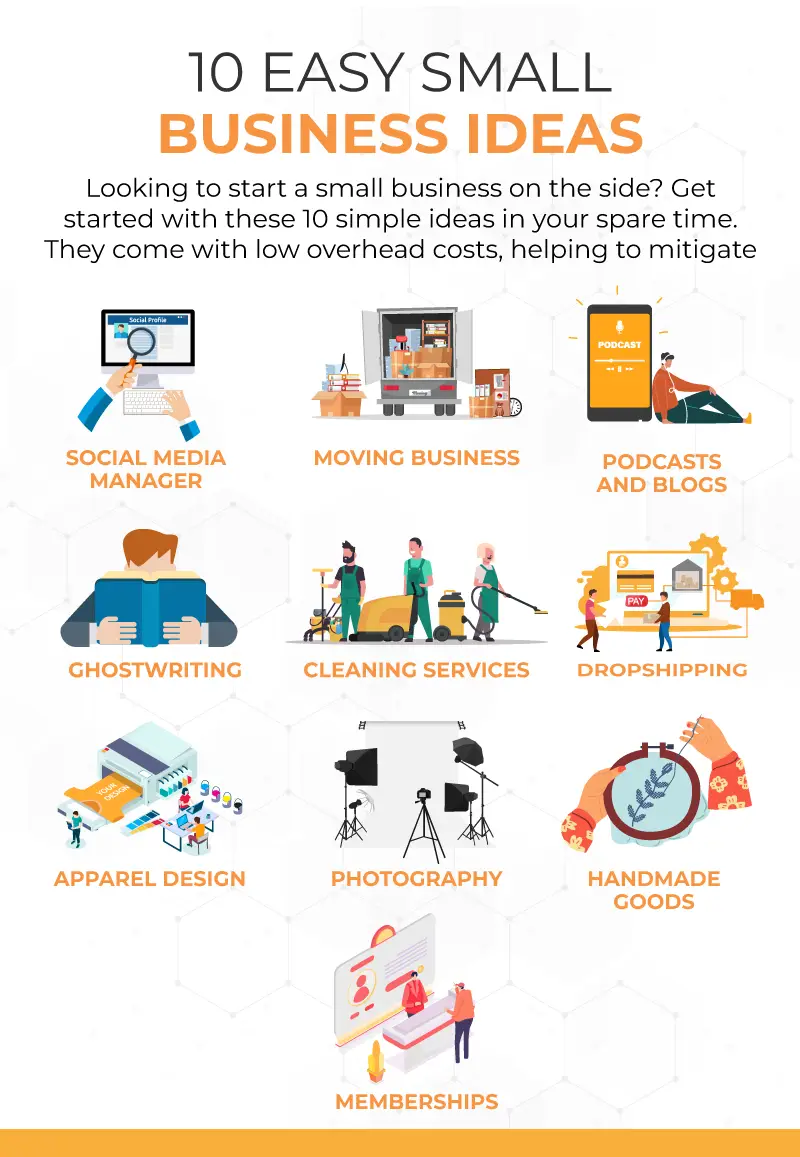
For many first-time entrepreneurs, the “best” business is one that requires minimal upfront investment but offers high hourly or project-based returns. Service-based businesses are often the most resilient because they bypass the complexities of inventory management and supply chain disruptions. In the realm of personal finance and online income, these models are prized for their high profit margins.
Professional Consulting and Specialized Freelancing
One of the most efficient ways to generate income is to monetize existing expertise. Consulting is a high-margin business because the primary “cost of goods sold” is your time. Whether you are providing financial advisory services, project management, or specialized business coaching, the overhead is remarkably low—typically limited to software subscriptions and marketing costs.
To turn a freelance gig into a true business, you must move from “trading hours for dollars” to a value-based pricing model. This shift allows you to increase your income without proportional increases in labor. By focusing on high-ticket clients, a consulting business can quickly become a significant source of cash flow that can be reinvested into more passive financial vehicles.
The Digital Product Ecosystem
If the goal is to decouple time from money, digital products are an unparalleled business model. This includes the creation of online courses, e-books, templates, or premium newsletters. Once the initial asset is created, the cost of selling to the 100th customer is virtually zero.
From a financial perspective, digital products offer an infinite “scalability factor.” Unlike a physical product that requires manufacturing, shipping, and storage, a digital asset is hosted online. This allows the business owner to maintain profit margins of 90% or higher. For individuals looking for a side hustle that can grow into a primary income stream, the digital product space provides a low-risk entry point into the world of online entrepreneurship.
Leveraging E-commerce and Scalable Online Income
While service models are excellent for cash flow, e-commerce remains a powerhouse for those looking to build a brand with tangible value. However, the financial strategy behind e-commerce has evolved. The focus has shifted from high-volume, low-margin products to niche markets with strong customer loyalty and recurring revenue potential.
Niche Dropshipping and Inventory-Light Models
Traditional retail requires significant capital to purchase inventory, which often sits in a warehouse as a “dead asset” until sold. Modern e-commerce entrepreneurs often prefer inventory-light models like dropshipping or print-on-demand. In these models, the financial risk is shifted; you only pay for the product after a customer has paid you.
The key to success here is not just selling products, but identifying “high-intent” niches where customers are less price-sensitive. By focusing on a specific niche—such as ergonomic office furniture for remote workers or specialized fitness equipment—you can command higher margins. The financial health of an e-commerce business is measured by the Customer Acquisition Cost (CAC) relative to the Lifetime Value (LTV) of that customer. If your LTV is significantly higher than your CAC, you have a business that is ready for capital injection and scaling.
Subscription-Based Recurring Revenue Streams
One of the most attractive business models from an investment perspective is the subscription box or membership site. The financial beauty of this model lies in “recurring revenue.” Predicting monthly income becomes much easier when you have a base of subscribers committed to a monthly fee.
Predictable cash flow allows a business owner to plan for expansion, negotiate better rates with suppliers, and secure business financing more easily. Investors and banks look favorably upon subscription models because the “churn rate” (the percentage of customers who cancel) provides a clear metric for the business’s long-term viability. Converting a one-time buyer into a recurring subscriber is the ultimate goal for any entrepreneur focused on sustainable wealth.
Investment-Heavy vs. Asset-Light Ventures
Choosing a business also requires a look at how you want to deploy your capital. Some entrepreneurs prefer “asset-light” businesses (like the ones mentioned above) because they are flexible. Others prefer “asset-heavy” businesses where the value of the company is backed by physical property or equipment.
Real Estate Management and Short-Term Rentals
Real estate remains a cornerstone of personal finance and wealth building. However, starting a real estate business today often looks different than it did a decade ago. Many entrepreneurs are entering the market through “rental arbitrage” or specialized property management for short-term rentals (like Airbnb).
In a rental arbitrage model, you lease a property long-term and sub-lease it as a short-term rental. This allows you to enter the real estate market without the massive down payment required for a mortgage. From a financial standpoint, this is a “leveraged” play. You are using a fixed expense (your rent) to generate variable, high-upside income. While it carries more risk than a digital business, the potential for high monthly cash flow is significant in high-demand tourism or business hubs.
Franchise Ownership: Buying a Proven System
For those with available capital who want to minimize the risk of “failure to launch,” a franchise is a viable business to start. Buying a franchise—whether it’s in the food service, cleaning, or fitness industry—is essentially buying a financial blueprint.
The primary advantage is the “proven ROI.” Most reputable franchisors provide detailed financial disclosures (Item 19) that show exactly what current owners are earning. While the initial franchise fee and ongoing royalties reduce your net profit, the reduced risk and established supply chains often lead to a more stable long-term investment. It is a “turnkey” business model for those who are more interested in management and financial optimization than in building a concept from scratch.
Financial Planning for New Business Owners
Regardless of the business you choose, the difference between a successful venture and a failed one often comes down to the underlying financial structure. Many businesses fail not because of a bad idea, but because of poor cash flow management.
Managing Cash Flow and Burn Rate
“Cash is king” is a cliché for a reason. Many entrepreneurs focus on “revenue,” but revenue is a vanity metric. Profit is what matters, and cash flow is what keeps the doors open. When starting a business, you must understand your “burn rate”—how much money the business spends each month to operate.
A good business to start is one where you can achieve a “break-even point” as quickly as possible. This involves meticulous tracking of every dollar. Using financial tools and accounting software from day one is essential. It allows you to see which products or services are truly profitable and which are draining your resources. In the early stages, lean operations are almost always superior to aggressive expansion.
Tax Efficiency and Legal Structuring
A crucial but often overlooked aspect of starting a business is the legal and tax structure. Whether you operate as a Sole Proprietorship, an LLC, or an S-Corp has massive implications for your personal finance.
For example, an S-Corp structure may allow you to save thousands in self-employment taxes as your income grows. Similarly, understanding deductible business expenses—such as home office deductions, travel, and equipment—can significantly lower your effective tax rate. A “good” business is one that is structured to keep as much money as possible in the owner’s pocket, rather than losing it to inefficient tax planning. Consulting with a financial professional early in the process is not a cost; it is an investment in your business’s future solvency.

Conclusion: Matching Financial Goals with Business Choice
Choosing a business to start is ultimately a financial decision. You are deciding where to allocate your most precious resources: your time and your capital. If you are looking for low-risk entry and high margins, the digital service and product sectors offer the best path. If you have capital to deploy and want to build a more traditional asset-based company, real estate or franchising may be the answer.
The most successful entrepreneurs are those who look beyond the “idea” and look into the “math.” They understand their margins, they manage their cash flow with discipline, and they choose models that offer scalability. Whether it’s a side hustle intended to pay off a mortgage or a full-time venture aimed at generating millions, the best business to start is the one that aligns with your financial goals and provides a clear, sustainable path to profitability. In the world of money, clarity is the ultimate competitive advantage.
aViewFromTheCave is a participant in the Amazon Services LLC Associates Program, an affiliate advertising program designed to provide a means for sites to earn advertising fees by advertising and linking to Amazon.com. Amazon, the Amazon logo, AmazonSupply, and the AmazonSupply logo are trademarks of Amazon.com, Inc. or its affiliates. As an Amazon Associate we earn affiliate commissions from qualifying purchases.