
In the world of finance, whether we are discussing personal wealth management, venture capital, or corporate scaling, we often focus on the “what” and the “how.” We analyze the “what”—stocks, bonds, real estate, or SaaS products—and the “how”—technical analysis, tax-loss harvesting, or lean methodology. However, the most critical variable in the wealth equation is often the “who.” Specifically, how the individual behind the assets perceives their own potential and the nature of capital. This brings us to the concept of the “fixed mindset,” a psychological framework popularized by Carol Dweck, but one that takes on a particularly high-stakes meaning when applied to the world of money.
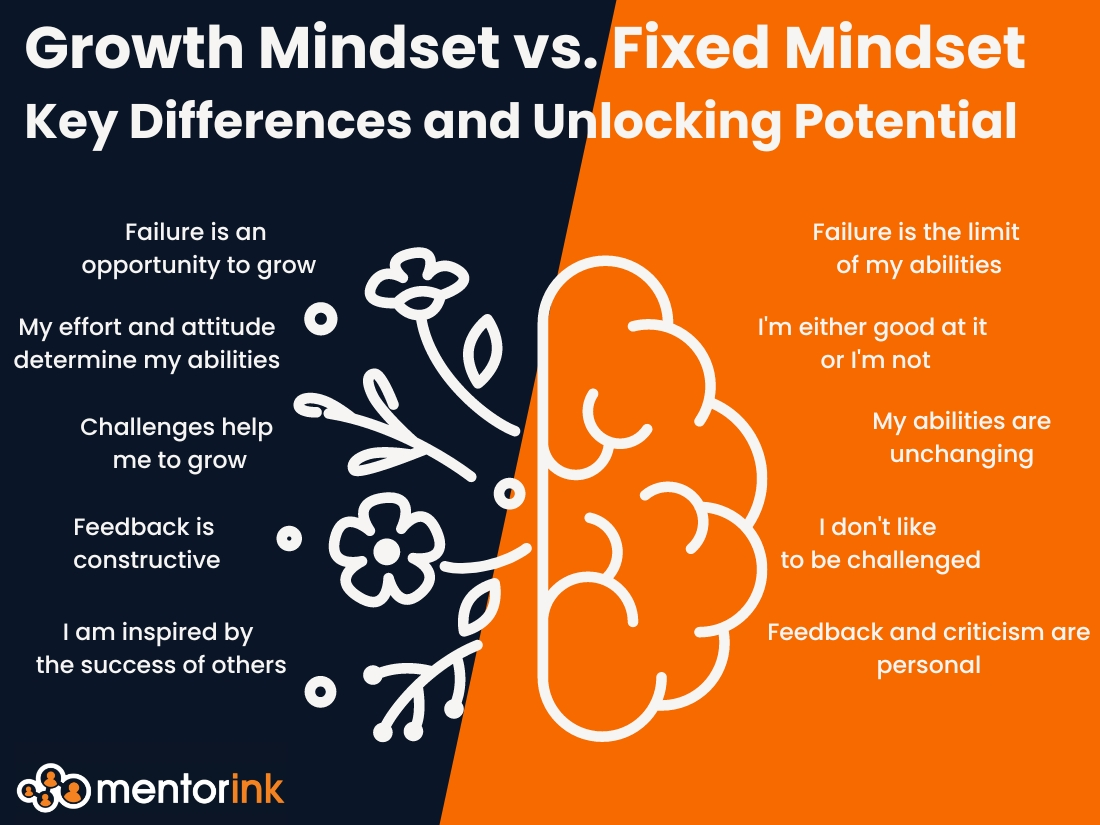
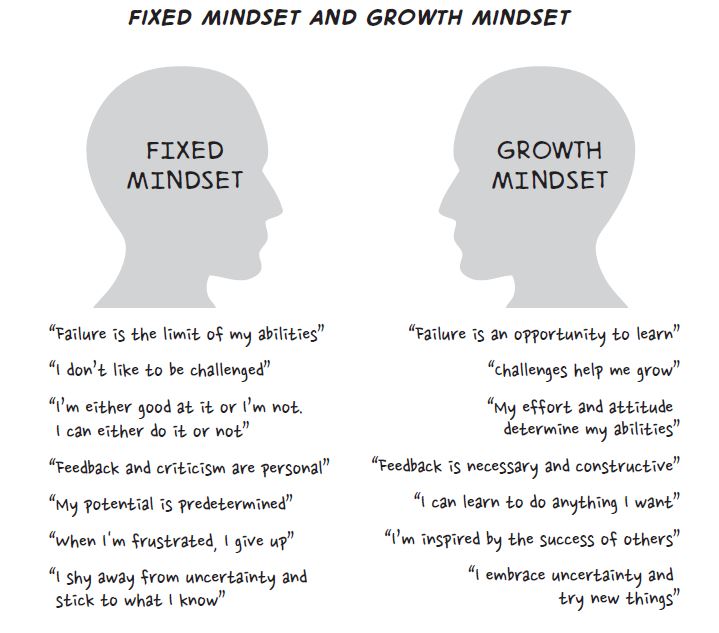
A fixed mindset is the belief that your qualities, intelligence, and—crucially—your financial capacity are static traits. In this worldview, you are born with a certain “money ceiling.” You are either “good with money” or you aren’t; you are either a “natural entrepreneur” or a “salaryman.” When this mindset permeates a financial strategy, it creates an invisible barrier to growth, often leading to stagnation, missed opportunities, and an inability to adapt to the rapidly shifting economic landscape.
The Anatomy of a Fixed Mindset in Personal Finance
To understand how a fixed mindset operates within the niche of money, one must look at the internal dialogue of the average consumer versus the sophisticated investor. A fixed mindset creates a rigid boundary around one’s earning potential and financial literacy.
The Psychology of “I’m Not Good with Money”
One of the most pervasive symptoms of a fixed financial mindset is the self-labeling of incompetence. Many individuals carry a lifelong narrative that they lack the “math gene” or the “business sense” required to build wealth. This is a classic fixed mindset trait: viewing a skill (financial literacy) as an innate talent rather than a developed proficiency.
When someone believes their financial aptitude is fixed, they tend to avoid challenges. They may shy away from learning how to read a balance sheet, ignore their credit score out of fear, or delegate their financial future entirely to others without oversight. This avoidance stems from the fear that if they try and fail, it proves they are “bad with money” at a fundamental level. In reality, financial mastery is a cumulative process of trial, error, and education.
Scarcity vs. Abundance: The Core of the Financial Block
The fixed mindset is the primary architect of a “scarcity mentality.” This is the belief that the “economic pie” is fixed in size, and for one person to gain, another must lose. In personal finance, this manifests as extreme risk aversion and an obsession with “pinching pennies” at the expense of “growing pounds.”
While frugality is a virtue, a fixed mindset takes it to a detrimental extreme. An individual with a fixed mindset focuses 90% of their energy on cutting costs—canceling streaming services or hunting for coupons—and 0% of their energy on expanding their income streams. They view their salary as a hard cap. Conversely, a growth mindset in finance views capital as fluid and income as something that can be engineered through the acquisition of new high-value skills or the deployment of assets.
How a Fixed Mindset Sabotages Long-Term Investing and Wealth Building
The impact of a fixed mindset is perhaps most visible in the arena of investing. The market is a volatile environment that demands emotional regulation and constant learning—two things a fixed mindset struggles to provide.
The Fear of Market Volatility and Risk Aversion
For an investor with a fixed mindset, a market downturn is often perceived as a personal failure or a sign that the “system is rigged.” Because they view their financial status as a reflection of their inherent worth, a 20% drop in their portfolio feels like a 20% drop in their value as a person.
This leads to “panic selling” at the bottom of a cycle. They lack the resilience to see market fluctuations as temporary noise or, better yet, as an opportunity to buy assets at a discount. Because they believe they cannot learn to navigate the complexities of the market, they often opt for the “safest” possible routes—such as keeping large sums of cash in low-interest savings accounts—which, ironically, guarantees a loss of purchasing power due to inflation.
The “Wait and See” Trap: Missing Out on Compound Interest
A fixed mindset often leads to “analysis paralysis.” An individual may feel they don’t know enough to start investing, and because they believe their ability to learn is limited, they wait until they feel “perfectly” prepared. In the world of finance, time is the most valuable asset due to the mechanics of compound interest.
By waiting years to enter the market because they “aren’t an expert yet,” individuals with a fixed mindset lose the exponential growth that occurs in the final decades of an investing career. A growth mindset, by contrast, acknowledges that “done is better than perfect.” A growth-oriented investor starts small, learns the mechanics of an index fund, and scales their contributions as their knowledge increases, understanding that the market itself is the best teacher.

Shifting from Employee to Entrepreneurial Thinking
The divide between a fixed mindset and a growth mindset is most apparent when discussing income generation. The traditional “employee” mindset is often rooted in the fixed belief that one’s value is tied to the hours they work.
Escaping the Hourly Wage Trap
In a fixed mindset, the formula for money is simple: Time x Hourly Rate = Income. When people with this mindset want more money, their only solution is to work more hours. However, time is a finite resource, meaning their income is fundamentally capped.
Transitioning to a wealth-building mindset requires breaking this link. It involves shifting toward “value-based” or “result-based” compensation. This might mean negotiating performance bonuses, starting a side hustle based on intellectual property, or investing in dividend-paying stocks. A person with a growth mindset asks, “How can I decouple my income from my time?” This question is the cornerstone of moving from a middle-class trap to true financial independence.
Scaling and Leverage: The Growth Mindset in Business
For business owners, a fixed mindset is a death sentence. It manifests as a refusal to pivot when the market changes or an inability to delegate because “nobody can do it as well as I can.” This is the “Founder’s Trap.”
A growth mindset in business finance is centered on the concept of leverage—using other people’s time (employees), other people’s money (capital/loans), or technology (software/AI) to scale results. The fixed mindset entrepreneur sees a loan as a “debt” to be feared; the growth mindset entrepreneur sees a loan as “leverage” to accelerate an existing, profitable system. One views business as a way to “buy a job,” while the other views business as a way to “build an asset.”
Strategies to Pivot Toward a Financial Growth Mindset
If you identify fixed-mindset patterns in your financial life, the good news is that cognitive frameworks can be rewritten. The transition from a fixed to a growth mindset in money management requires intentionality and systemic changes.
Financial Education as the Ultimate Asset
The antidote to the “I’m not good with money” belief is evidence-based competence. Start by treating financial literacy as a technical skill, not a personality trait.
-
Curated Consumption: Stop following “get rich quick” influencers and start reading foundational texts on value investing, macroeconomics, and behavioral finance.
-
Micro-Learning: Set a goal to understand one new financial concept per week—be it “EBITDA,” “Tax-Advantaged Accounts,” or “Dollar Cost Averaging.” As your knowledge base grows, the “fixed” walls around your potential will begin to crumble.
Reframing Failures as “Data Points” in Market Strategy
In a fixed mindset, a failed business venture or a bad stock pick is a permanent stain. In a growth mindset, it is a “tuition fee” paid to the school of experience. To shift your mindset, start performing “post-mortems” on your financial mistakes. Instead of saying, “I lost money because I’m bad at this,” ask, “What data did I miss, and how does this refine my investment thesis for the next time?” This objective detachment allows you to stay in the game long enough to eventually win.
The Role of Financial Tools and Systems in Reinforcing Growth
While mindset is internal, it is reinforced by the external tools we use. In the modern age, technology offers a bridge for those trying to move away from a fixed mindset by automating the “discipline” part of the equation.
Automating Success to Remove Psychological Barriers
One of the best ways to bypass a fixed mindset is to take the “self” out of the decision-making process. If you believe you lack the discipline to save or the intelligence to trade, use Fintech tools to automate your wealth building.
-
Robo-Advisors: These tools use algorithms to maintain a diversified portfolio, preventing the user from making emotional, “fixed-mindset” decisions during market swings.
-
Automated Transfers: Setting up a system where a portion of your income goes directly into an investment account before you even see it removes the daily struggle of “deciding” to be a growth-oriented person. It makes growth the default setting.
By leveraging these tools, you create a “system of growth” that operates regardless of your internal doubts. Over time, as you see your net worth increase through these automated systems, your internal mindset will naturally shift to align with your external reality. You will begin to see yourself as a person who builds wealth, effectively turning a growth mindset into a self-fulfilling prophecy.
aViewFromTheCave is a participant in the Amazon Services LLC Associates Program, an affiliate advertising program designed to provide a means for sites to earn advertising fees by advertising and linking to Amazon.com. Amazon, the Amazon logo, AmazonSupply, and the AmazonSupply logo are trademarks of Amazon.com, Inc. or its affiliates. As an Amazon Associate we earn affiliate commissions from qualifying purchases.