
In the rapidly evolving landscape of modern technology, we often focus on the visible components: the sleek glass of a smartphone, the complex algorithms of artificial intelligence, or the massive data centers powering the cloud. However, the most critical innovations of the 21st century are happening at a level invisible to the naked eye. To understand how our gadgets stay powered, how electric vehicles (EVs) achieve high ranges, and how next-generation semiconductors function, we must understand a fundamental chemical entity: the cation.
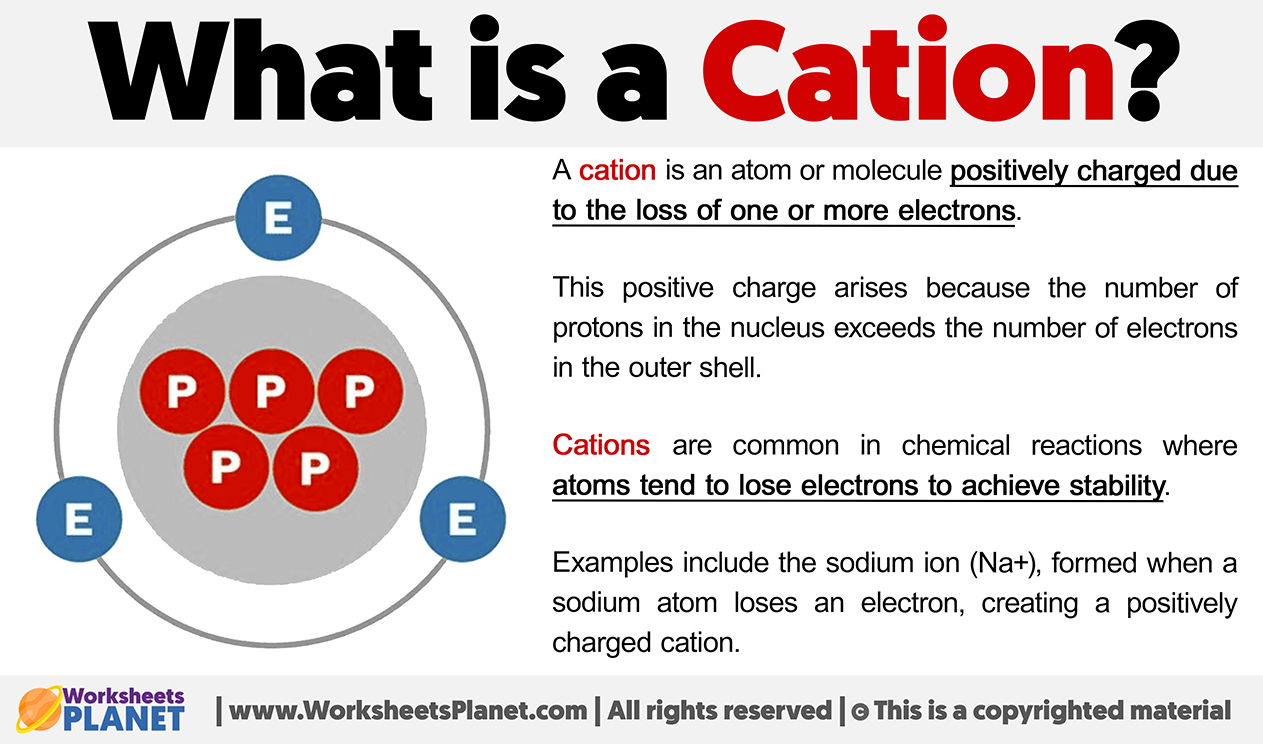
In the context of technology, a cation is far more than a textbook definition from a chemistry class. It is a positively charged ion—an atom that has lost one or more electrons—and it serves as the literal “heavy lifter” in the world of energy storage and hardware engineering. As we push toward a future defined by portable power and high-speed computing, the cation has become a central focus for tech innovators, material scientists, and hardware developers.
The Fundamental Role of Cations in Modern Energy Storage
At the heart of almost every portable device we own—from iPhones to MacBooks—lies the lithium-ion battery. The “ion” in this name specifically refers to the lithium cation ($Li^+$). Understanding how these cations move is essential to understanding the lifecycle, efficiency, and safety of modern technology.
The Lithium-Ion Revolution
The tech world was revolutionized by the ability to manipulate lithium cations. Unlike neutral atoms, these positively charged particles move between the anode and the cathode of a battery during charge and discharge cycles. When you plug your phone into a charger, you are essentially forcing lithium cations to move through an electrolyte toward the anode. When you use the device, they migrate back. This movement creates the flow of electricity that powers your software.
The choice of lithium as the primary cation for tech was not accidental. Lithium is the lightest metal and has a high electrochemical potential, meaning it can provide a high energy density. This tech breakthrough is what allowed for the miniaturization of laptops and the viability of long-range electric vehicles like those produced by Tesla and Rivian.
How Cationic Mobility Drives Device Performance
For a piece of hardware to be considered “high-performance,” it requires efficient cation mobility. This refers to the speed and ease with which cations can travel through the internal structure of a battery. If the movement is sluggish, the device experiences “voltage sag” or slow charging speeds.
Tech engineers are constantly looking for ways to optimize the pathways for these cations. Innovations in nanotechnology have led to the development of “nanowire” anodes, which provide a more direct route for cations, reducing heat generation and increasing the lifespan of the battery. For the tech consumer, this translates to a battery that doesn’t just last all day but remains healthy for several years.
Beyond Lithium: The Next Generation of Cation-Based Tech
While lithium cations currently dominate the market, the tech industry is facing a supply chain and sustainability crisis. This has led to a surge in research into alternative cations that could power the next generation of gadgets and renewable energy grids.
Sodium-Ion: A Sustainable Alternative to Lithium Cations
One of the most promising trends in green tech is the shift toward sodium-ion ($Na^+$) batteries. Sodium is chemically similar to lithium but is vastly more abundant and cheaper to source. Companies like CATL are already integrating sodium-ion technology into their roadmaps.
From a tech perspective, sodium-ion batteries present a unique challenge: sodium cations are larger and heavier than lithium cations. This means they move differently through materials. Engineers are currently designing new “open-framework” crystal structures that can accommodate these larger cations without the battery expanding or degrading. This technological pivot is crucial for reducing the cost of hardware and making sustainable energy storage accessible to a global market.
Solid-State Batteries and Enhanced Ion Conductors
The “holy grail” of current battery tech is the solid-state battery. In traditional tech, cations move through a liquid electrolyte, which is flammable and prone to leakage. Solid-state technology replaces this liquid with a solid ceramic or polymer electrolyte.
The technical advantage here is “cationic flux.” In a solid-state environment, cations can move faster and more safely, allowing for ultra-fast charging—imagine charging an EV in five minutes or a laptop in sixty seconds. This shift also eliminates the risk of “dendrites,” which are microscopic, needle-like structures that form when cations accumulate unevenly. By mastering the behavior of cations in solid mediums, the tech industry is on the verge of a safety and efficiency breakthrough that will redefine portable electronics.

Cations in Semiconductor and Nano-Engineering
While energy storage is the most famous application of cations in tech, they play an equally vital role in the manufacturing of the chips that run our AI and software. Semiconductor fabrication is a process of extreme precision where ions are used to “tune” the properties of silicon.
Ion Implantation and Transistor Scaling
As we strive to follow Moore’s Law—doubling the number of transistors on a chip every two years—the role of cation chemistry becomes paramount. This is achieved through a process called “ion implantation.” High-energy beams of cations (such as Boron or Phosphorus ions) are fired into the silicon wafer.
This process, known as “doping,” changes the electrical conductivity of the silicon. By precisely controlling the depth and concentration of these cations, engineers create “P-type” and “N-type” regions that form the basis of a transistor. Without the ability to manipulate these cations at the atomic scale, the high-speed processors used in modern AI training and high-end gaming would be impossible to manufacture.
Molecular Computing and Cationic Logic
Looking further into the future, tech researchers are exploring “molecular computing” and “ionic circuits.” Instead of using electrons to represent bits (1s and 0s), these experimental systems use the presence or absence of cations.
Cationic logic gates could potentially operate with much lower power consumption than traditional silicon-based electronics. This is particularly relevant for the “Internet of Things” (IoT), where billions of tiny sensors need to operate for years on a single charge. By mimicking the way biological neurons use ions (like sodium and potassium) to send signals, tech companies are aiming to create “neuromorphic” chips that are far more efficient at processing complex AI tasks than current hardware.
The Impact on Hardware Longevity and Digital Security
Understanding cations isn’t just for chemists and hardware engineers; it has practical implications for how we manage tech ecosystems and digital infrastructure. The physical behavior of these ions can affect everything from data integrity to the lifespan of server farms.
Preventing Cationic Migration in Circuits
A major concern in high-end server and data center hardware is “electromigration” and “cationic migration.” Over time, the high heat and electrical stress in a circuit can cause ions within the metal interconnects (like copper or gold) to physically move.
When cations migrate out of place, they can create microscopic voids or “whiskers” that lead to short circuits. For cloud providers and digital security firms, this is a hardware-level vulnerability. Tech giants like Intel and TSMC invest billions into “barrier materials” that lock cations in place, ensuring that the hardware remains stable and secure for decades of operation.
Environmental Monitoring and Sensor Tech
Finally, cations are the primary targets for a new wave of environmental tech. Smart sensors are being deployed in “Smart Cities” to monitor water quality and soil health by detecting specific cations (like lead $Pb^{2+}$ or mercury $Hg^{2+}$).
These sensors use “ion-selective electrodes” to convert the presence of a specific cation into a digital signal. This data is then transmitted via 5G networks to AI dashboards for real-time analysis. This intersection of chemistry and information technology is a prime example of how understanding a “cation” enables us to build smarter, safer, and more responsive urban environments.

Conclusion: The Future of Tech is Atomic
When we ask “What’s a cation?” in the context of the 21st-century tech landscape, the answer is clear: it is the fundamental building block of our digital existence. Whether it is the lithium cation powering the smartphone in your pocket, the sodium cation promising a greener energy grid, or the dopant ions inside a high-speed CPU, these positively charged particles are the engines of innovation.
As we move toward a future of solid-state power, molecular computing, and sustainable hardware, the ability to control, move, and monitor cations will be the deciding factor in which technologies succeed and which become obsolete. For professionals in the tech industry, staying ahead means looking beyond the software and recognizing the sophisticated atomic science that makes the digital world possible. The cation may be small, but its impact on the global technology sector is nothing short of massive.
aViewFromTheCave is a participant in the Amazon Services LLC Associates Program, an affiliate advertising program designed to provide a means for sites to earn advertising fees by advertising and linking to Amazon.com. Amazon, the Amazon logo, AmazonSupply, and the AmazonSupply logo are trademarks of Amazon.com, Inc. or its affiliates. As an Amazon Associate we earn affiliate commissions from qualifying purchases.