
In an era defined by data, algorithms, and personalized digital experiences, an ancient practice is finding a vibrant new life: astrology. Specifically, the concept of a “birth chart” – a celestial snapshot of the heavens at the precise moment of your birth – has transcended its esoteric origins to become a mainstream phenomenon, largely thanks to technological innovation. For centuries, understanding one’s cosmic blueprint required painstaking manual calculations and specialized knowledge. Today, powerful software, intuitive apps, and even emerging AI tools have democratized access to this profound self-discovery tool, transforming it from a niche art into a widely accessible digital utility.
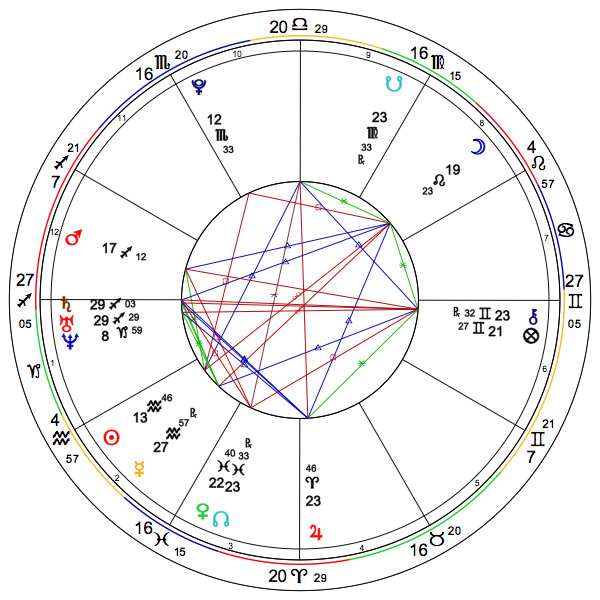
This article delves into the technological underpinnings of the modern birth chart, exploring how software engineering, data science, artificial intelligence, and sophisticated user experience design have converged to make personal astrology more precise, engaging, and insightful than ever before. We’ll uncover the algorithms that map the cosmos, the interfaces that simplify complex symbolism, and the digital security measures required to protect your unique astrological identity.
The Digital Genesis of Your Natal Chart: Algorithms and Astronomical Data
At its core, a birth chart is a highly precise diagram based on astronomical positions. Manually calculating one involves complex spherical trigonometry, reference to astronomical tables (ephemerides), and adjustments for time zones and geographical coordinates. This process was laborious and prone to error. The digital age, however, has revolutionized this foundation, embedding these calculations into robust software that delivers unparalleled accuracy and speed.
Beyond Manual Calculation: The Power of Algorithmic Precision
Modern birth chart generation relies on sophisticated algorithms that process vast datasets of astronomical information. The primary data source is the ephemeris – a table providing the precise positions of celestial bodies (planets, sun, moon, asteroids, etc.) at specific times. Digital ephemerides are far more comprehensive and accurate than their historical paper counterparts, often covering millennia with minute-by-minute precision.
When you input your birth date, time, and location into an astrology app or website, these algorithms spring into action:
- Time Conversion: The software first converts your local birth time to Universal Time Coordinated (UTC), accounting for time zones and daylight saving adjustments. This is crucial as astronomical events are measured universally.
- Geographical Coordinates: Your birth latitude and longitude are used to calculate the houses – twelve divisions of the sky that represent different areas of life. Various house systems (Placidus, Koch, Whole Sign, etc.) employ different mathematical formulas, all pre-programmed into the software.
- Planetary Positions: Using the UTC and ephemeris data, the algorithms pinpoint the exact zodiacal degree (0-29 degrees in each of the 12 signs) for the Sun, Moon, and all planets, as well as other significant points like the North Node, South Node, Chiron, and asteroids.
- Ascendant and Midheaven: These critical angular points, which mark the cusp of the 1st and 10th houses respectively, are dynamically calculated based on the precise time and location, requiring complex astronomical formulas related to the Earth’s rotation and the observer’s horizon.
The speed and accuracy with which these calculations are performed by modern software are astonishing, eliminating human error and democratizing access to this foundational astrological data.
Data Integrity and Accuracy: The Bedrock of Digital Astrology
The old adage “garbage in, garbage out” is profoundly true for birth charts. Even the most sophisticated software cannot compensate for incorrect birth data. A difference of just a few minutes in birth time can shift the Ascendant sign and house cusps, fundamentally altering the chart’s interpretation.
Astrology apps and websites employ various strategies to promote data integrity:
- Input Validation: Many platforms implement robust input validation, flagging implausible dates, times, or locations.
- Time Zone Databases: They integrate extensive global time zone databases, often updated regularly, to correctly handle historical daylight saving changes, which can vary by region and year.
- Geocoding APIs: Integration with geocoding services ensures that location inputs (e.g., “London, UK”) are accurately translated into precise latitude and longitude coordinates.
This commitment to data accuracy ensures that the digital birth chart generated is as precise as possible, providing a reliable foundation for personal exploration and insights.
Navigating the Celestial Map: User Experience in Astrology Apps and Platforms
Calculating a birth chart is only the first step. For the average user, the raw data – a circle filled with glyphs, numbers, and lines – can be intimidating and incomprehensible. This is where brilliant user experience (UX) and user interface (UI) design, coupled with sophisticated interpretation algorithms, come into play, transforming complex astrological data into accessible, engaging, and personalized insights.
Intuitive Interfaces: Making Complex Astrology Accessible
Modern astrology apps excel at presenting complex information in visually appealing and easy-to-understand formats.
- Interactive Chart Visualizations: Instead of static images, many apps offer dynamic, interactive birth charts. Users can tap on a planet, sign, or house to reveal its specific meaning and significance within their chart.
- Simplified Explanations: Adjacent to the chart, apps often provide clear, concise explanations of each astrological component (e.g., “Your Sun is in Leo, which means you are…”), breaking down intricate symbolism into digestible insights.
- Guided Tours and Tutorials: For beginners, many platforms include onboarding processes and interactive tutorials that walk users through the basics of their chart, explaining fundamental concepts like planets, signs, houses, and aspects.
- Customization: Users can often customize the chart’s appearance, select different house systems, or toggle on/off various astrological points, allowing for a personalized learning experience.
These design choices remove the barrier to entry, making astrological self-discovery available to anyone with a smartphone or internet connection, regardless of their prior astrological knowledge.
Personalization at Scale: Tailored Interpretations and Daily Horoscopes
One of the most powerful aspects of digital astrology is its ability to deliver hyper-personalized content. Unlike generic sun-sign horoscopes, which apply to millions, modern apps leverage your entire birth chart to generate readings unique to you.
- Natal Interpretations: Algorithms combine the meanings of your specific planetary placements, aspects (angles between planets), and house placements to generate comprehensive personality profiles. This involves complex combinatorial logic, where the meaning of Mars in Aries in the 5th house is distinct from Mars in Cancer in the 10th house.
- Transit and Progression Tracking: Apps can dynamically calculate current planetary positions (transits) and compare them against your static birth chart. This allows for real-time, personalized forecasts that explain how current cosmic energies might be influencing you specifically, based on how they interact with your unique natal placements.
- Relationship Synastry: Many platforms allow users to compare their birth chart with another person’s (e.g., a friend, partner) to generate a “synastry” report, highlighting compatibility and potential areas of growth based on the inter-aspects between their charts.
- Daily, Weekly, Monthly Forecasts: Beyond generic horoscopes, personalized forecasts explain how upcoming planetary movements will specifically impact your natal chart, often categorized by different life areas (career, relationships, finances).
This level of personalization, delivered instantly and continuously, transforms astrology from a one-time reading into an ongoing journey of self-awareness and cosmic connection.
Community and Connectivity: Social Features in Astrological Platforms
Technology has also fostered a sense of community around astrology. Many platforms integrate social features, allowing users to connect, share, and learn from each other.
- Chart Sharing: Users can often generate shareable images of their birth charts, making it easy to discuss placements with friends or within online communities.
- Forums and Discussion Boards: Dedicated forums or in-app chat features allow users to ask questions, share interpretations, and engage in discussions about astrological topics.
- Astrologer Networks: Some apps connect users with professional astrologers for personalized readings, often through in-app messaging or video calls, bridging the gap between automated insights and human expertise.

These social dimensions enhance the learning experience and foster a vibrant, global community of astrology enthusiasts.
The Rise of AI and Machine Learning in Astrological Insights
The frontier of digital astrology is undoubtedly artificial intelligence and machine learning. While current algorithms generate interpretations based on pre-programmed rules and text libraries, AI promises to elevate astrological analysis to unprecedented levels of nuance, context, and even predictive capability.
AI-Powered Interpretations: From Symbols to Sentences
Traditional astrological interpretations, even when personalized by software, often draw from a library of pre-written paragraphs or sentence fragments. AI, particularly large language models (LLMs), is poised to revolutionize this.
- Contextual Understanding: AI can process the entirety of a birth chart, understanding the complex interplay of planets, signs, houses, and aspects simultaneously, rather than interpreting each component in isolation and then stitching them together. This allows for more holistic and less contradictory readings.
- Nuanced Language Generation: LLMs can generate fluid, human-like text that accounts for the subtle interplay of energies, offering richer descriptions of personality traits, potential challenges, and opportunities. This moves beyond boilerplate text to truly personalized narratives.
- Learning from Data: In the future, AI could potentially learn from vast datasets of astrological charts paired with life outcomes (anonymized, of course) to identify patterns and refine interpretations, adding layers of depth beyond traditional symbolic associations.
This shift promises to make astrological readings feel less like a compilation of generic traits and more like a deeply personal, insightful conversation.
Predictive Analytics: Uncovering Patterns and Probabilities
While astrology is not about deterministic prediction, AI could enhance its capacity for “predictive analytics” in the realm of probabilities and trends.
- Event Correlation: By analyzing historical astrological transits and progressions alongside large-scale, anonymized datasets of life events (e.g., career changes, relationship milestones), AI might identify statistically significant correlations between specific planetary configurations and certain types of experiences.
- Personalized Timing Windows: Instead of simply listing potential influences, AI could help identify more precise timing windows when certain types of energies are most potent for an individual, based on their unique chart and historical patterns.
- Risk and Opportunity Assessment: AI could potentially highlight periods of increased astrological “stress” or “opportunity,” allowing individuals to be more mindful of prevalent energies and make more informed decisions.
It’s crucial to note that AI in astrology would still operate within the framework of potential and probability, respecting human free will, rather than dictating destiny.
Ethical Considerations and the Human Element in AI Astrology
As AI’s role in astrology grows, ethical considerations become paramount.
- Bias in Training Data: If AI models are trained on historical astrological texts or interpretations that contain biases (e.g., gender, cultural stereotypes), these biases could be perpetuated in new AI-generated readings. Careful curation and diversification of training data are essential.
- Over-reliance and Determinism: There’s a risk that users might become overly reliant on AI-generated insights, potentially losing the critical thinking and intuitive self-reflection that traditional astrology encourages. The human element of wisdom, intuition, and compassionate guidance from an experienced astrologer remains invaluable.
- Privacy: The collection and processing of personal data for highly individualized AI readings raise significant privacy concerns, requiring robust ethical guidelines and transparency.
The future of AI in astrology lies in augmenting, not replacing, human intuition and the philosophical depth of the practice. It’s a powerful tool to enhance understanding, but the ultimate wisdom still resides within the individual and their capacity for self-reflection.
Digital Security and Privacy: Safeguarding Your Astrological Identity
In a world where data breaches are common, the sensitive nature of personal birth information, used to generate a unique “astrological identity,” makes digital security and privacy paramount for astrology platforms.
Protecting Sensitive Personal Data: Birth Time, Location, and Identity
Your birth date, time, and location are not just mundane facts; they are the keys to a deeply personal map of your psychological and life potentials. In the wrong hands, such detailed information could theoretically be used for identity profiling or even malicious purposes. Therefore, reputable astrology apps and websites employ stringent security measures:
- Data Encryption: All personal data, especially birth details, should be encrypted both in transit (when sent from your device to the server) and at rest (when stored on servers).
- Secure Servers and Infrastructure: Platforms should utilize secure, regularly audited server infrastructure, often cloud-based services with robust security protocols and geographical data residency options.
- Privacy Policies and Data Handling: Transparent and comprehensive privacy policies are essential, clearly outlining what data is collected, how it’s used, how it’s stored, and whether it’s shared with third parties. Users should have clear options for data access, correction, and deletion.
- Anonymization and Pseudonymization: For aggregated data analysis (e.g., for AI training or trend identification), personal identifiers should be removed or pseudonymized to protect individual privacy.
Users themselves also play a role by using strong, unique passwords and being mindful of which permissions they grant to apps.
The Future of Decentralized Astrology: Blockchain and Data Ownership
Looking ahead, blockchain technology offers intriguing possibilities for enhanced privacy and user control in digital astrology.
- Self-Sovereign Identity: Blockchain could enable users to own and control their birth chart data as a form of self-sovereign digital identity. Instead of platforms storing your birth details, you could store an encrypted version on a personal, secure ledger and grant temporary, revocable access to apps for calculation and interpretation.
- Immutable Records: A blockchain-based birth chart could serve as an immutable, verifiable record of your cosmic blueprint, secure from tampering.
- Decentralized Applications (dApps): Astrology dApps could operate on decentralized networks, reducing reliance on central servers and potentially offering greater transparency in how astrological algorithms function.
While still nascent, the concept of decentralized astrology holds the promise of putting users firmly in control of their unique astrological data, aligning with the growing demand for digital autonomy and privacy.

Conclusion
The question “what’s a birth chart” today receives an answer fundamentally shaped by technology. What was once an esoteric practice demanding years of study and complex manual computation has been transformed into an accessible, interactive, and deeply personalized experience thanks to the advancements in software, UX/UI design, data science, and emerging AI.
From the precise algorithms that calculate planetary positions to the intuitive interfaces that render celestial maps understandable, technology has not only preserved this ancient wisdom but amplified its reach and relevance. As we look to the future, AI promises even more nuanced interpretations and predictive insights, while robust digital security and the potential of blockchain will ensure that our unique cosmic blueprints remain private and secure. The digital age has truly unlocked the potential of the birth chart, allowing millions to embark on a personalized journey of self-discovery, guided by the stars and powered by innovation.
aViewFromTheCave is a participant in the Amazon Services LLC Associates Program, an affiliate advertising program designed to provide a means for sites to earn advertising fees by advertising and linking to Amazon.com. Amazon, the Amazon logo, AmazonSupply, and the AmazonSupply logo are trademarks of Amazon.com, Inc. or its affiliates. As an Amazon Associate we earn affiliate commissions from qualifying purchases.