
The annals of financial history are punctuated by periods of extraordinary boom and devastating bust. Among the most impactful events are stock market crashes – sudden, dramatic declines in market value that send shockwaves through economies, challenge investor confidence, and often reshape the financial landscape. Understanding when these crashes occurred, what triggered them, and their lasting consequences is not merely an academic exercise; it’s a critical component of informed investing and sound financial planning. This article delves into the most significant stock market crashes throughout history, examining their timelines, causes, and the profound lessons they impart.
Understanding Stock Market Crashes: Definitions and Triggers
Before cataloging specific events, it’s essential to define what constitutes a “stock market crash” and distinguish it from more common market fluctuations. The term itself evokes images of panic and significant wealth destruction, but its technical definition often involves specific metrics and sustained declines.
Defining a Market Crash vs. Correction
In financial parlance, a stock market correction is typically defined as a decline of 10% or more from a recent peak in a major market index (like the S&P 500). Corrections are relatively common, often occurring annually or every few years, and are usually short-lived. They are considered a healthy part of market cycles, clearing speculative excesses.
A stock market crash, however, is a much more severe and rapid decline, often characterized by a drop of 20% or more in a major index over a short period (days or weeks), accompanied by widespread panic, high volatility, and significant economic uncertainty. Unlike corrections, crashes frequently lead to or coincide with broader economic recessions, mass layoffs, and lasting financial distress. While there’s no single universally agreed-upon percentage, the speed and magnitude of the decline, coupled with the systemic impact, are key differentiators.
Common Catalysts for Market Downturns
Stock market crashes are rarely isolated events; they are typically the culmination of various economic, social, and political pressures. Understanding these common catalysts provides insight into the vulnerabilities of financial systems:
-
Economic Bubbles: Periods of irrational exuberance can inflate asset prices far beyond their intrinsic value. When these bubbles burst – whether in housing, technology, or other sectors – the resulting correction can be swift and brutal.
-
Geopolitical Events: Major international conflicts, wars, or significant political instability can rattle investor confidence, disrupt supply chains, and introduce profound uncertainty, leading to market sell-offs.
-
Policy Missteps: Ill-conceived government policies, sudden shifts in monetary policy (like aggressive interest rate hikes), or regulatory failures can destabilize markets.
-
Financial Fraud and Scandals: High-profile cases of corporate fraud or widespread unethical practices can erode trust in financial institutions and markets, triggering panic.
-
Pandemics and Public Health Crises: Unforeseen global health emergencies can halt economic activity, disrupt consumer behavior, and trigger fear-driven market sell-offs, as seen most recently with COVID-19.
-
Systemic Financial Weaknesses: Underlying vulnerabilities within the banking system, excessive leverage, or interconnectedness of financial institutions can amplify a downturn, turning a correction into a full-blown crash.
A Historical Retrospective: Iconic Market Crashes
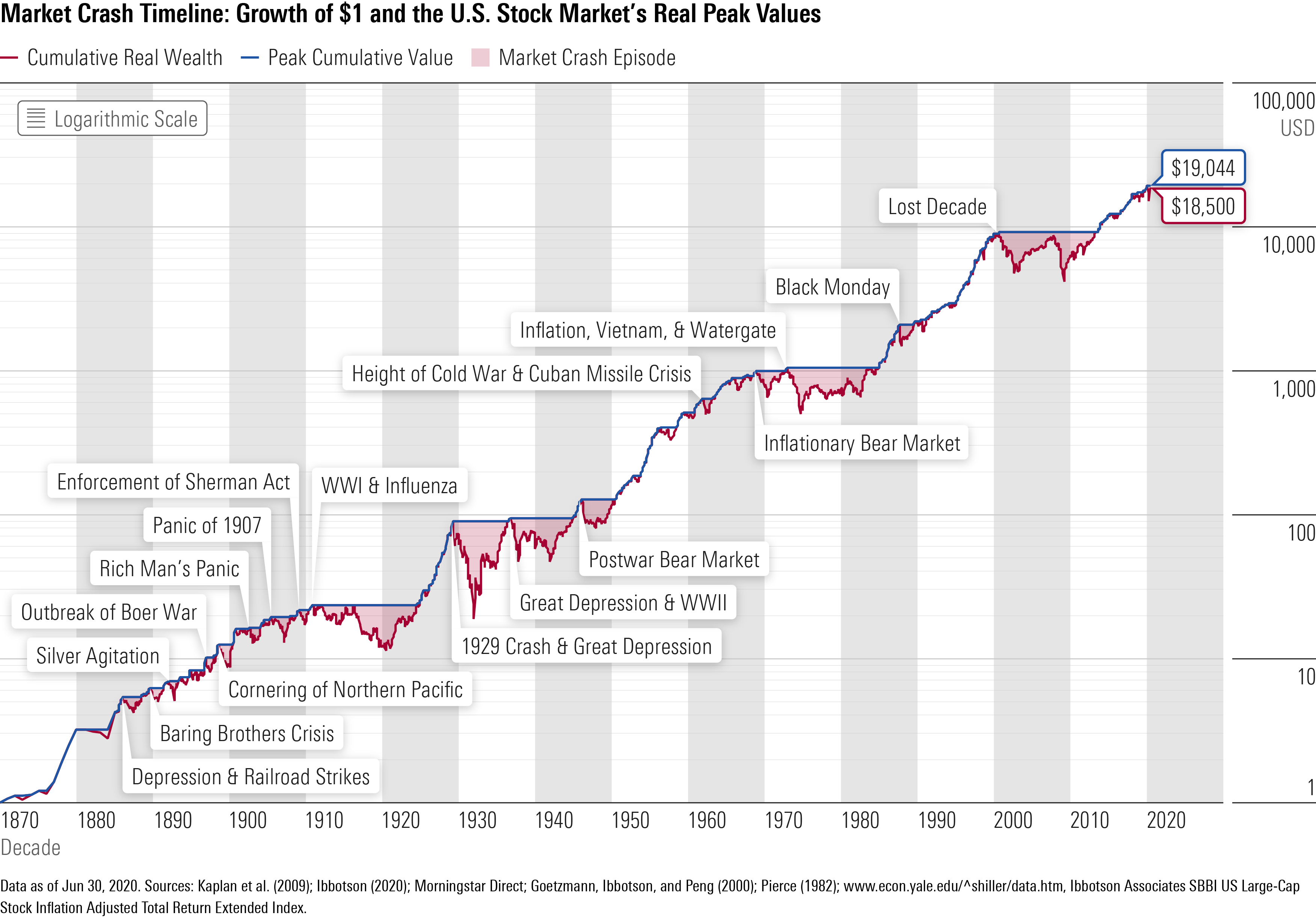
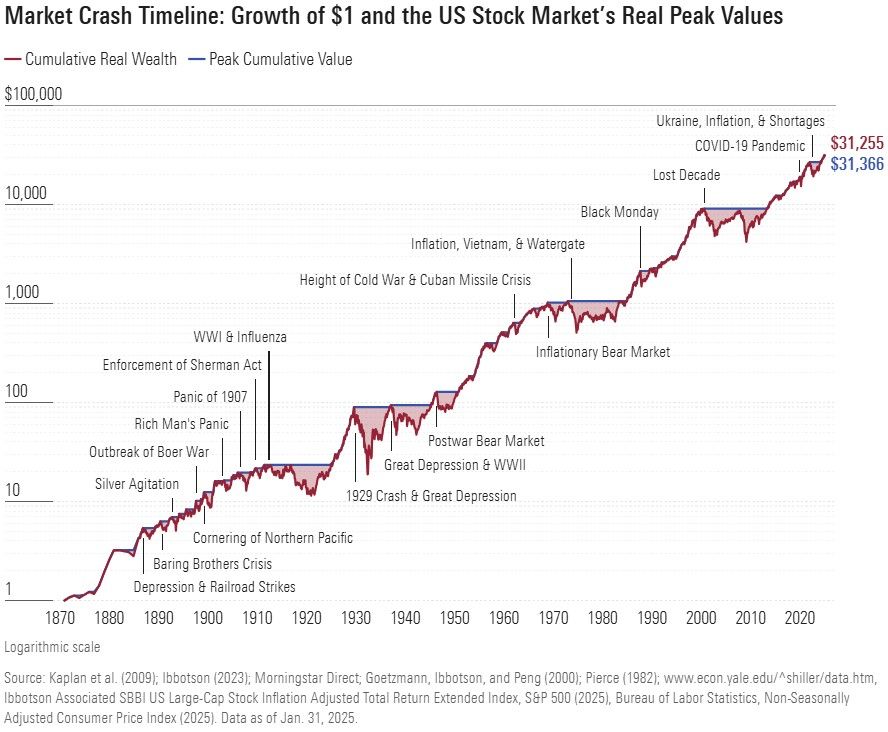
History offers a compelling narrative of market cycles, with several pivotal crashes standing out for their sheer scale and long-term consequences. These events serve as stark reminders of both the risks and the resilience inherent in capital markets.
The Great Depression and the Crash of 1929 (Black Tuesday)
Years: 1929-1932 (Crash specifically in October 1929)
Often cited as the most devastating stock market crash in U.S. history, the Wall Street Crash of 1929, famously culminating in “Black Tuesday” on October 29th, 1929, marked the onset of the Great Depression. Fueled by years of speculative buying on margin, overvalued stocks, lax regulation, and a perception of endless prosperity, the market had reached unsustainable highs. When confidence finally broke, a cascade of selling ensued.
-
Key Event: On Black Tuesday, the Dow Jones Industrial Average fell 12% in a single day, wiping out billions of dollars in wealth. Over a few days, the market lost roughly 25% of its value. By its lowest point in July 1932, the Dow had lost almost 90% of its peak value from 1929.
-
Impact: This crash didn’t just affect investors; it crippled the banking system, led to widespread business failures, mass unemployment (peaking at 25%), and a global economic contraction that lasted over a decade. It fundamentally reshaped the role of government in the economy and led to significant financial reforms.
Black Monday: The 1987 Global Rout
Year: 1987
On October 19, 1987, global stock markets experienced their largest one-day percentage drop in history, an event known as “Black Monday.” The Dow Jones Industrial Average plummeted an astonishing 22.6% in a single trading session.
-
Key Event: While there was no single identifiable economic catalyst like a recession, contributing factors included rising interest rates, a large U.S. trade deficit, and a looming congressional bill that threatened corporate takeovers. However, the sheer speed and magnitude of the crash were largely attributed to new trading technologies, specifically “program trading” and portfolio insurance, which exacerbated selling pressure as automated systems triggered further sales.
-
Impact: Despite the dramatic single-day drop, the 1987 crash did not lead to a recession. Central banks, particularly the U.S. Federal Reserve under Alan Greenspan, acted swiftly to inject liquidity into the financial system, preventing a systemic meltdown. This crash highlighted the need for circuit breakers and improved regulatory oversight of electronic trading.
The Dot-Com Bubble Burst of 2000 (Tech Bubble)
Years: 2000-2002
The late 1990s witnessed an unprecedented surge in technology and internet-related companies, driven by speculative investment and widespread belief in a “new economy.” Many internet startups with little to no revenue or clear business models commanded exorbitant valuations.
-
Key Event: The bubble began to burst in early 2000, with the tech-heavy NASDAQ Composite Index peaking in March 2000. Over the next two and a half years, the NASDAQ lost approximately 78% of its value. Many internet companies went bankrupt, wiping out trillions in market capitalization.
-
Impact: While it primarily affected the technology sector and venture capital, the dot-com bust had broader economic ramifications, contributing to a mild recession in 2001. It also served as a painful lesson on the dangers of speculative bubbles and the importance of fundamental analysis over hype.
The 2008 Financial Crisis (Great Recession)
Years: 2007-2009 (Stock market crash specifically in late 2008)
The 2008 financial crisis, often dubbed the “Great Recession,” stemmed from a combination of factors, most notably the collapse of the U.S. housing bubble and the subsequent subprime mortgage crisis. Aggressive lending practices, complex financial instruments (like mortgage-backed securities and collateralized debt obligations), and lax regulation created a highly leveraged and interconnected financial system.
-
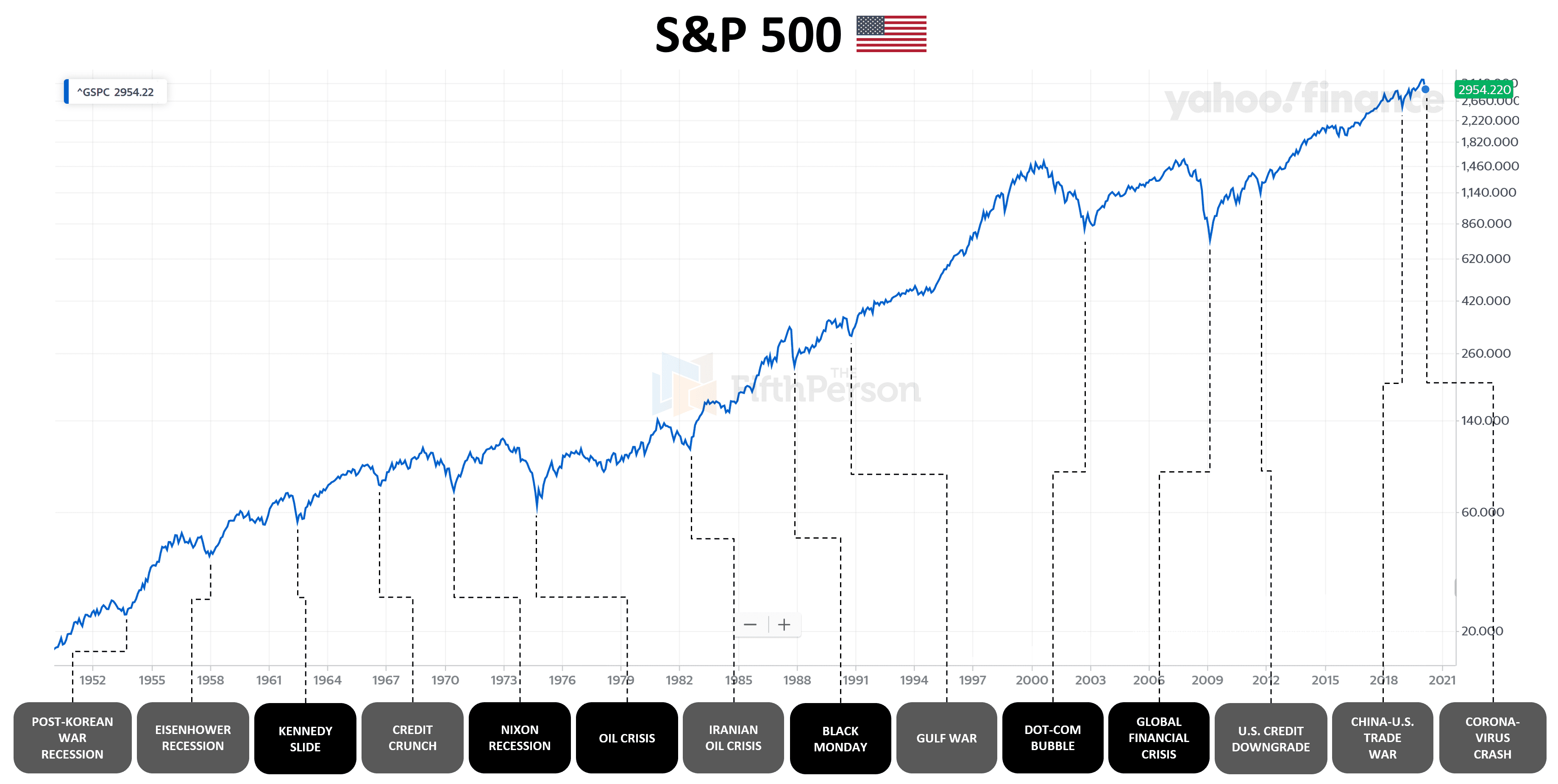
Key Event: The crisis reached its peak in September 2008 with the bankruptcy of Lehman Brothers. This triggered a freezing of credit markets and a massive loss of confidence. Stock markets around the world plunged, with the S&P 500 losing approximately 57% from its October 2007 peak to its March 2009 trough.
-
Impact: This was the most severe financial crisis since the Great Depression, leading to a deep global recession, widespread job losses, government bailouts of major financial institutions, and massive interventions by central banks. It spurred significant regulatory reforms, including the Dodd-Frank Wall Street Reform and Consumer Protection Act, aimed at preventing a recurrence.
The COVID-19 Pandemic Crash of 2020
Year: 2020
The most recent global stock market crash occurred in early 2020, triggered by the sudden onset and rapid global spread of the COVID-19 pandemic. Governments around the world implemented lockdowns and restrictions, effectively halting large parts of the global economy.
-
Key Event: From its peak on February 19, 2020, to its low on March 23, 2020, the S&P 500 fell approximately 34% in just over a month – one of the fastest declines of that magnitude in history. The speed of the downturn was unprecedented, reflecting the immediate and pervasive uncertainty created by the pandemic.
-
Impact: Unlike previous crashes driven by financial excesses, this was a health-driven economic shock. While the initial market drop was sharp, unprecedented monetary and fiscal stimulus from governments and central banks (including massive quantitative easing and direct aid) led to an equally swift market recovery. This event highlighted the fragility of highly interconnected global economies to non-financial shocks and demonstrated the immense power of coordinated policy responses.
The Broader Economic Ripple Effects
Stock market crashes are not isolated financial events; they reverberate through the real economy, impacting businesses, individuals, and government policy. The interconnectedness of financial markets with daily life means that a significant downturn can have profound and lasting consequences.
Impact on Businesses and Employment
When the stock market crashes, the immediate effects on businesses can be severe. Companies find it harder to raise capital through equity offerings, and the cost of debt financing often increases. Consumer confidence plummets, leading to reduced spending on goods and services. This decline in demand forces businesses to cut costs, which often translates into layoffs and hiring freezes. Small businesses, in particular, are vulnerable, as they may have limited access to credit and fewer financial reserves. The ripple effect can lead to widespread bankruptcies and significantly elevated unemployment rates, as seen during the Great Depression and the 2008 financial crisis.
Consequences for Personal Finance and Savings
For individuals, a stock market crash can be devastating to personal wealth and financial security. Retirement accounts (like 401(k)s and IRAs) invested in stocks can see significant declines, pushing back retirement plans for many. College savings funds may shrink, impacting educational opportunities. Home values can fall, especially if the crash is linked to a broader economic recession. The psychological impact is also considerable, fostering fear and uncertainty about future financial stability. This can lead to a “deleveraging” effect, where individuals and households reduce spending and increase saving, further dampening economic activity.
Government and Central Bank Interventions
In the face of a severe market crash and looming recession, governments and central banks typically step in with a range of interventions aimed at stabilizing markets and supporting the economy. These can include:
-
Monetary Policy: Central banks (like the U.S. Federal Reserve) may cut interest rates to near zero, engage in quantitative easing (buying government bonds and other assets to inject liquidity), and provide emergency loans to banks.
-
Fiscal Policy: Governments may implement fiscal stimulus packages, including tax cuts, increased government spending on infrastructure, unemployment benefits, and direct payments to citizens, all designed to boost demand and support incomes.
-
Regulatory Changes: Crashes often expose systemic weaknesses, leading to new regulations aimed at increasing transparency, improving oversight, and reducing risk in the financial system. Examples include the creation of the SEC after 1929 and the Dodd-Frank Act after 2008.
Lessons Learned and Investor Resilience
Each historical stock market crash, while painful, has offered invaluable lessons, prompting significant reforms and refining investment strategies. These experiences underscore the dynamic nature of financial markets and the importance of preparedness.
The Evolution of Regulatory Frameworks
The most enduring legacy of major stock market crashes has been the evolution of financial regulation. The Crash of 1929 led to the creation of the Securities and Exchange Commission (SEC) and the Glass-Steagall Act, separating commercial and investment banking (though later repealed). The 1987 crash prompted the implementation of “circuit breakers,” which halt trading temporarily during extreme market declines to prevent panic selling. The 2008 crisis brought forth the Dodd-Frank Act, aiming to increase oversight of financial institutions and protect consumers. These frameworks are continually refined, striving to build a more resilient and transparent financial system.
Strategies for Navigating Market Volatility
For individual investors, understanding historical crashes provides a crucial perspective on managing risk and building long-term wealth. Key strategies include:
-
Diversification: Spreading investments across different asset classes (stocks, bonds, real estate, commodities), industries, and geographies can help cushion the blow when one sector or market experiences a downturn.
-
Long-Term Perspective: History shows that markets, despite severe crashes, have always recovered and reached new highs over the long term. Adopting a long-term mindset helps investors ride out short-term volatility and avoid making emotional, panic-driven decisions.
-
Emergency Funds: Maintaining an adequate emergency fund (3-6 months of living expenses in easily accessible cash) is vital. This prevents investors from being forced to sell investments at a loss during a downturn to cover immediate expenses.
-
Dollar-Cost Averaging: Investing a fixed amount of money at regular intervals, regardless of market fluctuations, means buying more shares when prices are low and fewer when prices are high. This strategy averages out the purchase price over time and reduces the risk of timing the market incorrectly.
The Psychology of Investing During Downturns
One of the most challenging aspects of a stock market crash is managing the psychological impact. Fear, panic, and the urge to “sell everything” can lead to significant losses. Conversely, greed and irrational exuberance during boom times can lead to over-speculation. Successful investors learn to cultivate emotional discipline:
-
Avoid Herd Mentality: Resisting the urge to follow the crowd, whether during a speculative bubble or a panicked sell-off.
-
Focus on Fundamentals: Re-evaluating the underlying value of investments rather than reacting solely to price movements.
-
Rebalancing: Periodically adjusting portfolio allocations back to target percentages, which often involves selling assets that have performed well and buying those that have underperformed (and may now be undervalued).
Conclusion
The question “what years did the stock market crash?” opens a window into some of the most challenging and transformative periods in economic history. From the catastrophic unraveling of the Great Depression in 1929 to the lightning-fast pandemic-induced sell-off of 2020, each event serves as a powerful reminder of the inherent volatility and cyclical nature of financial markets.
Yet, beyond the immediate destruction of wealth and confidence, these crashes have consistently driven innovation in regulation, fostered resilience in economic policy, and imparted critical lessons for investors. They underscore the importance of diversification, a long-term perspective, and emotional discipline. While the precise timing and triggers of future downturns remain unknowable, understanding the patterns and consequences of past crashes equips investors with the wisdom and strategies to navigate the inevitable challenges, ensuring that wealth can not only survive but also thrive over the long arc of economic progress.
aViewFromTheCave is a participant in the Amazon Services LLC Associates Program, an affiliate advertising program designed to provide a means for sites to earn advertising fees by advertising and linking to Amazon.com. Amazon, the Amazon logo, AmazonSupply, and the AmazonSupply logo are trademarks of Amazon.com, Inc. or its affiliates. As an Amazon Associate we earn affiliate commissions from qualifying purchases.