
Understanding the ebb and flow of financial markets is a cornerstone of sound financial planning and investing. While periods of sustained growth are often celebrated, it is the market crashes that truly test the mettle of investors and the resilience of the global economy. A market crash is more than just a bad day on the stock exchange; it represents a significant, often rapid, decline in asset prices across a broad market, frequently signaling underlying economic distress or the bursting of an speculative bubble.
For anyone navigating the world of personal finance, investing, or business finance, recognizing the historical patterns of these downturns is not merely an academic exercise. It offers crucial insights into the forces that can destabilize wealth, the psychological traps to avoid, and the strategies that can help mitigate losses and even uncover opportunities during tumultuous times. By examining the major market crashes throughout history, we can better appreciate the cyclical nature of markets, the catalysts that trigger severe contractions, and the enduring principles that empower investors to weather the storm. This article delves into the defining years of market crashes, exploring their causes, impacts, and the invaluable lessons they impart for financial preparedness and long-term growth.
Defining a Market Crash and Its Core Triggers
Before cataloging specific historical events, it’s essential to establish a clear understanding of what constitutes a “market crash” and the common underlying factors that often precipitate such severe downturns. The terminology around market declines can sometimes be nuanced, but distinguishing between different levels of volatility is crucial for accurate analysis.
What Constitutes a Market Crash?
While there’s no universally agreed-upon, precise definition, a market crash typically refers to a sudden, dramatic decline in stock prices across a major market index (like the S&P 500 or Dow Jones Industrial Average) within a very short period. This rapid plunge often reflects a loss of investor confidence, panic selling, and a significant shift in market sentiment.
-
Correction: A market correction is generally defined as a decline of 10% or more from a recent peak. These are relatively common and can occur several times within a bull market without necessarily indicating a deeper problem.
-
Bear Market: A bear market is characterized by a decline of 20% or more from recent highs, often lasting for an extended period (months or even years). Bear markets are more severe than corrections and usually reflect underlying economic weakening or investor pessimism.
-
Market Crash: A crash is an even more extreme and typically swift event than a bear market. While it usually involves a 20% or greater drop, the defining characteristic is its speed and magnitude, often occurring within a few days or even a single trading session. Crashes are frequently associated with periods of intense fear and uncertainty, sometimes leading to liquidity crises or systemic breakdowns. The single-day percentage drop can be extreme, far exceeding typical daily fluctuations.
Common Triggers for Market Downturns
Market crashes are rarely isolated incidents; they are almost always a symptom of deeper economic or systemic issues. Identifying these common triggers can help investors recognize potential warning signs.
-
Economic Recessions: A significant and sustained contraction in economic activity, marked by declining GDP, rising unemployment, and reduced consumer spending, is a powerful precursor to market downturns. Recessions directly impact corporate earnings and future growth prospects, leading investors to devalue stocks.
-
Asset Bubbles Bursting: Speculative bubbles occur when asset prices (like stocks, real estate, or commodities) rise rapidly and become detached from their intrinsic value, driven by investor euphoria and irrational exuberance. When the speculation fades, or a catalyst causes a shift in sentiment, the bubble “bursts,” leading to a dramatic price collapse. Examples include the dot-com bubble and the housing bubble.
-
Geopolitical Events and Crises: Major global events, such as wars, terrorist attacks, political instability in key regions, or sovereign debt crises, can introduce significant uncertainty and risk into the global economy, prompting investors to flee riskier assets.
-
Monetary Policy Changes: Actions by central banks, such as aggressive interest rate hikes, can tighten credit conditions, make borrowing more expensive for businesses and consumers, and reduce the availability of capital. This can slow economic growth and reduce corporate profitability, leading to market declines.
-
Systemic Financial Risks: Issues within the financial system itself, such as widespread bank failures, a collapse in credit markets, or the failure of major financial institutions, can trigger a domino effect of panic and illiquidity, severely impacting asset prices.
-
“Black Swan” Events: These are unpredictable, rare events that have extreme impacts, often identified only in hindsight. The COVID-19 pandemic is a recent example, causing an abrupt global economic shutdown and a swift market crash.
A Historical Overview of Major Market Crashes
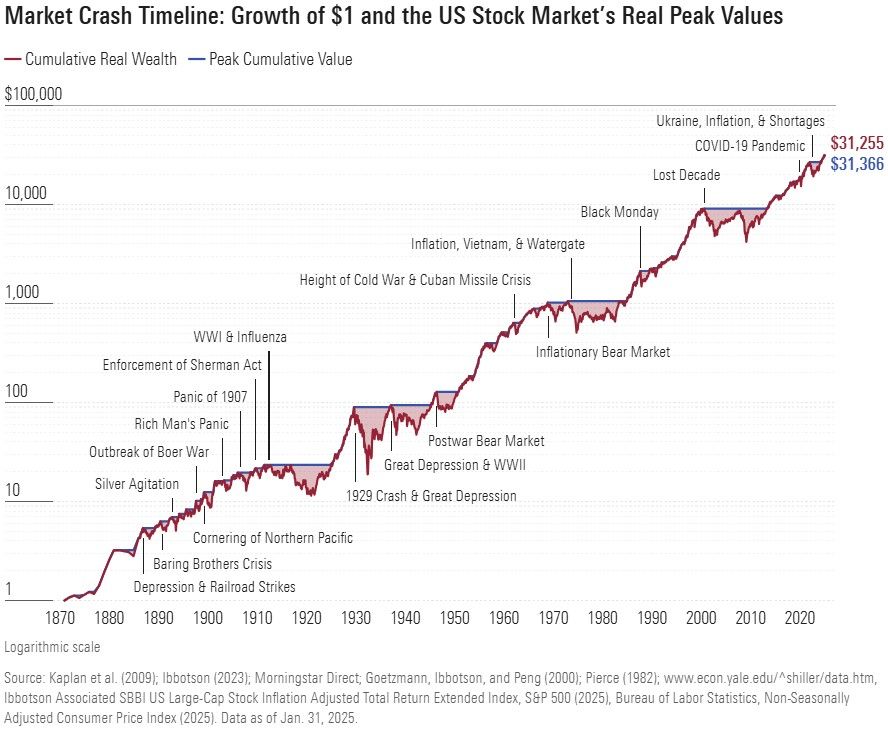
History provides a rich tapestry of market downturns, each with its unique characteristics but often sharing common threads of human psychology, economic imbalances, and unforeseen catalysts. Examining these seminal events offers profound insights into market behavior.
The Great Depression (1929)
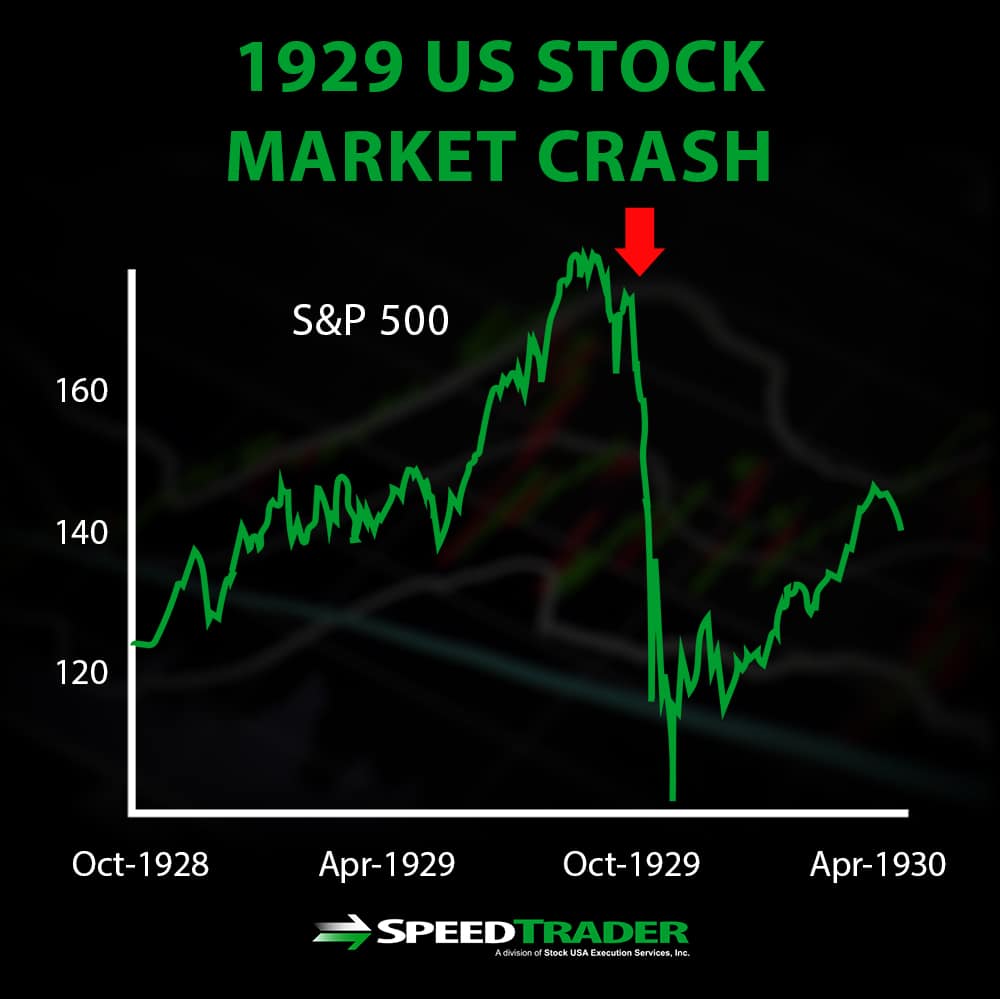
Often cited as the most severe economic downturn in modern history, the Great Depression began with the infamous “Black Tuesday” on October 29, 1929.
-
Causes: The crash followed a decade of speculative euphoria, known as the Roaring Twenties, fueled by widespread margin buying (borrowing money to buy stocks). Industrial overproduction, agricultural struggles, and an uneven distribution of wealth also contributed to an unsustainable economic environment.
-
Impact: The stock market lost nearly 90% of its value between 1929 and 1932. This precipitated the Great Depression, characterized by mass unemployment (peaking at 25% in the U.S.), widespread bank failures, severe deflation, and a global economic contraction that lasted for over a decade.
-
Recovery: Recovery was slow and arduous, aided by President Franklin D. Roosevelt’s “New Deal” policies and ultimately accelerated by the economic mobilization for World War II.
Black Monday (1987)
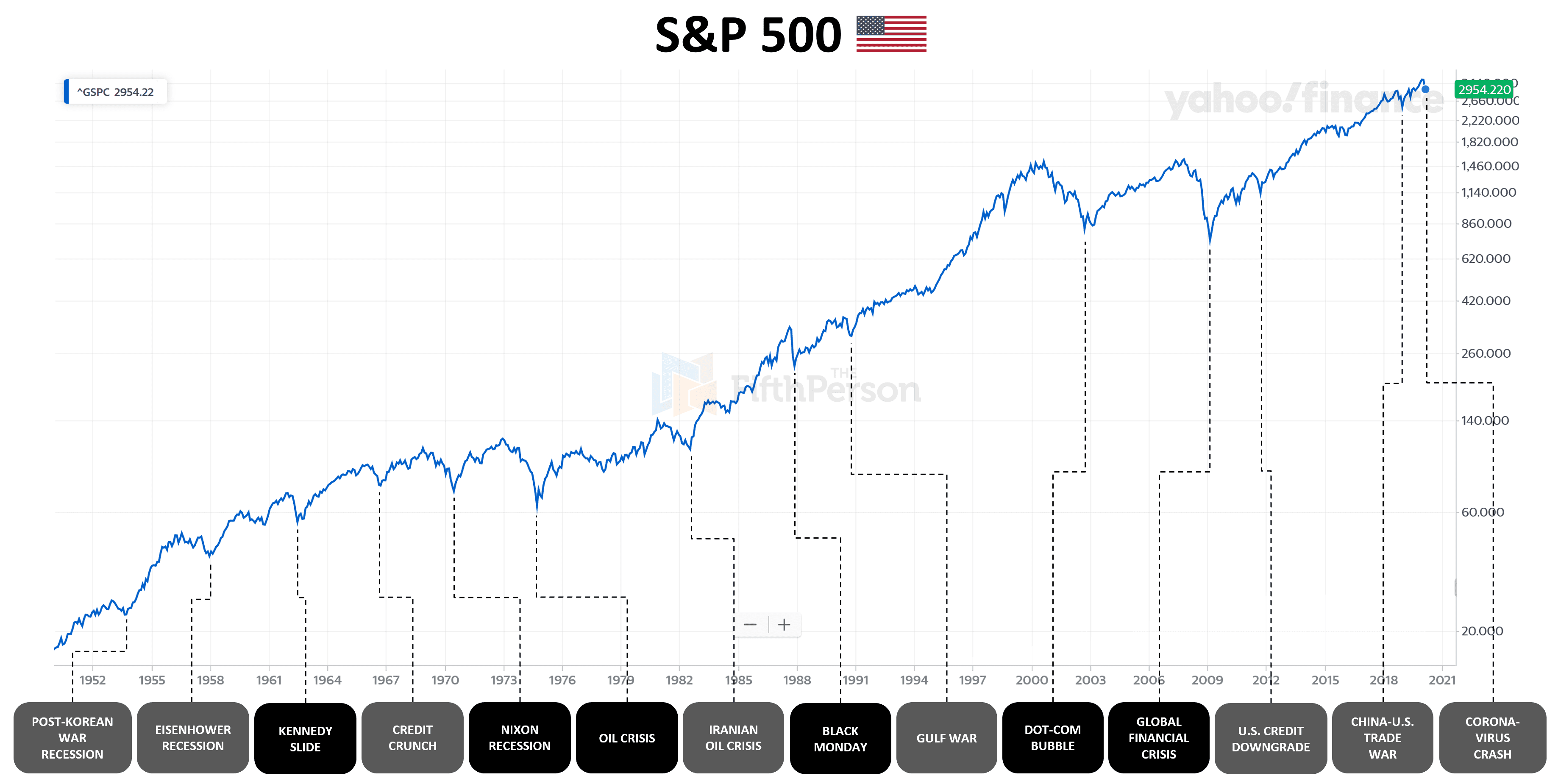
On October 19, 1987, global stock markets experienced their largest single-day percentage decline in history, with the Dow Jones Industrial Average falling by 22.6% in a single session.
-
Causes: While no single cause was pinpointed, factors included an overvalued market, rising interest rates, a large U.S. trade deficit, and concerns over a new tax bill. Crucially, the rise of “program trading” and portfolio insurance strategies, which involved automated selling as prices fell, exacerbated the decline through a feedback loop.
-
Impact: Despite the dramatic single-day drop, the market recovered relatively quickly, and the crash did not lead to a prolonged economic recession.
-
Lessons: The event led to the implementation of “circuit breakers” on exchanges, which halt trading temporarily during severe market declines to prevent panic selling and allow for an orderly market.
The Dot-Com Bubble Burst (2000-2002)
Towards the late 1990s, an intense speculative bubble formed around internet-based companies, fueled by rapid technological advancements and optimistic projections for online businesses.
-
Causes: Investors poured money into dot-com startups, often with little to no revenue or clear path to profitability, driving valuations to unsustainable levels. The Federal Reserve’s interest rate hikes in 1999 and 2000, combined with growing skepticism about the viability of many internet companies, triggered the bursting of the bubble.
-
Impact: The tech-heavy NASDAQ composite index lost approximately 78% of its value from March 2000 to October 2002. Many highly valued internet companies went bankrupt, leading to significant wealth destruction and a mild recession.
-
Lessons: The crash underscored the importance of fundamental analysis, profitability, and sustainable business models over hype and speculative growth.
The Great Recession (2008)
The 2008 financial crisis, often referred to as the Great Recession, stemmed from the collapse of the U.S. housing market and its ripple effects through the global financial system.
-
Causes: Years of loose lending standards, the proliferation of subprime mortgages (loans to borrowers with poor credit), and the complex securitization of these mortgages into mortgage-backed securities (MBS) and collateralized debt obligations (CDOs) created an enormous housing bubble. When homeowners defaulted en masse, the value of these securities plummeted, leading to widespread financial institution failures (e.g., Lehman Brothers) and a freeze in credit markets.
-
Impact: Global stock markets experienced sharp declines, with the S&P 500 falling over 50% from its peak. The crisis plunged the world into the worst economic recession since the Great Depression, characterized by high unemployment, widespread foreclosures, and massive government bailouts.
-
Lessons: This crisis highlighted the dangers of systemic risk, inadequate financial regulation, and the interconnectedness of global financial markets. It led to significant reforms, including the Dodd-Frank Act in the U.S.
The COVID-19 Crash (2020)
In early 2020, the rapid spread of the COVID-19 pandemic and the ensuing global lockdowns triggered an unprecedented economic shutdown and a swift market crash.
-
Causes: The pandemic forced businesses to close, supply chains to break, and consumer demand to evaporate overnight. The sudden and complete halt to economic activity created immense uncertainty and fear, leading to a scramble for cash and a sharp sell-off in all asset classes.
-
Impact: The S&P 500 entered a bear market, falling over 30% from its peak in just 33 days—the fastest bear market entry in history. However, thanks to massive fiscal stimulus from governments and aggressive monetary easing from central banks, the market rebounded with remarkable speed, reaching new highs within months.
-
Lessons: This crash demonstrated the power of unexpected “black swan” events and, conversely, the resilience of markets and the efficacy of coordinated policy responses in mitigating economic fallout.
Navigating Market Volatility: Investor Strategies
While market crashes are an inevitable part of the economic cycle, informed investors can adopt strategies to protect their capital and even capitalize on opportunities during periods of volatility.
The Importance of Diversification
Diversification is perhaps the most fundamental principle of risk management in investing. It involves spreading investments across various asset classes, industries, geographic regions, and investment styles.
-
Reduced Risk: By not putting all your “eggs in one basket,” the poor performance of a single investment or sector will have a less severe impact on your overall portfolio. During a market downturn, some assets may decline less than others, or even perform positively (e.g., bonds during a stock market sell-off), helping to cushion the blow.
-
Broader Opportunity: Diversification also ensures you are positioned to benefit from growth wherever it may occur, rather than being overly reliant on one specific area.
Long-Term Perspective and Dollar-Cost Averaging
Emotional reactions are a primary enemy of successful investing, especially during crashes. Panic selling at the bottom locks in losses and prevents participation in the inevitable recovery.
-
Time in the Market: A long-term perspective encourages investors to focus on their financial goals over decades, understanding that short-term fluctuations are temporary. Historical data overwhelmingly shows that markets tend to recover and grow over the long run.
-
Dollar-Cost Averaging (DCA): This strategy involves investing a fixed amount of money at regular intervals, regardless of market conditions. During a crash, DCA means buying more shares when prices are low, which reduces the average cost per share over time and positions the investor for greater gains when the market recovers.
Maintaining a Cash Reserve and Emergency Fund
Liquidity is paramount during market crises. Having readily available cash serves multiple purposes.
-
Avoid Forced Selling: An emergency fund prevents you from being forced to sell investments at depressed prices to cover unexpected expenses or job loss during an economic downturn.
-
Investment Opportunities: A healthy cash reserve can also provide “dry powder” to deploy into the market when asset prices are significantly discounted during a crash, allowing you to buy quality assets at bargain prices.
Rebalancing Your Portfolio
Periodic rebalancing is a disciplined approach to managing risk and maintaining your desired asset allocation.
-
Restore Target Allocation: Over time, the performance of different asset classes can shift your portfolio’s allocation away from your original target. Rebalancing involves selling assets that have performed well (and are now overweight) and using the proceeds to buy assets that have underperformed (and are now underweight).
-
“Buy Low, Sell High”: During a crash, rebalancing might mean selling a portion of your relatively stable bond holdings to buy more depressed stocks, effectively implementing a “buy low, sell high” strategy automatically.
The Inevitable Cycle of Markets and Future Preparedness
Understanding that market crashes are a recurring feature, not an anomaly, is central to building robust financial resilience. The market operates in cycles, and recognizing this pattern can temper emotional reactions and foster a disciplined approach to investing.
Understanding Market Cycles
Financial markets are inherently cyclical, moving through phases of expansion, peak, contraction (which includes corrections and crashes), and trough, before beginning a new expansion.
-
Natural Progression: Crashes are a natural, albeit painful, part of this cycle. They often serve to “cleanse” the market of overvaluation, unsustainable businesses, and excessive speculation, paving the way for healthier future growth.
-
Historical Recovery: While individual crashes can be devastating in the short term, historical analysis consistently demonstrates that major indices eventually recover and surpass previous highs. The upward trajectory of market capitalism over the long run has been undeniable.
The Role of Emotional Discipline
Perhaps the greatest challenge during a market crash is maintaining emotional discipline. Fear, panic, and the herd mentality can lead investors to make irrational decisions, such as selling everything at the bottom.
-
Stick to Your Plan: A well-defined investment plan, tailored to your risk tolerance and financial goals, acts as a critical anchor. Sticking to this plan, even when it feels counterintuitive, is paramount.
-
Avoid Market Timing: Attempting to time the market – selling before a crash and buying back at the exact bottom – is exceedingly difficult, even for professionals, and often leads to missed opportunities and suboptimal returns.
Continuous Learning and Adaptation
The financial landscape is constantly evolving, influenced by new technologies, geopolitical shifts, and changing economic paradigms.
-
Stay Informed: While avoiding obsession with daily market movements, staying informed about broader economic trends, technological innovations, and global events can help investors understand the context of market movements.
-
Review and Adapt: Periodically review your investment strategy and financial plan to ensure it remains aligned with your current life circumstances, financial goals, and evolving understanding of market dynamics. This doesn’t mean abandoning your long-term strategy, but rather making thoughtful adjustments as needed.
In conclusion, the question “what years did the market crash?” is a fundamental query for any financially literate individual. From the profound depths of the Great Depression to the lightning-fast descent of the COVID-19 crash, history teaches us that market downturns are not merely possibilities but probabilities. Each crash, while unique in its triggers and immediate aftermath, reinforces invaluable lessons about risk management, the power of a long-term perspective, and the indispensable role of emotional discipline. By embracing these insights and implementing prudent financial strategies—diversification, dollar-cost averaging, maintaining liquidity, and periodic rebalancing—investors can navigate the inevitable turbulence of financial markets, protect their wealth, and ultimately position themselves for sustained growth over the long arc of economic progress. The market’s resilience, coupled with investor preparedness, ensures that even after the deepest crashes, the potential for recovery and new highs remains an enduring characteristic of global capital markets.
aViewFromTheCave is a participant in the Amazon Services LLC Associates Program, an affiliate advertising program designed to provide a means for sites to earn advertising fees by advertising and linking to Amazon.com. Amazon, the Amazon logo, AmazonSupply, and the AmazonSupply logo are trademarks of Amazon.com, Inc. or its affiliates. As an Amazon Associate we earn affiliate commissions from qualifying purchases.