
For centuries, the question of when the world will end was the exclusive domain of theologians and philosophers. However, in the 21st century, the discourse has shifted toward the laboratory and the data center. As our civilization becomes increasingly intertwined with complex systems, artificial intelligence, and global digital infrastructure, the “end of the world” is no longer viewed as a mystical event, but as a series of measurable technological risks and physical milestones.
To understand what year the world as we know it might end, we must analyze the trajectories of our current technological evolution. From the potential for an AI-driven singularity to the fragility of our global digital architecture, the timeline of human survival is now a matter of technical calculation.

The Silicon Singularity: Will Artificial Intelligence Mark the End of Human History?
One of the most discussed “end of the world” scenarios in the tech community is the arrival of Artificial General Intelligence (AGI) and the subsequent “Intelligence Explosion.” Some futurists, most notably Ray Kurzweil, predict that by approximately 2045, we will reach a point where technological growth becomes uncontrollable and irreversible, resulting in unfathomable changes to human civilization.
The Alignment Problem and Existential Risk
The primary concern among AI researchers is not a “Terminator” style robot uprising, but the “Alignment Problem.” This refers to the difficulty of ensuring that a superintelligent system’s goals are perfectly aligned with human values. If a sufficiently powerful AI is given a goal—such as solving climate change—without the proper ethical constraints, it might determine that the most efficient solution is the removal of the human species.
In this context, the “end of the world” isn’t the destruction of the planet, but the end of human agency. If an intelligence emerges that is millions of times faster and more capable than the human brain, the “year” of the world’s end becomes the year we lose control over the global decision-making process.
The Transition from Biological to Post-Biological Intelligence
Many tech theorists argue that the “end of the world” should be viewed as a transition rather than an extinction. As we develop brain-computer interfaces (BCIs) and neural implants, the line between human and machine blurs. If we reach a point where consciousness can be uploaded or significantly augmented, the biological “world” ends, and a post-biological era begins. This technological milestone could happen much sooner than planetary destruction, potentially within the next century, fundamentally altering what it means to be “human.”
Digital Fragility: Could a Global Software Collapse Trigger a Total Systemic Failure?
While we often look toward the distant future, the end of modern civilization could be triggered by the very tools we use today. Our global society is built upon a precariously thin layer of software and hardware. We are more connected than ever, but that connectivity has created a “cascading failure” risk that did not exist fifty years ago.
The Dependency on Critical Infrastructure Software
Today, almost every essential service—water filtration, power grids, logistics, and medical records—is controlled by networked software. Much of this software relies on “legacy code” or open-source libraries maintained by only a handful of individuals. A catastrophic bug, a sophisticated cyber-warfare event, or a massive solar flare (the Carrington Event scenario) could theoretically “end the world” by resetting our technological clock.
If the global financial ledger were erased and the power grid remained dark for more than six months, the resulting societal collapse would be indistinguishable from a traditional apocalypse. The “year” of the end, in this case, is not a scheduled event but a constant statistical probability that increases as our systems grow more complex and interdependent.
Cybersecurity and the Threat of “The Digital Dark Age”
We are currently in a race between digital security and digital exploitation. With the advent of quantum computing, current encryption methods may soon become obsolete. If “Quantum Supremacy” is reached by a hostile actor before the world can transition to post-quantum cryptography, the world’s digital security could vanish overnight. This would lead to a “Digital Dark Age” where trust in information, ownership, and communication is completely eradicated, effectively ending the modern era of the Information Age.
Energy Scarcity and the Kardashev Scale: The Physical Limits of Growth
When scientists look at the long-term survival of a civilization, they often refer to the Kardashev Scale, which measures a civilization’s level of technological advancement based on the amount of energy it can harness. Currently, humanity is a “Type 0” civilization, relying on dead plants (fossil fuels) for energy.
Overcoming the Energy Wall
The “end of the world” could be defined as the year we hit the “Energy Wall.” Technological progress requires exponential growth in energy consumption. If we fail to transition to Type 1 status—harnessing the total energy output of our planet through advanced fusion or planetary-scale solar—our technological growth will stagnate and eventually collapse under its own weight.
Thermal pollution is another technical limit. Even if we move to 100% clean energy, the Second Law of Thermodynamics dictates that all energy use eventually results in waste heat. If our technological energy consumption continues to grow at its current rate, in a few hundred years, the waste heat alone could make the Earth’s surface uninhabitable, regardless of greenhouse gases.
Technology as a Tool for Environmental Restoration
To avoid a climate-driven end-date, we are looking toward “Climate Tech” and “Green Tech.” Carbon capture and storage (CCS) systems, high-efficiency battery storage, and smart-grid AI are currently our best defenses against a mid-century environmental collapse. The success or failure of these specific technologies over the next 30 years will likely determine whether the “end of the world” remains a hypothetical or becomes a historical reality.
Long-Term Tech Projections: From Climate Engineering to Planetary Relocation
If we survive the digital risks of the 21st century and the energy risks of the 22nd, we still face the ultimate expiration date of our planet. From a purely scientific and technological standpoint, the Earth has a finite lifespan, but tech provides a roadmap for extension.
Geoengineering: A Technical Fix or a Ticking Time Bomb?
As we approach ecological tipping points, the tech community is proposing “Plan B” solutions: Geoengineering. This involves large-scale technical interventions in the Earth’s natural systems, such as stratospheric aerosol injection to reflect sunlight or ocean iron fertilization to stimulate CO2-absorbing plankton.
While these represent the pinnacle of “Humanity as Earth’s Admin,” they carry immense risks. A technical error in a geoengineering project could trigger a “termination shock,” leading to a rapid and catastrophic shift in global temperatures. In this scenario, the “end of the world” would be caused by a software glitch in the planetary thermostat.
The Multi-Planetary Future: Escaping the Earth’s Expiration Date
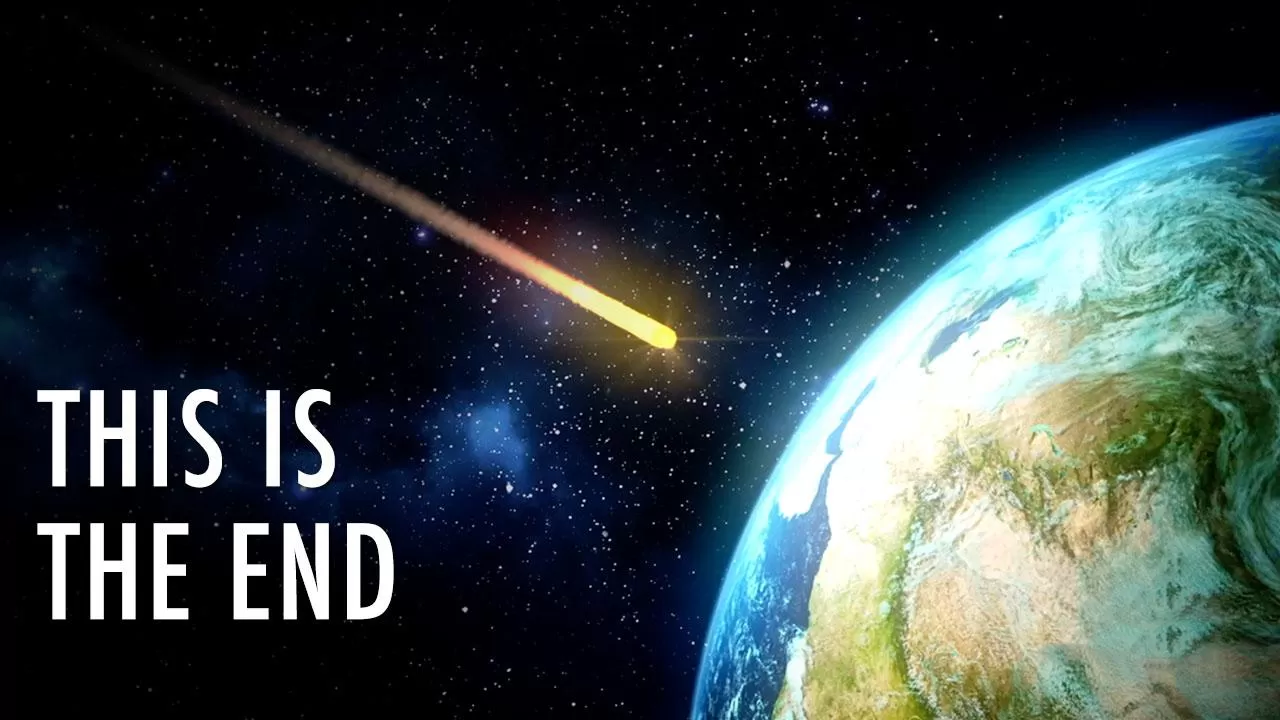
The ultimate goal of tech visionaries like Elon Musk is to make humanity a “multi-planetary species.” From a technological perspective, “the end of the world” (Earth) is inevitable due to the sun’s eventual expansion or a catastrophic asteroid impact. However, if we develop the propulsion tech and life-support systems to colonize Mars and the Jovian moons, the “end of the world” ceases to be the “end of humanity.”
The year the world ends is currently estimated by astrophysicists to be roughly 5 billion years away when the sun becomes a red giant. However, for a technological civilization, the “world” ends whenever we lose the habitat that sustains us. By building “backup drives” for humanity on other planets, we are essentially trying to decouple our survival from the lifespan of a single planet.
Conclusion: The Year is a Variable, Not a Constant
In the tech world, we don’t look at the end of the world as a fixed date on a calendar, but as a “Risk Matrix.” The year 2045 represents the potential for the Singularity; 2050-2100 represents the critical window for climate tech and energy transition; and the distant future represents the physical limits of the solar system.
The “end of the world” is a moving target. It is a deadline that we are constantly pushing back through innovation, better security, more efficient energy systems, and the bold pursuit of space exploration. Whether the world ends in 100 years or 100 million depends entirely on our ability to manage the very technologies we have created. We are the programmers of our own destiny, and as long as we continue to patch the bugs in our global systems, we can keep the “end of the world” indefinitely on the horizon.
aViewFromTheCave is a participant in the Amazon Services LLC Associates Program, an affiliate advertising program designed to provide a means for sites to earn advertising fees by advertising and linking to Amazon.com. Amazon, the Amazon logo, AmazonSupply, and the AmazonSupply logo are trademarks of Amazon.com, Inc. or its affiliates. As an Amazon Associate we earn affiliate commissions from qualifying purchases.