
The year the steel penny, officially known as the 1943 steel cent, was made is 1943. This singular year marks a fascinating and critical chapter in American numismatic and economic history, directly illustrating the profound impact of global events on domestic financial policy and resource management. The creation of this distinctive coin was not a whim but a strategic imperative driven by the exigencies of World War II, fundamentally altering the composition of America’s most common circulating coin for a brief but memorable period.
A Wartime Necessity: The Genesis of the 1943 Steel Cent
The decision to produce pennies from steel rather than their traditional copper composition was a direct consequence of the United States’ entry into World War II. The nation’s industrial capacity had to be fully mobilized to support the war effort, leading to unprecedented demands for critical raw materials.
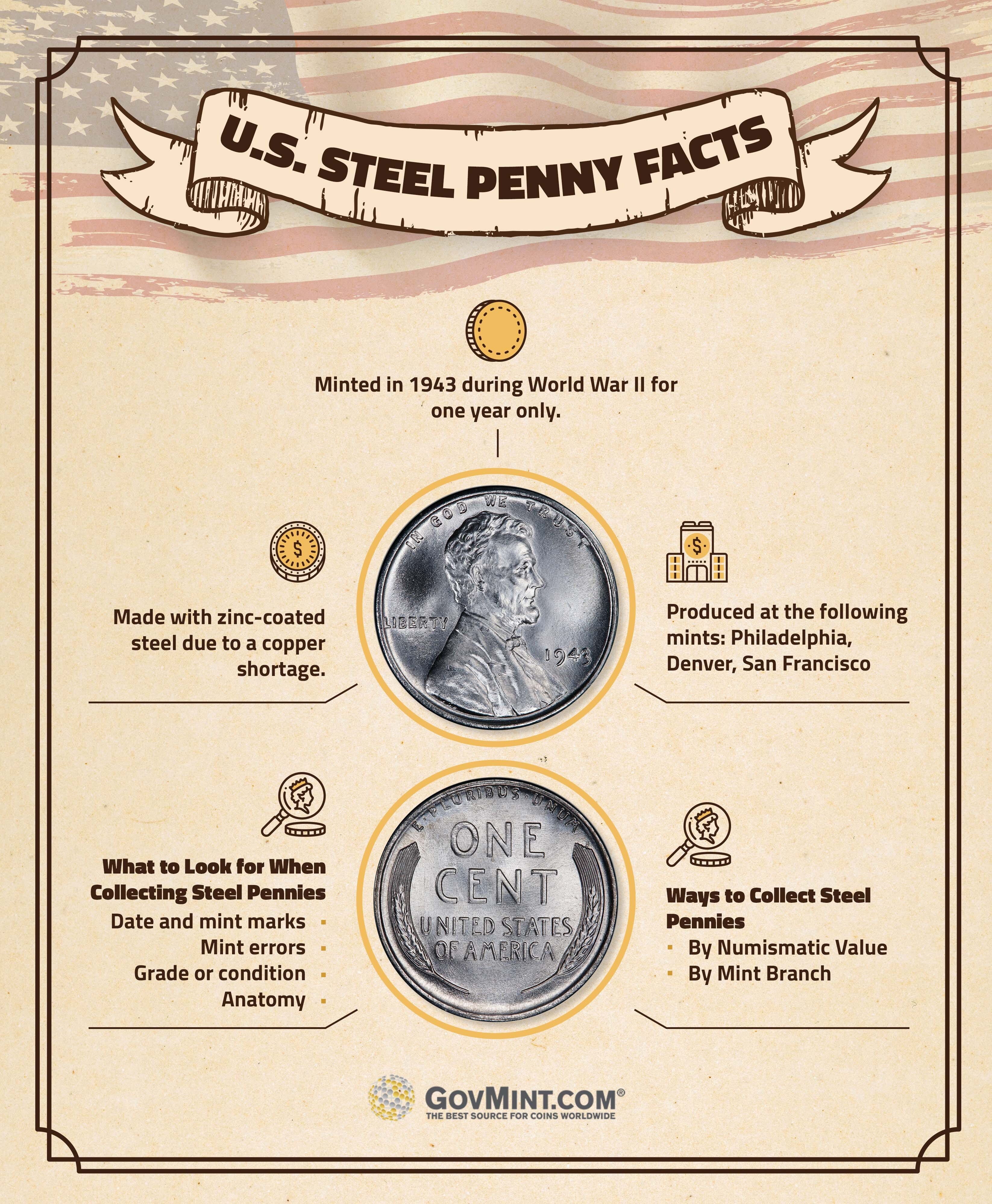
The Copper Crisis of World War II
Copper, a metal traditionally used for ammunition casings, electrical wiring in military equipment, and various other essential war materials, became an exceptionally strategic resource. As the war intensified, the demand for copper soared, leading to severe shortages for civilian and non-essential applications. The U.S. Mint, responsible for producing millions of pennies annually, consumed substantial amounts of copper, roughly 3,000 tons per year. Diverting this copper from coinage to military uses became an obvious and necessary step for national security. This strategic allocation highlights how national emergencies can abruptly shift economic priorities, impacting even the smallest units of currency.
Economic Strategy and Resource Allocation
The government’s role in resource allocation during wartime is a classic example of central planning in a market economy, designed to maximize efficiency for a single, overarching goal: victory. By mandating the switch from copper to steel for pennies, the War Production Board (WPB) and the Treasury Department demonstrated a clear understanding of the opportunity cost associated with copper usage. Every pound of copper used in coinage was a pound not available for bullets, artillery shells, or communication lines. This decision was a micro-level reflection of macro-economic wartime policy, where financial considerations often took a back seat to strategic material needs. Such measures underscore the government’s power to intervene in supply chains and currency composition during times of national crisis, illustrating a potent aspect of financial governance.
The Search for an Alternative
Before settling on steel, the U.S. Mint experimented with various alternative materials for the one-cent coin. These trials included plastics, glass, and different metallic compositions, reflecting a thorough due diligence process under immense pressure. The final choice of zinc-coated steel was pragmatic, balancing availability, cost, durability, and minting feasibility. Steel was readily available and cheaper, while the zinc coating provided corrosion resistance, an important financial consideration for a coin intended for widespread circulation. This innovative problem-solving under duress offers a compelling case study in applied materials science driven by economic and strategic necessity.
Understanding the Unique Characteristics and Financial Context
The 1943 steel cent is easily distinguishable from its copper predecessors and successors due to its unique composition and appearance. These characteristics are not merely aesthetic; they are direct outcomes of the underlying financial and resource decisions.
Composition and Appearance
The 1943 penny was struck on a planchet made of low-carbon steel, subsequently coated with a thin layer of zinc. This combination gave the coin its distinctive silvery-gray appearance, a stark contrast to the familiar reddish-brown hue of copper cents. Weighing 2.7 grams, it was also slightly lighter than the standard copper penny, which typically weighed 3.11 grams. This weight difference, while minor, was a tangible result of the material change and represented a tiny but cumulatively significant saving in raw materials. From a financial perspective, the lower material cost per coin was a direct benefit, allowing the mint to produce the required quantity of pennies at reduced expense during a period of intense budgetary strain.
Production and Distribution
Over 1 billion steel cents were minted in 1943 across the Philadelphia (no mint mark), Denver (D), and San Francisco (S) Mints. This massive production volume ensured that the new coins could quickly replace the copper cents in circulation, facilitating the transition and immediately freeing up copper for the war effort. The rapid and widespread distribution of these unusual coins meant that virtually every American would encounter them, making the change a palpable reality of wartime economics. The efficiency of this production and distribution network demonstrates the robust financial infrastructure of the U.S. Mint, capable of adapting quickly to extraordinary demands.
Cost-Benefit Analysis and Material Economics
The switch to steel pennies offered a clear cost-benefit advantage during wartime. The primary benefit was the conservation of copper, a material far more valuable for military applications than for low-denomination currency. The cost was minimal, primarily related to the adjustments in minting equipment and the potential for public confusion or dissatisfaction, which were deemed acceptable trade-offs given the urgency of the war. This decision exemplifies a classic economic trade-off: sacrificing a minor convenience (the traditional penny) for a major strategic gain (critical war materials). It highlights how governments must perform continuous cost-benefit analyses, especially in times of crisis, where the “cost” is not always purely monetary but can involve strategic resources and public sentiment.
Public Reception and Unforeseen Financial Headaches
While the 1943 steel penny achieved its primary goal of conserving copper, its introduction was not without practical challenges and a fair degree of public consternation, offering further insights into the user-facing aspects of financial change.
Confusion and Counterfeiting Concerns

The silvery appearance of the steel penny often led to it being mistaken for a dime, a coin with ten times its value. This caused confusion in daily transactions and, more alarmingly, opened avenues for potential fraud. Some individuals attempted to alter steel pennies to resemble dimes, although such efforts were generally crude and easily detected. This illustrates a fundamental principle of currency design: consistency and clear differentiation are crucial to maintain public trust and prevent financial manipulation. Any deviation from established norms, even for good reason, can introduce friction into the economic system.
Practical Problems in Daily Commerce
Beyond confusion, the steel pennies presented several practical issues. They did not work reliably in vending machines, which were calibrated for the weight and electromagnetic properties of copper pennies. This caused significant inconvenience for both consumers and businesses, highlighting how even minor changes in currency can ripple through the entire commercial infrastructure, affecting retail and service industries. Furthermore, the zinc coating, while offering some protection, was prone to wear, especially along the edges. Once the steel core was exposed, the pennies would rust, becoming unsightly and often making them less appealing for transactions. This problem of deterioration underscored a practical financial concern: currency must be durable to maintain its value and usability over time.
The Swift Return to Copper
By 1944, with sufficient copper supply becoming available due to a combination of increased production and strategic victories shifting resource demands, the U.S. Mint reverted to producing copper pennies. This swift return, despite the billions of steel cents still in circulation, was a testament to the public’s preference for the traditional copper coin and the desire to alleviate the practical problems associated with the steel version. The 1943 steel cent was thus a temporary solution, a direct artifact of a specific historical and economic moment, and its discontinuation provided valuable lessons on the importance of user experience in currency design and the public’s strong attachment to monetary familiarity.
The Steel Cent’s Enduring Financial Legacy and Collectibility
Despite its brief period of production and the initial public reception, the 1943 steel penny has garnered a unique place in financial history and the world of numismatics, demonstrating how historical artifacts can evolve into valuable assets.
A Numismatic Anomaly
The 1943 steel cent stands out as a distinct anomaly in the long history of U.S. coinage. It is the only widely circulated U.S. penny not made primarily of copper. This uniqueness makes it a perennial favorite among coin collectors, not just for its material composition but for the powerful story it tells about American resilience and adaptability during wartime. For numismatists, it represents a tangible link to a pivotal era, embodying the economic sacrifices and strategic decisions of the time. Collecting these coins is, in a way, an investment in historical narratives.
Valuation and Scarcity
While billions of steel cents were produced, making common examples readily available and relatively inexpensive, certain specimens command significant value. Factors influencing a steel penny’s market price include its condition (graded on a scale from Poor to Mint State), mint mark, and crucially, any rare errors. The most famous “error” is the 1943 copper penny, which was accidentally struck on a copper planchet instead of steel. Only a handful of these exist, and they are among the most valuable U.S. coins, fetching hundreds of thousands or even millions of dollars at auction. This extreme valuation highlights the financial principle of scarcity and error; deviations from the norm, especially when accidental and rare, can transform a mundane item into an extraordinary asset. For investors, numismatics represents an alternative asset class, where historical context and rarity drive value, much like art or other collectibles.
Lessons in Monetary Policy and Resource Management
The story of the 1943 steel penny offers profound lessons in monetary policy and resource management. It demonstrates how a nation’s currency, often seen as a stable and unchanging entity, can be subject to radical shifts in composition and design in response to external pressures. It underscores the critical role of government in allocating resources during crises and making decisions that balance economic costs with strategic imperatives. This historical episode serves as a reminder that the seemingly simple act of coining money involves complex economic, logistical, and political considerations, and that financial systems must be robust enough to adapt to unforeseen circumstances.
Broader Financial Insights from a Simple Coin
The 1943 steel penny, a small, unassuming coin, provides a rich tapestry of financial insights that extend far beyond its immediate production year.
The Interplay of Geopolitics and Economics
The existence of the steel penny is a stark reminder of how deeply intertwined geopolitics and economics are. A global conflict necessitated domestic financial and industrial adjustments, illustrating that economic policy is rarely formulated in a vacuum. International relations, trade agreements, and conflicts directly impact resource availability, production costs, and ultimately, the tangible assets like currency within a nation’s borders. Understanding this interplay is crucial for anyone studying macroeconomics or international finance, as it showcases the vulnerability and adaptability of national economies to global events.
Understanding Inflation and Material Costs
The decision to switch to steel was driven by the escalating cost and scarcity of copper. This implicitly touches upon the concept of inflation—not necessarily in the traditional sense of rising consumer prices, but in the soaring value of a specific commodity due to extraordinary demand. The government made a financial decision to find a cheaper alternative to maintain the nominal value of the penny while reducing the intrinsic material cost. This historical example offers a tangible illustration of how commodity prices can influence currency production and how governments might respond to maintain economic stability and functionality in the face of material cost pressures.

Asset Diversification and Historical Value
For individuals interested in personal finance and investing, the steel penny and numismatics, in general, present a unique perspective on asset diversification. While not for every investor, rare coins and historical artifacts can constitute an alternative asset class. Their value is derived from historical significance, rarity, condition, and market demand, rather than traditional financial metrics like dividends or interest rates. The long-term appreciation of certain rare coins demonstrates that a deep understanding of history, material science, and market dynamics can lead to significant financial returns, broadening the scope of what constitutes a valuable investment beyond stocks, bonds, and real estate. The 1943 steel cent, therefore, is not just a relic of the past but a testament to how economic history can inform modern financial perspectives.
aViewFromTheCave is a participant in the Amazon Services LLC Associates Program, an affiliate advertising program designed to provide a means for sites to earn advertising fees by advertising and linking to Amazon.com. Amazon, the Amazon logo, AmazonSupply, and the AmazonSupply logo are trademarks of Amazon.com, Inc. or its affiliates. As an Amazon Associate we earn affiliate commissions from qualifying purchases.