
The United States Constitution is a foundational document that has shaped the nation’s legal, social, and economic landscape for over two centuries. Among its most transformative amendments, the 13th Amendment stands as a pivotal point in American history, fundamentally altering the nation’s economic structure and social fabric. Its passage marked the abolition of slavery, a practice that had been deeply intertwined with the country’s economy since its inception. Understanding the year of its passage and its profound implications is crucial for grasping the evolution of American economic principles, labor practices, and the ongoing pursuit of financial equity.
The Pre-Amendment Economic Landscape: A Foundation Built on Enslaved Labor
Before the 13th Amendment, the economic engine of a significant portion of the United States was heavily reliant on enslaved labor. This was not merely a social issue; it was a deeply entrenched economic system that generated immense wealth for enslavers and shaped the agricultural and industrial output of the nation. The economic ramifications of slavery extended far beyond the plantations of the South, influencing trade, finance, and the very accumulation of capital that fueled early American industrialization.
The Peculiar Institution and its Economic Power
The institution of slavery, often referred to as the “peculiar institution,” was a brutal and inhumane system that treated human beings as chattel property. Economically, this meant that a significant portion of the population was unpaid, uncompensated labor, providing a vast and exploitable workforce. This system was particularly dominant in the Southern states, where agriculture, especially cotton production, became immensely profitable due to the free labor it provided. Cotton, often dubbed “King Cotton,” became a primary export commodity, driving the American economy and its international trade relationships.
The economic value of enslaved people was substantial. They represented a significant form of capital for enslavers, and their sale and inheritance formed a considerable part of intergenerational wealth transfer within slaveholding families. The enslaved population constituted a substantial portion of the total wealth in the Southern states, far exceeding the value of land and other tangible assets. This created a vested economic interest in maintaining and expanding the institution of slavery, leading to intense political and economic conflict.
The Intertwined Nature of Slavery and Northern Commerce
While the direct practice of slavery was concentrated in the South, its economic influence was pervasive throughout the nation. Northern merchants, financiers, and industrialists benefited indirectly, and sometimes directly, from the institution. Northern ships transported enslaved people and the goods produced by their labor. Northern banks financed plantations and the trade of enslaved individuals. Northern textile mills relied heavily on Southern cotton. This interconnectedness meant that the economic prosperity of the entire nation was, to a considerable extent, built upon the exploitation of enslaved labor.
The wealth generated by slavery fueled investments in infrastructure, manufacturing, and financial markets across the United States. The economic power of slaveholding states influenced national economic policy, including issues related to trade, tariffs, and westward expansion, which often served to perpetuate and extend the reach of the slave economy. The economic arguments for the continuation of slavery were often presented as essential for the nation’s overall economic stability and growth, underscoring the profound challenge that abolition posed to the existing economic order.
The Road to Emancipation: Economic Disruption and Reconstruction
The Civil War, fought from 1861 to 1865, was not solely about states’ rights; it was intrinsically linked to the economic foundations of slavery. The Union victory and the subsequent passage of the 13th Amendment initiated a period of radical economic and social transformation, grappling with the immense challenge of integrating millions of newly freed individuals into the American economy and rebuilding a nation divided.
The Civil War as an Economic Catalyst
The Civil War itself was an event of colossal economic consequence. It drained national treasuries, mobilized vast resources, and led to significant disruptions in trade and labor. As the war progressed, the Union government increasingly saw emancipation as not only a moral imperative but also an economic strategy to weaken the Confederacy. The Emancipation Proclamation in 1863, while limited in its immediate scope, began to sever the economic ties to enslaved labor in rebel territories.
The war also spurred industrial development in the North, as the demand for war materials and manufactured goods increased. This industrial growth, ironically, laid some of the groundwork for the post-slavery economy, though it was a far cry from the agrarian economy that had characterized the South. The economic landscape was fundamentally altered by the destruction of property in the South and the immense human cost of the conflict.
The Passage of the 13th Amendment: A Landmark Economic Decision
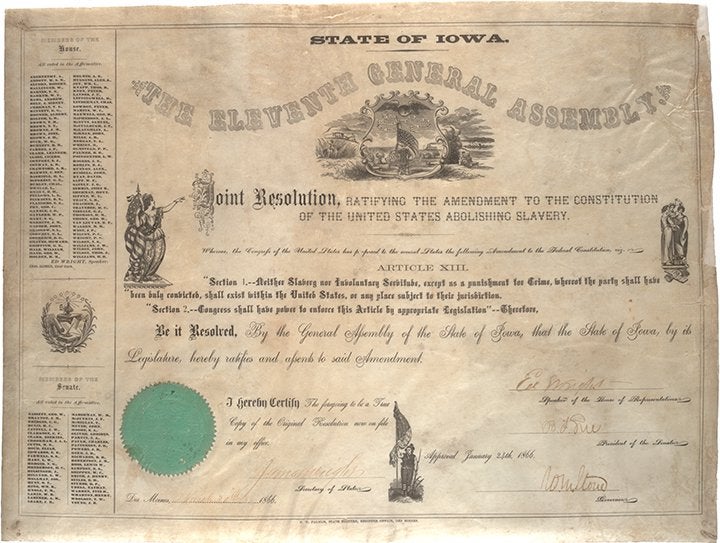
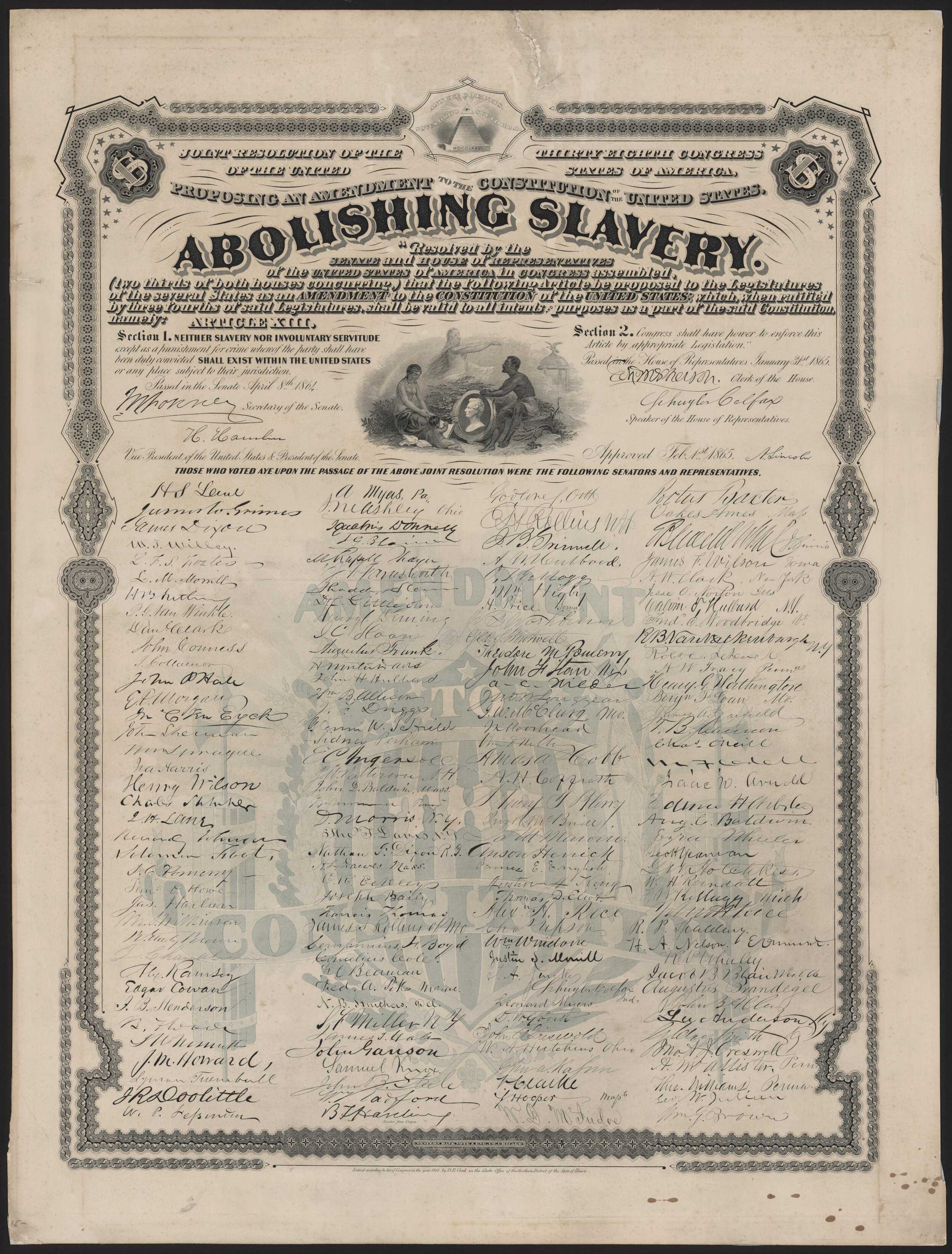
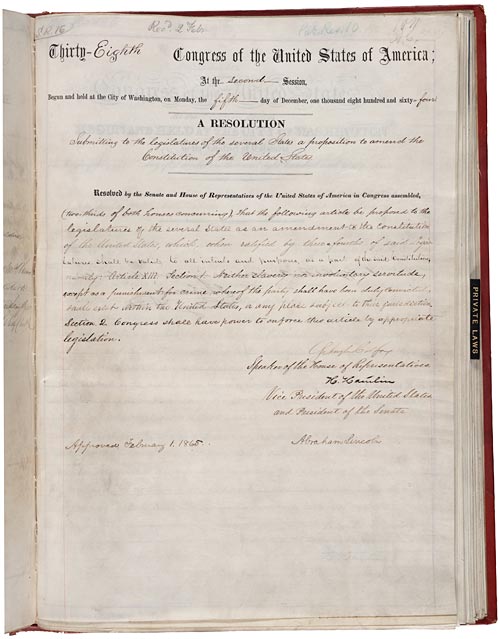
The 13th Amendment to the United States Constitution was formally passed by Congress on January 31, 1865, and ratified by the states on December 6, 1865. Its passage was the culmination of decades of abolitionist activism and the devastating conflict of the Civil War. The amendment states: “Section 1. Neither slavery nor involuntary servitude, except as a punishment for crime whereof the party shall have been duly convicted, shall exist within the United States, or any place subject to their jurisdiction. Section 2. Congress shall have power to enforce this article by appropriate legislation.”
This amendment was a revolutionary economic declaration. It legally dissolved the immense capital represented by enslaved people, fundamentally restructuring property rights and labor relations. It was not merely a social reform; it was a radical economic redistribution that shifted power and the means of production. The immediate aftermath saw the liberation of approximately four million individuals, presenting the nation with an unprecedented challenge and opportunity to redefine its economic future.
Post-Amendment Economic Realities: The Struggle for Financial Equity
The passage of the 13th Amendment was a watershed moment, but the economic journey for newly freed African Americans was fraught with challenges. The transition from chattel slavery to a system that theoretically offered free labor was complex, marked by systemic discrimination, economic exploitation, and a persistent struggle for true financial independence and equity.
The Legacy of Exploitation: Sharecropping and Debt Peonage
In the absence of widespread land redistribution and with limited access to capital, many formerly enslaved people found themselves in precarious economic situations. The dominant system that emerged in the South was sharecropping. Under this arrangement, formerly enslaved individuals worked land owned by white landowners, receiving a portion of the crops they grew as payment. While ostensibly a form of free labor, sharecropping often trapped workers in cycles of debt. Landowners would provide tools, seeds, and provisions on credit, with exorbitant interest rates. If the harvest was poor, or if the landowner manipulated the accounts, the sharecropper would owe more than they earned, effectively becoming indebted to the landowner for the following year.
This system of debt peonage, coupled with discriminatory Black Codes enacted in the South, served as a de facto continuation of forced labor for many. These codes restricted the movement, employment, and economic opportunities of African Americans, making it difficult to accumulate wealth or escape the cycle of poverty. The economic landscape was characterized by limited access to credit, education, and fair wages, perpetuating a system of economic disenfranchisement.
The Long Road to Economic Empowerment
The struggle for economic empowerment for African Americans after the 13th Amendment has been a protracted and arduous one. Despite the legal abolition of slavery, systemic racism continued to manifest in discriminatory practices in housing, employment, education, and access to financial services. The legacy of slavery and the subsequent era of Jim Crow laws created significant barriers to wealth accumulation and economic mobility.
However, African Americans consistently demonstrated resilience and innovation in building their own economic institutions. They established independent churches, mutual aid societies, credit unions, and businesses, creating economic networks that supported their communities. The Great Migration, which saw millions of African Americans move from the rural South to urban centers in the North, Midwest, and West, was also an economic migration, driven by the search for better employment opportunities and an escape from oppressive conditions.
The economic impact of the 13th Amendment continues to resonate today. The disparities in wealth and income that persist between different racial groups in the United States are, in large part, a direct consequence of the legacy of slavery and the economic injustices that followed. Understanding when the 13th Amendment was passed is not just a historical footnote; it is a critical point of reference for understanding the ongoing evolution of economic justice and the pursuit of a truly inclusive American economy. The amendment’s passage was the beginning of a profound, and still unfolding, economic reckoning.
aViewFromTheCave is a participant in the Amazon Services LLC Associates Program, an affiliate advertising program designed to provide a means for sites to earn advertising fees by advertising and linking to Amazon.com. Amazon, the Amazon logo, AmazonSupply, and the AmazonSupply logo are trademarks of Amazon.com, Inc. or its affiliates. As an Amazon Associate we earn affiliate commissions from qualifying purchases.