
Tesla, Inc., the pioneering electric vehicle and clean energy company, was founded in July 2003. This seemingly simple date marks the genesis of a company that would profoundly disrupt multiple industries, from automotive manufacturing to energy storage and artificial intelligence. Conceived by a group of engineers with a vision to prove that electric vehicles could be better, quicker, and more fun to drive than gasoline cars, Tesla’s birth represented a significant inflection point in the modern technological landscape. Far from a mere car company, Tesla emerged as a technology powerhouse, committed to accelerating the world’s transition to sustainable energy through its innovative products and an ambitious, forward-thinking approach that has consistently challenged conventional wisdom. Understanding its founding year is crucial to appreciating the technological journey and the strategic foresight that has defined its remarkable trajectory.

The Dawn of an Electric Revolution: Tesla’s Inception
The early 2000s were a period of burgeoning environmental awareness and increasing concern over fossil fuel dependency, yet the automotive industry remained largely wedded to internal combustion engines. Electric vehicles were often relegated to niche experimental projects or seen as slow, impractical alternatives. It was within this context that Tesla Motors (as it was initially known) was born, not just as a business venture, but as a bold statement of technological possibility. The founders harbored a vision that went beyond incremental improvements; they sought a complete re-imagination of personal transportation and energy use.
Origins and the Visionaries
Tesla was co-founded by Martin Eberhard and Marc Tarpenning in July 2003. Their initial motivation stemmed from a desire to create a sports car using an AC motor, inspired by the brilliance of Nikola Tesla’s original motor designs, which ultimately gave the company its name. Both Eberhard and Tarpenning brought a wealth of experience from the tech world, particularly in software and product development, which instilled a Silicon Valley mindset into the nascent automotive company from day one. This tech-centric perspective would prove fundamental to Tesla’s distinct identity and its rapid pace of innovation, distinguishing it sharply from traditional car manufacturers.
The vision quickly attracted other key players. Ian Wright was the third employee, joining a few months later. Soon after, in February 2004, Elon Musk invested $6.5 million in the Series A funding round, becoming the largest shareholder and chairman of the board. Although Musk was not one of the original founders by technical definition in July 2003, his substantial early investment and active involvement quickly led him to play a pivotal role in shaping the company’s direction, technology strategy, and public identity. His strategic acumen and ambitious goals would become synonymous with Tesla’s journey. Musk’s “secret master plan,” articulated in 2006, laid out a clear technological roadmap: build a low-volume, high-price car (Roadster), use that money to develop a medium-volume, medium-price car (Model S), and then use that money to create a high-volume, low-price car (Model 3), all while also providing zero-emission electric power generation options. This audacious plan, rooted in a phased technological rollout, set the stage for Tesla’s long-term dominance.
A Niche Market, A Grand Ambition
From its very inception, Tesla chose a challenging path: entering the competitive automotive market with an entirely new powertrain technology. The decision to start with a high-performance sports car, the Roadster, was a strategic technological choice. It aimed to debunk the pervasive myth that electric cars were inherently slow, ugly, and range-limited. By targeting affluent early adopters with a premium product, Tesla sought to generate revenue and prestige, which could then be leveraged to fund the development of more affordable, mass-market electric vehicles. This “top-down” market penetration strategy was fundamentally different from what other nascent EV companies might have considered, highlighting Tesla’s focus on technological demonstration and market acceptance rather than immediate mass appeal.
The initial team’s ambition was not merely to produce an electric car but to produce a superior one – one that offered compelling performance, design, and a guilt-free driving experience. This meant pushing the boundaries of battery technology, electric motor design, and power electronics, areas where traditional automakers had shown little inclination to invest heavily. The founding year was therefore not just about paperwork; it was about committing to a technological revolution that would require unprecedented innovation and a relentless pursuit of engineering excellence.
Catalyzing Innovation: Early Technological Hurdles and Triumphs
The period immediately following Tesla’s founding was characterized by intense research and development, as the company grappled with the immense technical challenges of building a high-performance electric vehicle from the ground up. The automotive industry is notoriously complex, with stringent safety regulations, demanding performance criteria, and the need for robust, long-lasting components. For a startup venturing into the unproven territory of mass-produced, high-performance EVs, these hurdles were monumental.
The Roadster: Proving Electric Performance
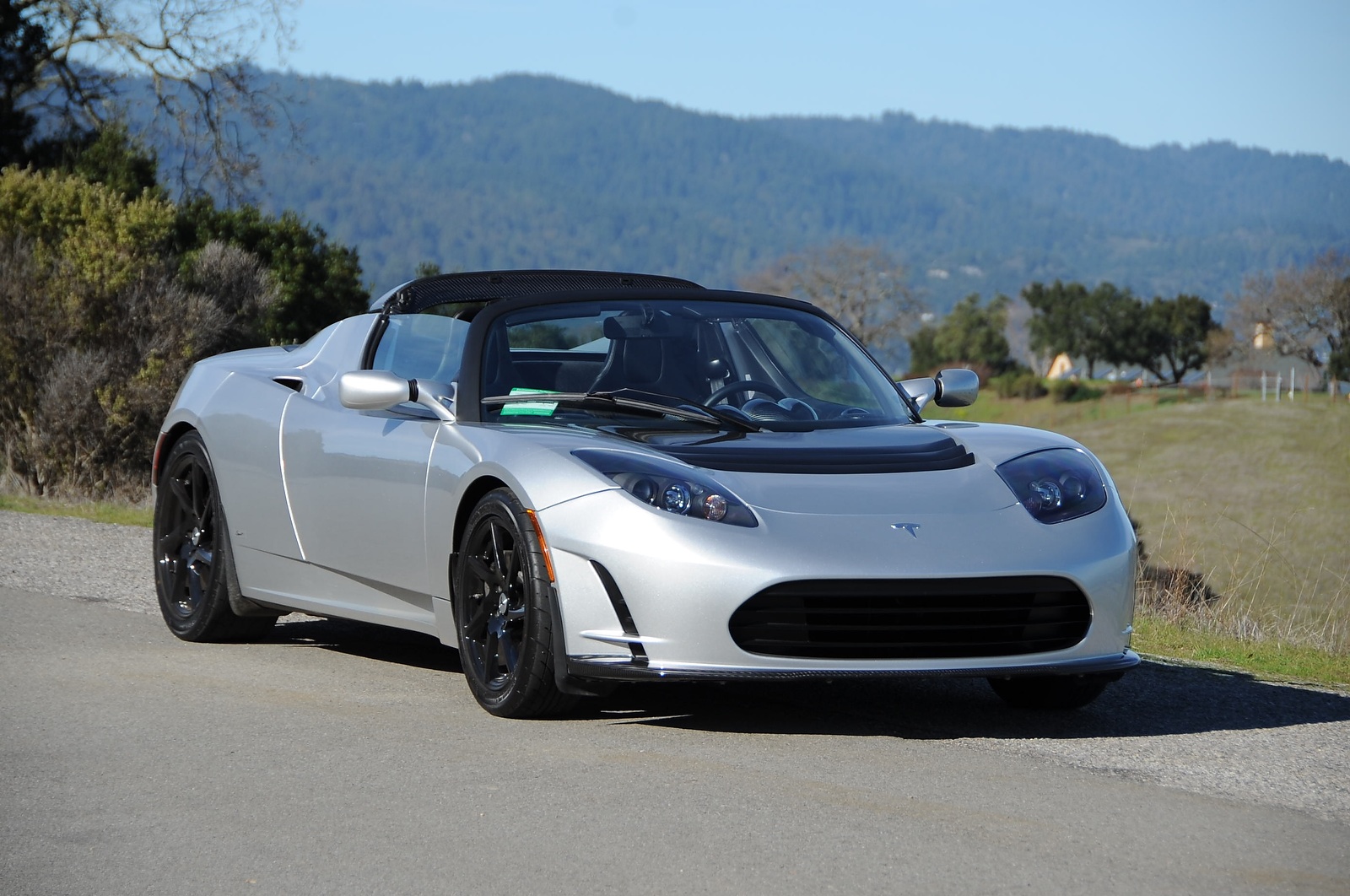
The Tesla Roadster, unveiled in 2006 and delivered to customers starting in 2008, was the company’s first major technological triumph. It was a groundbreaking vehicle, not just for Tesla but for the entire automotive world. Based on the Lotus Elise chassis, but significantly re-engineered, the Roadster utilized a proprietary AC motor, power electronics, and a revolutionary lithium-ion battery pack. At a time when laptops were just beginning to widely adopt lithium-ion batteries, Tesla engineered a way to safely bundle thousands of these cells into a large, powerful battery capable of propelling a sports car.
The Roadster’s specifications were astonishing for its era: 0-60 mph in under 4 seconds, and a range of over 200 miles on a single charge. This performance shattered preconceived notions about electric cars, proving definitively that EVs could offer thrilling acceleration and practical range. The Roadster demonstrated Tesla’s core technological thesis: electric powertrains were not just viable but could outperform their gasoline counterparts in key metrics. Its success validated the company’s founding vision and provided critical validation for its engineering approach.
Battery Technology and Powertrain Development
At the heart of Tesla’s early technological advantage was its relentless focus on battery technology. Unlike most automakers who sourced complete battery packs from external suppliers, Tesla took an active role in designing its battery packs, thermal management systems, and battery management software. The decision to use thousands of small, commodity laptop cells (18650 format) was initially controversial but proved prescient. This approach allowed Tesla to leverage economies of scale from existing cell manufacturing and focus its innovation on how to safely and efficiently manage such a large array of cells.
The development of the battery management system (BMS) was a critical early technological achievement. This sophisticated software and hardware system monitors each individual cell’s voltage and temperature, balancing the pack and preventing thermal runaway. Without a robust BMS, the promise of high-energy-density lithium-ion batteries would have been impossible to realize in an automotive context. Coupled with advancements in inverter technology and motor design, Tesla’s powertrain became a benchmark for efficiency and performance, establishing the company as a leader in electric propulsion technology.
Software-Defined Vehicles: A Paradigm Shift
Perhaps one of the most defining technological decisions made early in Tesla’s history was to treat the car not just as a piece of hardware but as a software-defined product. From its earliest days, Tesla envisioned vehicles that could be updated, improved, and gain new features over time through over-the-air (OTA) software updates. This approach, commonplace in smartphones and computers, was revolutionary for the automotive industry.
This software-centric philosophy meant that Tesla had to develop its own in-house software stack, from the user interface and infotainment system to the vehicle controls and battery management. This vertical integration, an uncommon strategy for an automotive startup, gave Tesla unparalleled control over its products and allowed for rapid iteration and deployment of new features. The foundational work in software development, laid in the years following its 2003 founding, set the stage for Tesla’s future ambitions in autonomy and connectivity, fundamentally redefining what a “car” could be.
Scaling the Vision: From Niche to Mainstream Disruption
With the technological success of the Roadster paving the way, Tesla embarked on its ambitious “Master Plan” to bring electric vehicles to a broader market. This required not just further technological refinement but also innovations in manufacturing, energy infrastructure, and artificial intelligence, all of which Tesla tackled with a distinctive, tech-driven approach. The period following its founding saw the company mature from an innovative startup into a global technology giant.
Gigafactories: Manufacturing Innovation at Scale
To achieve its goal of mass-producing electric vehicles, Tesla recognized that traditional automotive manufacturing processes were insufficient. The solution was the conceptualization and construction of “Gigafactories.” The first Gigafactory, located in Nevada and announced in 2014, was designed to be the largest building in the world by footprint, integrating battery cell production, module and pack assembly, and vehicle drivetrain manufacturing under one roof. This vertical integration, enabled by advanced robotics, automation, and a data-driven approach to production, represented a significant technological leap in manufacturing.
The Gigafactory concept was not just about scale; it was about efficiency and innovation in production technology. Tesla aimed to design the “machine that builds the machine,” treating the factory itself as a product subject to continuous optimization and software control. This manufacturing philosophy, deeply rooted in technological innovation, was crucial for bringing down the cost of batteries and vehicles, making them accessible to a wider audience and fulfilling the broader ambition of accelerating sustainable energy adoption.
Autonomy and AI: The Future of Driving
From its earliest days, Tesla engineers understood the potential for software to revolutionize not just the car’s features but its fundamental operation. This led to an intense focus on autonomous driving technology. Tesla began equipping its vehicles with a suite of sensors – cameras, radar, and ultrasonics – early on, collecting vast amounts of real-world driving data. This data forms the bedrock of its “Full Self-Driving” (FSD) beta program, a sophisticated AI system that learns and improves through neural networks.
Tesla’s approach to autonomy is distinctively tech-centric, relying heavily on a vision-first, AI-driven strategy rather than an over-reliance on LiDAR or high-definition maps. This decision, while controversial to some, underscores Tesla’s commitment to pushing the boundaries of artificial intelligence and machine learning in a real-world, safety-critical application. The development of its custom AI chip (Dojo) and the supercomputer infrastructure to train its neural networks further solidify Tesla’s position as a leading AI company, extending far beyond the traditional definition of an automaker.
Energy Ecosystems: Beyond Vehicles
True to its founding mission of accelerating the world’s transition to sustainable energy, Tesla’s technological ambitions extended beyond electric vehicles. The company recognized that sustainable transportation needed to be complemented by sustainable energy generation and storage. This led to the development of products like the Powerwall (home battery storage), Powerpack (commercial and utility-scale storage), and Solar Roof.
These energy products are deeply intertwined with Tesla’s core technological competencies, leveraging its expertise in battery technology, power electronics, and software control. The integrated ecosystem, where solar panels charge a home battery that then powers an electric vehicle, showcases Tesla’s holistic vision for a sustainable future. The company’s continued investment in grid-scale energy storage solutions positions it as a key player in modernizing energy infrastructure, demonstrating a commitment to technological solutions that address global environmental challenges, a testament to the comprehensive vision present since its founding in 2003.
Tesla’s Enduring Legacy and Future Trajectory in Tech
Since its founding in 2003, Tesla has transformed from a daring startup into a global technological powerhouse, leaving an indelible mark on multiple industries. Its journey has been characterized by audacious goals, relentless innovation, and a willingness to challenge established norms, all rooted in a profound commitment to technological advancement.
Impact on the Automotive Industry
Tesla’s most immediate and undeniable technological legacy lies in its disruption of the automotive industry. Before Tesla, electric vehicles were largely seen as a niche, unappealing alternative. The success of the Roadster, followed by the Model S, Model 3, Model X, and Model Y, forced traditional automakers to dramatically accelerate their own EV development plans. Today, virtually every major car manufacturer has committed billions to electrification, largely spurred by Tesla’s market success and technological prowess. Tesla proved that EVs could be high-performance, desirable, and practical, fundamentally shifting consumer perception and market demand. Its early focus on software, OTA updates, and a direct-to-consumer sales model also challenged conventional dealership models and vehicle ownership experiences.
Shaping AI and Battery Development
Beyond vehicles, Tesla has played a pivotal role in advancing battery technology and artificial intelligence. Its innovations in battery cell chemistry, pack design, and thermal management have contributed significantly to increasing energy density, reducing costs, and improving the safety and longevity of lithium-ion batteries. The sheer scale of its battery production at Gigafactories has driven down costs across the industry, making EVs more affordable for everyone. In AI, Tesla’s massive real-world data collection, its development of sophisticated neural networks, and its investment in custom hardware like the Dojo supercomputer have pushed the boundaries of machine learning for autonomous systems. The company’s work in self-driving technology has applications that extend far beyond cars, influencing robotics and other AI-driven fields.

The Road Ahead: Robotics and New Frontiers
Looking forward, Tesla continues to push the envelope of technological innovation, true to the spirit of its 2003 founding. Its foray into humanoid robotics with “Optimus” represents another ambitious undertaking, aiming to leverage its AI and hardware expertise to develop general-purpose robots that can perform dull, repetitive, or dangerous tasks. Furthermore, ongoing developments in vehicle-to-grid (V2G) technology, advanced energy storage solutions, and new forms of transportation (like the Cybertruck and potential future projects) suggest that Tesla’s trajectory of technological disruption is far from over. The company’s consistent investment in fundamental research and development, coupled with its willingness to take big risks, positions it as a critical player in shaping the technological landscape for decades to come. From its humble origins in 2003, Tesla has not just built a company; it has spearheaded a technological movement, continually redefining what is possible in sustainable energy, transportation, and artificial intelligence.
aViewFromTheCave is a participant in the Amazon Services LLC Associates Program, an affiliate advertising program designed to provide a means for sites to earn advertising fees by advertising and linking to Amazon.com. Amazon, the Amazon logo, AmazonSupply, and the AmazonSupply logo are trademarks of Amazon.com, Inc. or its affiliates. As an Amazon Associate we earn affiliate commissions from qualifying purchases.