
The year 1943 stands as a singular anomaly in the history of American currency. While the United States Mint has produced billions of copper-colored Lincoln cents since 1909, a specific set of geopolitical and economic circumstances led to the creation of the “Steelie”—the 1943 steel penny. For those interested in the intersection of history and personal finance, understanding the steel penny is not just a lesson in numismatics; it is a case study in how resource scarcity dictates the value of tangible assets.
In the world of coin collecting and alternative investments, the 1943 steel penny is one of the most recognizable icons. While millions were minted, their unique composition and the rare errors associated with that era have created a market where a single cent can be worth anywhere from a few cents to hundreds of thousands of dollars.

The Origin of the 1943 Steel Penny: A Wartime Financial Pivot
To understand why the steel penny exists, one must look at the global economic landscape of the early 1940s. Following the entry of the United States into World War II, the demand for raw materials skyrocketed. Copper, the primary component of the American penny, was a critical strategic metal required for the manufacturing of shell casings, telephone wires, and other military hardware.
The Strategic Shift to Zinc-Coated Steel
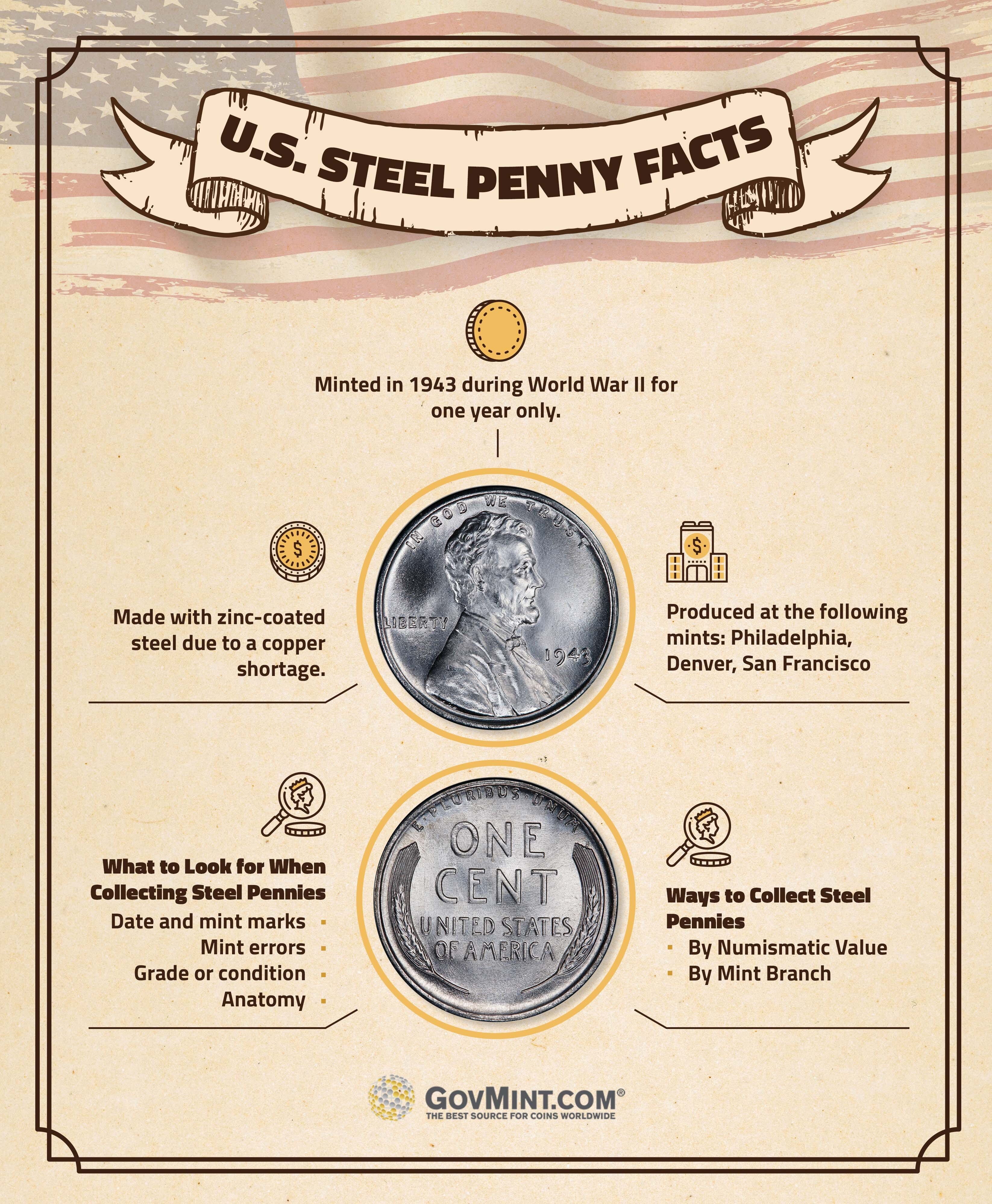
In 1942, the War Production Board requested that the U.S. Mint find a substitute for copper to ensure that the military had an uninterrupted supply. After experimenting with various materials—including glass, plastic, and different metallic alloys—the Mint settled on low-carbon steel coated with a thin layer of zinc.
This transition was intended to be temporary. The 1943 steel penny was produced at all three functional mints at the time: Philadelphia (no mint mark), Denver (D), and San Francisco (S). While the steel penny solved the copper shortage, it created a host of new problems. The coins were often mistaken for dimes due to their color, they were not compatible with many vending machines of the era, and they lacked the corrosion resistance of copper. By 1944, the Mint returned to a copper composition, sourcing the metal from spent shell casings, making the 1943 steel penny a one-year-only curiosity.
Economic Impact of the Production Change
From a business finance perspective, the production of the steel penny was a massive logistical undertaking. Over one billion steel cents were struck in 1943. The cost-saving measure of using steel helped redirect thousands of tons of copper to the war effort, effectively utilizing the nation’s currency as a tool for military logistics. However, the public’s dissatisfaction with the “white penny” led to their rapid withdrawal from circulation in the post-war years, which contributes to the varying levels of scarcity seen in the market today.
Identifying Value: Is Your 1943 Penny a Financial Asset?
When evaluating a steel penny as part of a financial portfolio or a personal collection, the year is only the starting point. Because so many were produced, a standard 1943 steel penny in circulated condition is common. However, the nuances of condition and minting can significantly alter its market price.
The Importance of Mint State and Grading
In the “Money” niche, the condition of an asset—often referred to as its “grade”—is the primary driver of value. For steel pennies, the zinc coating is highly susceptible to oxidation. When the zinc wears off, the underlying steel rusts, significantly devaluing the coin.
- Circulated Condition: Most steel pennies found in old jars or inherited collections are in “average circulated” condition. These typically retail for $0.10 to $0.50. While this is a high percentage increase over face value, it does not constitute a major investment.
- Uncirculated (Mint State): Coins that have never been used in commerce and retain their original “cartwheel” luster are highly sought after. A 1943 penny graded MS-67 or higher by professional services like PCGS (Professional Coin Grading Service) or NGC (Numismatic Guaranty Company) can fetch hundreds or even thousands of dollars at auction.
- Re-processed Pennies: Beware of “re-processed” or “re-zinced” coins. These are circulated coins that have been stripped and replated to look new. In the financial market of numismatics, these are considered damaged and hold very little value to serious investors.
Mint Marks and Rarity
The location where the coin was struck also influences its valuation.
- Philadelphia (1943): The most common, with over 680 million produced.
- Denver (1943-D): Roughly 217 million produced. High-grade examples from Denver often command a premium because they were struck with better-quality dies.
- San Francisco (1943-S): The lowest mintage of the three at approximately 191 million. Generally, the “S” mint mark carries a slight premium in the eyes of collectors looking to complete a set.
The Holy Grail of Errors: 1943 Copper and 1944 Steel
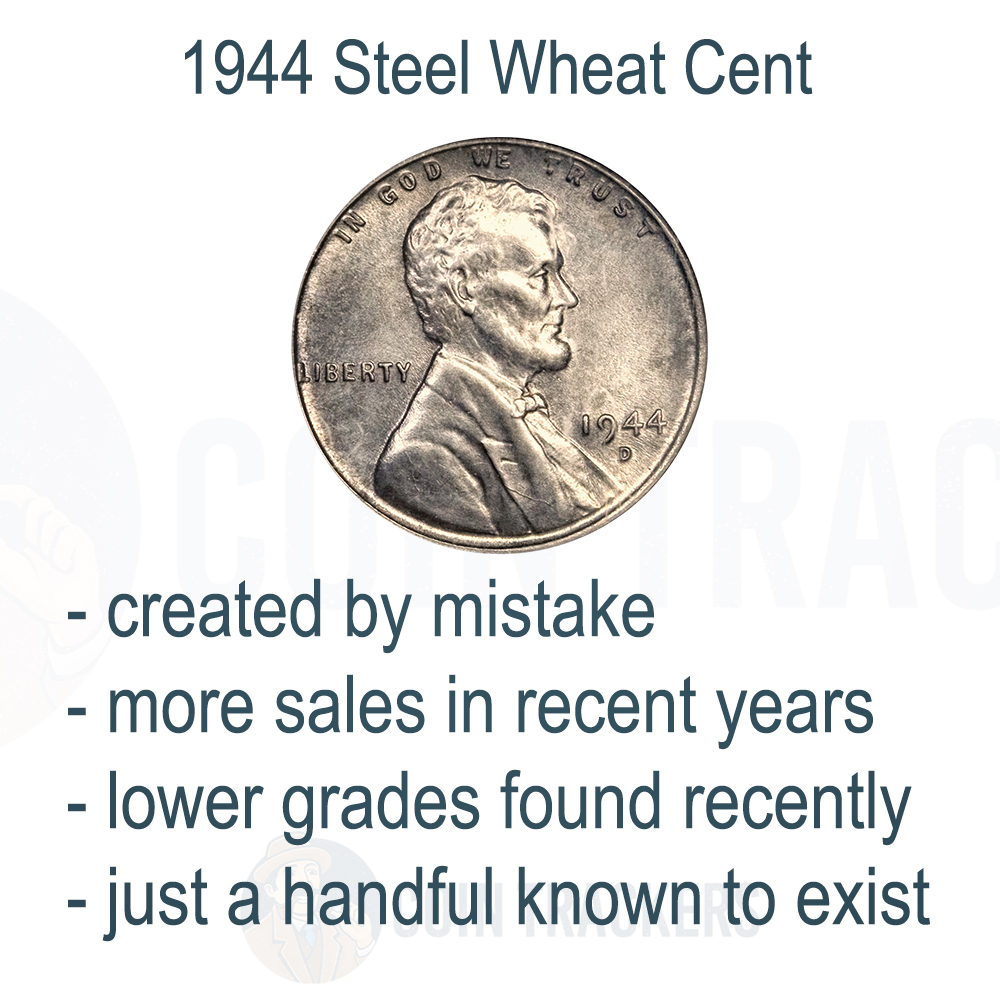
While the 1943 steel penny is the standard, the real wealth in this niche lies in the “transitional errors.” These occurred when leftover planchets (the blank metal discs) from the previous or following year were accidentally fed into the presses.
The 1943 Copper Penny
This is perhaps the most famous error in the history of the U.S. Mint. A few copper planchets from 1942 remained in the hoppers when production of the 1943 steel pennies began. The result was a handful of 1943-dated pennies struck in copper.
For a collector or investor, finding an authentic 1943 copper penny is like winning the lottery. Only about 20 to 40 examples are known to exist. In 2010, a 1943-D copper penny sold for $1.7 million. Even lower-grade examples regularly sell for over $100,000.
The 1944 Steel Penny
Conversely, when the Mint switched back to copper in 1944, a few steel blanks from 1943 were left in the system. The 1944 steel penny is also an exceptionally rare and valuable error. While not quite as legendary as the 1943 copper cent, a 1944 steel penny can easily command $30,000 to $100,000 depending on its condition and mint mark.
The Magnet Test: A Basic Financial Audit
If you believe you have found one of these high-value errors, the first step is a simple magnet test.
- Standard 1943 Steel Penny: Will stick to a magnet.
- Rare 1943 Copper Error: Will NOT stick to a magnet.
- Rare 1944 Steel Error: Will stick to a magnet (unlike the common 1944 copper penny).
In the world of finance, due diligence is key. Many “1943 copper pennies” found today are actually steel pennies that have been copper-plated by fraudsters or are 1948 pennies that have been shaved down. Verification by a third-party grading service is the only way to solidify the value of these assets.
Investing in Numismatics: Strategies for the Modern Portfolio
Including rare coins like the 1943 steel penny (or its rare variants) in a financial portfolio is a form of “alternative investing.” Like gold, silver, or fine art, rare coins provide a hedge against inflation and a way to diversify away from the stock market.
Tangible Asset Stability
Unlike digital assets or stocks, rare coins have a physical scarcity that cannot be altered by corporate decisions or market dilution. The number of 1943 steel pennies in existence is finite and slowly decreasing as coins are lost or succumb to environmental damage. This fixed supply, coupled with a steady or increasing demand from a global collecting base, often leads to long-term price appreciation.
Liquidity and Market Access
One of the challenges of investing in rare coins is liquidity. Unlike selling a share of Apple or Bitcoin, selling a high-value 1943 steel penny takes time. To realize the full market value, an investor must often go through an auction house or a specialized dealer. However, for lower-grade steel pennies, there is a very liquid “junk silver” and “bulk wheat cent” market where these coins can be sold quickly for a modest profit.
The Role of Authentication in Financial Security
For any investment exceeding $100, professional authentication is mandatory. In the coin market, “slabbing”—the process of having a coin graded and sealed in a plastic holder—is the standard for financial security. It guarantees the coin’s authenticity and provides a standardized grade that allows for easier price comparisons across different sales platforms. This transparency is vital for anyone looking to use numismatics as a serious side hustle or a legitimate component of their net worth.
The Future of the 1943 Steel Penny Market
As we move further away from the 1940s, the 1943 steel penny continues to gain historical “weight.” Its story—one of wartime sacrifice, industrial ingenuity, and accidental rarities—resonates with both history buffs and financial speculators.
The market for these coins is currently influenced by two main factors:
- Generational Wealth Transfer: As older collectors pass down their holdings, a new generation is entering the market, often focusing on high-quality, “investment-grade” specimens rather than bulk collecting.
- Technological Advancements in Grading: Enhanced imaging and AI-assisted grading are making it easier to identify the highest-quality coins, which in turn drives up the prices for those “top-pop” (highest population) examples.
Whether you are holding a single steel cent found in a coin roll or looking to acquire a rare 1943 copper error as a centerpiece for a diversified portfolio, the year 1943 remains a cornerstone of American financial history. It serves as a reminder that even the smallest denomination of currency can reflect the grandest shifts in global economics. By understanding the year, the composition, and the market dynamics of the steel penny, an individual can transform a simple piece of metal into a sophisticated financial asset.
aViewFromTheCave is a participant in the Amazon Services LLC Associates Program, an affiliate advertising program designed to provide a means for sites to earn advertising fees by advertising and linking to Amazon.com. Amazon, the Amazon logo, AmazonSupply, and the AmazonSupply logo are trademarks of Amazon.com, Inc. or its affiliates. As an Amazon Associate we earn affiliate commissions from qualifying purchases.