
In the intersection of cinema and automotive history, few names carry as much weight, or as much legal complexity, as “Eleanor.” For enthusiasts and casual viewers alike, the question of “what year is the Eleanor Mustang” usually yields two different answers depending on which era of film history one references. However, beyond the chrome and the horsepower lies a sophisticated study in brand strategy, intellectual property (IP) management, and the power of cinematic storytelling to create a multi-million dollar asset.
The Eleanor Mustang is not merely a car; it is a brand—a character that has been litigated, licensed, and leveraged for over five decades. Understanding the years associated with this vehicle requires a deep dive into how a single nameplate transitioned from a 1970s cult classic to a global symbol of high-performance luxury.

The Dual Identity of a Cinematic Icon: 1971 vs. 1967
To answer the chronological question, one must first identify which “brand” of Eleanor they are seeking. The name does not refer to a specific model year produced by the Ford Motor Company, but rather to a character name assigned to two very different Mustangs in two different films.
The 1971 Mustang Sportsroof: The Original Hero
In the original 1974 film Gone in 60 Seconds, written, directed, and starred in by H.B. “Toby” Halicki, Eleanor was a 1971 Ford Mustang Sportsroof. For the purposes of the film, the car was modified with 1973 grille work to appear more current. In this context, the Eleanor brand was built on “blue-collar” durability. The car famously performed a 128-foot jump and survived a 40-minute chase sequence, much of which was unscripted.
The branding here was centered on the car as a resilient protagonist. It wasn’t a luxury item; it was a tool of the trade. This original iteration established the foundational IP that would eventually lead to decades of legal battles regarding who truly “owns” the persona of a modified Ford Mustang.
The 1967 GT500: Reimagining a Brand for the Modern Era
When Jerry Bruckheimer and Disney sought to remake Gone in 60 Seconds in 2000, they realized the brand needed an aesthetic upgrade to appeal to a new generation. They moved away from the 1971 chassis and opted for a 1967 Shelby GT500 look.
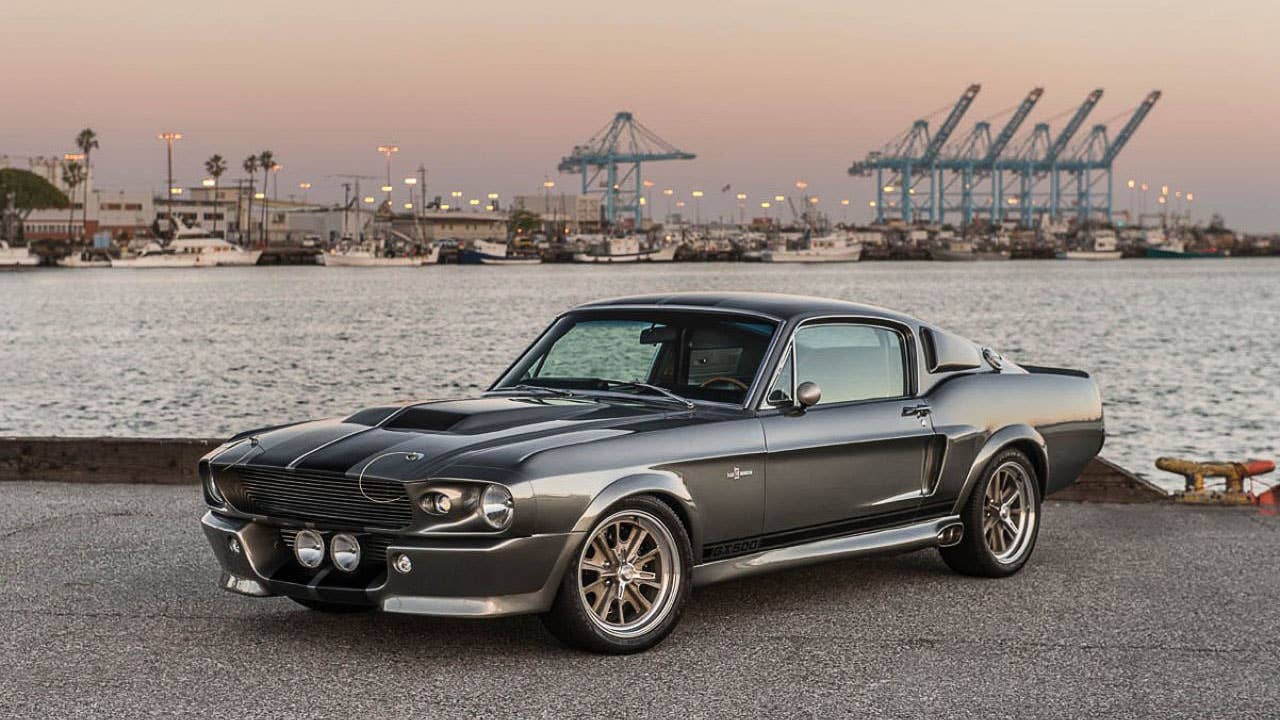
Designed by the legendary Chip Foose and Steve Stanford, the 2000 version of Eleanor—styled as a Metallic Pepper Grey 1967 Fastback with black stripes—defined the modern “Eleanor” brand. This is the version most people refer to today. By shifting the “model year” of the character to 1967, the filmmakers successfully aligned the Eleanor brand with the “Golden Era” of American muscle, instantly increasing the brand’s perceived value and desirability.
Building a Brand Through Motion Pictures
The success of the Eleanor Mustang serves as a primary case study in how entertainment can create a “halo effect” for a physical product. In the world of brand strategy, this is known as “Narrative Equity.”
Product Placement vs. Character Creation
Most automotive branding in films is the result of standard product placement—a manufacturer pays to have their newest model featured on screen. Eleanor was different. Because the car was treated as a character (she is even listed in the credits of the 1974 film), the brand was not tied to Ford’s marketing department, but to the storytelling itself.
This distinction is vital. When a car becomes a character, it transcends its mechanical specifications. It becomes an aspirational lifestyle brand. People do not just want a 1967 Mustang; they want the Eleanor experience. This emotional connection is what allows licensed builders to charge upwards of $300,000 for a recreation that would otherwise be worth a fraction of that price.
The Aesthetic Signature: Pepper Grey and Black Stripes
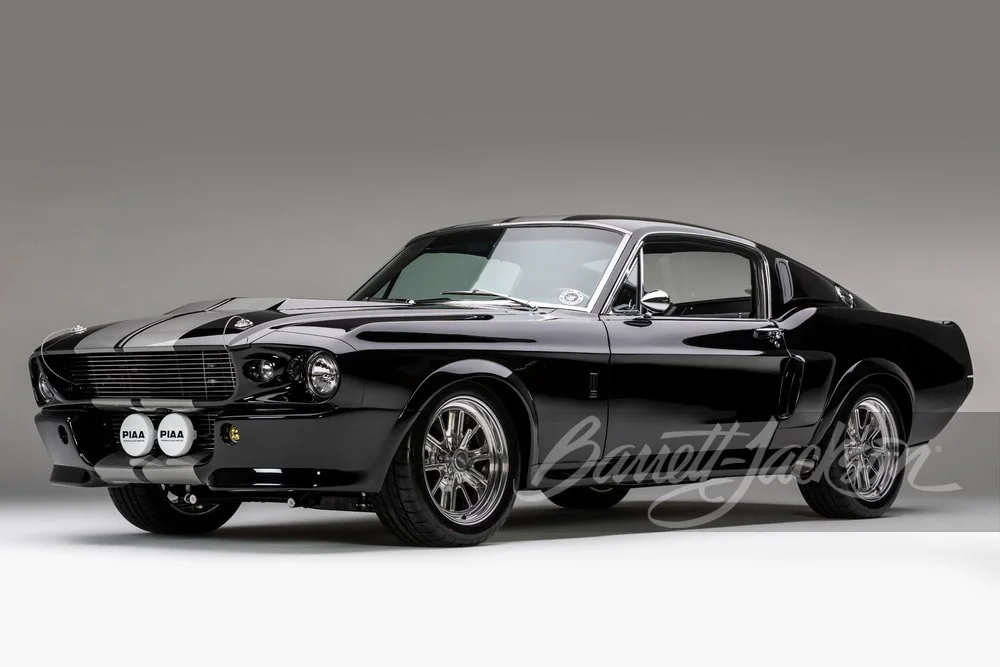
A strong brand requires a recognizable visual identity. The 2000 remake achieved this by creating a specific “uniform” for Eleanor. The PIAA lights, the Schmidt 17-inch wheels, the side-exit exhausts, and the “Go-Baby-Go” nitrous button on the shifter became the brand’s visual shorthand.
By standardizing these elements, the producers created a brand kit that could be replicated. Whether you see an Eleanor in Los Angeles or London, the visual cues are identical. This consistency is the hallmark of professional brand management, ensuring that the “Eleanor” name remains synonymous with a specific, high-end aesthetic.
The Legal Battlefield: Protecting the “Eleanor” Trademark
One cannot discuss the Eleanor brand without addressing the high-stakes legal environment that has surrounded it for years. The “Eleanor” name became one of the most fiercely protected trademarks in the automotive world, illustrating the complexities of corporate identity and intellectual property.
Denice Halicki and the Protection of a Legacy
For years, the estate of H.B. Halicki, led by his widow Denice Halicki, maintained a strict “Iron Curtain” around the Eleanor brand. The estate argued that “Eleanor” was a copyrighted character, much like Mickey Mouse or James Bond. This meant that any car builder who produced a 1967 Mustang with the Eleanor body kit without a license was infringing on the estate’s IP.
This strategy was incredibly effective for a time. It centralized the brand’s power, allowing only a select few “Official Licensed Builders” to use the name. For a brand strategist, this is a textbook example of “Scarcity Marketing.” By limiting who could build the car, the estate ensured that the Eleanor brand remained an elite, high-ticket item.
The Landmark 2022 Ruling: Reclaiming the Mustang Identity
In a seismic shift for the automotive and branding world, a 2022 court ruling (Shelby Trust v. Halicki) changed the landscape. The court ruled that the “Eleanor” character—as depicted in the films—was not entitled to independent copyright protection as a “character.”
From a brand perspective, this was a moment of “Brand Democratization.” It stripped away the exclusive character-based protection that had prevented enthusiasts and independent shops from using the likeness of the 1967 car. While the trademark for the name “Eleanor” in specific commercial contexts may still exist, the ruling significantly weakened the estate’s ability to monopolize the 1967 aesthetic. This case highlights the precarious nature of brands built on cinematic “characters” rather than traditional trademarks.
The Commercial Impact of the Eleanor Brand Strategy
The enduring popularity of the Eleanor Mustang, regardless of the model year, has created a secondary market that functions as a high-value brand extension. This market demonstrates how a well-managed brand can influence consumer behavior and market valuations.
Restomods as High-Value Brand Extensions
The “Restomod” (restoration-modification) industry owes much of its growth to the Eleanor brand. Before the 2000 film, the purist community valued “original” parts and factory-spec restorations. Eleanor changed the branding of the “modified” car. It proved that a classic silhouette, when branded correctly and outfitted with modern technology, could be more valuable than a numbers-matching original.
This shift allowed companies like Fusion Motor Company to build a business model around the Eleanor brand. These aren’t just cars; they are “Luxury Brand Assets.” The consumer is paying for the heritage of the 1967 Shelby design, the coolness factor of the 2000 film, and the modern reliability of a performance engine.
Scarcity and Desirability in the Collectible Market
The Eleanor brand also benefits from the “Celebrity Provenance” effect. When the original “Hero Car” from the 2000 movie went to auction at Mecum, it fetched $1.1 million. This price point was not based on the car’s weight in steel or its engine displacement; it was a valuation of the brand’s cultural capital.
This ripple effect extends to the years 1967 and 1968 specifically. Because the Eleanor brand is so dominant, the market value for all 1967-1968 Mustang Fastbacks has risen disproportionately compared to other years. In branding terms, Eleanor has become the “Category King,” where the brand name defines the entire segment of modified vintage Mustangs.
Conclusion: The Lasting Legacy of Eleanor as a Brand
So, what year is the Eleanor Mustang? It is a 1971 Mustang that defined a genre, and it is a 1967 Shelby GT500 that redefined automotive cool. But more importantly, Eleanor is a masterclass in how a brand can be constructed, protected, and evolved over time.
The story of Eleanor teaches us that a brand’s value is not found in the product itself, but in the story we tell about it. Whether it’s the gritty, indestructible spirit of the 1971 model or the sleek, high-octane luxury of the 1967 version, Eleanor remains a testament to the power of branding. By navigating the complexities of film history, visual identity, and trademark law, the “Eleanor” name has secured its place as the most famous—and most valuable—character in automotive history. For brands looking to create lasting impact, the lesson is clear: build a character, maintain its visual signature, and protect its story at all costs.
aViewFromTheCave is a participant in the Amazon Services LLC Associates Program, an affiliate advertising program designed to provide a means for sites to earn advertising fees by advertising and linking to Amazon.com. Amazon, the Amazon logo, AmazonSupply, and the AmazonSupply logo are trademarks of Amazon.com, Inc. or its affiliates. As an Amazon Associate we earn affiliate commissions from qualifying purchases.