
When players step into the mud-stained sandals of Jin Sakai, they are instantly transported to a pivotal moment in feudal history. To answer the foundational question: Ghost of Tsushima is set in the year 1274. This specific date marks the first Mongol invasion of Japan, a period defined by the transition of the Kamakura shogunate and the clash between traditional samurai bushido and the pragmatic, often brutal, tactics of the invading Yuan Dynasty.
However, from a technology perspective, the year 1274 is more than just a chronological marker; it is the blueprint for one of the most sophisticated digital environments ever rendered in gaming. Sucker Punch Productions utilized cutting-edge software engineering and hardware optimization to recreate the 13th-century landscape of Tsushima Island. In this exploration, we delve into the tech-driven mastery that brings 1274 to life, from procedural foliage systems to the revolutionary loading speeds of modern console architecture.
The Software Engineering Behind 13th-Century Tsushima
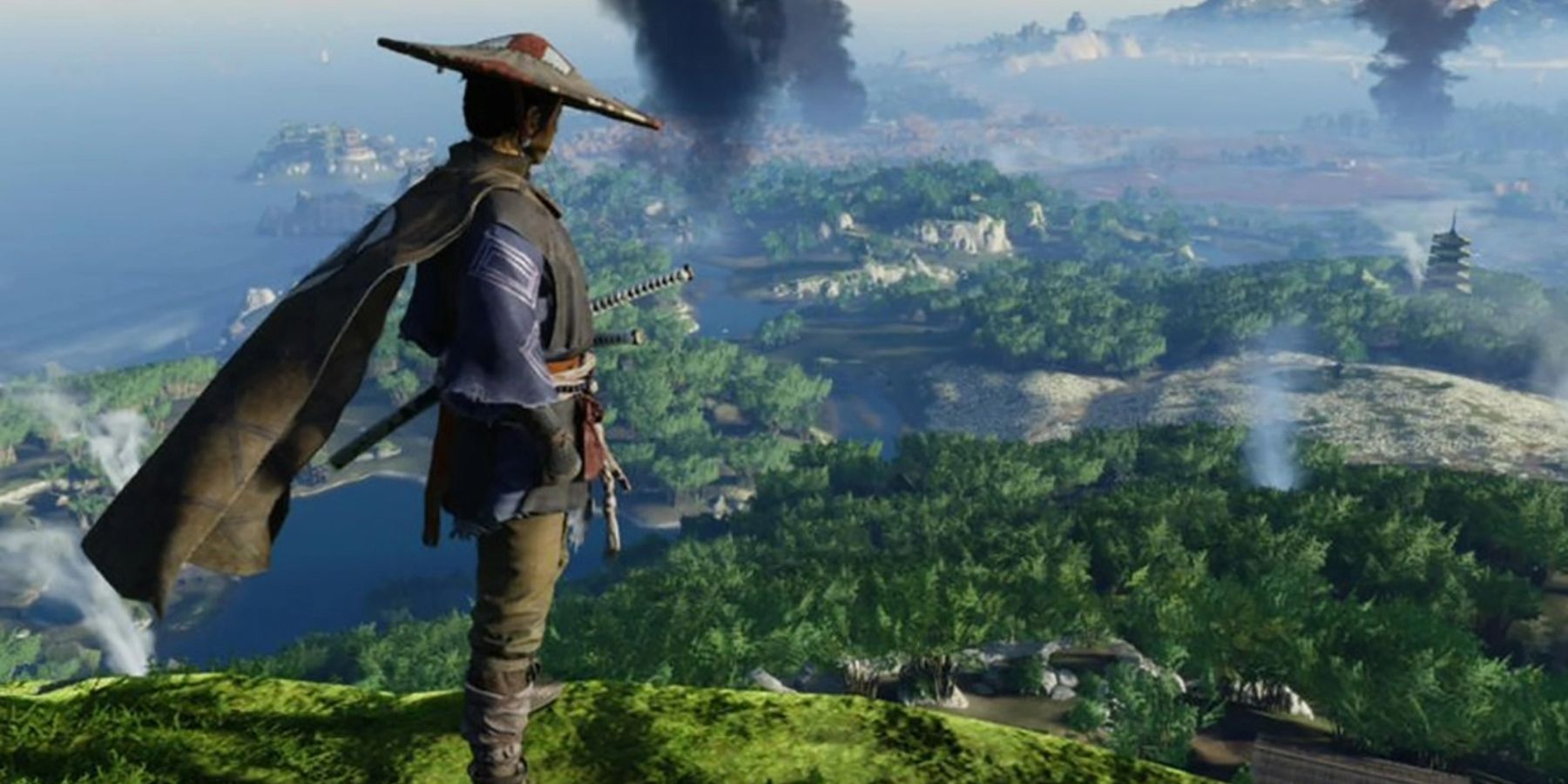
Recreating a specific year in history requires more than just artistic talent; it necessitates a robust engine capable of handling vast amounts of environmental data. The year 1274 in Ghost of Tsushima is characterized by its wild, untamed nature, which presented a unique challenge for the developers: how to render thousands of individual leaves, blades of grass, and particles of debris without crashing the hardware.
Procedural Generation and Dynamic Foliage
One of the most impressive technical feats in the game is the procedural foliage system. In traditional game design, placing every tree and flower by hand is inefficient. Sucker Punch developed a sophisticated algorithmic approach that allowed the environment to “grow” based on biological rules. By utilizing this tech, the developers could simulate the dense forests and rolling pampas grass fields of 1274 Japan with a density never before seen on the PlayStation 4. Each blade of grass is a dynamic object, reacting to the player’s movement and the directional flow of the wind—a core mechanic of the game’s navigation system.
The Guiding Wind: A Mastery of UX Design
Technically, the “Guiding Wind” is a brilliant solution to the “HUD clutter” problem in open-world games. Instead of a floating GPS arrow or a cluttered mini-map, the tech team utilized real-time fluid dynamics to guide the player. By swiping the touchpad, the engine triggers a wind gust that ripples through the environment. This required a deep integration between the physics engine and the user interface, ensuring that the wind direction felt organic and reacted realistically to the terrain’s geometry.
Visual Fidelity and Atmospheric Rendering Tech
The year 1274 was an era of stark contrasts—the beauty of the Japanese autumn against the smoke and fire of war. To capture this, the technical team focused on lighting and post-processing effects that push the limits of GPU (Graphics Processing Unit) capabilities.
Kurosawa Mode: Software-Driven Aesthetic Transformation
Perhaps the most notable “tech” feature in Ghost of Tsushima is the “Kurosawa Mode.” This isn’t just a black-and-white filter. The developers worked closely with the estate of legendary filmmaker Akira Kurosawa to analyze the specific film grain, contrast levels, and sound frequencies of 1950s samurai cinema. From a technical standpoint, this involved a custom post-processing pass that adjusts the game’s black levels, increases the “crush” of the shadows, and adds a layer of digital film grain that mimics 35mm celluloid. It even modifies the audio engine to produce a “lo-fi” sound that replicates the crackle of vintage speakers.
Particle Systems and Weather Simulation
The atmosphere of 1274 is heavy with the “embers of war.” To achieve this, Sucker Punch utilized an advanced particle system that allows for thousands of simultaneous on-screen elements—be it cherry blossoms, autumn leaves, or sparks from a Mongol fire. These particles are not just visual overlays; they are affected by the game’s global illumination system, meaning they catch the light of the sun or the glow of a torch as they drift through the air. This creates a volumetric depth that makes the historical setting feel tangible and lived-in.
Performance Evolution: From PlayStation 4 to PlayStation 5
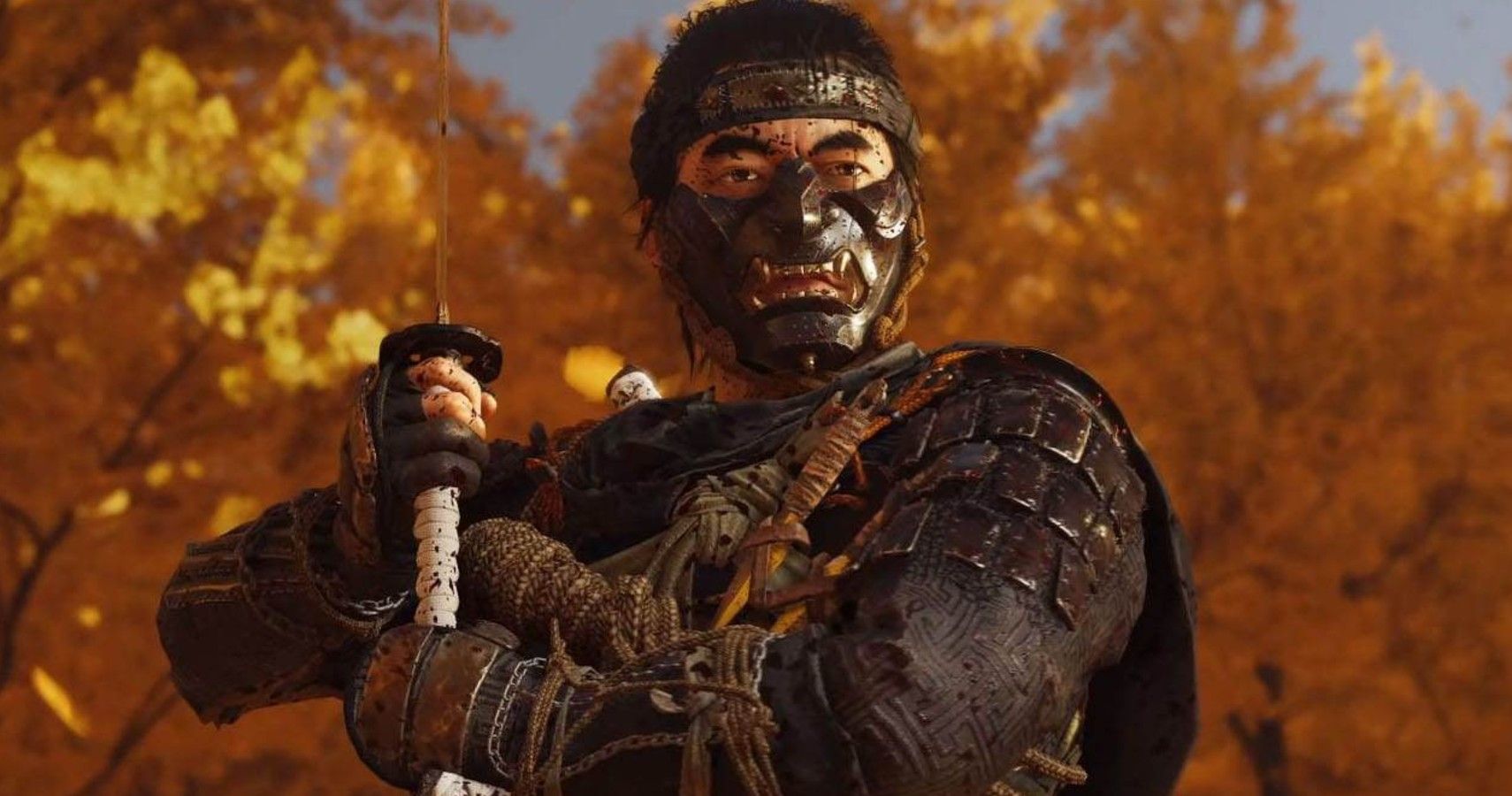
While the game was originally optimized for the aging architecture of the PS4, the transition to the PS5 allowed Ghost of Tsushima to showcase what modern hardware can do for historical simulations. The leap in technology changed how players experience the year 1274 by removing the barriers between the player and the world.
SSD Optimization and the Death of the Loading Screen
One of the most talked-about technical achievements of Ghost of Tsushima is its loading speed. On the original PS4, the game loaded significantly faster than its peers due to clever data-striping techniques. However, on the PS5, the game utilizes the custom NVMe SSD architecture to achieve “instantaneous” travel. The technical wizardry here involves decompressing assets in real-time as the player moves, allowing the game to load the entire island of Tsushima in under two seconds. For a game set in 1274, this means the historical immersion is never broken by a loading bar.
4K Resolution and 60 FPS: The Hardware Advantage
The “Director’s Cut” of the game leverages the PS5’s increased TFLOPS (Teraflops) to deliver a native 4K resolution at a stable 60 frames per second. This frame rate doubling is crucial for the technical execution of the game’s combat system. In 1274, samurai combat was a matter of split-second timing. The higher frame rate reduces input latency, making the parries and strikes feel more responsive. This technical polish ensures that the player’s interaction with the 13th-century world is as fluid as the animations themselves.
The Future of Period-Piece Gaming Technology
Ghost of Tsushima has set a high bar for how technology can be used to recreate specific historical eras. As we look beyond the year 1274 and the 13th-century setting, the techniques developed by Sucker Punch provide a roadmap for the future of digital preservation and historical storytelling.
Ray Tracing and Enhanced Realism
While Ghost of Tsushima uses highly optimized screen-space reflections, future titles in this niche will likely utilize hardware-accelerated Ray Tracing. Imagine the year 1274 rendered with true-to-life light bounces off the armor of a Mongol general or the accurate reflection of a Shinto shrine in a puddle of rainwater. This technology will allow for even greater immersion, blurring the line between a digital game and a historical documentary.
AI-Driven NPC Behavior
The tech of 1274 isn’t just about visuals; it’s about the “life” within the world. Future iterations of this technology will likely include more sophisticated AI routines for NPCs (Non-Player Characters). In Ghost of Tsushima, we see the beginnings of this with animals that lead you to secrets and enemies that react to your “Ghost” reputation. Advanced machine learning could eventually allow the inhabitants of Tsushima to have even more complex schedules and reactions, making the historical simulation feel truly alive.

Conclusion: The Digital Resurrection of 1274
Answering “what year is Ghost of Tsushima set” is only the beginning of the conversation. While the history books tell us the invasion happened in 1274, it is the technology of the 21st century that allows us to walk through it. Through a combination of procedural generation, custom engine tools, and the sheer power of modern console hardware, the industry has proven that history is no longer something we just read about—it is something we can inhabit.
The technical mastery behind Ghost of Tsushima serves as a reminder that the best technology doesn’t just provide “better graphics”; it provides a deeper connection to the human experience. By meticulously reconstructing the world of 1274, Sucker Punch has created a digital time machine, proving that with the right software and hardware, the past is never truly lost. It is simply waiting to be rendered.
aViewFromTheCave is a participant in the Amazon Services LLC Associates Program, an affiliate advertising program designed to provide a means for sites to earn advertising fees by advertising and linking to Amazon.com. Amazon, the Amazon logo, AmazonSupply, and the AmazonSupply logo are trademarks of Amazon.com, Inc. or its affiliates. As an Amazon Associate we earn affiliate commissions from qualifying purchases.