
The pursuit of valuable half dollars represents a fascinating intersection of history, artistry, and astute financial acumen. For many, these once-common denominations are merely pocket change, yet to the discerning eye, certain years and varieties can command significant premiums, turning a casual find into a tangible asset. Understanding which half dollars hold financial promise requires delving into the intricate world of numismatics, where rarity, condition, and specific historical contexts dictate market value. This article explores the key factors that drive a half dollar’s worth and highlights specific series and dates to watch for, transforming the hunt for old coins into a potential investment strategy.
The Lure of Half Dollars: A Financial and Historical Perspective
Half dollars, with their generous size and often intricate designs, have always held a special place in American coinage. From the early days of the republic to modern times, they have commemorated significant events, celebrated national figures, and served as a robust form of currency. Beyond their historical and aesthetic appeal, however, lies a compelling financial dimension. Unlike many contemporary assets, rare and valuable coins are tangible, possessing intrinsic material value (especially those containing silver) and often appreciating as collectibles due to scarcity and demand.
Investing in or collecting half dollars can be a rewarding endeavor, but it’s crucial to distinguish between face value and numismatic value. While all half dollars are legal tender, only a select few transcend their face value to become significant monetary assets. This transformation is driven by a confluence of factors, primarily concerning their mintage, survival rate, composition, and desirability among collectors. For those looking to capitalize on this niche market, whether through a deliberate collection strategy or a serendipitous discovery, understanding these core value drivers is paramount.
Fundamental Value Drivers for Half Dollar Collections
Several critical factors determine whether a half dollar is merely a piece of currency or a valuable asset worthy of investment. Astute collectors and investors meticulously assess these attributes to gauge a coin’s market potential.
Rarity and Mintage Figures
The most fundamental driver of a coin’s value is its rarity, which is often directly correlated with its original mintage figure and its survival rate. Coins struck in lower quantities generally command higher prices, especially if few examples have survived in good condition. Furthermore, the mint mark (P for Philadelphia, D for Denver, S for San Francisco, O for New Orleans, CC for Carson City) plays a crucial role. Coins from specific mints, such as Carson City, often had lower production numbers and are consequently rarer and more valuable today. For instance, a coin with a mintage of only a few hundred thousand will inherently be rarer than one with tens or hundreds of millions, assuming similar survival rates.
Condition and Grading
A coin’s condition is arguably the most significant determinant of its numismatic value after rarity. The preservation of a coin, from its initial striking to its current state, dramatically impacts its worth. Professional grading services, such as the Professional Coin Grading Service (PCGS) and the Numismatic Guaranty Corporation (NGC), use a standardized 70-point Sheldon scale to assess a coin’s condition. A coin graded MS-70 (Mint State Perfect) is flawless, while one graded MS-60 is an uncirculated but imperfect specimen. Even slight differences in grade can lead to substantial differences in market price. Factors like luster, strike quality, lack of wear, and absence of distracting marks are all considered. Generally, the higher the grade, the greater the value, particularly for rare dates.
Metal Composition
The intrinsic metal content of a half dollar provides a baseline for its value, often referred to as its “melt value.” All U.S. half dollars minted before 1965 are composed of 90% silver, while those minted from 1965 to 1970 contain 40% silver. The fluctuating price of silver directly impacts the melt value of these coins, often setting a floor beneath their numismatic value. Even if a particular silver half dollar doesn’t have a high collector premium due to rarity or grade, its silver content ensures it’s worth more than its face value. Post-1970 half dollars are primarily copper-nickel clad and typically hold only face value unless they are exceptional examples of specific varieties or errors.
Errors and Varieties
Mint errors and distinct varieties represent some of the most sought-after and valuable half dollars. An “error” refers to a mistake made during the minting process, such as a doubled die (where the design is stamped twice, slightly misaligned), an off-center strike, a missing mint mark, or a planchet error (issues with the blank coin itself). A “variety” refers to a slight intentional alteration or accidental difference in the die that was used to strike the coins, which was not necessarily an “error” but a distinct type. For example, a “repunched mintmark” (RPM) where the mintmark was punched incorrectly and then repunched in the correct position. These unique anomalies, particularly well-known and documented ones, can elevate a coin’s value far beyond its typical market price, sometimes reaching into the thousands or even tens of thousands of dollars.
Identifying Valuable Kennedy Half Dollars (1964-Present)
The Kennedy half dollar series, introduced in 1964, is perhaps the most familiar to modern collectors. While most post-1970 Kennedy halves are circulating currency, several key issues hold significant numismatic and intrinsic value.
The 90% Silver 1964 Kennedy Half Dollar
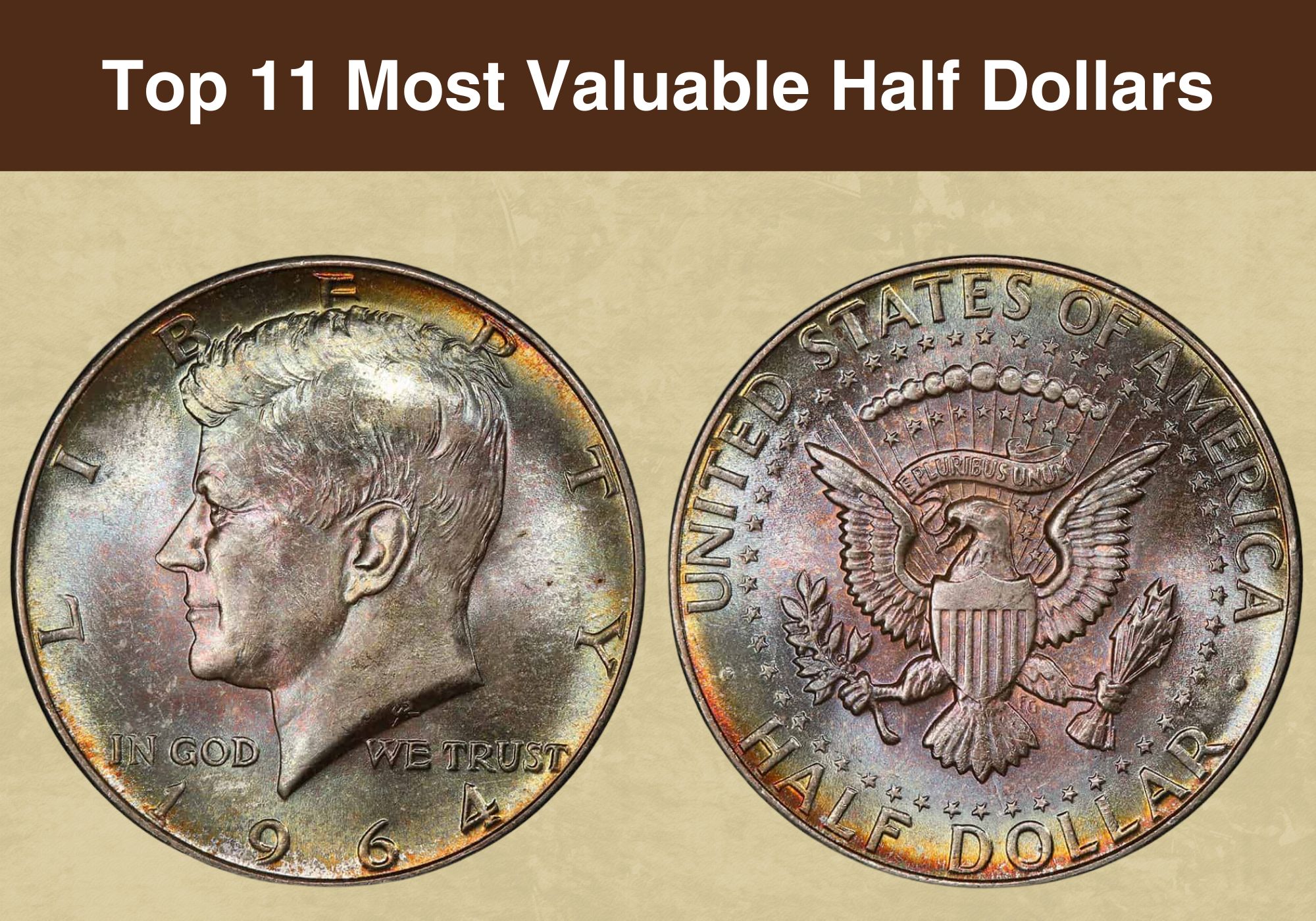
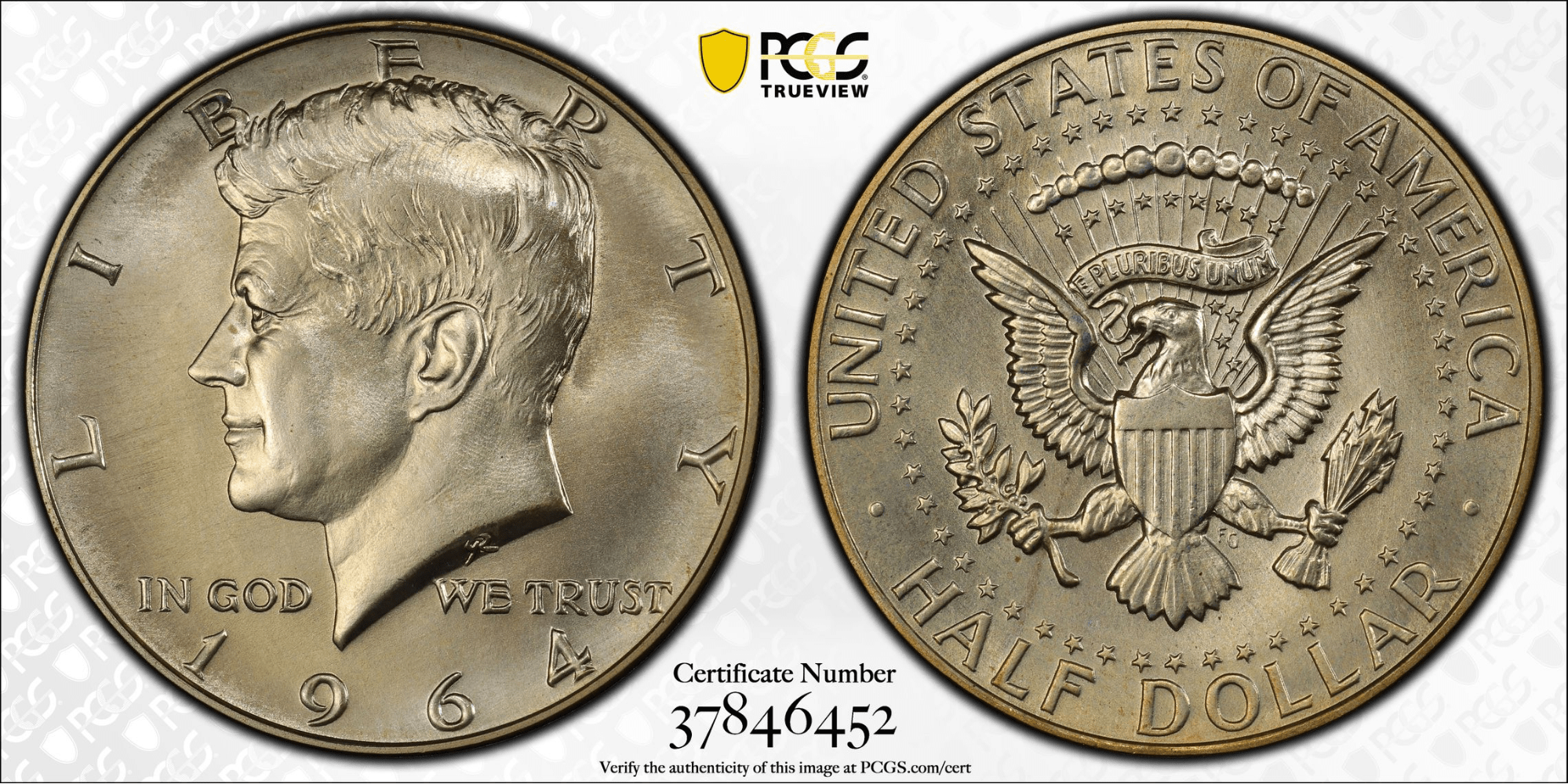
The 1964 Kennedy half dollar is a cornerstone for any collector interested in silver coinage. This coin is unique as the only regular issue Kennedy half dollar struck with 90% silver composition. Its issuance followed President John F. Kennedy’s assassination, leading to immense public demand. Despite a massive mintage, its 90% silver content makes it highly desirable. Even in circulated condition, its value is tied directly to the spot price of silver. Uncirculated examples, especially those graded MS-65 or higher, command healthy premiums beyond their melt value. This coin is an essential starting point for understanding valuable modern half dollars.
The 40% Silver Clad Kennedy Half Dollars (1965-1970)
Following 1964, the U.S. Mint transitioned to a clad coinage system due to rising silver prices. From 1965 to 1970, Kennedy half dollars were produced with a 40% silver outer layer bonded to a copper core. These coins are often identifiable by a copper line visible on their reeded edge. Like their 1964 predecessors, their value is inherently linked to silver prices. While their numismatic premiums are generally lower than the 90% silver issues, uncirculated rolls or individual high-grade examples (especially for earlier dates like 1965 or 1966) can still be sought after by collectors. The 1970-D issue is particularly noteworthy as it was only released in mint sets and not for general circulation, making it scarcer and more valuable in all grades.
Key Dates and Varieties Post-1970 (Copper-Nickel Clad)
After 1970, Kennedy half dollars were struck in a copper-nickel clad composition, making most of them primarily face value. However, certain exceptions and varieties can still be valuable:
- 1776-1976 Bicentennial Half Dollars (Silver Clad): While the regular bicentennial halves are copper-nickel clad, special collector versions were minted in 40% silver for mint and proof sets. These silver versions are worth their melt value and more in higher grades.
- Proof Issues: Proof half dollars, struck with special dies for collectors, often have higher premiums than their circulating counterparts, especially in cameo or deep cameo finishes. Look for specific proof-only errors or varieties.
- Errors: Well-documented mint errors, such as doubled dies or off-center strikes, regardless of the year, can turn an otherwise ordinary copper-nickel clad half dollar into a significant collector’s item. Research specific error listings for each year. While rare, discovering such an error can be highly profitable.
Exploring Earlier Half Dollar Series with Significant Value
Before the Kennedy series, several other half dollar types circulated, and these older coins almost universally hold significant value due to their age, silver content, and often lower mintages.
Franklin Half Dollars (1948-1963)
The Franklin half dollar series is entirely composed of 90% silver, making all issues valuable based on their melt value. Key dates and varieties that command premiums beyond the silver content include:
- 1949-S: A lower mintage issue from San Francisco.
- 1953-S: Another lower mintage San Francisco coin.
- 1955-P: A relatively low mintage from Philadelphia.
- Full Bell Lines (FBL): For many Franklin collectors, coins with “Full Bell Lines” on the reverse (indicating a strong strike where all lines within the Liberty Bell are visible) fetch significantly higher prices, even for common dates.
Walking Liberty Half Dollars (1916-1947)
Considered one of the most beautiful U.S. coin designs, all Walking Liberty half dollars are 90% silver. This series contains many key dates and conditional rarities:
- 1916-S, 1917-D (obverse mintmark), 1917-S (obverse mintmark): Early issues with lower mintages and high demand.
- 1921-P, 1921-D, 1921-S: These are particularly rare and valuable in any grade due to extremely low mintages.
- 1938-D: The lowest mintage of the entire series.
- Full Head: Similar to Franklin’s FBL, Walking Liberty coins with a “Full Head” (all details of Liberty’s hair and face are sharp) are highly prized.
Barber Half Dollars (1892-1915)
The Barber half dollar series, also 90% silver, presents a formidable challenge for collectors due to its age and the fact that many examples are heavily circulated. Key dates and mint marks are numerous and often command substantial prices, even in lower grades:
- 1892-O, 1892-S, 1893-S: Early, low-mintage issues from the New Orleans and San Francisco mints.
- 1897-O, 1897-S: Another pair of scarce mintmark issues.
- 1901-S: A significant conditional rarity, very valuable in higher grades.
- Many other dates, particularly from the San Francisco (S) and New Orleans (O) mints, are quite scarce.
Pre-Barber Half Dollars (Seated Liberty, Capped Bust, Flowing Hair)
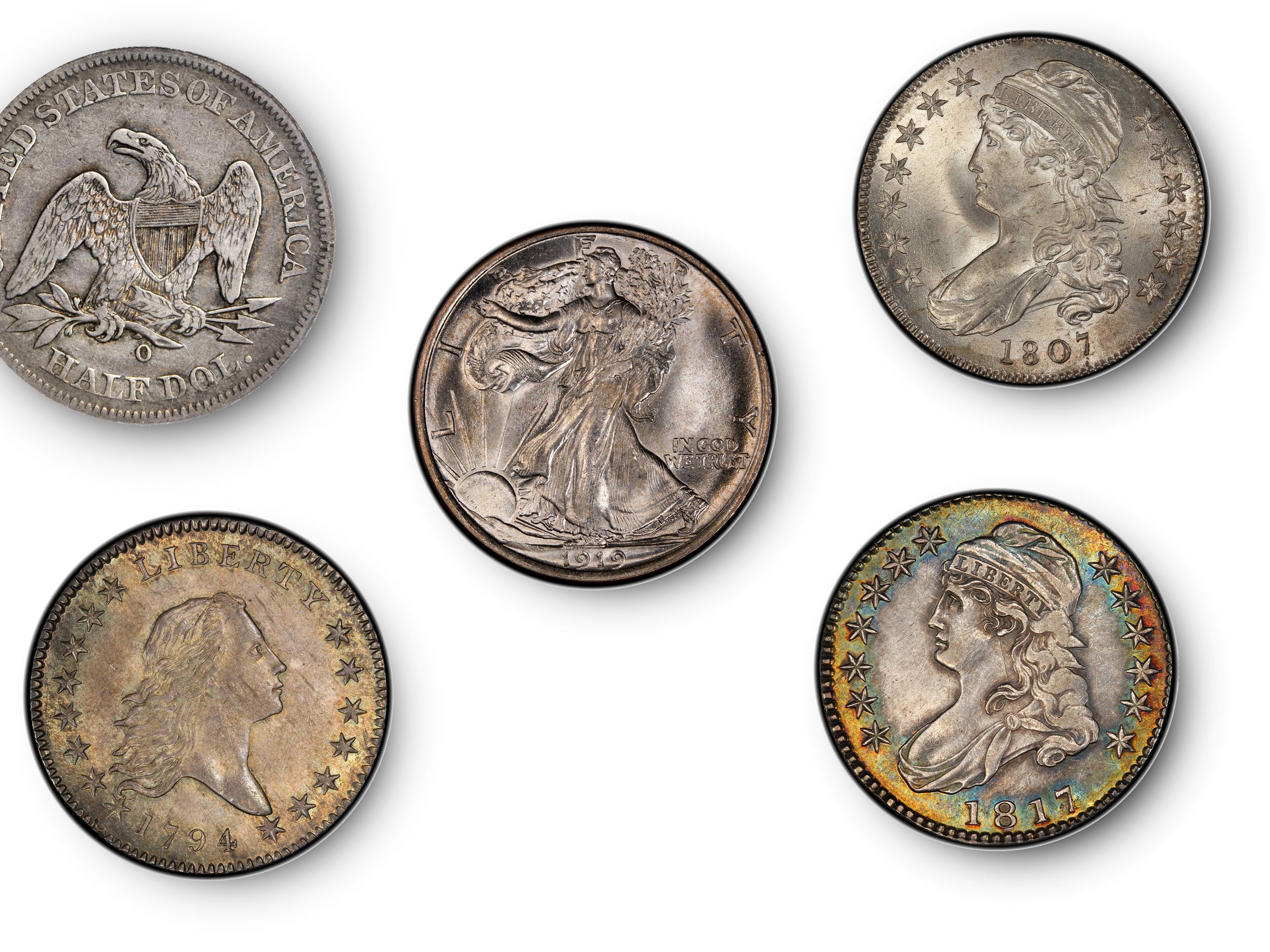
For the advanced numismatist and serious investor, half dollars minted before the Barber series represent true historical treasures and often command significant financial value. These include the Seated Liberty (1839-1891), Capped Bust (1807-1839), Draped Bust (1796-1807), and Flowing Hair (1794-1795) half dollars. Almost all examples of these series are valuable due to their extreme age, very low original mintages, and limited survival rates, especially in higher grades. Finding any of these in good condition is a substantial discovery, and their value often starts in the hundreds or thousands of dollars, climbing much higher for key dates, rare varieties, or exceptional grades.
Strategic Investment and Care for Half Dollar Collectors
For those looking to engage with half dollars as an investment, a structured approach is essential to maximize potential returns and preserve asset value.
Research and Education
The foundation of any successful coin investment strategy is continuous learning. Acquire reputable resources such as “A Guide Book of United States Coins” (the Red Book), specialized guides for half dollars, and access to online databases like PCGS Coinfacts or NGC Coin Explorer. Understanding specific mintages, known errors, and historical market performance for each series and date is crucial before making purchases.
Professional Grading Services
For any half dollar believed to be of significant value, submitting it to a reputable third-party grading service (PCGS or NGC) is highly recommended. Professional grading provides an objective assessment of condition, authenticates the coin, and encapsulates it in a tamper-evident holder. This not only protects the coin but also enhances its liquidity and market value, as buyers trust the authenticated grade.
Proper Storage
Once acquired, coins must be stored correctly to prevent damage and preserve their condition. Avoid PVC-containing flips or albums, as these can leach chemicals that harm a coin’s surface over time. Opt for inert, acid-free holders, such as mylar flips, archival-safe albums, or professionally graded slabs. Store your collection in a stable environment, away from extreme temperature fluctuations, humidity, and direct sunlight, ideally in a secure location.
Market Awareness
Stay informed about current market trends by monitoring auction results, dealer price lists, and online marketplaces. The value of coins can fluctuate based on economic conditions, collector demand, and new discoveries. Treating coin collecting as a long-term investment often yields the best results, as the rarity and historical appeal of valuable half dollars tend to appreciate over time, offering both a captivating hobby and a tangible financial asset.
aViewFromTheCave is a participant in the Amazon Services LLC Associates Program, an affiliate advertising program designed to provide a means for sites to earn advertising fees by advertising and linking to Amazon.com. Amazon, the Amazon logo, AmazonSupply, and the AmazonSupply logo are trademarks of Amazon.com, Inc. or its affiliates. As an Amazon Associate we earn affiliate commissions from qualifying purchases.