
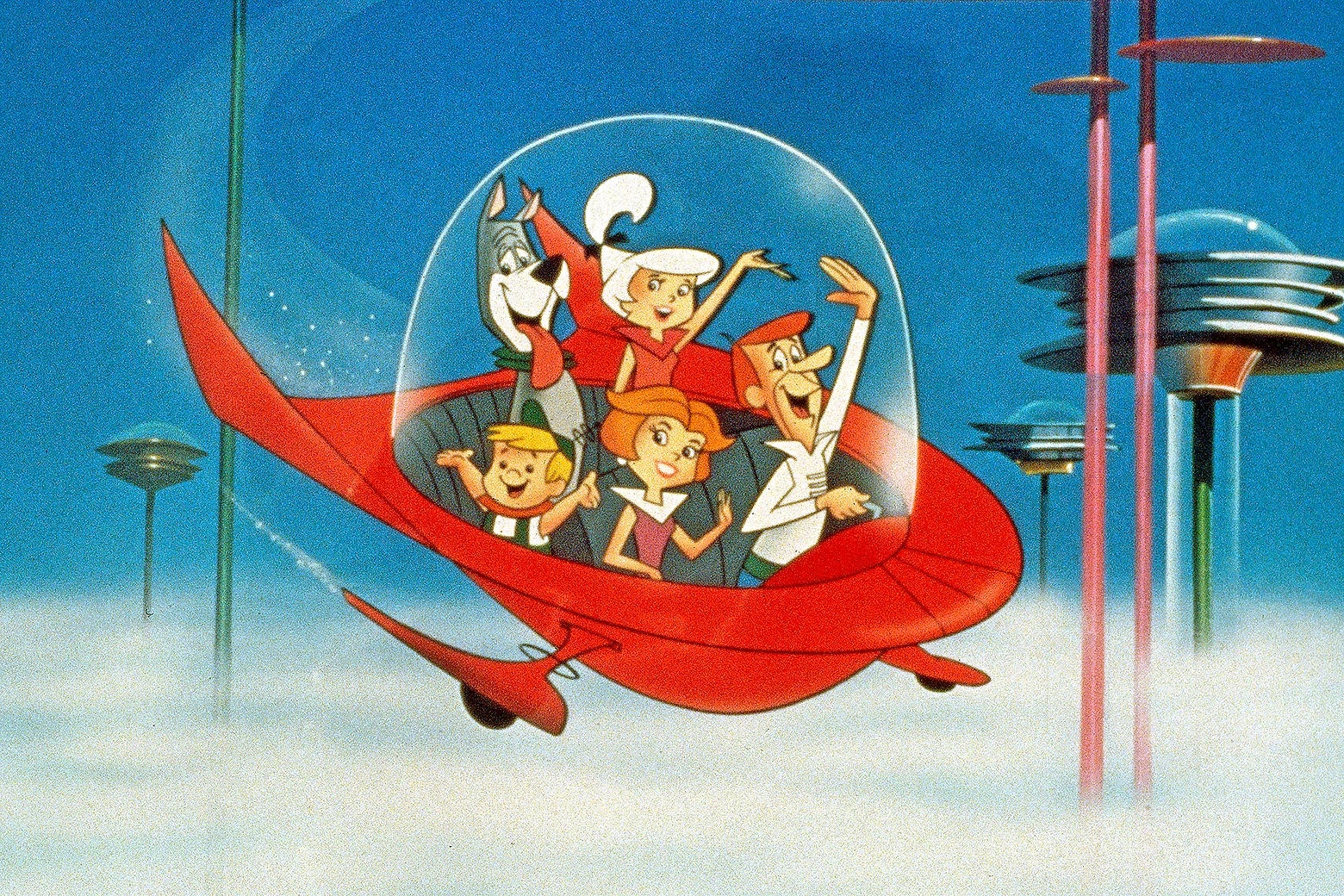
When the first episode of The Jetsons aired on ABC in 1962, it didn’t just provide a whimsical look at a family living in the clouds; it established a definitive technological goalpost for the human race. While the show was a product of the Space Age zeitgeist, it was explicitly set 100 years in the future. This means that George, Jane, Judy, and Elroy live in the year 2062.
As we cross the midway point between the show’s original air date and its fictional setting, the technology industry often looks back at Orbit City to measure our progress. The Jetsons remains one of the most influential pieces of futurist media because it moved beyond the “hard sci-fi” of space travel and focused on the “soft tech” of daily life: automation, connectivity, and the user experience. By exploring the year 2062 through a modern technological lens, we can see which predictions have become our current reality and which innovations are still waiting in the wings.
The Timeline of Tomorrow: Why 2062 Matters in Tech History
The choice of 2062 wasn’t arbitrary. In 1962, the world was obsessed with the “Century 21” exposition and the promise of the 21st century. By setting the show exactly a century ahead, the creators allowed for a complete overhaul of the physical and digital landscape. From a tech perspective, 2062 represents a “Type 1 Civilization” on the Kardashev scale—a society that can harness all the energy of its home planet.
The 100-Year Leap
In the tech world, a century is an eternity. Consider the difference between 1862 and 1962: we went from the telegraph to the first communications satellites. The “Jetson Leap” suggests a similar exponential curve. In the show’s vision of 2062, Moore’s Law has been active for a century, leading to hardware so miniaturized and powerful that it can sustain entire cities suspended in the troposphere. This vision serves as a benchmark for modern developers and engineers who are currently working on the infrastructure of 2062.
Bridging the Gap Between Mid-Century Modernism and Futurism
While the aesthetic of The Jetsons is “Googie” architecture and tailfins, the underlying tech philosophy is purely functionalist. It predicted a world where technology is invisible. George Jetson rarely interacts with raw code or complex interfaces; he pushes a single button. This “One-Button” philosophy has become the North Star for modern UX/UI design. In the journey toward 2062, the tech industry has moved away from complex command lines toward intuitive, gesture-based, and voice-activated systems that the Jetson family would find familiar.
Automation and Robotics: The Legacy of Rosey the Robot
Perhaps the most iconic piece of technology in the show is Rosey (sometimes spelled Rosie), the robotic maid. In the year 2062, Rosey is a sophisticated, sentient-adjacent machine capable of complex household management. Today, the robotics industry is aggressively pursuing the “Rosey standard.”
Household AI and the Rise of Assistive Robotics
In the early 2000s, we saw the first wave of household robotics with the Roomba. While a far cry from a walking, talking maid, it signaled the shift toward autonomous domestic labor. As we move closer to the actual 2062, companies like Boston Dynamics, Tesla (with the Optimus bot), and Figure AI are developing humanoid robots designed to navigate human environments. These machines utilize computer vision and neural networks to understand spatial geometry—capabilities that Rosey demonstrated decades before the first microprocessor was even invented.
From Pre-programmed Scripts to Large Language Models (LLMs)
The true magic of Rosey wasn’t her ability to hold a vacuum; it was her ability to converse, offer sass, and understand emotional context. In the 1960s, this was pure fantasy. Today, through the evolution of Large Language Models like GPT-4 and Claude, we have achieved the “brain” of Rosey. We now possess the natural language processing (NLP) capabilities to interact with machines as if they were people. The challenge for the next few decades leading up to 2062 is the integration of these AI brains into mobile, versatile robotic bodies.
Transportation and Connectivity: Flying Cars vs. Digital Highways
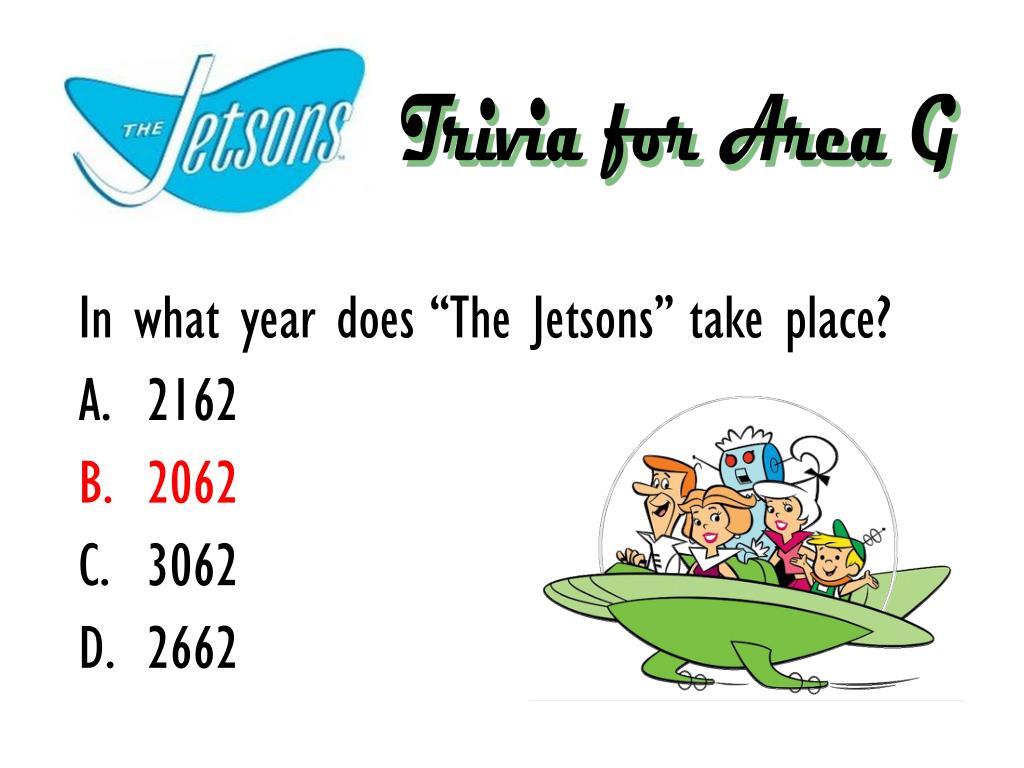
The Jetsons is synonymous with the flying car. In Orbit City, traffic is three-dimensional. While we haven’t quite reached the point where every suburban driveway houses an aerocar, the tech sector is currently in the middle of a “Vertical Mobility” revolution.
The Aerodynamics of the Jetson Lifestyle
In the actual world of tech trends, we refer to flying cars as eVTOLs (Electric Vertical Take-off and Landing) aircraft. Companies like Joby Aviation and Archer are currently testing air taxis that mirror the Jetson experience. These vehicles rely on advanced battery density and autonomous flight software—technologies that are scaling rapidly. While we might not have the “folding briefcase car” by 2062, the transition from ground-based combustion engines to autonomous aerial electric vehicles is a primary focus of modern transport tech.
Telepresence and the Proliferation of Video Communication
One of the most accurate predictions of The Jetsons was the “Tele-viewer.” In 1962, the idea of a flat-screen video call was revolutionary. Today, it is mundane. The show predicted a world where physical distance was rendered irrelevant by high-speed data transmission. We have surpassed the show in this regard; while George Jetson had to sit in front of a bulky screen, we carry high-definition telepresence devices in our pockets. The move toward the 2062 era is now focusing on holographic communication and “spatial computing” via headsets like the Apple Vision Pro, which aim to make digital interactions feel even more three-dimensional.
The Smart Home Ecosystem: IoT in the 21st Century
The Jetson home was an interconnected web of devices that anticipated our current “Internet of Things” (IoT). From the “Food-a-Rac-a-Cycle” to the automated morning grooming machines, the show imagined a world where hardware and software work in a seamless loop to serve the human user.
Food Replicators and Modern Automated 3D Printing
The Jetsons’ ability to press a button and have a hot meal appear is no longer the stuff of cartoons. We are seeing the early stages of this through 3D food printing and automated kiosks. In the tech world, the focus is on “Molecular Assembly” and precision nutrient delivery. Startups are currently experimenting with printing plant-based proteins and intricate confections. By 2062, it is highly probable that kitchens will focus more on “cartridge-based” nutrition rather than traditional raw-ingredient cooking, mirroring the show’s vision of ultra-convenience.
Wearable Tech and Health Monitoring
In several episodes, the characters interact with automated “probers” or medical machines that diagnose them instantly. This is the ultimate goal of the current wearable tech market. With the Apple Watch, Oura Ring, and continuous glucose monitors, we are building the sensory infrastructure for the 2062 health suite. The trend is moving toward preventative, real-time data analysis where AI “doctors” monitor our vitals 24/7, providing the same level of instant diagnostic feedback seen in the futuristic world of the Jetsons.
Assessing the Feasibility of the 2062 Vision
As we look toward the actual year 2062, we must ask: how close are we to the “Jetsons” reality? In some ways, we are centuries ahead; in others, we are lagging behind.
Areas Where We Have Surpassed the Jetsons
Ironically, The Jetsons failed to predict the most transformative technology of our time: the Internet. While they had video calls and robots, their world still relied heavily on physical media and centralized systems. They didn’t envision a decentralized web, cloud computing, or the ability to access the sum of human knowledge from a handheld device. Our data architecture is far more sophisticated than what was imagined for 2062 back in 1962. We have achieved a level of digital miniaturization that makes their “high-tech” consoles look like relics.

The Remaining Hurdles in Energy and Infrastructure
The biggest gap between our current trajectory and the year 2062 lies in energy and gravity. The Jetson world is powered by seemingly limitless, clean energy that allows for floating cities and anti-gravity propulsion. In our reality, the tech industry is still grappling with the transition to sustainable energy and the limitations of current battery chemistry. For the 2062 vision to fully manifest, we would need a breakthrough in either compact nuclear fusion or high-room-temperature superconductivity.
Furthermore, the “Flying Car” future faces more regulatory and infrastructure hurdles than technological ones. Managing a 3D traffic grid requires a level of AI-driven air traffic control that we are only just beginning to conceptualize. However, with the current pace of AI development and the push toward autonomous systems, the gap is closing.
The Jetsons gave us a target. Whether we reach the year 2062 with cities in the clouds or simply with highly efficient, AI-integrated lives, the show’s influence on the tech industry remains undeniable. It taught us to expect more from our tools—to demand that technology doesn’t just work, but that it works for us, simplifying the complexities of life into the press of a single, elegant button.
aViewFromTheCave is a participant in the Amazon Services LLC Associates Program, an affiliate advertising program designed to provide a means for sites to earn advertising fees by advertising and linking to Amazon.com. Amazon, the Amazon logo, AmazonSupply, and the AmazonSupply logo are trademarks of Amazon.com, Inc. or its affiliates. As an Amazon Associate we earn affiliate commissions from qualifying purchases.