
The question “What year does Batman Beyond take place?” is more than a simple query about a fictional timeline; it’s an invitation to explore a meticulously crafted future that continues to resonate with audiences decades after its debut. This iconic animated series plunged viewers into Neo-Gotham, a sprawling, neon-soaked metropolis brimming with advanced technology, complex corporate structures, and a distinct economic landscape. While the precise dates anchor the narrative, the true fascination lies in how Batman Beyond anticipated and reflected real-world trends in technology, brand strategy, and personal finance—themes that are profoundly relevant to our modern digital age.
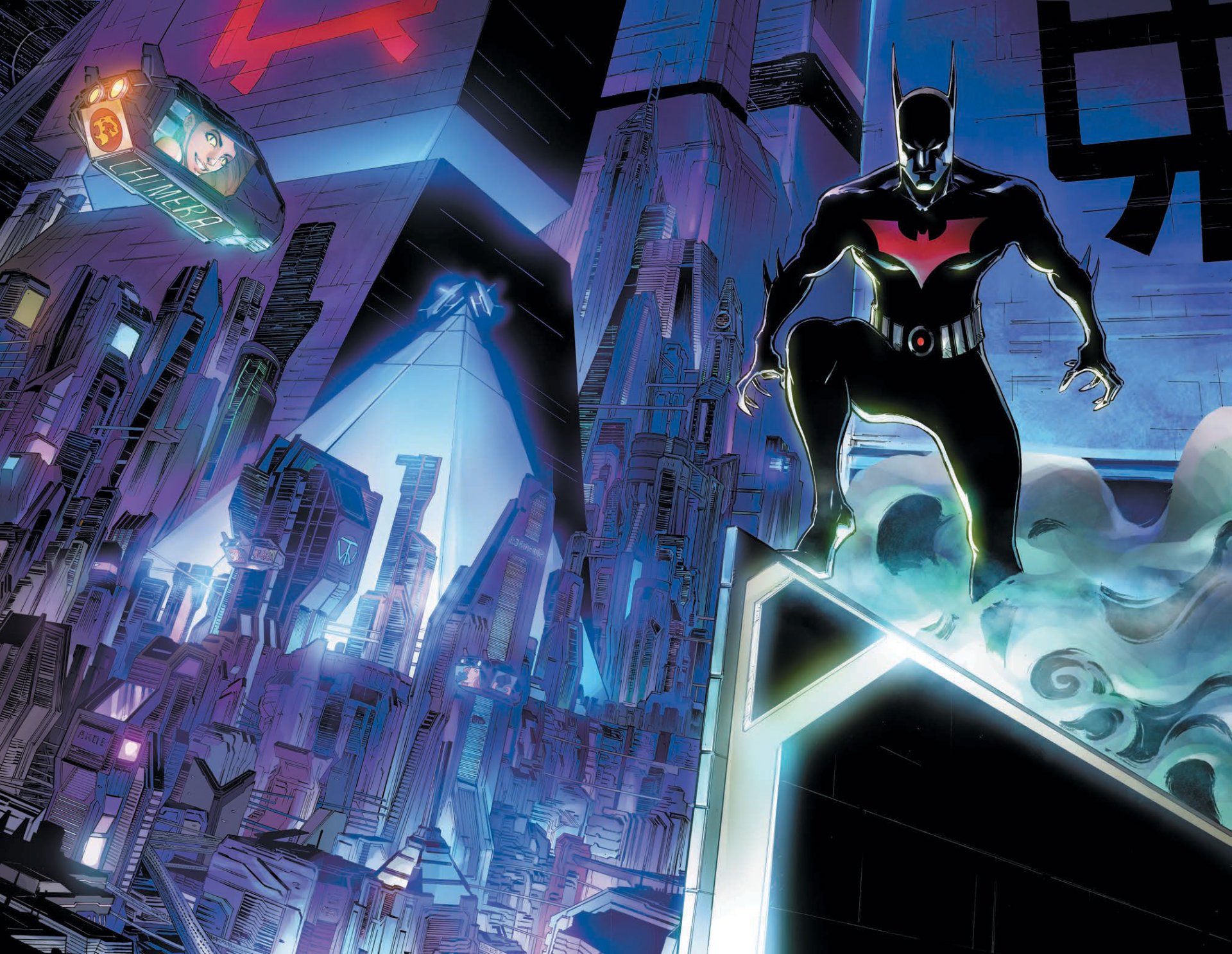
More than just a sequel to Batman: The Animated Series, Batman Beyond offered a speculative leap into a future where the mantle of the Bat passed from an aging Bruce Wayne to a new, younger hero, Terry McGinnis. This transition wasn’t just about a new costume; it was about reimagining the very essence of Gotham in an era defined by rapid technological advancement, corporate dominance, and evolving societal challenges. Understanding its timeline helps us contextualize not only the show’s narrative brilliance but also its uncanny ability to mirror the very issues we grapple with today, making it a compelling case study for anyone interested in the intersection of fiction and foresight.
Pinpointing the Future: The Official Timeline and Its Implications
To answer the central question, we must first dive into the established chronology of the DC Animated Universe (DCAU), the rich tapestry of interconnected shows that Batman Beyond belongs to. This shared universe provides a clear framework, allowing us to accurately place Neo-Gotham on a historical continuum and appreciate the legacy that informs its future.
The DC Animated Universe (DCAU) Chronology
Batman Beyond is a direct continuation of Batman: The Animated Series and The New Batman Adventures, with ties extending to Justice League and Justice League Unlimited. The narrative generally kicks off 40 years after Bruce Wayne’s last active year as Batman, which, given various estimates placing his prime in the late 1990s to early 2000s, places the primary events of Batman Beyond squarely in the late 2030s to early 2040s.
Specifically, the pilot episode, “Rebirth,” is understood to occur in 2039. The main run of the series, which spanned three seasons and a feature film (Batman Beyond: Return of the Joker), covers the period from 2039 to 2041. This timeframe sees Terry McGinnis grappling with a new rogues’ gallery, navigating high school, and learning the ropes from an aged, cynical Bruce Wayne. A pivotal episode, “Epilogue” from Justice League Unlimited, offers a further glimpse into the timeline, revealing events that take place approximately 15 years after the Batman Beyond series finale, pushing its narrative into the mid-2050s, and featuring a much older Terry and an even older Bruce. This carefully constructed timeline allows the show to explore themes of legacy, change, and the enduring nature of heroism across generations.
A Vision of Tomorrow: Technology’s Role in Neo-Gotham
The most striking aspect of Batman Beyond‘s future is its dazzling, often daunting, technological landscape. Set just two decades from now, the show presents a Neo-Gotham teeming with innovations that felt futuristic at the time of its airing but now echo many contemporary technology trends. Flying vehicles, towering holographic advertisements, and advanced cybernetic enhancements are commonplace, painting a vivid picture of a world transformed by rapid technological evolution.
The Bat-suit itself is a marvel of gadget integration and AI tools. It features enhanced strength, flight capabilities, cloaking mechanisms, and sophisticated tracking software—functionalities that resonate with ongoing developments in wearable tech, augmented reality, and even robotic exoskeletons. The city’s ubiquitous surveillance systems, while providing a degree of security, also raise questions about digital security and privacy, issues that are central to modern discussions around smart cities and data collection. Furthermore, the show frequently features advanced robotics, AI-driven personal assistants (like Bruce Wayne’s digital butler, Alfred), and seamless communication devices, foreshadowing the proliferation of apps and interconnected devices that define our current digital ecosystem. Batman Beyond thus serves as both an aspirational blueprint and a cautionary tale, prompting us to consider how we manage software development and harness the power of AI to build a future that is both innovative and equitable. Its exploration of advanced tech reminds us that every technological leap brings with it new challenges for productivity and societal well-being.
Beyond the Bat-Suit: Branding, Legacy, and Corporate Power in a Future City
Beyond the gadgets and advanced vehicles, Batman Beyond delves deeply into the intricacies of identity, perception, and the overwhelming influence of corporate entities. These themes are fundamentally about brand strategy, illustrating how a legacy can be preserved, adapted, or even co-opted in a hyper-capitalistic future.
The Evolution of a Brand: Batman’s Enduring Legacy
The “Batman” identity itself is a powerful brand. It’s a symbol, a philosophy, and a cultural phenomenon that transcends its original bearer. Bruce Wayne, in his twilight years, faces the ultimate challenge of personal branding: how to ensure his legacy continues effectively when he can no longer uphold it himself. Terry McGinnis’s journey is a masterclass in rebranding and adaptation. He doesn’t just wear the suit; he has to make it his own, blending his youthful energy and distinct personality with the grim determination associated with the Bat. This process reflects modern challenges in brand management, where established brands must evolve to remain relevant to new generations without losing their core identity.
The show also explores the corporate identity of Wayne Enterprises, which, by Terry’s time, has merged with Powers Technology to form Wayne-Powers. This amalgamation signifies the complex dance of mergers and acquisitions in the corporate world, where brand reputation and consumer trust become valuable, yet fragile, assets. The omnipresent logos and corporate sponsorships across Neo-Gotham highlight how marketing and design become integral to the fabric of daily life, influencing everything from architecture to fashion.
Corporate Overlords and Brand Influence
In Neo-Gotham, mega-corporations wield immense power, often eclipsing traditional governmental structures. Wayne-Powers, under the nefarious control of Derek Powers (aka Blight), serves as a prime example of unchecked corporate ambition. This narrative arc provides a chilling case study on the dangers of corporate greed and how a powerful brand can be twisted for ill intent. The show expertly depicts how brand loyalty can be exploited, and how a company’s reputation, once tarnished, can have devastating societal consequences.
The influence of these corporate behemoths extends to every facet of society, from the economy to individual lives. They dictate technology, drive consumerism, and often manipulate political processes. This paints a stark picture of a future where corporate entities are not just suppliers of goods and services but architects of societal norms. It forces viewers to consider the ethical implications of corporate power, drawing parallels to contemporary debates about tech giants, data monopolies, and the role of advertising in shaping public perception. Understanding the brand strategy of these fictional entities helps us analyze real-world corporate behavior and its impact on consumers and culture.

The Future Economy: Money, Inequality, and Financial Landscapes in Neo-Gotham
Beneath the shimmering chrome and advanced gadgets of Neo-Gotham lies a complex economic reality that mirrors many contemporary concerns about money, wealth distribution, and the financial implications of technological progress. Batman Beyond doesn’t shy away from depicting the stark contrasts inherent in a future shaped by advanced capitalism.
Wealth Disparity and the Cost of Progress
The visual storytelling of Batman Beyond immediately highlights profound wealth disparity. The soaring, pristine skyscrapers and luxurious amenities of the upper city stand in stark contrast to the grittier, often impoverished underbelly of Neo-Gotham. This divide speaks to the “cost” of technological advancement: who benefits from innovation, and who is left behind? The show subtly suggests that while technology offers convenience and efficiency, it doesn’t automatically solve fundamental socio-economic issues. Instead, it can exacerbate them, leading to vast gaps between the super-rich and the struggling working class.
This resonates with modern discussions surrounding personal finance and the challenges of economic inequality in an increasingly tech-driven world. The high cost of living in advanced urban centers, the impact of automation on job markets, and the need for new skills in a rapidly evolving economy are all themes implicitly explored. Characters in Batman Beyond often struggle with debt, limited opportunities, and the daily grind, providing a relatable backdrop to Terry McGinnis’s extraordinary life. This aspect of the show encourages viewers to consider not just technological progress, but also its human and economic impact, emphasizing the importance of sustainable financial planning and inclusive economic policies.
The Business of Being Batman (and Supervillainy)
Even the operations of Batman and his adversaries carry financial implications. Bruce Wayne’s vast inherited wealth is the business finance engine that powers the Batcave’s technology, the Bat-suit’s development, and the ongoing investigation into Gotham’s criminal underworld. Without substantial capital, the advanced tools and infrastructure necessary for a modern Batman would be impossible. This highlights the practical side of maintaining a high-tech crime-fighting enterprise, a concept that mirrors real-world entrepreneurial ventures requiring significant investment in R&D and operational costs.
Conversely, the supervillains of Neo-Gotham also engage in “business” of their own. From high-tech corporate espionage to sophisticated black market operations, their schemes often involve complex financial dealings. The Jokerz gang, for instance, thrives on chaos and petty crime, but more organized villains often employ advanced technology to facilitate their illicit gains, perhaps even hinting at futuristic forms of online income through cybercrime or digital currency manipulation. The show, through its various antagonists, implicitly touches upon the dark side of financial innovation and the potential for technological tools to be exploited for illicit purposes. Understanding these elements can even inform discussions about financial tools and digital security in protecting assets in an increasingly complex economic landscape.
Why Does the Timeline Matter? Foresight, Fandom, and Future-Proofing
Understanding the timeline of Batman Beyond is more than just a matter of factual accuracy; it’s about appreciating its enduring legacy, its predictive power, and the valuable lessons it offers for navigating our own technological and financial futures.
Cultural Impact and Predictive Power
The series’ setting in the late 2030s and early 2040s wasn’t chosen arbitrarily. It provided just enough distance from the present (at the time of its airing) to allow for speculative technological leaps while remaining close enough to feel tangible. This temporal proximity is precisely why Batman Beyond‘s “predictions” about tech, urban life, and societal challenges continue to resonate so strongly. From advanced AI in daily life to sophisticated biometric security and the dominance of corporate branding, many elements of Neo-Gotham feel eerily prescient.
The show’s cultural impact stems from its ability to meld the timeless appeal of the Batman mythos with a fresh, forward-looking perspective. It sparked conversations about what the future could look like, both technologically exciting and socially complex. This foresight makes Batman Beyond a valuable artifact for understanding how fiction can shape our perception of potential futures and inspire innovation.
Engaging with the Future: Lessons for Today
For readers interested in Technology Trends, Brand Strategy, or Personal Finance, Batman Beyond‘s timeline offers a rich metaphorical landscape. It challenges us to consider:
- How can we ethically develop and deploy AI tools and gadgets to enhance lives without creating greater inequality or compromising digital security?
- What lessons can we learn from Neo-Gotham’s corporate behemoths about building brand reputation responsibly and fostering sustainable corporate identity?
- How can individuals better plan their personal finance to thrive in an economy potentially reshaped by automation and new technologies, guarding against the wealth disparities seen in the show?
By examining this fictional future, we gain a unique lens through which to analyze our present and proactively engage with the challenges and opportunities of tomorrow. It’s a reminder that the future isn’t just something that happens to us; it’s something we build, day by day, through our technological choices, brand strategies, and financial decisions.

Conclusion
The question “What year does Batman Beyond take place?” leads us down a fascinating path, revealing that the series is set primarily between 2039 and 2041, with an “Epilogue” extending into the mid-2050s. This specific timeline isn’t merely a chronological detail; it’s the foundation for a vibrant, speculative future that holds profound relevance for our modern world.
Batman Beyond is more than just a beloved animated series; it’s a powerful narrative that intricately weaves together themes of technological advancement, corporate influence, and economic disparity. It offers a captivating glimpse into a future Gotham, where technology trends like AI and advanced gadgets are commonplace, raising questions about digital security and the ethical use of innovation. It explores the enduring power of the “Batman” brand, illustrating how legacies are built, passed on, and challenged in an age dominated by powerful corporate identities and pervasive marketing. And crucially, it delves into the economic realities of a future metropolis, highlighting issues of wealth disparity and the complex interplay between progress and personal finance.
By situating its story in a meticulously crafted future, Batman Beyond serves as both entertainment and a potent social commentary. It encourages us to reflect on our present choices and consider their long-term impact on our technological landscape, our brand narratives, and our financial futures. The enduring legacy of Terry McGinnis’s Batman isn’t just in fighting crime; it’s in prompting us to critically engage with the future we are actively creating.
aViewFromTheCave is a participant in the Amazon Services LLC Associates Program, an affiliate advertising program designed to provide a means for sites to earn advertising fees by advertising and linking to Amazon.com. Amazon, the Amazon logo, AmazonSupply, and the AmazonSupply logo are trademarks of Amazon.com, Inc. or its affiliates. As an Amazon Associate we earn affiliate commissions from qualifying purchases.