
The question of “what year did the prohibition end” often evokes simple historical recall: 1933, with the ratification of the 21st Amendment. However, reducing this pivotal moment to a mere date overlooks its profound and enduring financial reverberations. The conclusion of America’s “noble experiment” was not just a return to legal alcohol; it marked a colossal economic reorientation, shifting billions of dollars from illicit shadow economies back into legitimate, taxable channels. For investors, entrepreneurs, and policymakers, understanding the financial landscape before, during, and after Prohibition’s repeal offers a masterclass in market disruption, regulatory pitfalls, and the remarkable resilience of economic forces. This period serves as a crucial historical precedent for comprehending the financial implications of significant regulatory shifts, from emerging industries like cannabis to the ongoing debates surrounding digital assets and various forms of online commerce.
The Economic Iron Curtain: Financial Realities Before Repeal
The 13 years of Prohibition, often remembered for speakeasies and gangsters, fundamentally reshaped America’s economic fabric long before its eventual repeal. The legislative attempt to eradicate alcohol had the unintended consequence of creating a colossal, untaxed parallel economy, diverting immense wealth and entrepreneurial energy away from legitimate ventures.
The Anatomy of the Illicit Economy
Prior to the Volstead Act in 1920, alcohol sales constituted a significant portion of the U.S. economy, generating substantial tax revenue for both federal and state governments. With Prohibition, this entire legitimate industry was forcibly dismantled, creating a vacuum instantly filled by organized crime. Bootlegging operations, clandestine distilleries, and an intricate network of distribution sprung up, generating an estimated $2 billion annually (equivalent to tens of billions in today’s money) in illicit revenue. This massive financial flow fueled the rise of powerful crime syndicates, enabling them to expand into other illegal activities and even corrupt legitimate businesses and public officials. The financial dynamics of this shadow market were entirely outside government oversight, untaxed, unregulated, and operated on principles of violence and intimidation rather than transparent market mechanisms. For businesses operating legitimately, this meant facing unfair competition from entities that bore no tax burden and operated with impunity.
Industry Decimation and Capital Flight
The immediate economic casualty of Prohibition was the entire legitimate alcoholic beverage industry. Breweries, distilleries, wineries, and their vast supply chains—including agriculture (hops, barley, grapes), cooperages, bottling plants, and transportation—were either forced to close, drastically retool, or operate at a fraction of their former capacity producing “near beer” or other non-alcoholic goods. This resulted in the loss of hundreds of thousands of jobs, significant depreciation of capital assets, and a chilling effect on investment in related sectors. Capital that would have been invested in legal production moved underground or sought other, less regulated avenues. The financial distress extended to saloon owners, hotel operators, and restaurant owners whose business models were critically dependent on alcohol sales. The economic ripple effect was profound, contributing to the broader economic challenges of the era.
The Government’s Lost Coffers
Perhaps one of the most direct and crippling financial impacts of Prohibition was the drastic reduction in government tax revenue. Prior to 1920, federal excise taxes on alcohol constituted a substantial portion of the U.S. Treasury’s income. With legal production ceasing, this vital revenue stream dried up almost overnight. During a period that would eventually lead into the Great Depression, this loss of consistent, substantial tax income exacerbated fiscal challenges, limiting the government’s ability to fund public services and infrastructure projects. The economic benefit of reduced alcohol consumption, if any, was overwhelmingly overshadowed by the financial drain and the enormous costs associated with enforcing an unenforceable law. This period provided a stark lesson in the economic trade-offs of social engineering via legislative fiat, demonstrating how efforts to control consumption can inadvertently starve public coffers and empower illicit enterprises.
The Uncorking of Opportunity: Financial Resurgence Post-Repeal
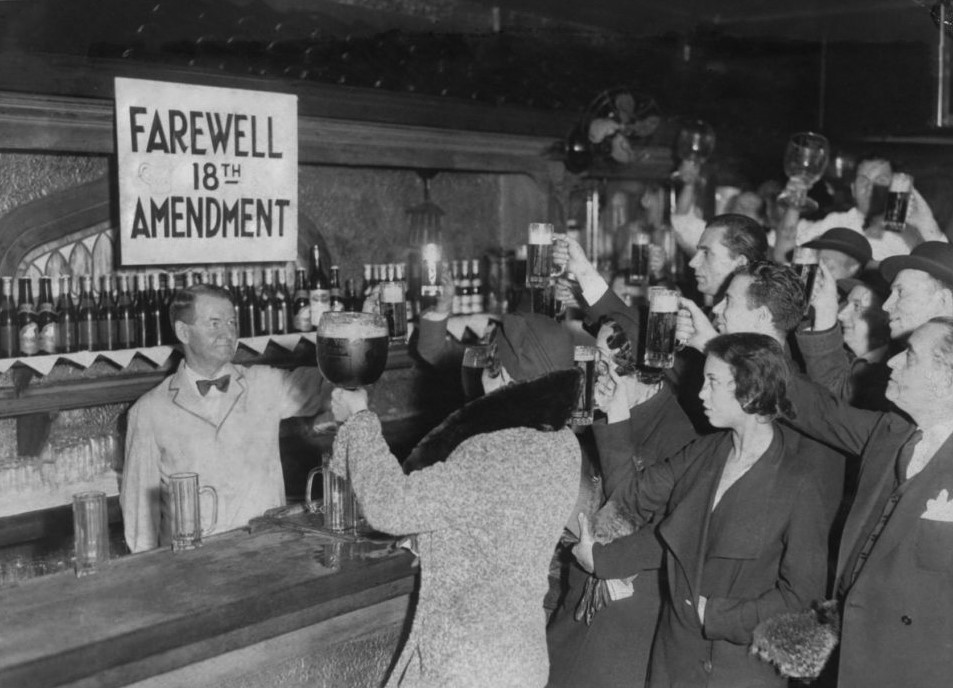
The repeal of Prohibition in 1933 was heralded not just as a victory for personal liberty but as a critical catalyst for economic recovery, arriving amidst the deepest trough of the Great Depression. Its financial impact was immediate and far-reaching, demonstrating the power of re-legalization to unlock dormant capital, stimulate job growth, and create new, legitimate revenue streams.
Rebirth of Legitimate Industries and Investment Boom
The moment the 21st Amendment was ratified, a massive legal industry sprang back to life. Former breweries and distilleries, many of which had been kept on life support producing non-alcoholic products or operating abroad, immediately began retooling and ramping up production. This required substantial investment in infrastructure, equipment, and raw materials. Entrepreneurs and established businesses vied for licenses, leading to a rapid influx of capital into the sector. Stock prices of companies poised to benefit, such as Anheuser-Busch and National Distillers, saw significant surges. This revitalization created hundreds of thousands of direct and indirect jobs, from agricultural workers to truck drivers, bottlers, and hospitality staff, providing a much-needed boost to the national economy grappling with unemployment. For investors, it represented a rare opportunity to participate in the rapid reconstruction of an entire industry.
Taxation as a Cornerstone of Recovery
The most tangible and immediate financial benefit for the government post-repeal was the reintroduction of alcohol excise taxes. Federal, state, and local governments quickly established tax regimes for the production and sale of alcoholic beverages. This new, reliable, and significant stream of revenue provided a crucial boost to public finances at a time when governments were desperately seeking funds to combat the Depression. These tax revenues were instrumental in funding New Deal programs and general government operations, demonstrating how a regulated and taxed industry could serve as a powerful engine for public finance. The economic incentive for governments to control, rather than completely prohibit, such lucrative markets became abundantly clear.

New Market Dynamics and Consumer Spending
With repeal, the consumer landscape transformed. Money previously spent in illegal speakeasies now flowed into legitimate bars, restaurants, and retail liquor stores. This shift not only generated tax revenue but also stimulated activity in the broader hospitality and retail sectors. Advertising, branding, and distribution networks, once clandestine, became open and competitive. The financial implications extended beyond direct alcohol sales, impacting related industries such as entertainment, tourism, and food services. The end of Prohibition effectively injected a massive new consumer market into the legitimate economy, leading to a re-allocation of household spending and overall economic uplift.
Lessons for Modern Financial Regulation and Business
The economic saga of Prohibition offers invaluable lessons for contemporary financial regulation, business strategy, and market dynamics. Its conclusion provides a historical blueprint for understanding the interplay between legal frameworks, market forces, and the generation of wealth.
The Unintended Consequences of Extreme Prohibition
Prohibition stands as a stark reminder of the financial perils of absolute prohibition. While well-intentioned, the attempt to ban alcohol completely did not eliminate demand; instead, it funneled that demand into an untaxed, unregulated, and often violent black market. For policymakers today, this highlights the critical importance of considering the economic implications of restrictive legislation. Whether it’s the debate around emerging technologies, digital currencies, or various consumer goods, an outright ban can inadvertently create a fertile ground for shadow economies, diverting potential tax revenue and empowering illicit actors. The lesson is clear: regulation, taxation, and control often prove more effective and financially beneficial than outright prohibition.
Balancing Public Welfare and Revenue Generation
The financial success of alcohol tax revenue post-repeal underscored the balancing act governments face between public welfare concerns and the need for revenue generation. While there are legitimate public health and safety concerns associated with alcohol, the financial history of Prohibition demonstrates that these concerns can often be addressed through robust regulation, licensing, and taxation, rather than through complete suppression. For modern finance and business, this lesson applies to industries with perceived social costs, such as gambling, tobacco, or even aspects of the gig economy. Striking the right balance allows governments to generate revenue for public services while implementing safeguards, rather than pushing economic activity underground.
Entrepreneurial Adaptation and Regulatory Arbitrage
The end of Prohibition created a monumental opportunity for businesses that were either prepared to pivot or nimble enough to capitalize on the new legal landscape. Companies that had survived by producing “near beer” or other substitutes were well-positioned to quickly re-enter the lucrative alcohol market. This historical episode highlights the importance of entrepreneurial foresight and adaptability in navigating significant regulatory shifts. For investors, it underscores the potential for massive returns when identifying industries poised for re-legalization or significant regulatory change. Conversely, it also showcases the risks of being heavily invested in sectors that are vulnerable to prohibitive legislation. Understanding regulatory arbitrage – exploiting legal differences to generate profit – remains a crucial aspect of business finance and investment strategy.
Broader Economic Implications and Enduring Legacy
Beyond the immediate financial boom, the repeal of Prohibition left an enduring legacy that continues to inform economic policy and business strategy today. It serves as a compelling case study in how large-scale societal changes impact financial ecosystems.
The Evolving Nature of the Shadow Economy
While the end of Prohibition significantly crippled organized crime’s lucrative alcohol trade, it did not eliminate the shadow economy. Instead, criminal enterprises adapted, pivoting their financial models to other illicit ventures, such as narcotics, gambling, and prostitution. This illustrates a crucial economic principle: demand, especially for goods and services with high profit margins, will often find a supply, regardless of legality. For financial regulators and law enforcement, the lesson is that combating illicit finance requires continuous adaptation and a deep understanding of market dynamics, rather than focusing solely on prohibition. The infrastructure and financial networks built during Prohibition proved surprisingly resilient, demonstrating the persistent challenge of channeling all economic activity into legitimate, taxable channels.
A Precedent for Emerging and Re-legalizing Markets
The repeal of Prohibition offers a powerful historical analogy for today’s emerging markets, particularly those transitioning from illicit or grey-area status to legal industries. The legalization of cannabis in various jurisdictions across the U.S. and globally is perhaps the most direct contemporary parallel. Discussions around cannabis legalization often echo the financial arguments made during Prohibition’s repeal: generating significant tax revenue, creating legitimate jobs, attracting investment, and redirecting capital from criminal organizations to regulated businesses. The financial challenges faced by the cannabis industry—such as banking restrictions, complex tax structures, and interstate trade barriers—also find echoes in the chaotic early days of alcohol re-legalization. This historical precedent provides valuable insights for investors assessing these new markets and for policymakers crafting appropriate regulatory and financial frameworks.

Cultural and Economic Identity
The end of Prohibition didn’t just alter financial flows; it also contributed to the shaping of America’s economic and cultural identity in the 20th century. The newfound freedom to consume alcohol legally fostered the growth of a robust hospitality industry, influencing leisure, entertainment, and social norms. From a financial perspective, this demonstrated how regulatory environments can profoundly impact consumer behavior and the development of entire economic sectors centered around lifestyle and leisure. This broad impact serves as a reminder that economic policy decisions often extend far beyond balance sheets, shaping the very fabric of society and creating long-term investment opportunities in related cultural and lifestyle industries.
The question “what year did the prohibition end” transcends a simple historical fact. It opens a window into a complex financial narrative that continues to resonate today. The economic lessons derived from this period—the perils of prohibition, the power of taxation, the resilience of market demand, and the adaptability of both legitimate and illicit enterprises—remain critically relevant for anyone engaged in personal finance, investing, business strategy, or financial policy. The 1933 repeal was not merely a legislative footnote; it was a monumental economic reawakening whose echoes continue to shape our understanding of markets, regulation, and wealth creation.
aViewFromTheCave is a participant in the Amazon Services LLC Associates Program, an affiliate advertising program designed to provide a means for sites to earn advertising fees by advertising and linking to Amazon.com. Amazon, the Amazon logo, AmazonSupply, and the AmazonSupply logo are trademarks of Amazon.com, Inc. or its affiliates. As an Amazon Associate we earn affiliate commissions from qualifying purchases.