
The year 1965 stands as a watershed moment in the history of cinematic commercialism and brand longevity. When The Sound of Music made its world premiere on March 2, 1965, at the Rivoli Theatre in New York City, it did more than just save a struggling film studio; it established a blueprint for the “heritage brand”—a product capable of maintaining cultural relevance, emotional resonance, and high market value across multiple generations. While the film is often discussed through the lens of musical theater history or cinematic technique, its true legacy lies in its masterful brand positioning. By examining the year of its release and the subsequent decades of market dominance, we can uncover how a single intellectual property transformed into a multi-billion-dollar global ecosystem.

1965: The Strategic Context of a Heritage Release
To understand why 1965 was the perfect incubator for this brand, one must look at the state of the film industry and global culture at the time. In the mid-1960s, Hollywood was experiencing a transition from the studio system’s “Golden Age” to a more fragmented, experimental era. 20th Century Fox was reeling from the financial catastrophe of Cleopatra (1963), which had nearly bankrupted the company. The release of The Sound of Music in 1965 was not just a creative endeavor; it was a high-stakes corporate recovery strategy.
The Pivot from Stage to Screen Brand
The brand did not begin in 1965. It was already a proven commodity, having debuted as a Broadway musical in 1959. However, the 1965 film adaptation represents one of the most successful “brand scaling” exercises in history. By transitioning the Rodgers and Hammerstein IP from the localized, high-price-point environment of Broadway to the global, accessible medium of cinema, 20th Century Fox effectively democratized the brand. This move allowed the “Sound of Music” identity to permeate international markets, reaching audiences who would never have the opportunity to visit a New York theater.
Timing and Emotional Market Fit
The mid-60s were marked by increasing social turbulence, including the escalation of the Vietnam War and civil rights unrest. In this climate, the 1965 release offered a “brand promise” of escapism, family cohesion, and moral clarity. From a marketing perspective, the film filled a vacuum in the family-friendly segment of the market. It capitalized on a collective desire for nostalgia and traditional values, a positioning strategy that ensured its initial box-office dominance—surpassing Gone with the Wind as the highest-grossing film of all time within a year of its release.
The Architecture of an Eternal Brand: Visual Identity and Consistency
The reason the “Sound of Music” brand remains recognizable over half a century after 1965 is due to its rigorous visual and auditory consistency. In branding, consistency is the bedrock of trust and recognition. The film’s creators established a set of “brand assets” that are still used today in marketing everything from stage revivals to interactive “sing-along” events.
The “Hill” as a Logo
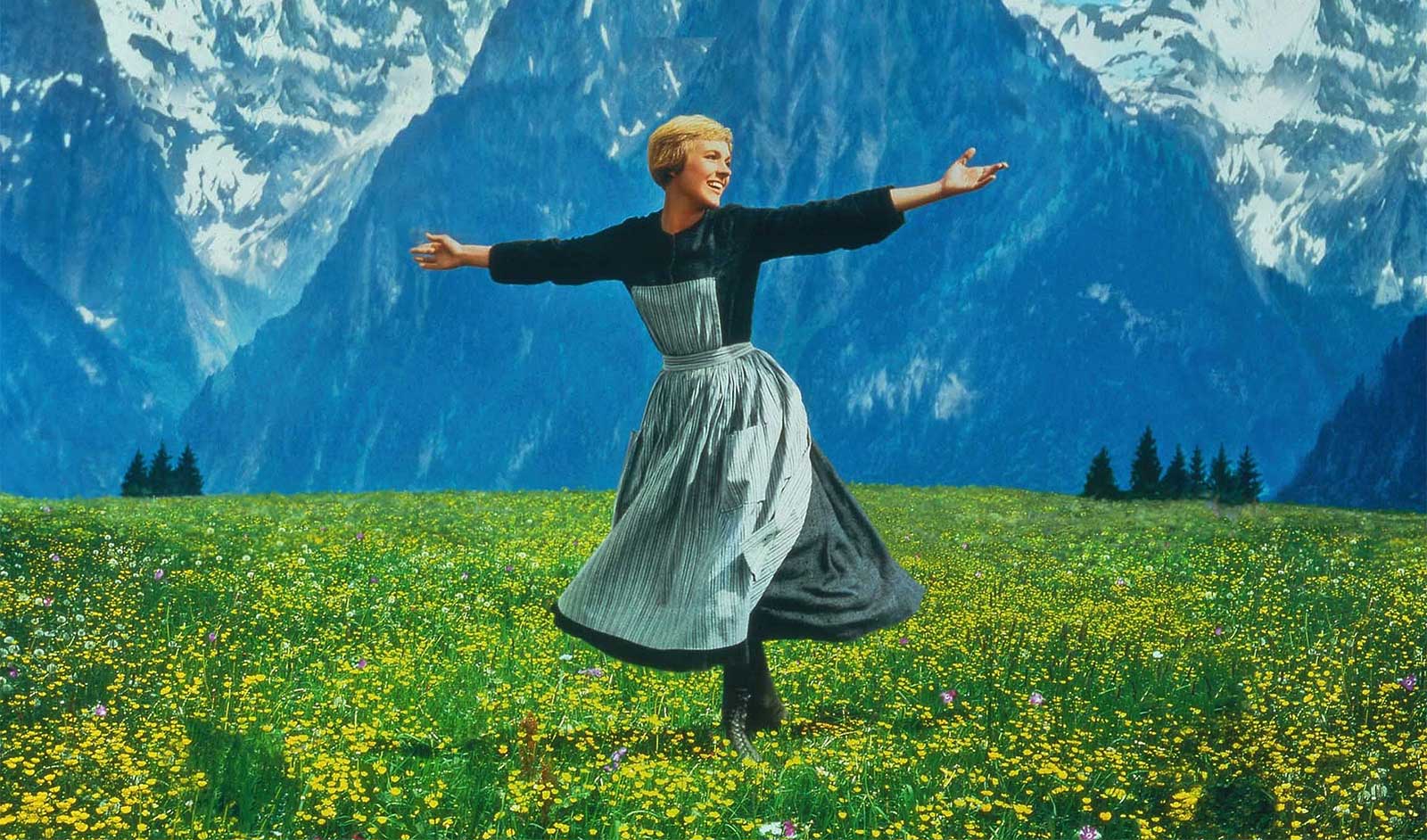
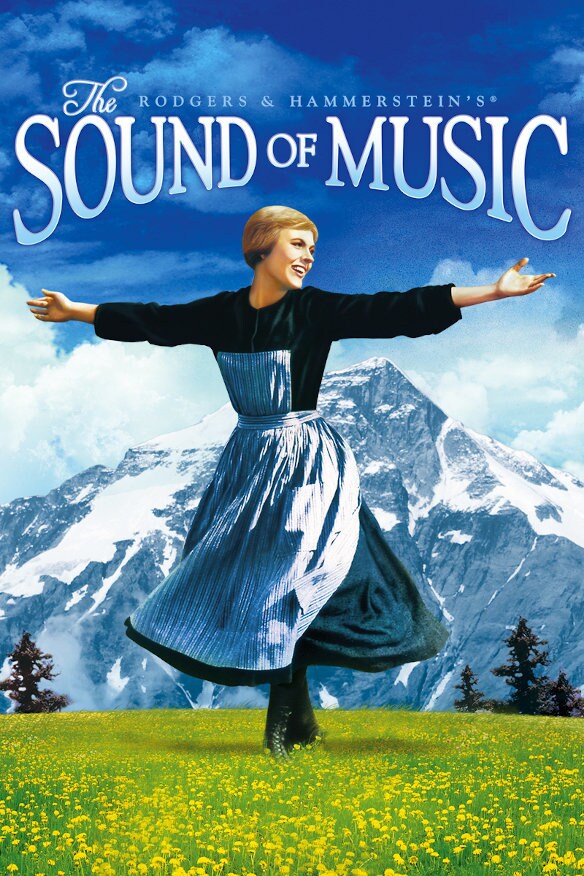
The opening shot of Maria on the Austrian hills is more than a cinematic masterpiece; it is the brand’s primary visual signifier. This imagery functions as a logo. Even without the title text, the silhouette of a woman with outstretched arms against an alpine backdrop is instantly identifiable. This visual shorthand has been leveraged for decades in promotional posters, DVD covers, and digital thumbnails, proving that a strong visual anchor can sustain a brand’s identity through various technological shifts in media consumption.
Auditory Branding and the “Sonic Logo”
The music of the film serves as a sophisticated form of auditory branding. Songs like “Do-Re-Mi” and “My Favorite Things” are not merely plot devices; they are “sonic logos” that trigger immediate emotional responses. From a brand management perspective, these songs function as touchpoints that reinforce the brand’s core values of joy, resilience, and family. The fact that these songs are frequently covered by modern artists or used in contemporary advertising (such as Ariana Grande’s “7 Rings” sampling “My Favorite Things”) demonstrates the brand’s ability to remain “top-of-mind” in the cultural zeitgeist.
Geographic Branding: The “Salzburg Effect”
One of the most unique aspects of The Sound of Music as a brand is its physical manifestation in a real-world location. The city of Salzburg, Austria, has become synonymous with the 1965 film, creating a symbiotic relationship between a corporate IP and a municipal identity. This is an early and highly successful example of “location branding.”
Tourism as Brand Experience
For decades, Salzburg has capitalized on the “Sound of Music” brand through specialized tours, museums, and themed events. For the brand owner, this creates a perpetual “brand experience” that exists outside of the screen. When fans visit the Mirabell Gardens or the Nonnberg Abbey, they are participating in a live-action extension of the brand. This physical immersion deepens consumer loyalty and ensures that the brand remains a living, breathing entity rather than a static piece of film history.
Cultural Friction and Brand Adaptation
Interestingly, the brand faced significant resistance in its “home” market. For years, the film was largely ignored or criticized in Austria and Germany for its “Hollywoodized” portrayal of history. However, the brand’s management strategy focused on global rather than local sentiment. By prioritizing the brand’s perception in the United States, United Kingdom, and Japan, the IP holders were able to generate massive international revenue, eventually forcing the local Austrian market to acknowledge and integrate the brand into its own tourism strategy. This highlights a key lesson in brand strategy: global dominance can sometimes be used to retroactively conquer a resistant local niche.
Brand Extension and Modernization: Keeping the IP Relevant
Since its 1965 debut, the brand has avoided the trap of becoming a “relic.” This is due to a deliberate strategy of brand extension and periodic modernization. Heritage brands often fail when they refuse to adapt to new formats; The Sound of Music has done the opposite.
The Sing-Along Phenomenon
In the late 1990s and early 2000s, the brand was revitalized through the “Sing-a-Long-a Sound of Music” events. This transformed the viewing experience from a passive one to a participatory “fan activation.” By encouraging audiences to dress up and interact with the screen, the brand managers successfully tapped into the community-building aspects of modern marketing. This move expanded the brand’s reach to younger, kitsch-loving demographics while maintaining the loyalty of the original 1965 audience.
The Live Television Event
In 2013, NBC aired The Sound of Music Live! starring Carrie Underwood. While purists debated the creative merits compared to the 1965 original, from a brand perspective, it was a masterstroke. It proved that the IP could draw a massive contemporary audience (18.6 million viewers) in an era of fragmented streaming. It introduced the story to a new generation of digital natives and drove a significant spike in sales of the original 1965 film and its soundtrack. This demonstrated the brand’s “elasticity”—its ability to be stretched into new formats without breaking its core identity.
Strategic Lessons for Modern Brand Managers
What can modern businesses learn from a film that came out in 1965? The longevity of The Sound of Music offers several critical insights into sustainable brand building.
1. Identify Universal Emotional Triggers
The brand’s success is rooted in themes that do not age: the quest for belonging, the power of music, and the triumph of the human spirit over adversity. In marketing, technical features change, but human psychology remains constant. Successful brands find a way to anchor their product in these universal truths.
2. Multi-Generational Targeting
A heritage brand must appeal to multiple age groups simultaneously. The Sound of Music achieves this by having characters of various ages (the children, the teenagers, the adults). This allows the brand to “grow” with its audience. The child who watched it in a theater in 1965 became the parent who bought the VHS in the 1980s, who became the grandparent who streams it with their grandchildren today.
3. Rigorous Quality Control
Despite numerous adaptations, the core elements of the 1965 film—the arrangements, the costumes, and the narrative structure—remain protected. Brand dilution occurs when an IP is licensed too loosely or when the quality of extensions drops significantly. By maintaining high production standards for every “official” revival or anniversary edition, the brand’s prestige remains intact.
Conclusion: The Legacy of 1965
When asking what year The Sound of Music came out, the answer—1965—is just the beginning of the story. It was the year a movie became a movement, and a story became a permanent fixture of the global marketplace. Through savvy geographic branding, consistent visual and auditory identity, and a willingness to embrace new media formats, the brand has transcended its origins as a mid-century musical. In the world of brand strategy, The Sound of Music serves as the ultimate case study in how to build an identity that is not just successful for a season, but iconic for a lifetime. The hills are still alive, not just with music, but with a brand equity that continues to resonate in the digital age.
aViewFromTheCave is a participant in the Amazon Services LLC Associates Program, an affiliate advertising program designed to provide a means for sites to earn advertising fees by advertising and linking to Amazon.com. Amazon, the Amazon logo, AmazonSupply, and the AmazonSupply logo are trademarks of Amazon.com, Inc. or its affiliates. As an Amazon Associate we earn affiliate commissions from qualifying purchases.