
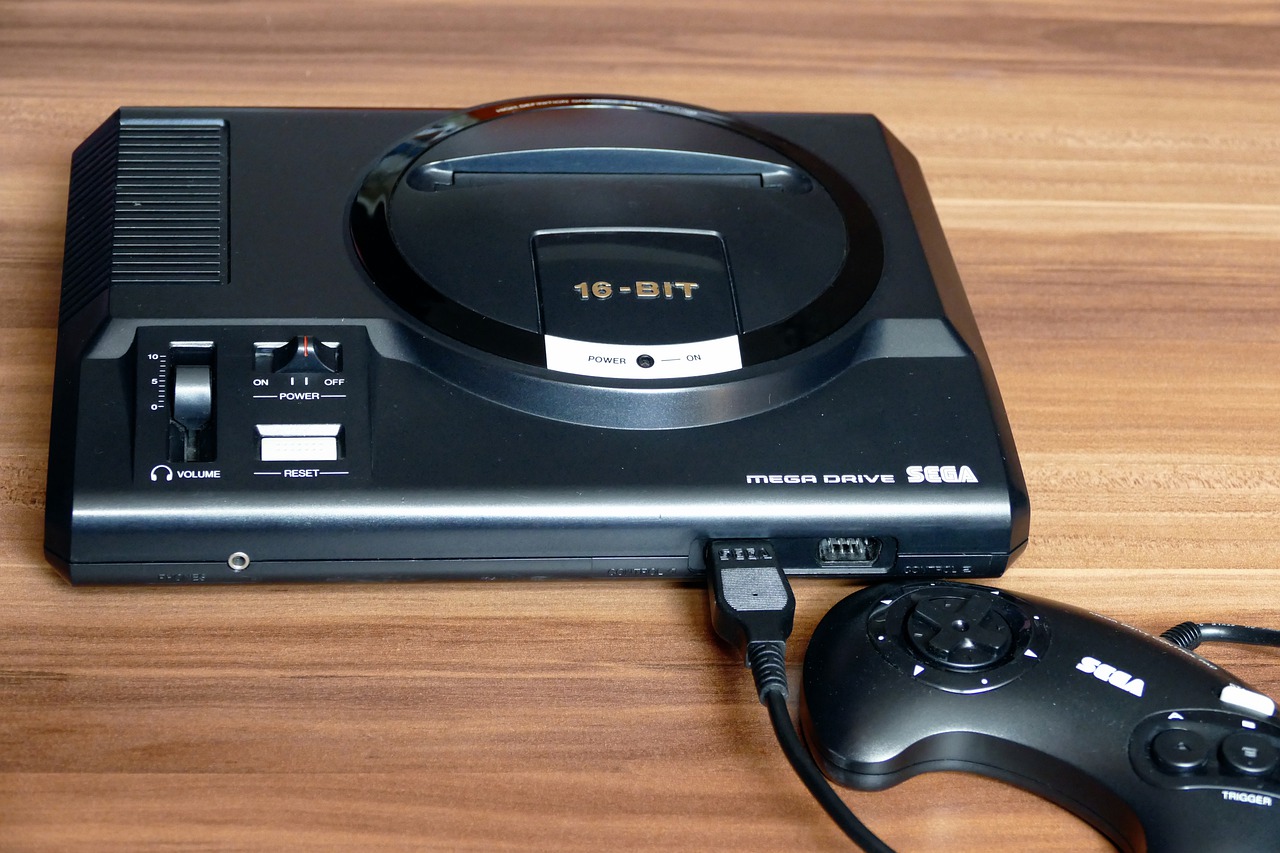
The Sega Genesis, a name synonymous with a golden era of video gaming, officially launched in North America on August 14, 1989. Known as the Mega Drive in most other regions, its release marked a pivotal moment in the history of technology, particularly within the nascent home console market. This 16-bit console wasn’t just another gaming system; it represented a significant leap forward in processing power, graphics, and sound design, setting the stage for one of the most intense and technologically driven console wars in history. Its arrival ushered in an age where gaming experiences became more immersive, intricate, and technologically sophisticated, permanently altering the landscape of digital entertainment.

The Genesis Unveiled: A New Era of Gaming Technology
The introduction of the Sega Genesis (or Mega Drive) was a strategic move by Sega to challenge Nintendo’s dominance, which had been firmly established by the success of the 8-bit Nintendo Entertainment System (NES). The Genesis arrived with superior hardware, aiming to capture an older, more discerning audience with its arcade-quality graphics and faster gameplay.
The North American Debut and Global Rollout
While North America experienced the Genesis in August 1989, the console had actually debuted earlier in Japan as the Mega Drive on October 29, 1988. This staggered release allowed Sega to refine its marketing strategies and software lineup. Europe and other PAL regions would follow suit much later, in November 1990, also under the Mega Drive moniker. This global rollout, despite its varied timing, showcased Sega’s ambition to become a worldwide leader in interactive entertainment, leveraging its technological edge to break into diverse markets. The decision to brand it as “Genesis” in North America was due to a trademark conflict, but the name quickly became iconic, symbolizing the birth of a new generation of gaming technology.
Initial Hardware Specifications and Market Context
Upon its release, the Sega Genesis was a marvel of consumer-grade technology. Its core component, a Motorola 68000 CPU, was a far cry from the MOS Technology 6502-based processors found in its 8-bit predecessors. This 16-bit architecture allowed for significantly faster processing and more complex computations, directly impacting game design possibilities. The console also featured a Zilog Z80 coprocessor, primarily dedicated to sound, freeing up the main CPU for graphics and gameplay logic. This dual-processor setup was an early example of distributed computing in consumer electronics, optimizing performance by delegating specific tasks.
The market context was crucial for the Genesis’s initial reception. The NES was still incredibly popular, but its aging 8-bit technology was beginning to show limitations. Consumers, especially teenagers and young adults, were hungry for more advanced experiences. Sega recognized this gap and positioned the Genesis as the “next generation” console, directly appealing to those who had outgrown the simpler games of the 8-bit era. This strategic timing, coupled with its robust hardware, laid the foundation for its eventual success.
A Leap from 8-bit to 16-bit Computing
The transition from 8-bit to 16-bit computing was more than just a doubling of bit width; it represented a fundamental shift in what home consoles could achieve. 16-bit processors could handle larger amounts of data at once, leading to more detailed graphics, larger color palettes, and more sprites on screen without flicker. This meant developers could create games with richer environments, more fluid animations, and a greater sense of depth.
Sound technology also saw a dramatic improvement. The Genesis incorporated a Yamaha YM2612 FM synthesis chip, capable of producing six channels of high-quality sound, alongside a Texas Instruments SN76489 chip for PSG (programmable sound generator) effects. This combination allowed for sophisticated musical scores and complex sound effects, moving beyond the simple bleeps and bloops of earlier consoles into an auditory experience that could rival arcade machines. The Genesis wasn’t just an upgrade; it was a redefinition of what a home gaming system could be, leveraging advancements in microprocessor and audio technology to deliver an unparalleled experience for its time.
Engineering Excellence: The Genesis’s Core Technological Advantages
The heart of the Sega Genesis’s appeal lay in its sophisticated engineering. Every component, from its central processing unit to its graphics and sound capabilities, was chosen to deliver a superior gaming experience, setting it apart from its contemporaries.
The Motorola 68000: Powering a Revolution
The decision to use the Motorola 68000 CPU was arguably one of Sega’s most brilliant engineering choices. This 16/32-bit microprocessor (it had a 16-bit data bus but 32-bit internal registers) was commonly found in high-end workstations and arcade machines of the time, such as the Apple Macintosh and the Amiga. Its inclusion in a home console was revolutionary, providing the Genesis with raw processing power that far exceeded anything seen in previous home systems.
This processing muscle allowed for significantly faster game logic, more complex AI, and the handling of more on-screen objects simultaneously. It was the backbone of what Sega would later famously market as “Blast Processing,” a term that, while often exaggerated for marketing purposes, hinted at the console’s genuine speed advantage. The 68000 enabled developers to craft games with larger levels, more intricate enemy patterns, and faster action, establishing a new benchmark for performance in the home gaming sector.
Graphics and Sound: Pushing the Limits of Home Entertainment
Beyond its CPU, the Genesis excelled in its audiovisual capabilities. Its custom Video Display Processor (VDP) could generate a palette of 512 colors, displaying 64 simultaneously—a significant improvement over the NES’s limited color range. This allowed for more vibrant and detailed graphics, bringing arcade-quality visuals into living rooms. Sprites could be larger, more numerous, and animated with greater fluidity, reducing the flicker and slowdown often seen on 8-bit systems. Games like Street Fighter II: Special Champion Edition and Mortal Kombat demonstrated the Genesis’s ability to render complex character models and detailed backgrounds, captivating players with their visual fidelity.
The sound system, as mentioned, was equally impressive. The Yamaha YM2612 FM synthesis chip provided a rich, dynamic soundscape that could produce complex musical arrangements and realistic sound effects. Many Genesis soundtracks are celebrated to this day for their unique FM synth character, offering a distinct auditory signature. This advanced sound capability was crucial for immersion, making games feel more alive and engaging, and contributed significantly to the overall technological prowess of the console.
Speed and Accessibility: A Developer’s Perspective
From a developer’s standpoint, the Genesis offered a compelling platform. Its architecture, especially the robust 68000 processor, made it relatively easier to port arcade games, which often utilized similar processor families. This meant that high-quality, proven arcade experiences could be brought home with fewer compromises, a huge draw for players. The speed of the hardware also opened up new creative avenues for game designers, allowing them to experiment with fast-paced action, complex scrolling techniques, and larger game worlds.
The Z80 coprocessor for sound was also a boon, as it meant sound programming could be offloaded, preventing it from consuming precious cycles from the main CPU, ensuring smooth gameplay even during intense action sequences. This separation of duties was an intelligent design choice that optimized performance and simplified development, making the Genesis an accessible and powerful tool for creating groundbreaking video games.
The “Blast Processing” Era: Marketing Technical Superiority
Sega’s marketing strategy for the Genesis was as aggressive and innovative as its hardware. Recognizing the need to differentiate itself from the entrenched competition, Sega focused on highlighting the console’s technological superiority, coining catchphrases that resonated with a tech-savvy audience.
Challenging the Incumbent: Nintendo’s Technological Counterpart
The primary target of Sega’s marketing efforts was Nintendo, specifically their Super Nintendo Entertainment System (SNES), which launched in North America in 1991. While the SNES also utilized a 16-bit architecture, the Genesis had a head start and a different approach to hardware design. Sega’s “Blast Processing” campaign aimed directly at this difference, implying that the Genesis’s CPU was faster and more efficient, particularly in handling high-speed graphics and quick action.
This wasn’t just marketing hype; it was rooted in the Genesis’s architectural strengths. Its faster CPU clock speed (7.67 MHz compared to the SNES’s 3.58 MHz) gave it an edge in raw processing power, making it adept at rendering fast-moving objects and intricate animations, often without the slowdown that could sometimes plague SNES titles. Sega positioned the Genesis as the console for “cooler,” more mature gamers who craved speed and intensity, creating a distinct identity that appealed to an audience looking for an alternative to Nintendo’s family-friendly image.
Sonic the Hedgehog: A Showcase of Speed and Innovation
No discussion of the Genesis’s technological marketing would be complete without mentioning Sonic the Hedgehog. Released in 1991, Sonic was not just a game; it was a technological demonstration of the Genesis’s capabilities. Its titular character could race through levels at breathtaking speeds, thanks to the Genesis’s rapid sprite handling and smooth scrolling capabilities. The game’s vibrant graphics, intricate level design, and fast-paced gameplay were a direct result of the console’s advanced hardware.
Sonic the Hedgehog became the ultimate embodiment of “Blast Processing.” It showcased the Genesis’s ability to render large, detailed backgrounds that scrolled seamlessly at high speeds, providing an unparalleled sense of velocity. This game proved that the Genesis could deliver experiences that were not just better but fundamentally different from what its competitors offered, cementing its image as the go-to console for speed and technological innovation. Sonic didn’t just sell consoles; it defined the Genesis’s technological identity for an entire generation.
The Birth of a New Console War Paradigm
The competition between Sega Genesis and SNES wasn’t just a battle for market share; it was a technological arms race that drove innovation in the gaming industry. Both companies pushed the boundaries of what was possible with home hardware, resulting in a rich era of diverse and groundbreaking games. Sega’s aggressive marketing, focused on raw power and speed, forced Nintendo to continuously highlight its own technological advantages, such as its superior color palette and Mode 7 graphics capabilities for pseudo-3D effects.
This intense rivalry led to rapid advancements in game development techniques, hardware optimization, and peripheral technologies. It taught the industry valuable lessons about competitive differentiation through technological features and how to communicate those advantages to consumers. The Genesis’s role in this paradigm shift was undeniable, proving that a technically superior product, backed by clever marketing and compelling software, could challenge and even surpass an established market leader.
Expanding Horizons: Sega’s Add-on Technologies
Sega’s ambition extended beyond the base Genesis console. In a bid to continuously innovate and keep its hardware competitive, Sega introduced a series of add-on technologies that aimed to upgrade the Genesis’s capabilities, some more successful than others.
The Sega CD: Pioneering Optical Disc Media
The Sega CD (Mega-CD outside North America), released in 1992, was Sega’s ambitious attempt to introduce optical disc technology to the home console market. This add-on attached to the side of the Genesis, providing a CD-ROM drive and additional processing power, including a faster 68000 CPU and a dedicated graphics chip for scaling and rotation. Its primary advantage was the massive storage capacity of CD-ROMs compared to cartridges, allowing for full-motion video (FMV), larger game worlds, and CD-quality audio.
The Sega CD represented a significant technological leap. It brought multimedia capabilities to home gaming, experimenting with interactive movies and cinematic experiences. While the execution of many FMV games was criticized, the Sega CD was a pioneer in demonstrating the potential of optical media for games, paving the way for future disc-based consoles like the PlayStation. It showcased Sega’s forward-thinking approach to technology, even if the market wasn’t entirely ready for it.
The 32X: A Bridge to the Next Generation
The Sega 32X, launched in late 1994, was another add-on designed to extend the life of the Genesis by boosting its processing power to near 32-bit capabilities. It plugged into the Genesis’s cartridge slot and added two Hitachi SH-2 32-bit RISC processors, alongside a new graphics processor capable of generating polygonal 3D graphics. The goal was to provide an affordable upgrade path for Genesis owners to experience next-generation graphics without buying a completely new console, especially as the Sega Saturn was on the horizon.
Technologically, the 32X was impressive for an add-on, offering a glimpse into true 3D gaming on existing hardware. It significantly enhanced the Genesis’s ability to render complex polygons and process more sophisticated game logic. However, its late release, competition from the upcoming Saturn and PlayStation, and limited software support ultimately led to its commercial failure. Despite this, it remains an interesting footnote in gaming technology, demonstrating Sega’s continuous drive to push hardware boundaries and innovate with modular system upgrades.
The Genesis as a Platform for Innovation
Even beyond the major add-ons, the Genesis served as a platform for various other technological experiments. The Sega Channel, for instance, was an early precursor to modern digital distribution platforms, allowing subscribers to download games via cable television. This initiative was years ahead of its time, demonstrating Sega’s willingness to explore new ways of delivering content to consumers using existing infrastructure. Similarly, early modem accessories explored online multiplayer and communication, hinting at the future of connected gaming. The Genesis was not just a console; it was a modular, adaptable platform that Sega continuously sought to enhance and expand through innovative technological solutions.
The Genesis’s Lasting Technological Footprint
While the Sega Genesis eventually faded from the market, its technological contributions and enduring legacy continue to influence the gaming industry. It was a console that not only defined an era but also laid groundwork for future advancements.
Influence on Future Console Design and Architecture
The design choices made for the Genesis had a ripple effect on subsequent console generations. Its emphasis on a powerful CPU, combined with specialized graphics and sound processors, became a standard architecture. The shift to 16-bit processing became the new minimum expectation, pushing all competitors to innovate. Sega’s aggressive focus on speed and “arcade-like” experiences also shaped expectations for game performance and fidelity.
Furthermore, the Genesis’s open architecture, which allowed for various add-ons and peripherals, showed the potential for modular expansion, influencing concepts like console redesigns (e.g., PSOne, Xbox 360 S) and, to some extent, even modern downloadable content and expansion packs that extend a game’s life. The success of Sonic the Hedgehog also solidified the idea that a console needed a killer app—a game that uniquely showcased its technological capabilities—to truly differentiate itself.
The Rise of Retro Gaming and Emulation Technology
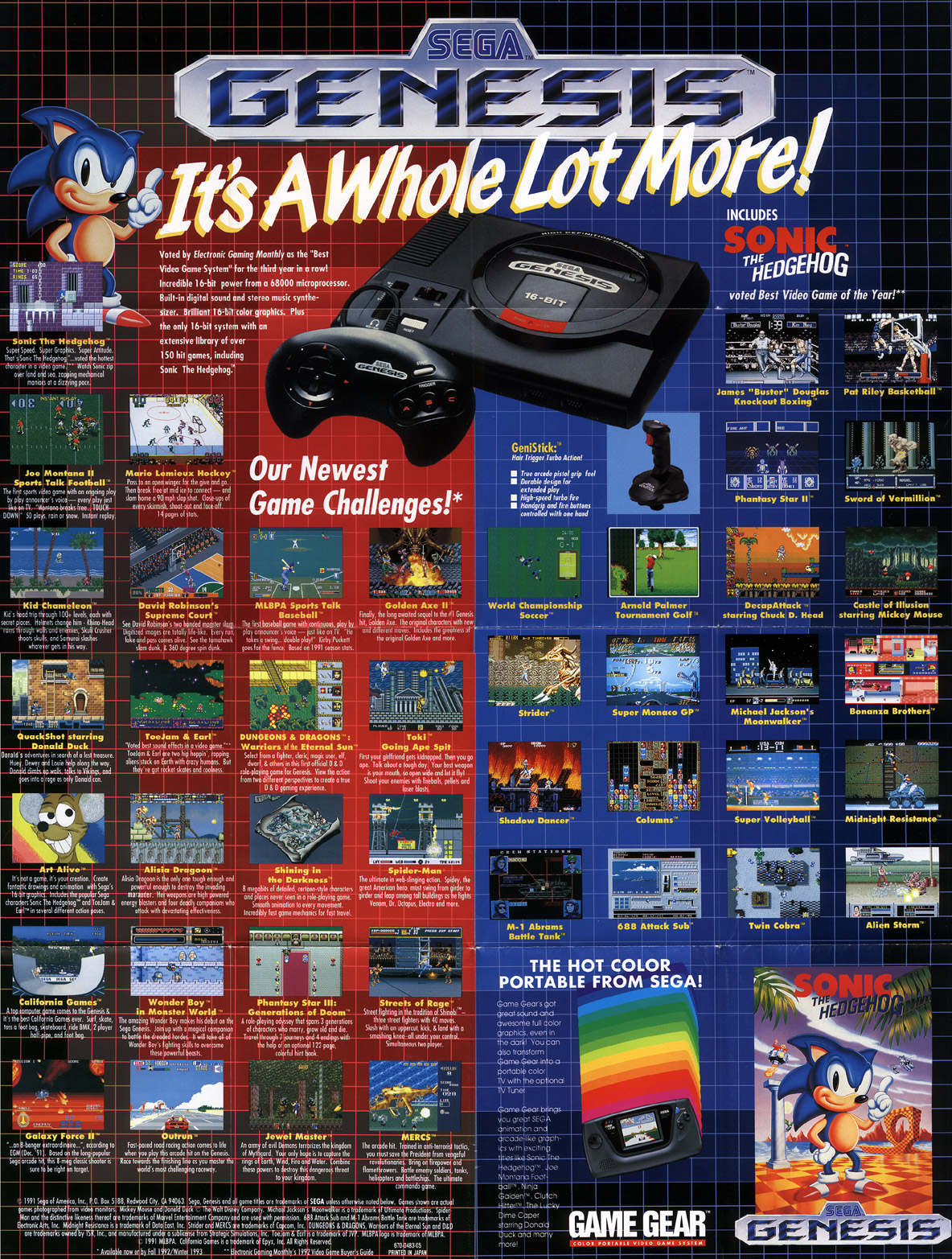
Today, the Sega Genesis is a beloved icon in the retro gaming community. Its rich library of games, from fast-paced action to deep RPGs, is celebrated by enthusiasts. This has led to the flourishing of emulation technology, where software replicates the Genesis’s hardware, allowing its games to be played on modern computers and devices. Emulators are complex pieces of software engineering that meticulously simulate every aspect of the original console’s chips and circuits, a testament to the Genesis’s well-understood and documented architecture.
The demand for retro gaming has also spurred hardware manufacturers to release “mini” versions of classic consoles, including the Sega Genesis Mini. These devices use modern System-on-a-Chip (SoC) technology to emulate the original hardware, offering a perfect blend of nostalgia and contemporary convenience. This resurgence highlights the timeless appeal of the Genesis’s technology and the games it enabled.
A Testament to Enduring Hardware Design Principles
The Sega Genesis stands as a testament to effective hardware design principles. Its chosen components, particularly the robust Motorola 68000 CPU and the Yamaha FM sound chip, provided a strong foundation for a diverse range of games. The careful balance between raw power and cost-effectiveness made it a commercially viable and technologically competitive product.
Its legacy is not just in the games it hosted but in the blueprint it provided for what a successful home console could be: a powerful, engaging, and innovative piece of technology capable of delivering truly next-generation entertainment. The year 1989 didn’t just mark the launch of a console; it marked the beginning of an era of unprecedented technological advancement and fierce competition that would shape the future of video gaming for decades to come.
aViewFromTheCave is a participant in the Amazon Services LLC Associates Program, an affiliate advertising program designed to provide a means for sites to earn advertising fees by advertising and linking to Amazon.com. Amazon, the Amazon logo, AmazonSupply, and the AmazonSupply logo are trademarks of Amazon.com, Inc. or its affiliates. As an Amazon Associate we earn affiliate commissions from qualifying purchases.