
In the annals of Wall Street history, few events carry as much weight as the day Microsoft Corporation decided to offer its shares to the public. For investors, financial analysts, and business historians, the transition of Microsoft from a privately held partnership to a publicly traded powerhouse is a masterclass in corporate finance, timing, and long-term value creation. Microsoft officially went public on March 13, 1986. While the mid-1980s were characterized by a burgeoning interest in personal computing, the MSFT Initial Public Offering (IPO) was more than just a tech event; it was a watershed moment that redefined the wealth-building potential of the stock market.
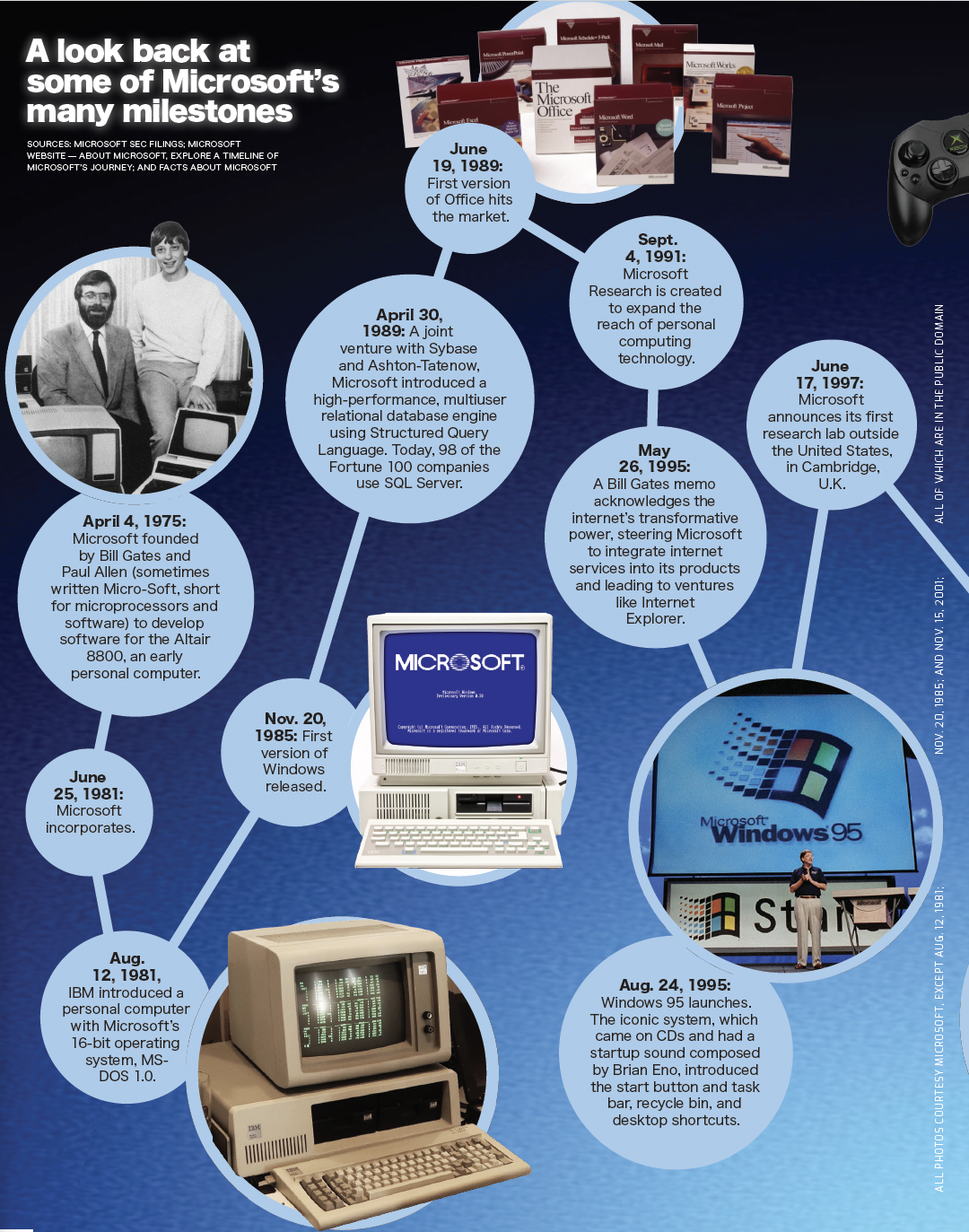
Understanding the context of 1986 requires looking at a financial landscape where “Big Tech” did not yet exist as a dominant market sector. At the time, the market was led by industrial giants, oil companies, and traditional retailers. By examining the mechanics of Microsoft’s entry into the public eye, we can glean essential lessons about business finance, the importance of liquidity, and the sheer power of compound interest.
The Historical Context of the 1986 IPO
The decision to take Microsoft public was not one that Bill Gates made lightly. Throughout the early 1980s, Microsoft was already an incredibly profitable venture. Unlike many modern tech startups that rush to an IPO to solve cash flow issues or to satisfy venture capital demands, Microsoft was flush with cash. In fact, Bill Gates was famously cautious about the distractions and regulatory burdens that came with being a public company.
The Road to March 13
By 1985, however, the pressure began to mount. Microsoft had instituted a generous employee stock option program to attract top-tier talent. Under federal law at the time, if a company had more than 500 shareholders, it was required to register with the Securities and Exchange Commission (SEC) and report its finances as if it were public. Microsoft was rapidly approaching that threshold. Gates and his co-founder Paul Allen, along with then-Vice President Steve Ballmer, realized that if they had to disclose their financial secrets anyway, they might as well reap the benefits of a public market valuation and provide their employees with a liquid market for their shares.
The lead underwriters for the offering were Goldman Sachs and Alex. Brown & Sons. The “roadshow”—the process where executives pitch the company to institutional investors—was a resounding success. Investors were captivated by Microsoft’s dominant position in the operating system market through MS-DOS and its promising relationship with IBM.
The Day of the Offering
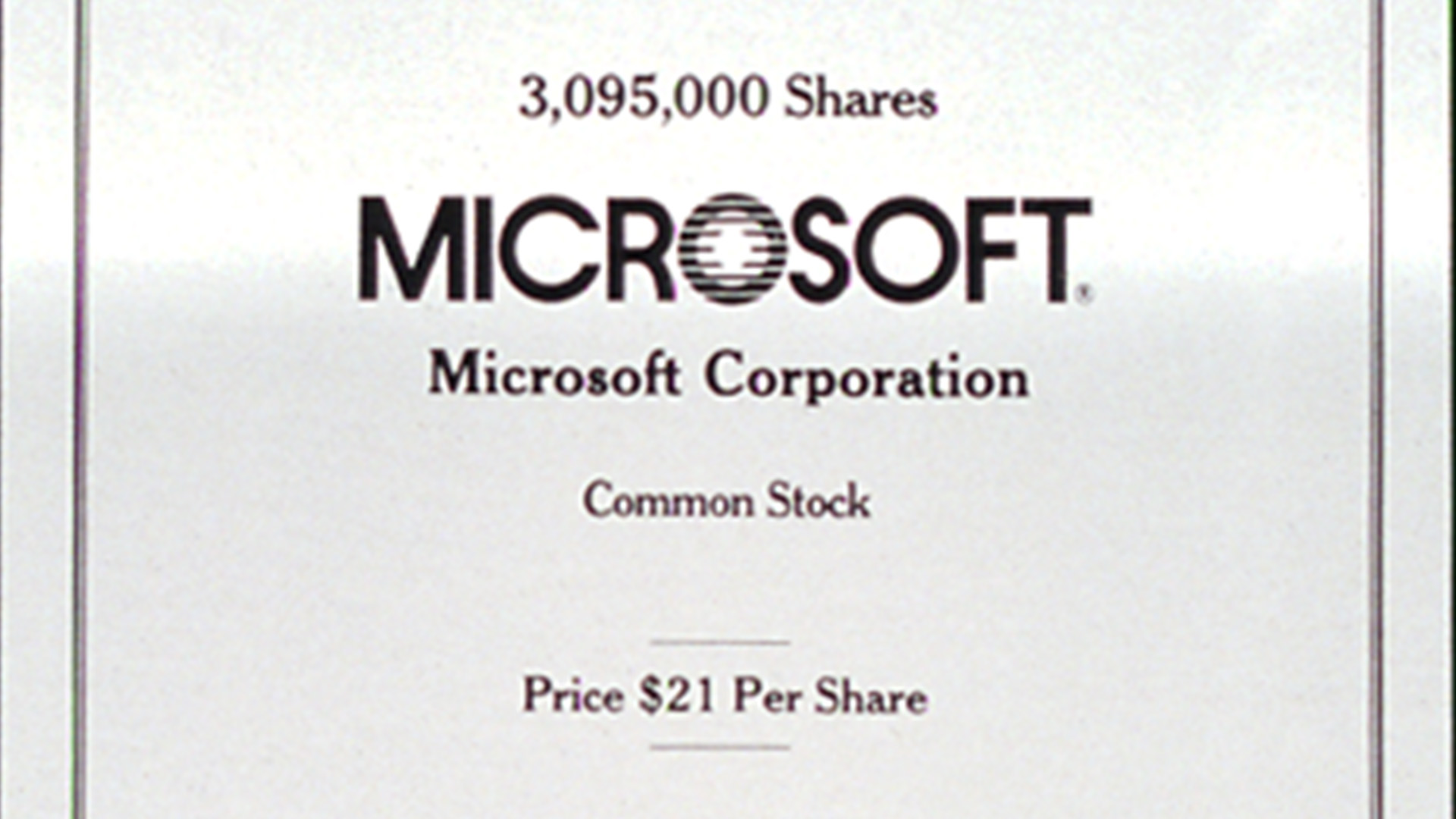
On the morning of March 13, 1986, Microsoft stock (ticker: MSFT) was priced at $21 per share. Demand was so high that the price quickly climbed. By the end of the first day of trading, the stock had reached $27.75, and the company had raised approximately $61 million. At the time, the total market capitalization of Microsoft was roughly $519 million. To put that into perspective, Microsoft is now valued in the trillions, representing one of the greatest periods of capital appreciation in human history.
The Financial Mechanics: Shares, Prices, and Splits
For a personal finance enthusiast or an investor looking at historical returns, the “raw” IPO price of $21 is deceptive. To understand the true financial impact of the Microsoft IPO, one must look at the history of its stock splits. A stock split is a corporate action in which a company divides its existing shares into multiple shares to boost the liquidity of the shares. Although the number of shares outstanding increases by a specific multiple, the total dollar value of the shares remains the same compared to pre-split amounts, because the split does not add any real value.
The Power of Nine Stock Splits
Between 1987 and 2003, Microsoft executed nine stock splits. These were designed to keep the share price at a level that was accessible to individual retail investors rather than letting it climb into the thousands of dollars per share, which was the standard practice before the era of fractional shares.
The split history is as follows:
-
September 1987: 2-for-1
-
April 1990: 2-for-1
-
June 1991: 3-for-2
-
June 1992: 3-for-2
-
May 1994: 2-for-1
-
December 1996: 2-for-1
-
February 1998: 2-for-1
-
March 1999: 2-for-1
-
February 2003: 2-for-1
Calculating the ROI
If an investor had purchased 100 shares at the IPO price of $21 ($2,100 investment) and held those shares through every split, they would today own 28,800 shares. At contemporary market prices, that initial $2,100 investment would be worth tens of millions of dollars. This does not even account for the dividends that Microsoft began paying in 2003, which have provided a consistent stream of passive income to long-term shareholders.
This mathematical reality highlights a core principle of business finance: the most significant wealth is often generated not by “timing the market,” but by “time in the market.” Microsoft’s ability to maintain growth over decades allowed the geometric progression of stock splits to turn modest savings into generational wealth.
The “Microsoft Millionaires” and the Wealth Effect
One of the most unique aspects of the Microsoft IPO was its impact on the company’s internal culture and the local economy of the Pacific Northwest. Because Microsoft had used stock options as a primary recruitment tool, a massive percentage of its workforce held significant equity by the time the company went public in 1986.
Creating a Culture of Ownership
The IPO effectively turned hundreds, and eventually thousands, of early employees into “Microsoft Millionaires.” This was a relatively new phenomenon in the 1980s. It created a culture of extreme loyalty and high performance, as every developer and manager knew that their personal net worth was directly tied to the company’s stock performance.
From a business strategy perspective, this was a masterstroke. It shifted the cost of labor from immediate cash outlays to future equity, allowing Microsoft to retain its cash reserves for research, development, and acquisitions. This model has since been emulated by almost every successful Silicon Valley startup, but Microsoft was one of the first to demonstrate its efficacy on such a grand scale.
The Broader Economic Impact
The wealth generated by the MSFT IPO didn’t just stay in brokerage accounts. It fueled a massive wave of reinvestment. Many early Microsoft employees went on to become “angel investors” themselves, funding the next generation of software and biotech companies. Others founded their own ventures or established some of the world’s largest philanthropic organizations. This “wealth effect” served as a catalyst for the entire technology ecosystem, proving that a successful IPO could serve as an engine for broader economic growth.
Lessons for Modern Investors: Identifying Fundamental Value
Looking back at 1986, it is easy to say that buying Microsoft was an obvious choice. However, at the time, the market was volatile, and many skeptics believed that the software industry was a fad or that IBM would eventually crush its smaller competitors. For the modern investor, the Microsoft IPO offers several critical takeaways regarding financial analysis and portfolio management.
Profitability Matters
Unlike many “Unicorn” companies of the 2020s that go public while losing billions of dollars, Microsoft was highly profitable in 1986. It had a clear business model, a dominant market share in a critical niche (operating systems), and high margins. Investors who prioritize “Business Finance 101″—looking for companies with real earnings and sustainable competitive advantages—would have found Microsoft to be a stellar candidate even then.
Navigating the “Lost Decade”
It is also important for investors to realize that the journey wasn’t always upward. After the dot-com bubble burst in 2000, Microsoft entered what many call a “lost decade.” From 2000 to 2013, the stock price remained largely stagnant as the company transitioned through different leadership phases and faced antitrust challenges.
For an investor, this period tested their conviction. Those who focused on the underlying financial health of the company—its massive cash flows and growing server business—stayed the course. This illustrates that even the best investments require patience and the ability to weather periods of underperformance.
The Evolution into a Dividend-Paying Blue Chip
A final important chapter in Microsoft’s financial journey began in the early 2000s. As the company matured from a high-growth “tech darling” into a foundational pillar of the global economy, its financial strategy shifted. In 2003, Microsoft began paying a regular quarterly dividend.
Transitioning Strategy
This shift was significant for the “Money” niche because it signaled that Microsoft had moved into a phase of capital return. In 2004, the company even issued a one-time special dividend of $3.00 per share, distributing a staggering $32 billion to shareholders in a single day.
Today, Microsoft is a staple in dividend growth portfolios. For someone focused on retirement planning or building a “side hustle” through dividend investing, MSFT represents the ideal blend of capital appreciation and income. It remains one of the few companies with a AAA credit rating from Standard & Poor’s—higher than even the United States government at various points in history.

Conclusion of the IPO Legacy
The year 1986 didn’t just mark the arrival of a new ticker symbol on the NASDAQ; it marked the beginning of a new era in business finance. Microsoft’s IPO showed the world that software was a scalable, high-margin business that could generate unprecedented levels of wealth for those willing to take a long-term view. From the initial $21 price tag to its current status as a global titan, the story of Microsoft’s public offering remains the gold standard for how a company can use the capital markets to change the world while enriching its shareholders.
aViewFromTheCave is a participant in the Amazon Services LLC Associates Program, an affiliate advertising program designed to provide a means for sites to earn advertising fees by advertising and linking to Amazon.com. Amazon, the Amazon logo, AmazonSupply, and the AmazonSupply logo are trademarks of Amazon.com, Inc. or its affiliates. As an Amazon Associate we earn affiliate commissions from qualifying purchases.