
To understand the current state of global technology, one must look back to April 4, 1975. This was the year Microsoft began, originally established in Albuquerque, New Mexico. While today the company is a multi-trillion-dollar titan headquartered in Redmond, Washington, its origins were rooted in a singular, audacious technical challenge: creating a programming language for the world’s first commercially successful microcomputer. Founded by childhood friends Bill Gates and Paul Allen, Microsoft—initially hyphenated as “Micro-Soft”—was born out of a realization that the hardware revolution of the 1970s would be useless without sophisticated, scalable software.
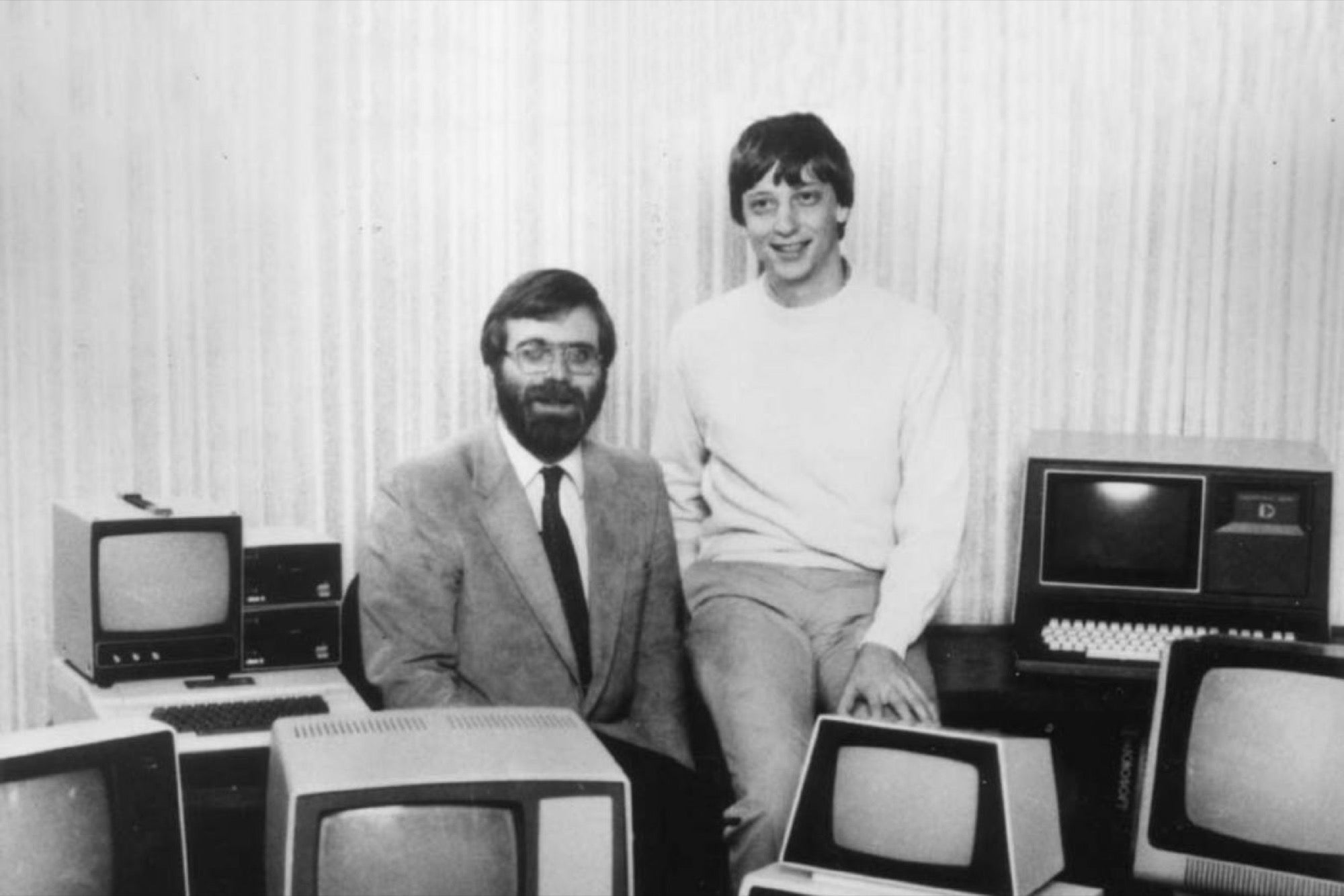
The mid-1970s represented a period of transition in the computing world. Massive mainframes still dominated corporate landscapes, but the “hobbyist” era of personal computing was just beginning to flicker into existence. When the MITS Altair 8800 appeared on the cover of Popular Electronics in January 1975, Gates and Allen recognized that the era of accessible computing had arrived. However, the Altair lacked an operating system and a high-level programming language. Microsoft’s first major technological contribution was the development of Altair BASIC, a version of the BASIC (Beginner’s All-purpose Symbolic Instruction Code) programming language adapted for the Intel 8080 microprocessor. This achievement set the stage for a company that would eventually define the user experience for billions of people.
April 4, 1975: The Birth of a Technological Revolution
The formal founding of Microsoft on April 4, 1975, marked a shift in the hierarchy of the tech industry. Before this era, software was often bundled for free with hardware or written specifically for one-of-a-kind machines. Gates and Allen envisioned a different model where software was a standalone product that could be licensed across various hardware platforms. This “software-first” philosophy was radical at the time, but it proved to be the catalyst for the entire modern software industry.
From Altair 8800 to BASIC
The technical feat of fitting a BASIC interpreter into the Altair’s meager 4KB of memory cannot be overstated. Working in the labs at Harvard and later in Albuquerque, the duo utilized a PDP-10 computer to simulate the Intel 8080 environment. This was a sophisticated approach to software engineering that allowed them to write and debug code before they even had physical access to the Altair hardware. When Paul Allen flew to Albuquerque to demonstrate the software to MITS, the code worked on the first try. This success didn’t just launch a company; it proved that high-level languages could thrive on microcomputers, opening the door for software developers worldwide.
The Vision of a Computer on Every Desk
While 1975 was the year of incorporation, it was also the year the mission statement “a computer on every desk and in every home” was conceptualized. From a technical standpoint, this required more than just hobbyist tools. It required an ecosystem. Throughout the late 70s, Microsoft focused on refining its compilers and interpreters, porting BASIC to other platforms like the Apple II and the Commodore PET. By focusing on the underlying code that allowed humans to communicate with silicon, Microsoft ensured that regardless of which hardware manufacturer won the early “PC wars,” Microsoft software would be the bridge between the machine and the user.
The Evolution of Microsoft Software: From MS-DOS to Windows
If 1975 was the spark, the early 1980s provided the fuel. The tech landscape shifted dramatically when IBM decided to enter the personal computer market. This led to one of the most significant software contracts in history. Microsoft did not have a disk operating system (DOS) of its own at the time, so it purchased QDOS (Quick and Dirty Operating System) from Seattle Computer Products and refined it into MS-DOS.
The IBM Partnership and MS-DOS
In 1981, the launch of the IBM PC powered by MS-DOS 1.0 solidified Microsoft’s role as the architect of the digital age. Technically, MS-DOS was a command-line interface that required users to input specific syntax to manage files and run programs. While primitive by today’s standards, its architecture allowed for a level of standardization that the industry desperately needed. Because Microsoft retained the right to license MS-DOS to other hardware manufacturers, it created the “PC-compatible” market. This meant that software written for an IBM machine could run on a Dell, an HP, or a Compaq, provided they were running Microsoft’s operating system. This standardization was the technical foundation upon which the modern software economy was built.
Breaking Barriers with the Graphical User Interface (GUI)
As the 1980s progressed, the limitations of command-line interfaces became apparent. The next frontier was the Graphical User Interface (GUI). While Microsoft began work on Windows in the early 80s, it wasn’t until the release of Windows 3.0 in 1990 and Windows 3.1 in 1992 that the technology truly matured. These versions introduced better memory management, support for 16-color graphics, and the ability to multitask—running multiple applications simultaneously in a stable environment.
The transition to Windows 95 represented a massive leap in software architecture. It introduced the “Plug and Play” feature, which automated the installation of hardware drivers, and the iconic Start menu. Under the hood, Windows 95 moved toward a 32-bit architecture, providing better performance and stability for a new generation of high-powered software. This era demonstrated Microsoft’s ability to take complex computing concepts and wrap them in a user-friendly shell, making technology accessible to the general public.
Driving the Personal Computing Era Through Innovation
The decade following Microsoft’s inception was focused on the operating system, but the 1990s and 2000s were defined by the applications that lived on top of it. Microsoft’s strategy was to create a comprehensive ecosystem where tools for communication, data analysis, and document creation worked in harmony.
Productivity Transformed: The Office Suite
In 1989 and 1990, Microsoft introduced the Office suite, bundling Word, Excel, and PowerPoint. Technically, the genius of Office lay in its OLE (Object Linking and Embedding) technology. OLE allowed a user to embed an Excel spreadsheet directly into a Word document, with the data updating automatically. This level of interoperability between different types of software was a technical breakthrough that redefined professional productivity. By the mid-90s, the “Office” environment had become the standard for businesses globally, driven by a commitment to feature-rich software and a consistent user interface.
The Internet Age and the Browser Wars
The mid-1990s brought the rise of the World Wide Web. Microsoft’s response—the development of Internet Explorer and its integration into the Windows operating system—was a pivotal technical move. It signaled that the PC was no longer an isolated island of data but a gateway to a global network. This era saw the introduction of technologies like ActiveX and improved support for TCP/IP protocols within the Windows kernel, ensuring that the operating system was “Internet-ready” out of the box. While this period was marked by intense competition, it forced a rapid acceleration in web standards and browser performance that benefited the entire tech industry.
Modern Microsoft: Cloud Computing, AI, and Future Frontiers
Decades after its 1975 beginning, Microsoft underwent a radical technological transformation. The company shifted from a “shrink-wrapped software” model to a “Cloud-first, Mobile-first” approach. This pivot was not just a change in business strategy; it was a fundamental re-engineering of the company’s technical stack.
The Azure Transformation
The launch of Microsoft Azure in 2010 marked the company’s entry into large-scale cloud infrastructure. Instead of selling licenses for software installed on local hard drives, Microsoft began providing distributed computing power, storage, and networking over the internet. Azure’s architecture is built on a global network of data centers, utilizing advanced virtualization and containerization technologies (such as Kubernetes and Docker). This allows developers to build and scale applications with unprecedented speed. The shift to the cloud also transformed the Office suite into Microsoft 365, a Software-as-a-Service (SaaS) model that ensures users always have the latest updates and cloud-synchronized data.

Leading the AI Revolution with Copilot
Today, the legacy that began in 1975 continues through the lens of Artificial Intelligence. Microsoft has integrated Large Language Models (LLMs) across its entire product line, from the Windows OS to the GitHub developer platform. The development of Microsoft Copilot represents the next stage of the “computer on every desk” vision—now, it is an “intelligent assistant for every person.”
From a technical perspective, this involves massive investments in AI supercomputing clusters and the development of specialized hardware to handle neural network inference. By partnering with organizations like OpenAI and developing its own custom silicon (such as the Azure Maia AI chip), Microsoft is ensuring that it remains at the forefront of the next great technological shift. The journey from a 4KB BASIC interpreter in Albuquerque to a global AI infrastructure highlights a consistent thread: a relentless focus on the software tools that empower human potential. As we look back at the year Microsoft began, it is clear that 1975 was not just the start of a company, but the beginning of the digital world as we know it.
aViewFromTheCave is a participant in the Amazon Services LLC Associates Program, an affiliate advertising program designed to provide a means for sites to earn advertising fees by advertising and linking to Amazon.com. Amazon, the Amazon logo, AmazonSupply, and the AmazonSupply logo are trademarks of Amazon.com, Inc. or its affiliates. As an Amazon Associate we earn affiliate commissions from qualifying purchases.