
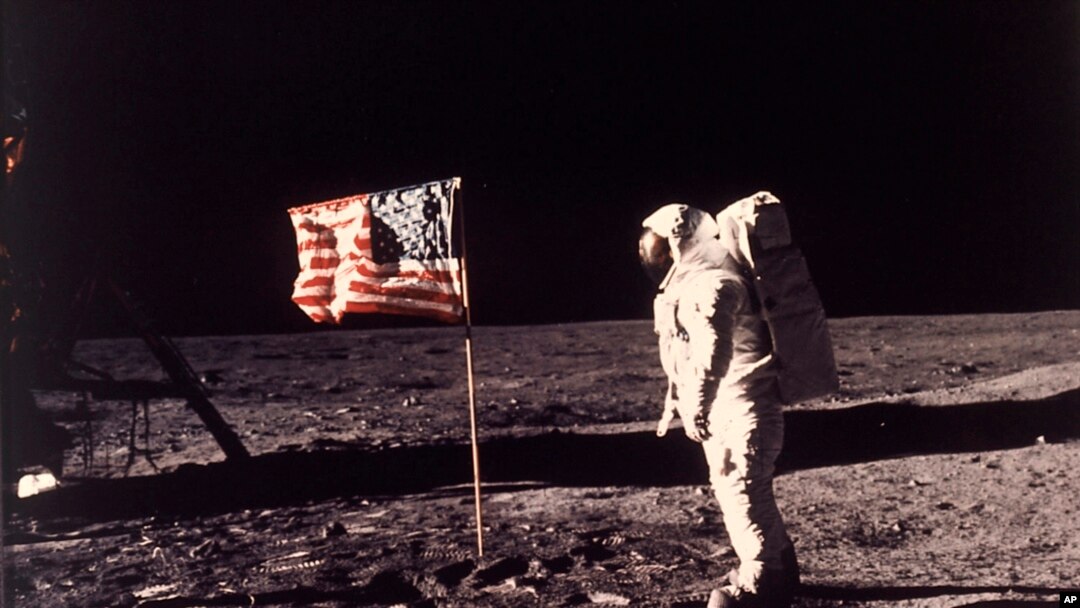
In the annals of human history, few dates carry as much technological weight as July 20, 1969. When the Lunar Module Eagle touched down on the Sea of Tranquility, it did more than fulfill a geopolitical promise; it served as the ultimate stress test for the most sophisticated technology ever assembled by human hands. To answer the fundamental question—what year did America land on the moon—is to identify the exact inflection point where the mechanical age transitioned into the digital era.
The year 1969 represents “Year Zero” for modern computing, software engineering, and telecommunications. The Apollo 11 mission was not merely a feat of bravery; it was a triumph of systems integration and hardware miniaturization. Today, we carry more processing power in our pockets than NASA possessed in the entire decade of the 1960s, but that power exists only because of the foundational breakthroughs made during the race to the moon.

The Hardware Revolution: Engineering the Impossible in 1969
The primary challenge of the moon landing was one of physics and weight. Every ounce of equipment required a massive amount of fuel to lift into orbit. This necessity birthed the era of miniaturization. Before the mid-1960s, computers were massive machines that filled entire rooms, relying on fragile vacuum tubes that generated immense heat. For a spacecraft to reach the moon, NASA needed a computer that was small, rugged, and incredibly efficient.
The Apollo Guidance Computer: A Masterclass in Early Computing
The Apollo Guidance Computer (AGC) was the first of its kind to use integrated circuits—the ancestors of the modern microchips found in our laptops and smartphones. At a time when the tech industry was still skeptical of these tiny silicon components, NASA’s demand for them was so high that they purchased nearly 60% of all integrated circuits produced in the United States between 1962 and 1965.
The AGC operated at a clock speed of about 1.024 MHz, with roughly 3,800 bytes of RAM. To put that into perspective, a modern high-definition photograph is often larger than the entire memory capacity of the machine that guided Neil Armstrong and Buzz Aldrin to the lunar surface. Yet, its architecture was revolutionary, utilizing a “Dsky” (display and keyboard) interface that allowed astronauts to communicate with the machine using verb-and-noun syntax—a precursor to modern user-interface design.
Integrated Circuits: Transitioning from Vacuum Tubes to Silicon
The decision to use integrated circuits was a massive gamble. In the early 60s, these components were considered unreliable for critical systems. However, NASA’s rigorous testing and quality control standards forced the tech industry to mature at an exponential rate. By proving that silicon chips could survive the vibrations of a Saturn V launch and the radiation of deep space, NASA paved the way for the consumer electronics revolution of the 1970s and 80s. Without the “Moonshot” demand, the transition from massive mainframes to personal computers might have been delayed by decades.
Software Engineering: From “Hand-Woven” Code to Global Standards
While the hardware was a feat of metallurgy and physics, the software was arguably more innovative. In 1969, the term “software engineering” wasn’t widely recognized as a formal discipline. It was during the development of the Apollo missions that Margaret Hamilton and her team at MIT developed the rigorous coding practices that underpin all modern software development.
Priority Displays and Real-Time Error Detection
The brilliance of the Apollo software was demonstrated minutes before landing. As the Eagle descended, the computer began flashing “1201” and “1202” alarms. These were “executive overflow” errors, indicating that the computer was being asked to do too many tasks at once.
Crucially, the software was designed with a priority-scheduling system. It recognized that landing the ship was more important than processing peripheral radar data. Instead of crashing—the digital equivalent of a “blue screen of death”—the software automatically rebooted, cleared low-priority tasks, and focused exclusively on the landing. This concept of asynchronous processing and priority-driven execution is a cornerstone of modern operating systems like Linux, Windows, and iOS.

The Birth of Modern Software Engineering Practices
Before Apollo, programming was often seen as an afterthought to hardware. Hamilton’s team introduced concepts like end-to-end testing, error detection, and recovery protocols. They also utilized “Core Rope Memory,” which was literally hand-woven by female workers in factories. This “LOL memory” (Little Old Lady memory) was incredibly durable and could not be erased by cosmic rays—a primitive but effective form of digital security and data integrity. The documentation and rigorous testing frameworks established for the moon landing became the blueprint for how we build mission-critical software today, from autonomous vehicles to medical devices.
The Digital Legacy: How Moonshot Tech Shaped Today’s Gadgets
The year 1969 did not just change our understanding of the solar system; it fundamentally altered our relationship with technology. The “spinoffs” from the moon landing are so pervasive that we often take them for granted. The pressure to innovate for space travel forced breakthroughs in materials science, digital imaging, and global connectivity.
Miniaturization and the Rise of Personal Computing
The trajectory from the Apollo Guidance Computer leads directly to the microprocessor. Once the industry learned how to manufacture reliable integrated circuits for NASA, the cost dropped, and the density of transistors increased. This follows Moore’s Law, but NASA was the initial catalyst that got the law moving. The technology used to navigate the command module Columbia eventually shrank down to become the CPU in your laptop.
Furthermore, the need for portable, high-density power sources led to advancements in battery technology and fuel cells. The ruggedization of electronics—making them resistant to heat, cold, and shock—has its roots in the environmental testing chambers used at the Johnson Space Center.
Telemetry and Modern Satellite Communications
Landing on the moon required real-time communication over 238,000 miles. This necessitated advancements in digital signal processing and telemetry. The protocols developed to transmit voice, health data, and grainy television images from the moon were the precursors to modern satellite communications.
Today, when we use GPS to navigate a city or watch a live stream from across the globe, we are using the legacy of 1969. The high-gain antennas and deep-space network established by NASA provided the framework for the global satellite constellations that provide us with high-speed internet and weather forecasting today. Even the CMOS (Complementary Metal-Oxide-Semiconductor) sensors found in every smartphone camera are direct descendants of the digital imaging technology developed for space exploration.
The New Frontier: AI, Quantum Computing, and the Future of Space Tech
As we look back at the 1969 moon landing, we are currently entering a “second space age” fueled by the next generation of technology: Artificial Intelligence and Quantum Computing. The challenges of the 21st century—returning to the moon with the Artemis program and eventually reaching Mars—require a leap in tech as significant as the transition from vacuum tubes to silicon.
AI-Driven Navigation and Autonomous Landers
In 1969, Neil Armstrong had to take manual control of the Eagle to avoid a boulder-strewn crater. In the modern era, AI and machine learning handle these decisions in milliseconds. Autonomous “Hazard Detection and Avoidance” systems use LIDAR and computer vision to map the lunar surface in real-time, allowing for precision landings in areas that were previously considered too dangerous. These AI algorithms are trained on petabytes of data, a far cry from the hand-woven code of the 60s.
Quantum Sensors and the Next Step in Interstellar Tech
The next great hurdle is deep-space navigation where GPS signals don’t reach. NASA and private tech firms are now looking toward quantum sensors. These devices use the properties of atoms to measure tiny changes in gravity or magnetic fields, allowing for “quantum positioning” that doesn’t rely on external satellites. This level of precision would allow a spacecraft to navigate the solar system with the same ease that we navigate a city street.
The moon landing of 1969 was the ultimate proof of concept for the power of human-directed technology. It proved that if a problem can be defined by mathematics and physics, it can be solved through engineering. As we move toward a future defined by the “Internet of Things” and the “Internet of Space,” the year 1969 remains our North Star—a reminder that the most significant “Giant Leap” wasn’t a footstep on the dust, but the digital revolution that made it possible.
aViewFromTheCave is a participant in the Amazon Services LLC Associates Program, an affiliate advertising program designed to provide a means for sites to earn advertising fees by advertising and linking to Amazon.com. Amazon, the Amazon logo, AmazonSupply, and the AmazonSupply logo are trademarks of Amazon.com, Inc. or its affiliates. As an Amazon Associate we earn affiliate commissions from qualifying purchases.