
The genesis of Bitcoin, the world’s first decentralized digital currency, is a pivotal moment in the history of finance and technology. Understanding what year Bitcoin came out is not merely an academic exercise; it’s key to appreciating the revolutionary ideas that underpinned its creation and the profound impact it has had on the global financial landscape. This exploration delves into the background, the key individuals, and the initial development of Bitcoin, setting the stage for its subsequent evolution and influence on personal finance, investing, and the broader digital economy.

The Genesis of a Revolutionary Idea: Precursors to Bitcoin
Before Bitcoin emerged, the concept of digital cash and secure peer-to-peer transactions had been explored by cryptographers and technologists for decades. These early efforts, while not achieving widespread adoption, laid the crucial theoretical groundwork for what Satoshi Nakamoto would eventually bring to life. The desire for a form of currency that was free from central authority and could be transferred securely and anonymously online was a persistent theme in these endeavors.
Early Attempts at Digital Cash
The pursuit of digital currency can be traced back to the late 20th century. Projects like David Chaum’s DigiCash, developed in the 1980s, introduced the concept of anonymous electronic cash. While innovative, DigiCash was a centralized system that required users to trust a central authority to manage transactions and maintain privacy. This reliance on a trusted intermediary was a fundamental limitation that Bitcoin would later address.
Another significant precursor was Adam Back’s Hashcash, introduced in 1997. Hashcash was a proof-of-work system designed to combat email spam by requiring a sender to perform a small computational effort to send an email. This concept of computational work as a barrier to entry or an anti-spam mechanism would become a cornerstone of Bitcoin’s mining process. The idea was that it would be too costly for spammers to generate the necessary proof-of-work for every email they sent.
The Cypherpunk Movement and the Desire for Decentralization
The cypherpunk movement, a loose association of individuals advocating for the widespread use of strong cryptographic tools to ensure privacy and security, played a vital role in fostering the ideas that led to Bitcoin. From the early 1990s, cypherpunks engaged in discussions about privacy, anonymity, and the potential for decentralized digital currencies. They envisioned a future where individuals could conduct transactions without relying on banks or governments, a future where privacy was a default, not a privilege.
Key figures within the cypherpunk community, through mailing lists and online forums, debated various approaches to digital cash, cryptography, and distributed systems. Their collective intellectual curiosity and commitment to privacy-preserving technologies created an fertile environment for the emergence of a truly decentralized digital currency. They understood the potential vulnerabilities of centralized systems and sought robust, resilient alternatives. The concept of a “digital bearer instrument” – an asset that is owned and transferred directly by its holder, similar to physical cash – was a recurring theme.
The Mysterious Birth: Satoshi Nakamoto and the Bitcoin Whitepaper
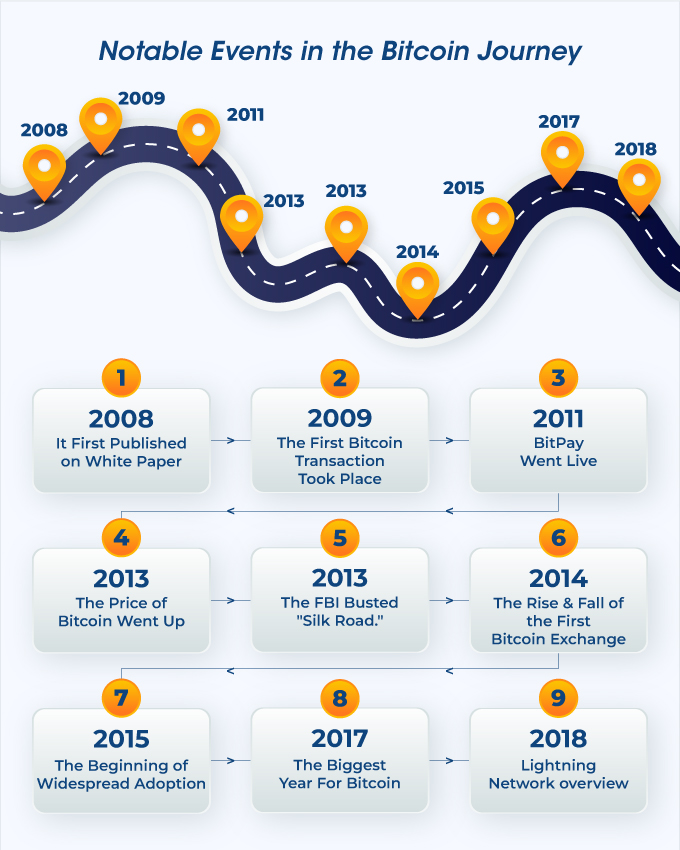
The year Bitcoin officially entered the public consciousness was 2008, when the pseudonymous entity known as Satoshi Nakamoto published a groundbreaking whitepaper. This seminal document, titled “Bitcoin: A Peer-to-Peer Electronic Cash System,” outlined the revolutionary architecture and principles that would define the cryptocurrency. The identity of Satoshi Nakamoto remains one of the most enduring mysteries in the tech and finance worlds, with speculation ranging from individuals to groups of developers.
The “Bitcoin” Whitepaper Publication
On October 31, 2008, a paper was posted to a cryptography mailing list by someone using the name Satoshi Nakamoto. This paper presented a novel solution to the “double-spending problem” in digital currencies without the need for a central authority. The double-spending problem refers to the risk that a digital token could be copied and spent more than once, a challenge that had plagued previous attempts at digital cash. Nakamoto’s elegant solution involved a distributed ledger, later to be known as the blockchain, and a proof-of-work consensus mechanism.
The whitepaper meticulously detailed how transactions would be broadcast to a network of computers, validated by participants through cryptographic puzzles, and then permanently recorded in a chronological chain of blocks. This ingenious design ensured both the security and immutability of the ledger, effectively solving the double-spending problem in a decentralized manner. The publication of this whitepaper marked the theoretical birth of Bitcoin, laying out the blueprint for a truly peer-to-peer electronic cash system.
Early Development and the Genesis Block
Following the publication of the whitepaper, Satoshi Nakamoto began the actual development of the Bitcoin software. The first implementation of Bitcoin, the reference client, was released in early 2009. On January 3, 2009, the Bitcoin network officially came to life when Nakamoto mined the very first block of the blockchain, known as the “genesis block.” This block contained a hidden message embedded within its data: “The Times 03/Jan/2009 Chancellor on brink of second bailout for banks.” This message is widely interpreted as a commentary on the prevailing financial crisis of 2008 and a justification for the creation of a decentralized alternative to traditional financial systems.

The genesis block also contained a reward of 50 Bitcoins, marking the beginning of Bitcoin’s issuance. In the initial days and weeks, Bitcoin had virtually no market value and was primarily of interest to a small community of cryptographers and computer scientists who were testing and developing the software. The early adopters were instrumental in popularizing the concept, refining the code, and laying the foundation for the network’s growth.
The Early Years: Building a Community and Establishing Value
The period immediately following Bitcoin’s launch was characterized by a small but dedicated community of enthusiasts. These early adopters played a crucial role in testing the software, reporting bugs, and advocating for its adoption. While Bitcoin lacked a formal price or exchange rate in its earliest days, its value began to emerge through its utility and the growing belief in its potential.
The Birth of Bitcoin Trading and Early Exchanges
The first recorded real-world transaction involving Bitcoin occurred in May 2010, famously known as “Bitcoin Pizza Day.” Laszlo Hanyecz, a programmer, paid 10,000 Bitcoins for two pizzas. At the time, this was a significant amount of Bitcoin, but the market value was still negligible. This transaction, however, marked a significant step in establishing Bitcoin’s transactional utility.
The emergence of dedicated Bitcoin exchanges in 2010 was a critical development in establishing its market value. Mt. Gox, which would later become the largest Bitcoin exchange, began operations in 2010. These platforms allowed individuals to buy and sell Bitcoin for fiat currency, creating a mechanism for price discovery. The initial prices were extremely low, measured in fractions of a cent. However, as more people became aware of Bitcoin and its underlying technology, demand gradually increased, leading to the first significant price rises and establishing Bitcoin as a nascent asset class.
Growing Awareness and the First Major Price Surges
As the Bitcoin network matured and more people began to experiment with mining and trading, awareness of the cryptocurrency started to spread beyond niche technological circles. The increasing availability on exchanges and early media coverage, however sparse, began to pique the interest of a wider audience. The first major price surge occurred in mid-2011, when Bitcoin briefly reached parity with the US dollar and then quickly climbed to over $30. This volatility, while alarming to some, also attracted significant attention and speculation, bringing Bitcoin into the global conversation.
These early price fluctuations, though dramatic, were symptomatic of a nascent market finding its footing. They were driven by a combination of increasing adoption, limited supply, and speculative interest. The understanding of Bitcoin’s potential as a store of value and a medium of exchange began to solidify, even amidst the inherent uncertainties of a brand-new technology and market. The journey from a whitepaper published in 2008 to a globally recognized digital asset had officially begun.
The Lasting Impact: Bitcoin’s Evolution and Influence
Since its inception, Bitcoin has undergone significant evolution, facing numerous challenges, regulatory scrutiny, and periods of intense speculation. However, its foundational principles of decentralization, immutability, and a transparent ledger have endured, cementing its place as a pioneering force in the digital economy. The year Bitcoin came out, 2008, and its subsequent launch in 2009, are etched in history as the dawn of a new era for finance.
Bitcoin’s Role in the Broader Financial Landscape
Bitcoin’s existence has fundamentally altered the discourse around money, payments, and financial sovereignty. It has inspired thousands of other cryptocurrencies and blockchain-based projects, collectively known as the altcoin market. The underlying blockchain technology has found applications beyond finance, impacting industries such as supply chain management, healthcare, and digital identity.
For individuals, Bitcoin has opened up new avenues for investment, wealth preservation, and participation in a global, permissionless financial system. It has provided a hedge against inflation for some, a speculative asset for others, and a means of financial inclusion for those underserved by traditional banking. The concept of decentralized finance (DeFi), which builds financial services on blockchain technology, owes much of its existence to the precedent set by Bitcoin.
Challenges and Future Trajectory
Despite its revolutionary nature, Bitcoin has faced persistent challenges, including scalability issues, environmental concerns related to its energy consumption, and regulatory uncertainty in various jurisdictions. However, ongoing development efforts, such as the Lightning Network, aim to address scalability, while the debate around energy consumption continues to evolve.
The future trajectory of Bitcoin remains a subject of intense discussion. Whether it will fully displace traditional currencies, serve as a niche digital gold, or evolve into a hybrid asset class is yet to be determined. Regardless of its ultimate role, the innovation sparked by Satoshi Nakamoto’s vision in 2008 and the subsequent launch of the network in 2009 has irrevocably changed the financial and technological landscape, marking a permanent shift in how we conceive of and interact with money. The question of what year Bitcoin came out is therefore more than just a historical footnote; it’s a gateway to understanding a paradigm shift that continues to unfold.
aViewFromTheCave is a participant in the Amazon Services LLC Associates Program, an affiliate advertising program designed to provide a means for sites to earn advertising fees by advertising and linking to Amazon.com. Amazon, the Amazon logo, AmazonSupply, and the AmazonSupply logo are trademarks of Amazon.com, Inc. or its affiliates. As an Amazon Associate we earn affiliate commissions from qualifying purchases.