
The dazzling spectacle of the night sky, a tapestry of stars, planets, and distant galaxies, has captivated humanity for millennia. Yet, for a vast majority of us living in urbanized and suburban areas, this celestial panorama is shrouded in a perpetual haze – the insidious glow of artificial light, commonly known as light pollution. This pervasive phenomenon, born from our technological advancement and insatiable demand for illumination, has systematically diminished our connection to the cosmos. But what if we could rewind the clock? What if we could experience the night sky as it was meant to be seen, unmarred by the electric glare of our modern world? This exploration delves into the profound implications of a world free from light pollution, not just for astronomical observation, but for its trickle-down effects on technology, our understanding of the universe, and the very tools we use to explore it.

The Unveiling of the Cosmos: A Stellar Renaissance
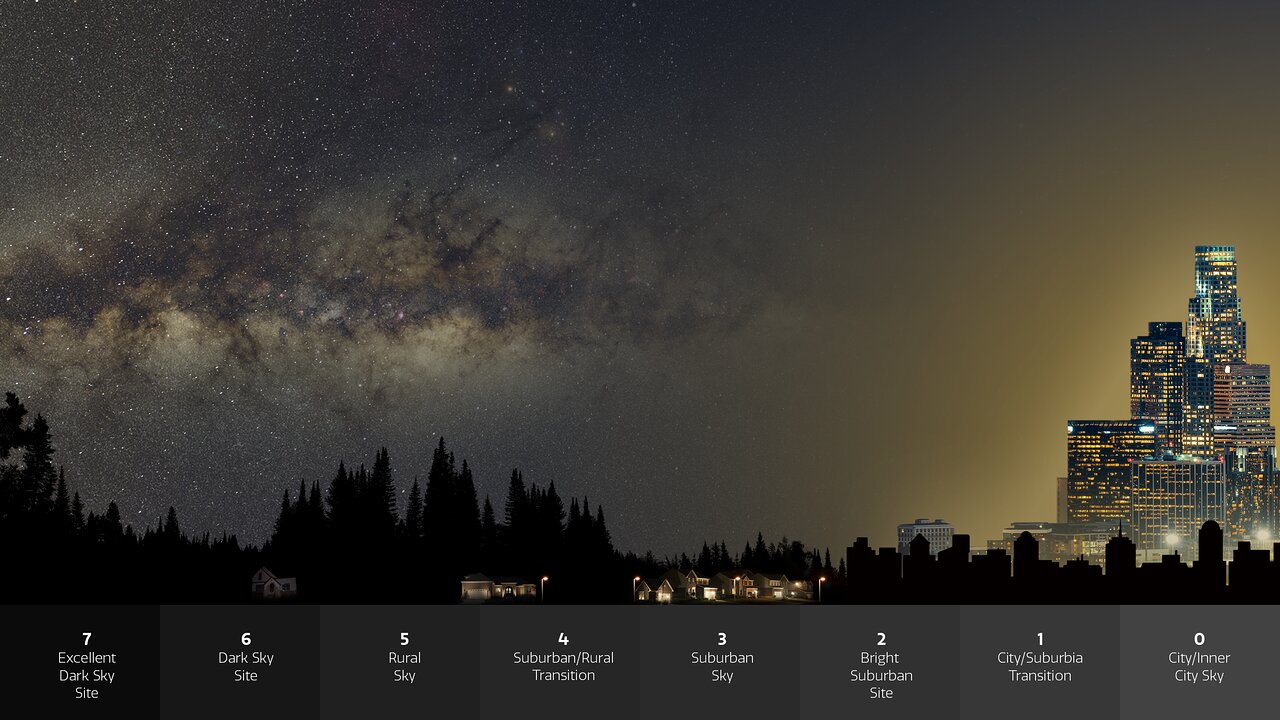
The most immediate and breathtaking impact of eliminating light pollution would be the dramatic re-emergence of the night sky’s full glory. What is currently a muted, washed-out canvas would transform into an
intensely vibrant and detailed celestial masterpiece. This is not merely a qualitative shift; it represents a fundamental change in our observable universe, a rediscovery of the cosmic wonders that have been hidden in plain sight.
The Milky Way: A Galactic River Reborn
For those living in cities, the Milky Way, our own galaxy, is often reduced to a faint, diffuse smudge, if visible at all. Without light pollution, it would dominate the night sky. Imagine standing under a truly dark sky, where the galactic center, a dense and luminous core of stars, would be clearly discernible, radiating outwards with unparalleled brilliance. The dust lanes, those intricate dark ribbons that snake through the galactic disk, would become starkly visible, providing a three-dimensional perspective of our cosmic home. This profound visual experience would serve as a constant, awe-inspiring reminder of our place within the vastness of the universe, fostering a deeper sense of wonder and connection.
The Abundance of Stars: Beyond Counting
The number of stars visible to the naked eye would increase exponentially. Instead of a few hundred or thousand stars, a truly dark sky can reveal tens of thousands. Constellations, often mere skeletal outlines in light-polluted areas, would burst forth with their constituent stars, allowing for more intricate pattern recognition and a richer understanding of celestial navigation and mythology. Even fainter objects, previously invisible, would become accessible. Nebulae, those ethereal clouds of gas and dust where stars are born, and distant star clusters, would transform from theoretical concepts into tangible celestial features.
Planets and Transient Phenomena: Enhanced Visibility
Beyond stars, the planets in our solar system would also appear more striking. Their moons, often challenging to observe even with moderate light pollution, would become more readily visible, allowing for a more nuanced appreciation of planetary systems. Furthermore, transient astronomical events, such as meteor showers and comets, would be vastly enhanced. The fleeting streaks of meteors would cut through a blacker background, making each one a more impactful spectacle. The faint tail of a comet, often lost in the skyglow, would stretch further and more clearly, offering a dramatic display of these interstellar visitors.
Technological Implications: Tools for a Deeper Dive
The absence of light pollution would not only enhance our visual experience but would also significantly impact the development and application of technologies designed to observe and study the universe. Our current astronomical tools are often designed with light pollution as a significant mitigating factor. Removing this obstacle opens up new possibilities and necessitates a re-evaluation of existing technologies.
Telescopes: Redefining Capabilities
For amateur astronomers, the most immediate benefit would be the dramatic improvement in the performance of their existing equipment. A telescope that struggles to resolve faint deep-sky objects under light pollution would reveal stunning detail in a truly dark sky. Beyond this, the absence of skyglow would allow for the development and effective use of more sensitive optics and imaging techniques. Telescopes could be designed to capture fainter light signals more efficiently, pushing the boundaries of what can be observed without requiring massive, prohibitively expensive instruments. This could democratize deep-sky observation even further, making it more accessible to a wider audience.
Imaging and Data Capture: Pushing the Limits of Observation
Modern astronomy relies heavily on sophisticated imaging techniques to capture faint celestial signals. Light pollution adds a significant amount of background noise to these images, obscuring subtle details and requiring extensive processing to remove. In a light-pollution-free environment, the signal-to-noise ratio would be dramatically improved, allowing for clearer and more detailed images to be captured with less effort. This would be particularly impactful for the study of faint astronomical phenomena, such as exoplanet atmospheres, the early universe, and the intricate structures of distant galaxies. New algorithms and software could be developed to leverage this cleaner data, pushing the frontiers of astronomical discovery.
Citizen Science and Data Accessibility: A Collective Gaze Upward
The implications extend to citizen science initiatives. With clearer skies, amateur astronomers could contribute more valuable and precise data to professional research projects. This democratizes the scientific process, allowing more people to participate in groundbreaking discoveries. Furthermore, the enhanced visibility of celestial objects would likely spark a renewed public interest in astronomy and space exploration, leading to greater support for scientific endeavors and educational outreach programs. The accessibility of clear skies could foster a global community of stargazers, united by a shared appreciation for the cosmos.
The Biological and Cultural Reconnection: Reclaiming the Night
The impact of light pollution extends beyond the purely observational, affecting biological systems and our cultural heritage. Reclaiming the night sky offers a chance to reverse these negative effects and foster a deeper connection with the natural world and our ancestral past.
Wildlife and Ecosystems: Restoring Natural Rhythms
Artificial light at night disrupts the natural circadian rhythms of countless species. Nocturnal animals, which rely on darkness for foraging, mating, and predator avoidance, are disoriented by artificial lights. This can lead to decreased reproductive success, altered migration patterns, and increased vulnerability. Eliminating light pollution would allow these creatures to reclaim their natural nocturnal environments, restoring ecological balance. Insect populations, crucial for pollination and food webs, are particularly affected by artificial lights, often becoming easy prey or disoriented. A darker night would allow them to thrive.
Human Health and Well-being: The Unseen Cost of Glare
Our own biological systems are also sensitive to light. Exposure to artificial light at night, particularly blue-rich light emitted by LEDs, can suppress melatonin production, disrupting sleep patterns and potentially contributing to a range of health issues, including mood disorders, metabolic problems, and even an increased risk of certain cancers. A return to natural darkness would allow our bodies to function more in line with their evolutionary programming, promoting better sleep and overall health. The psychological benefits of experiencing a truly dark night sky – a sense of awe, tranquility, and perspective – are immeasurable and often overlooked.

Cultural Heritage and Ancestral Wisdom: Echoes of the Past
For most of human history, the night sky was an essential part of our cultural landscape. It guided travelers, inspired myths and legends, and provided a framework for understanding the passage of time. Light pollution has effectively erased this shared experience for much of the modern population, severing a crucial link to our ancestral past. Imagine the stories of ancient mariners navigating by the stars, or the cultural significance of celestial events to indigenous communities. A return to dark skies would allow us to reconnect with this rich heritage, fostering a deeper appreciation for the knowledge and wisdom passed down through generations. The ability to see the stars clearly would reignite a sense of wonder and curiosity that has driven human exploration and innovation for millennia.
In conclusion, the hypothetical scenario of a night sky devoid of light pollution is not merely a romanticized vision. It represents a profound shift with far-reaching implications for technology, our scientific endeavors, and our fundamental relationship with the natural world and our own heritage. It underscores the unintended consequences of our technological progress and highlights the importance of preserving the darkness for the sake of scientific advancement, ecological health, and the enduring human spirit of wonder. The journey to reclaim the night sky is a collective responsibility, one that demands innovative technological solutions, thoughtful urban planning, and a renewed appreciation for the profound beauty and wisdom held within the celestial darkness.
aViewFromTheCave is a participant in the Amazon Services LLC Associates Program, an affiliate advertising program designed to provide a means for sites to earn advertising fees by advertising and linking to Amazon.com. Amazon, the Amazon logo, AmazonSupply, and the AmazonSupply logo are trademarks of Amazon.com, Inc. or its affiliates. As an Amazon Associate we earn affiliate commissions from qualifying purchases.